Castle of Gorizia: A Medieval and Early Modern Fortress in Italy


Visitor Information
Google Rating: 4.5
Popularity: Medium
Google Maps: View on Google Maps
Official Website: www.turismofvg.it
Country: Italy
Civilization: Unclassified
Remains: Military

History
The Castle of Gorizia is located in the municipality of Gorizia in modern-day Italy. It was originally constructed during the 11th century by medieval builders who established a strategic stronghold atop a hill overlooking the city.
In its earliest phase, the site likely featured wooden defensive structures typical of the period, such as earthworks combined with a motte-and-bailey design, including a moat and palisade. By the 11th century, these were replaced by more permanent stone constructions, beginning with a central tower or keep. Around 1146, the castle became the seat for the House of Gorizia, with Henry IV of Spanheim known as the first confirmed count to rule from the fortress, emphasizing its political importance in the region.
Throughout the 13th century, the castle saw significant expansion. A lordly palace and a two-storey building were added within its walls. Adjacent to the castle’s fortifications was a settlement enclosed by a palisade, where residents were obliged not only to live in houses built of masonry but also to assist in the castle’s defense. This close community supported the fortress’s military and administrative functions.
The castle’s appearance by the early 14th century is documented visually through a city seal granted in 1307 by Albert II. This seal shows a stylized but recognizable keep. By about 1350, the castle’s form was likely similar to that of Bruck Castle near Lienz, suggesting common architectural influences in the region during that timeframe.
The medieval lineage of the House of Gorizia ended with the death of Count Leonhard in 1500. Subsequently, the castle and its county passed to Maximilian I, Holy Roman Emperor and head of the Habsburg dynasty, through negotiations involving the brothers Virgil and Luca di Graben. The Habsburgs sought to solidify control of the area, but in 1508, the Republic of Venice seized the castle, asserting claim over the county based on its relationship with the Patriarchate of Aquileia.
Venetian occupation was brief, lasting just over a year until mid-1509, yet during this time the castle underwent important changes to adapt to new warfare technologies. Firearms had altered military tactics, prompting the demolition of the original stone keep from the 11th century to make way for fortifications better suited to resist artillery. These included the installation of bastions and the reinforcement of walls.
In the centuries that followed, the castle’s role transformed significantly. During the 17th century, it served mainly as a prison and military barracks, losing much of its medieval character. The 18th century brought further structural enhancements, particularly with the addition of bastions, powder magazines, and sturdy walls. Some of these improvements were overseen by Edmond Halley, known primarily as a mathematician and astronomer, reflecting an interdisciplinary approach to fortress design.
The castle sustained damage during World War I, particularly from aerial bombardments. A restoration project carried out between 1934 and 1937 led by architect Ferdinando Forlati, together with military engineers and the Trieste authority responsible for fine arts, aimed to return the structure to its medieval appearance. This included removing plaster added during the Renaissance period, thus restoring its stone façade and medieval architectural features.
Remains
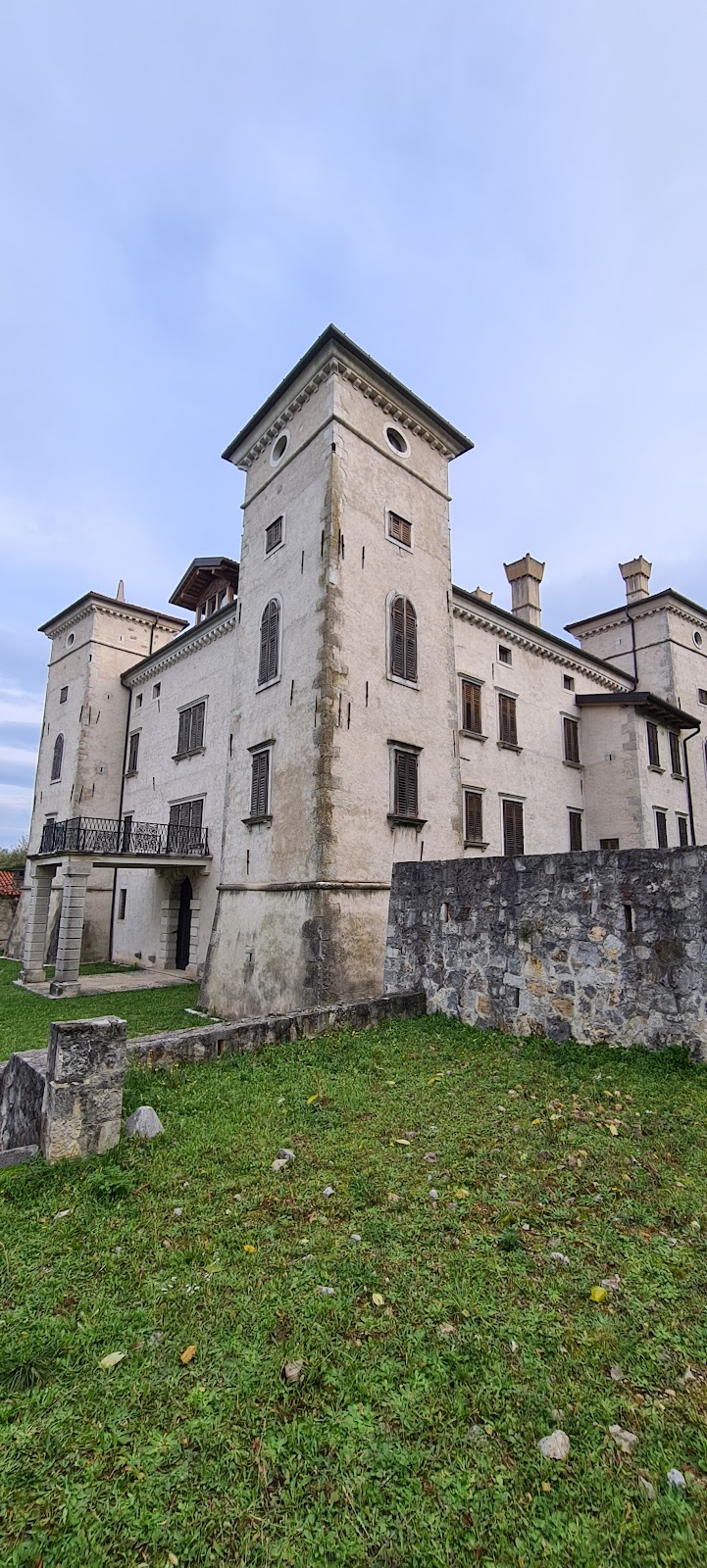
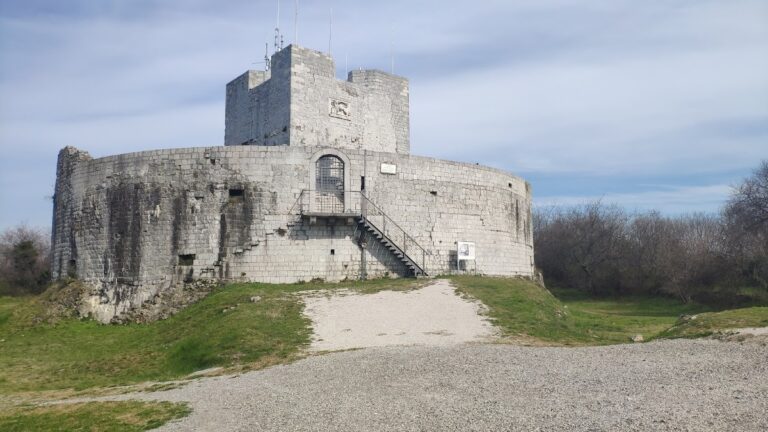
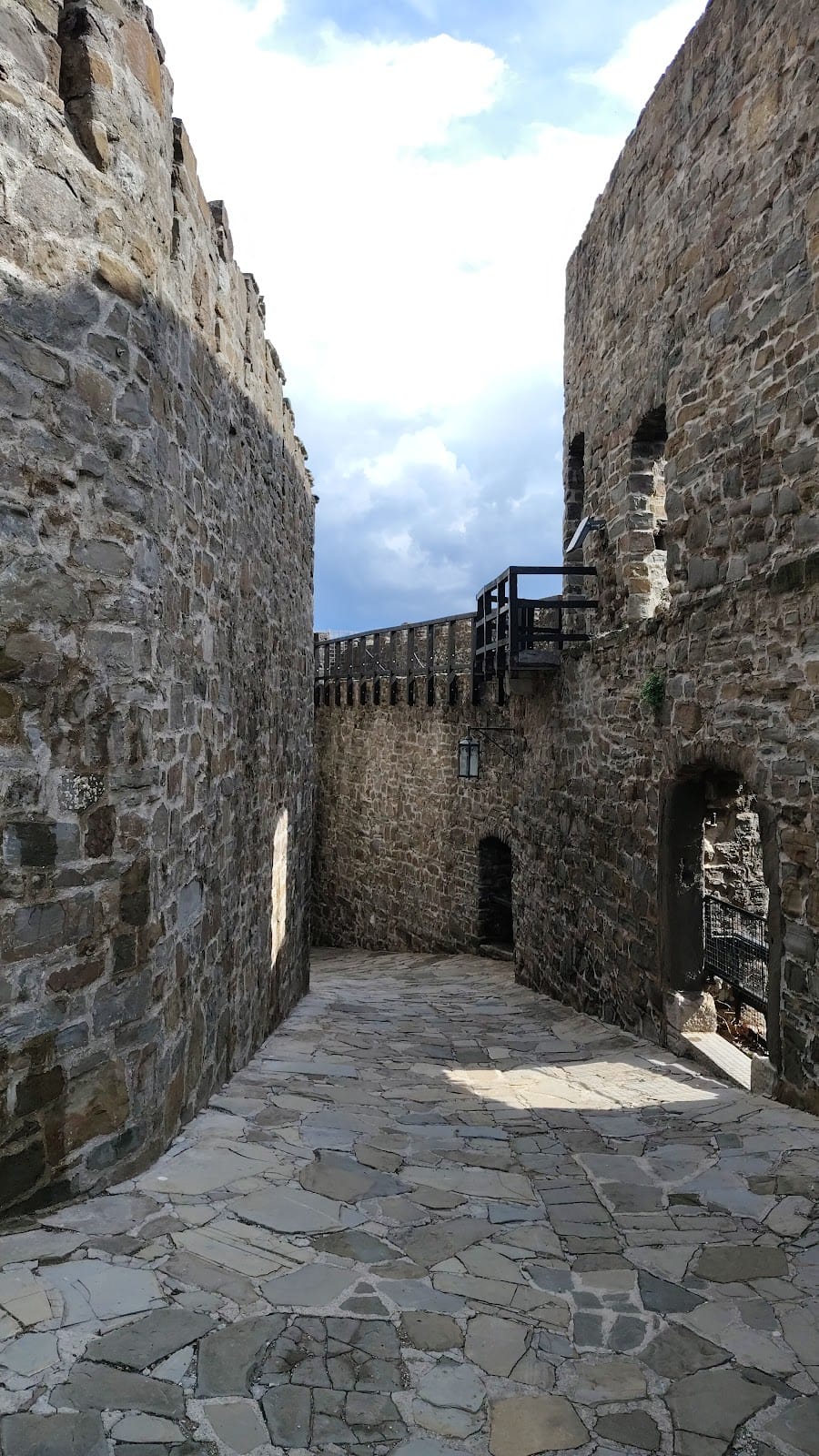
The Castle of Gorizia occupies a hill situated 155 meters above sea level with commanding views of the surrounding city. Its layout reflects development over several centuries, combining early medieval construction with Renaissance and later military adaptations. The earliest stone structure—a central keep from the 11th century—is partially visible as ruins within the courtyard, offering a tangible link to the castle’s original defensive core.
During the 13th century, expansions added significant buildings within the castle complex, including a lordly palace and a two-storey building. These structures were constructed with stone and masonry typical of the medieval period, reflecting the social and administrative functions of the castle as both a residence and military base. Surrounding the castle, beyond the original palisade, was a fortified settlement where inhabitants were required to construct masonry homes and participate in the defense, reinforcing the stronghold’s control over the local population.
The castle’s external fortifications changed notably in the Renaissance and early modern periods to accommodate new military technologies. This included the demolition of the original keep and the addition of bastions designed to better resist firearms and artillery. In the 18th century, thick defensive walls, powder magazines for storing gunpowder, and further bastions were constructed. Some of this work was supervised by Edmond Halley, indicating an applied scientific approach to fortress reinforcement.
Although the Republic of Venice only controlled the castle briefly in the early 16th century, a 16th-century statue of the Lion of Saint Mark—the symbol of Venice—was installed above the castle entrance in 1919 to commemorate that episode in its history.
Today, the castle’s interior houses the Museum of the Middle Ages of Gorizia. This museum features original medieval furniture alongside reproductions of period weapons and siege engines, providing insight into the castle’s military and domestic past. The overall preservation of the structure was greatly enhanced by the 20th-century restoration effort that stripped away later Renaissance alterations, revealing the castle’s medieval stonework.
Encircling the hill on which the castle stands is a public park that frames the site. The combination of the surviving medieval ruins, restored buildings, and preserved fortifications offers a layered picture of the castle’s evolution from a medieval stronghold to an early modern fortress and beyond.
Nearby sites