Castello di Rubbia: A Renaissance Castle and Winery in Italy
Site at a Glance
- Rating
- 4.3
- Popularity
- Very Low
- Country
- Italy
- Primary era
- Early Modern
- Eras represented
- Medieval, Early Modern
- Civilizations
- Habsburg, Holy Roman Empire
- Site type
- Military
- Remains
- Castle
On this page8 sections
History
Castello di Rubbia is a Renaissance castle in Italy, built during the fifteenth or sixteenth century on the remains of older fortifications. It occupies a strategic position above routes through the Vipava Valley, which connected the Po-Venetian plain with the Danubian plain and, farther east, Pannonia, the ancient region centered on the middle Danube basin.
Earlier Fortifications and Renaissance Construction
The site served as a military-strategic point in antiquity and the Middle Ages. The present castle replaced an earlier fortification that may have been built in Roman times. Historians Tito Miotti and Vinicio Tomadin linked notches on some tower corner stones to possible Roman quarrying activity.
The fifteenth- or sixteenth-century castle was constructed on older remains, and its building has been attributed to the Della Torre family. The first known owner is also identified as Count Egg. The property later passed to the Torre-Valsassina family and then to Angel Giacomo Edling. Around the beginning of the sixteenth century, it came to the Coronini family and Cipriano Coronini of Kromberk. Coronini interests retained the estate for several centuries.
Religious Conflict and Wartime Damage
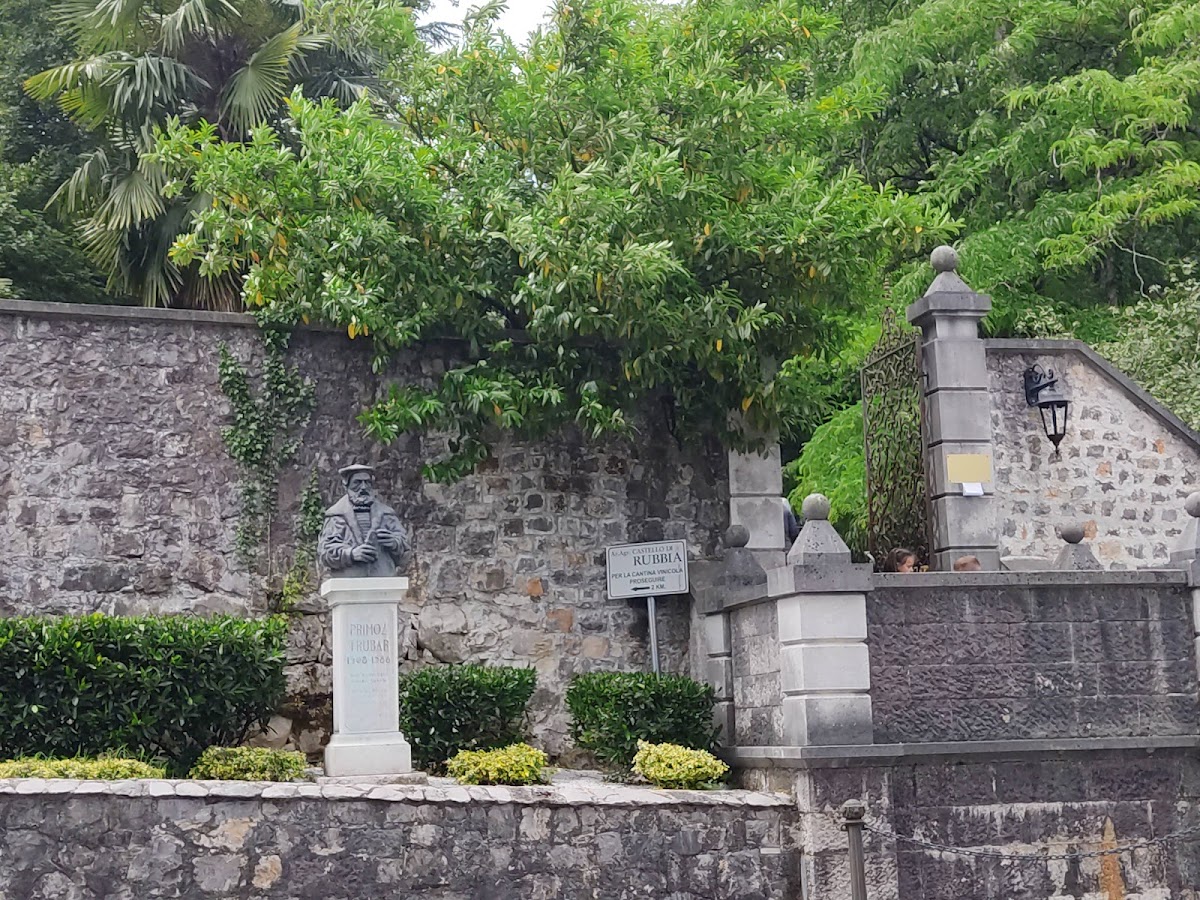
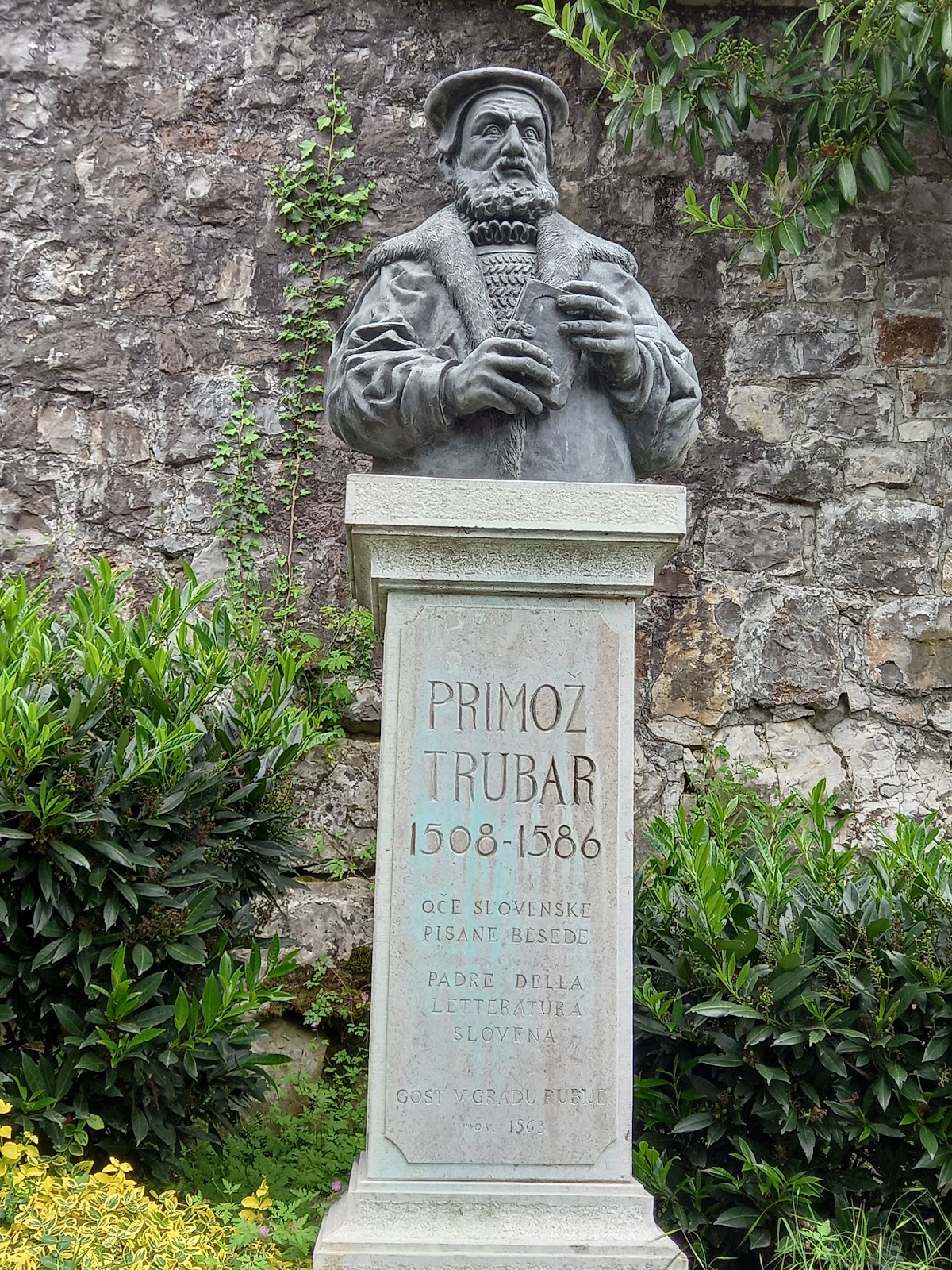
In 1563, Primož Trubar, a sixteenth-century Slovenian Protestant preacher and an important figure in the development of Slovenian written culture, stayed at Rubbia after withdrawing from Gorizia to escape opponents of the Counter-Reformation. This was the Catholic reform movement and campaign against the spread of Protestantism in the sixteenth and seventeenth centuries. Trubar preached and baptized at the castle.
During the War of Gradisca in 1616 and 1617, an early seventeenth-century conflict between the Habsburg Monarchy and the Republic of Venice around Gradisca, Rubbia served as the headquarters of General Ademo Trautmannsdorf, commander of the archducal troops. An artillery projectile struck the building and caused severe damage. The castle suffered further heavy damage during the First World War.
The Bianchi di Casalanza Estate
Leonardo Bianchi di Casalanza purchased the castle in 1872. After the death of his wife, Luisa Cavriani, he withdrew to Rubbia for two years, living in seclusion while undertaking restoration work. He also restored a mill on the Vipava, raised silkworms, planted vineyards, and developed an important agricultural enterprise and winery.
In 1874, Bianchi di Casalanza married Baroness Josefina Steininger, a descendant of the Trieste Sartorio family, and turned Rubbia into a center of social life. After his death in 1912, the estate and castle passed by inheritance to his sons. Following the First World War, his nephew Karlo built a small house near the ruins and lived at Rubbia with his family from 1948 to 1961.
Reconstruction and Present Use
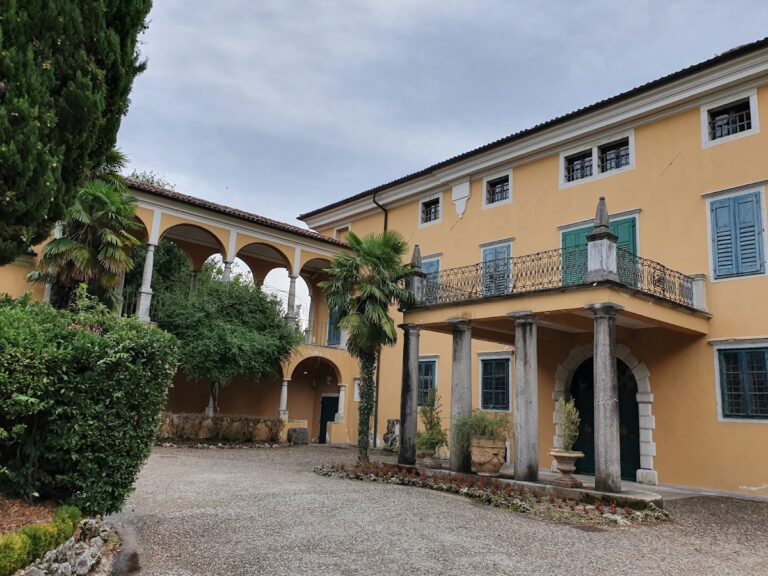
Reconstruction began during the first decade of the twenty-first century, based on historical documents concerning the castle’s design. The complex was still undergoing restoration in 2014. Recorded renovation dates include 1927 and 2011. The privately owned property is now used as a winery.
Remains
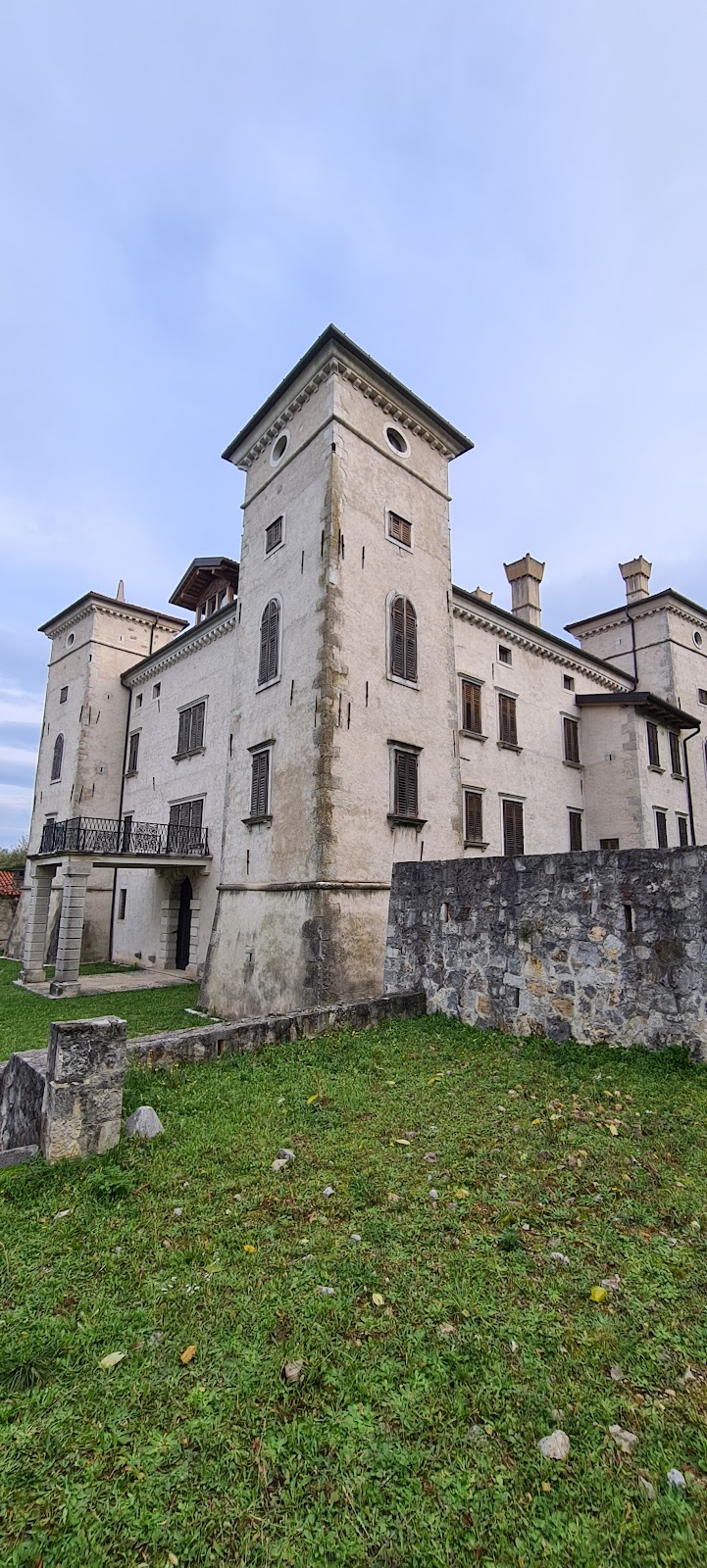
Castello di Rubbia, also known as Castello della Torre or Rubijski grad, stands in Rubbia in the municipality of Savogna d’Isonzo, on the left bank above the Vipava River near its confluence with the Soča. At approximately 62 metres above sea level, it is a lowland castle, meaning a fortified residence built on relatively level terrain rather than on a hilltop or mountain. Its present character is Renaissance in style.
Castle Buildings and Walls
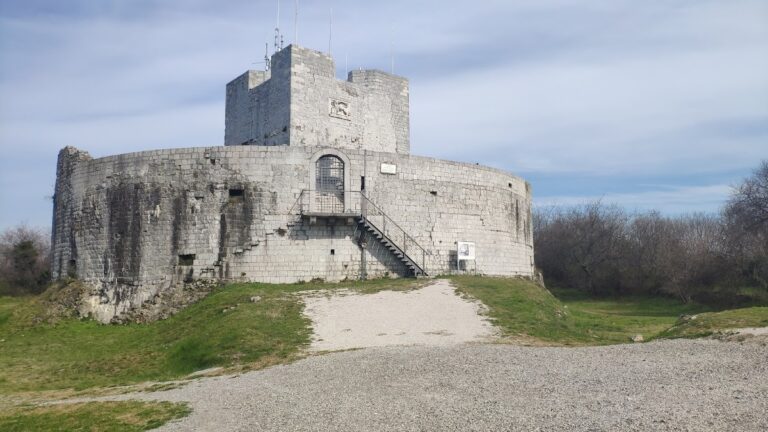
The castle was built in brick masonry and finished with plaster. Its fifteenth- or sixteenth-century fabric incorporates older structures, while surviving sections of the surrounding walls preserve parts of the earlier complex. The tower has corner stones bearing notches interpreted as possible evidence of Roman quarrying activity. Wartime destruction left the buildings requiring substantial restoration and reconstruction. A bust of Primož Trubar stands in front of the entrance.
Estate Structures
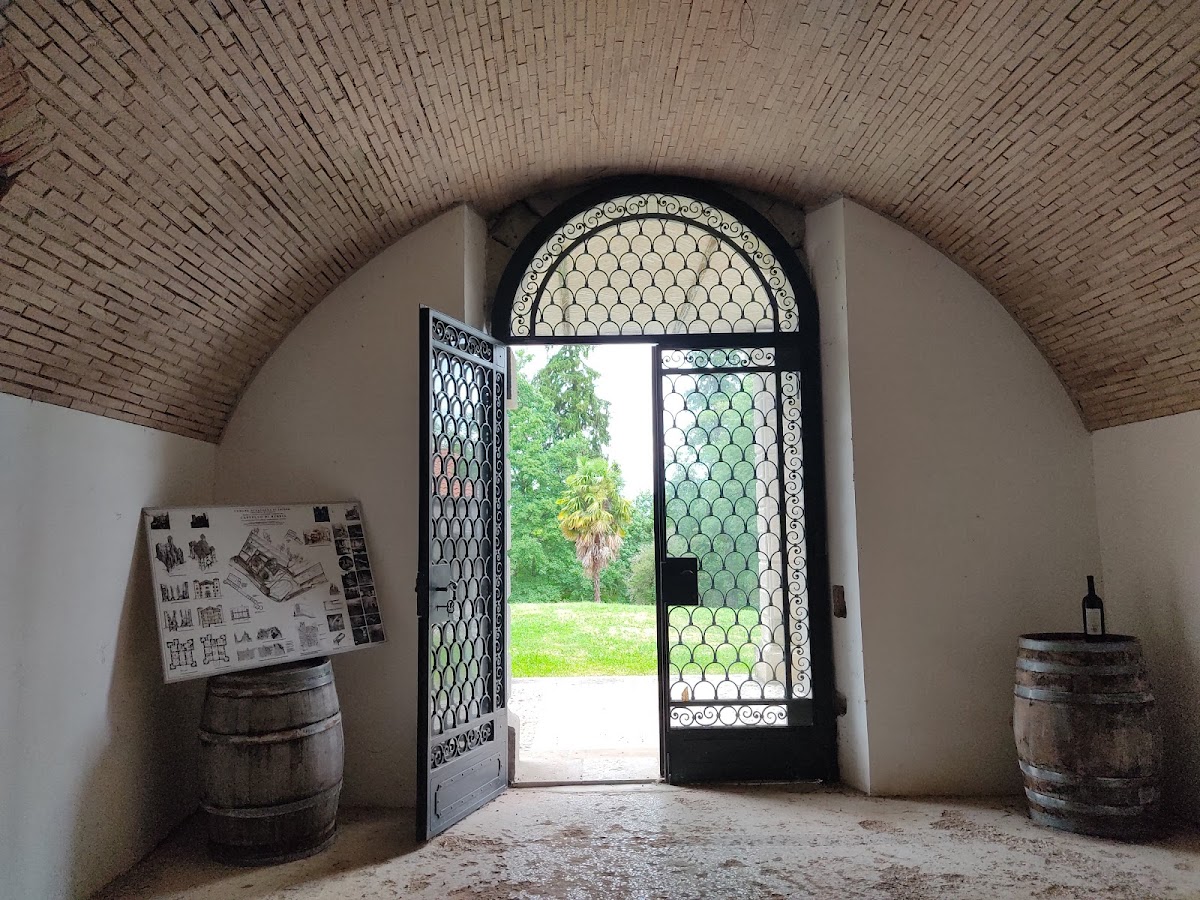
A small house was built beside the castle ruins after the First World War. The estate also included a mill on the Vipava, which was restored during Leonardo Bianchi di Casalanza’s ownership. The restored or reconstructed complex is used as a winery.