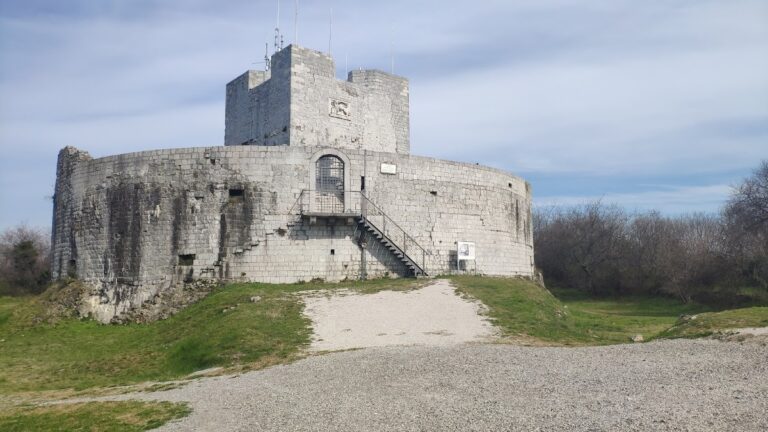
Gorizia Castle: Medieval Fortress in Gorizia, Italy


Site at a Glance
- Rating
- 4.5
- Popularity
- Medium
- Country
- Italy
- Primary era
- Medieval
- External website
- Open
- Eras represented
- Medieval, Early Modern
- Civilizations
- Habsburg, Holy Roman Empire, Venetian
- Site type
- Military
- Remains
- Castle
On this page7 sections
History
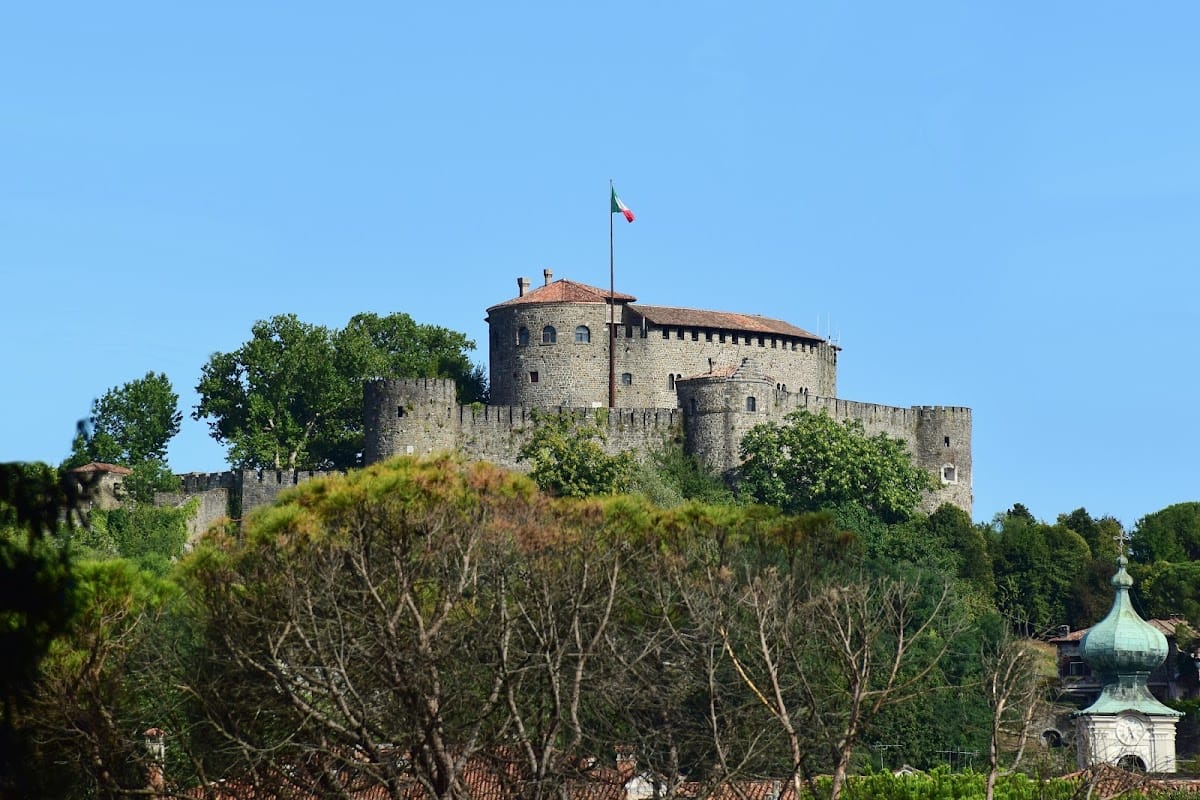
Gorizia Castle is an eleventh-century medieval fortress in Gorizia, Italy. Built on a hill above the city, it gave its name to the House of Gorizia, the medieval ruling dynasty whose members held the title Count of Gorizia.
Origins and Medieval Expansion
The castle’s origins are linked to the first appearance of the title Count of Gorizia around 1146, when it was held by Henry IV of Spanheim. The title indicates that a fortification already stood on the site. In the following generation, it passed to counts from the Puster Valley who were related to the Spanheims.
An early defensive complex probably came before the stone tower or keep. During the thirteenth century, the castle grew to include a lordly residence and a two-storey building. A fortified hamlet stood outside the palisade, and its inhabitants had to build their homes in masonry and assist in defending the castle during attacks.
The castle first appears in a known representation on the seal granted to Gorizia by Albert II in 1307. Although the image is highly stylized, it clearly depicts the keep. Around 1350, the castle probably had an appearance comparable to Bruck Castle at Lienz.
Habsburg and Venetian Control
When Leonhard, the last Count of Gorizia, died in 1500, the county and castle passed to Maximilian I of Habsburg, Holy Roman Emperor. The transfer was arranged by Leonhard’s administrator, Virgilio di Graben, with assistance from his son Luca di Graben in Gorizia.
Maximilian’s forces strengthened the defenses, but the Republic of Venice seized the fortress and territory in 1508 after Maximilian’s unsuccessful attack on Venice during the Battle of Cadore. Venice claimed the County of Gorizia as a fief of the Patriarchate of Aquileia.
Venetian engineers adapted the castle for Renaissance warfare, when firearms had become central to defense, and demolished the eleventh-century keep. Venetian occupation lasted only thirteen months and ended in June 1509. In the following century, the castle served as a prison and barracks, losing much of its medieval appearance. During the eighteenth century, it acquired bastions, powder magazines, and large defensive walls. Some of this work was supervised by the mathematician and astronomer Edmond Halley.
War Damage and Restoration
Bombardment during the First World War damaged the castle. From 1934 to 1937, architect Ferdinando Forlati directed a philological restoration, a reconstruction based on surviving fabric and historical evidence, with assistance from military engineers and Trieste’s fine-arts heritage authority. The project sought to recover a medieval appearance and remove the white plaster added during the Renaissance.
Gorizia Castle is owned by the Commune of Gorizia and houses the Museum of the Middle Ages of Gorizia. Its current listing identifies Otto III of Saxony as its first owner.
Remains
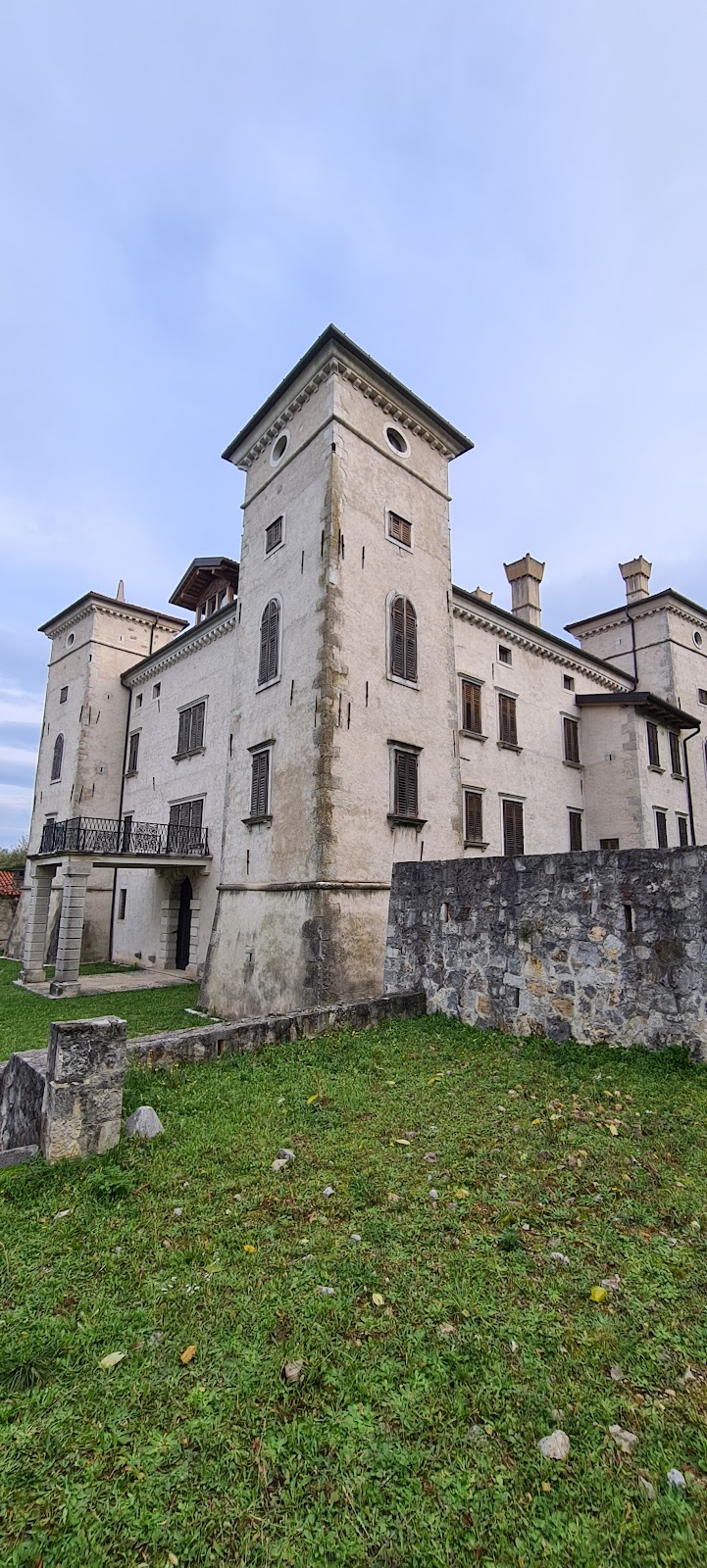
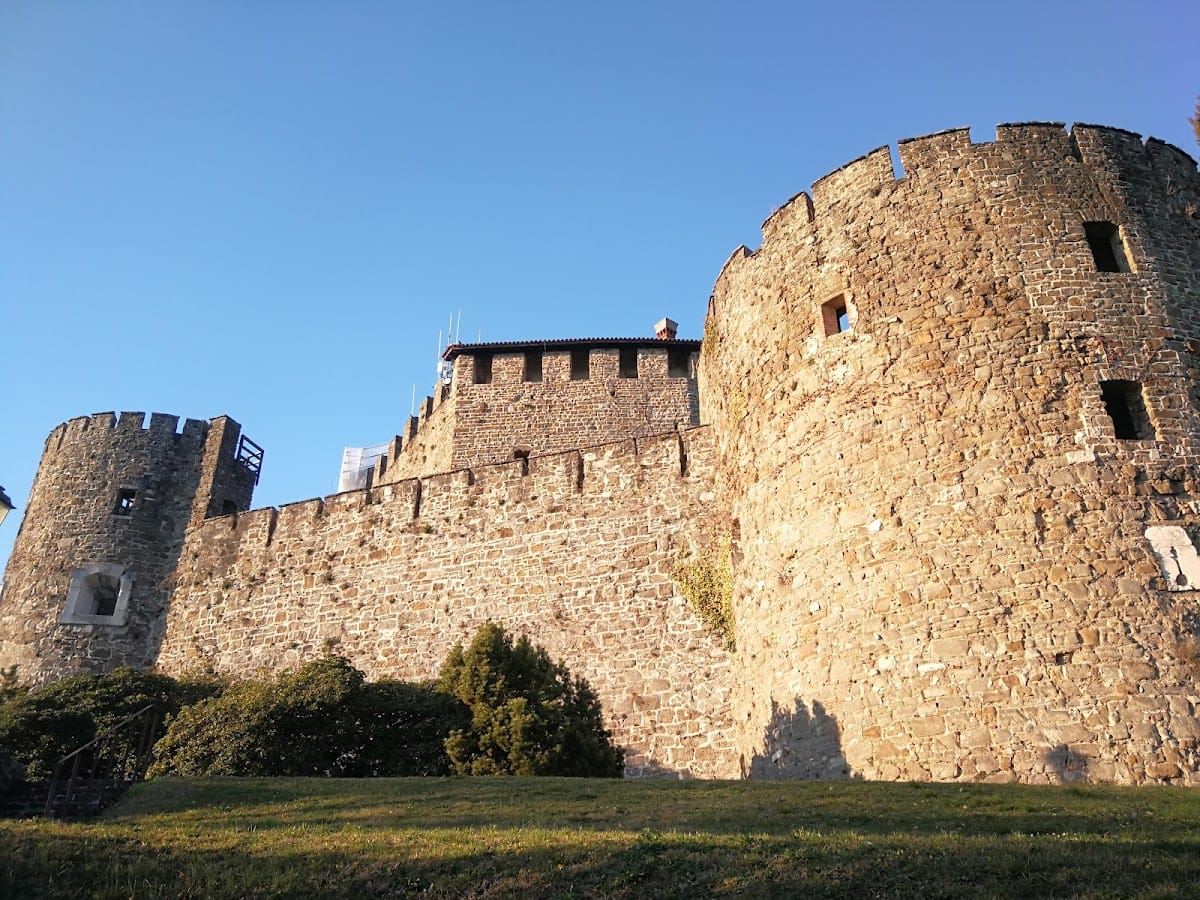
The surviving fortress occupies a hill above Gorizia and is built in rubble-stone masonry. It has been restored and is generally well preserved. The castle’s central courtyard retains the remains of the old eleventh-century tower, while the surrounding hill is covered by a public park.
Early Defenses and Fortified Settlement
The earliest probable defenses consisted of an earthwork, moat, and palisade, possibly forming a small motte-and-bailey complex. These defenses were followed by a stone tower or keep, later enlarged by a lordly residence and a two-storey building. The settlement outside the palisade had its own defensive barrier, and its houses were required to be built in masonry.
Entrance and Venetian Features
The entrance is surmounted by a sixteenth-century statue of the Lion of Saint Mark, the emblem of the Republic of Venice. The statue was not used during the brief Venetian occupation and was placed in its present position in 1919. The castle also contains original furniture and furnishings. Reproductions of bladed weapons and siege engines are displayed inside.