Castle of Canet-en-Roussillon: A Medieval Fortress in France



Visitor Information
Google Rating: 3.9
Popularity: Very Low
Official Website: www.canetenroussillon.fr
Country: France
Civilization: Unclassified
Site type: Military
Remains: Castle

History
The Castle of Canet-en-Roussillon is located in the municipality of Canet-en-Roussillon, France. This medieval fortress was originally constructed by the Franks and is first recorded in the early 11th century, appearing as “Castellum de Caned” in 1013 and “Villa Kanedo” in 1017.
During the mid-11th century, the castle became closely linked to the Canet family, a noble lineage that governed the surrounding region as viscounts. Key figures in this line include Ramon I and Pere Ramon (also known as Pere I), who and their descendants maintained control over the fortress and an extensive territory that included several local lordships such as Sant Miquel de Forques. Over time, through inheritance and marriage, these holdings passed to other noble houses, including the Fenollet, Castro, Pinós, and Fernández de Híjar families, signifying the castle’s ongoing importance in the political landscape of Roussillon.
In the early 15th century, the castle hosted distinguished guests, most notably Emperor Sigismund I, who spent a night there in 1415 while traveling to attend a council in the nearby city of Perpignan. This event highlights the castle’s role as a place of regional significance during that period.
Following the upheavals of the French Revolution, the castle was abandoned and fell into disuse. Local inhabitants later quarried stone from its walls, which caused considerable damage to the structure. Recognition of its historical value came much later, with its official classification as a French historic monument in 1984. Since the 1960s, dedicated restoration efforts have been led by groups such as Les Amis du Vieux Canet, aiming to conserve and rehabilitate the castle remains.
Remains
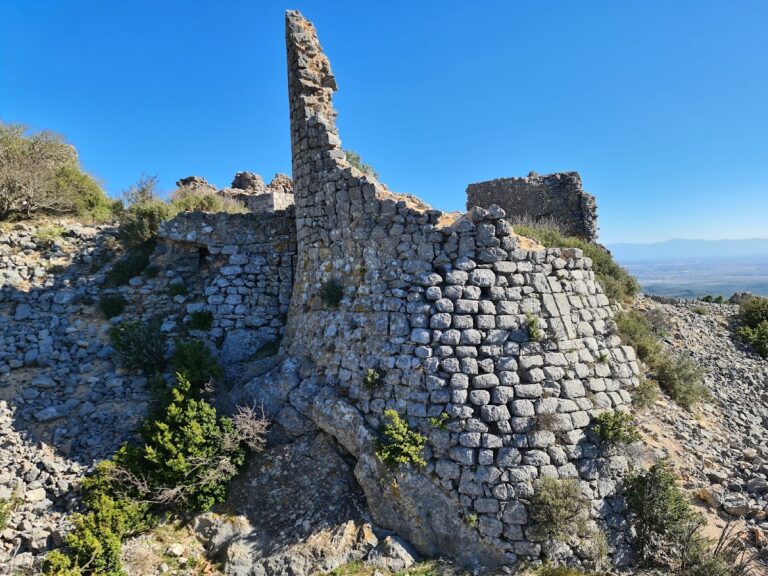
The castle is perched atop a hill north of the old village of Canet-en-Roussillon, overseeing the right bank of the Tet river. Its defensive enclosure is elongated and trapezoidal, stretching about 95 meters in length and 30 meters across. The surrounding walls are built with sturdy talus slopes—a sloping base designed for stability—and reinforced by buttresses along the northern and western sides, though the enclosure does not include flanking towers.
At the heart of the fortress lies the base of the keep, or tower of homage, whose circular foundation measures approximately 8.5 meters outside and 4 meters within. Below this tower is a cistern, an ancient water storage system vital for sustaining inhabitants during sieges.
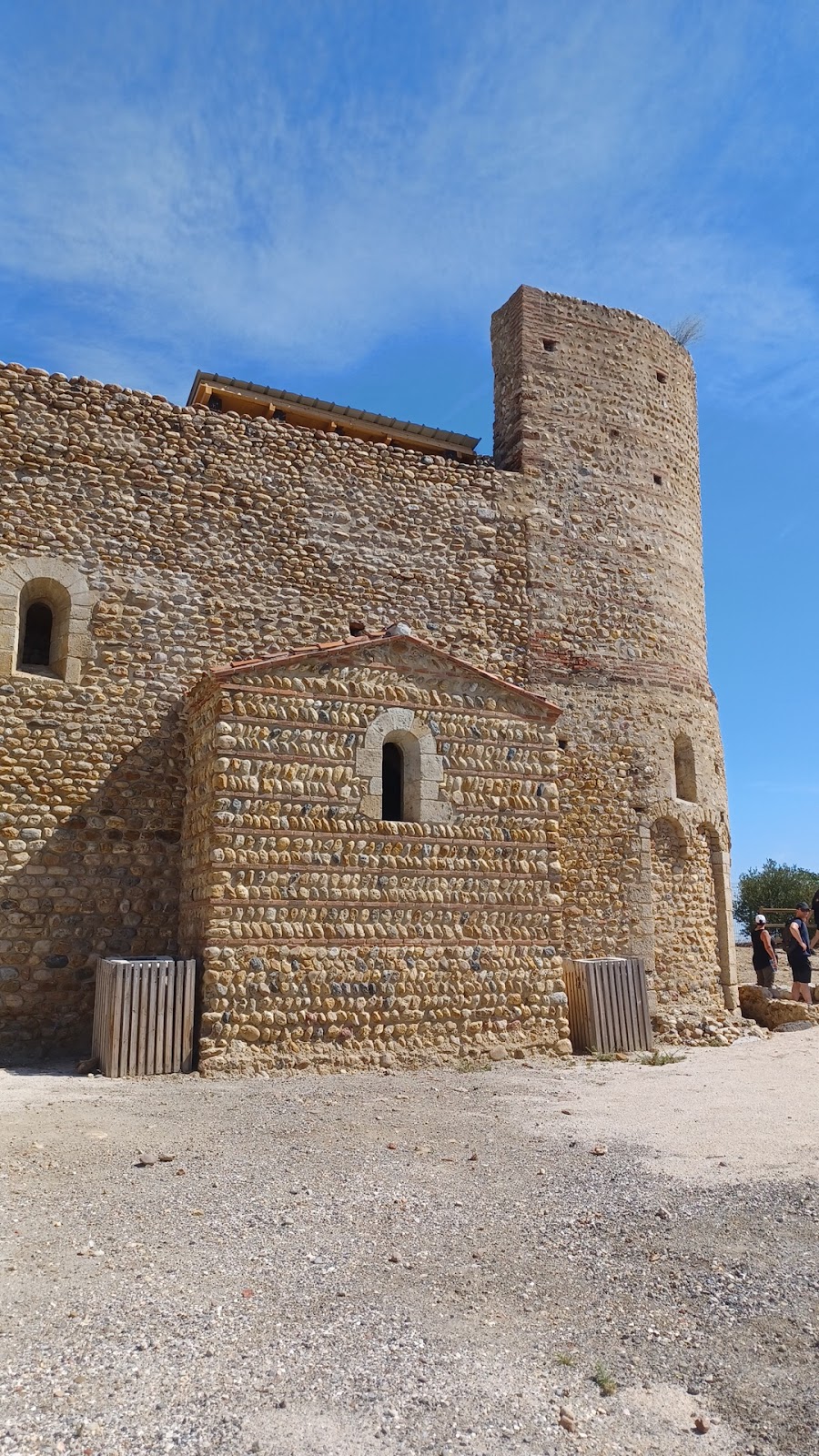
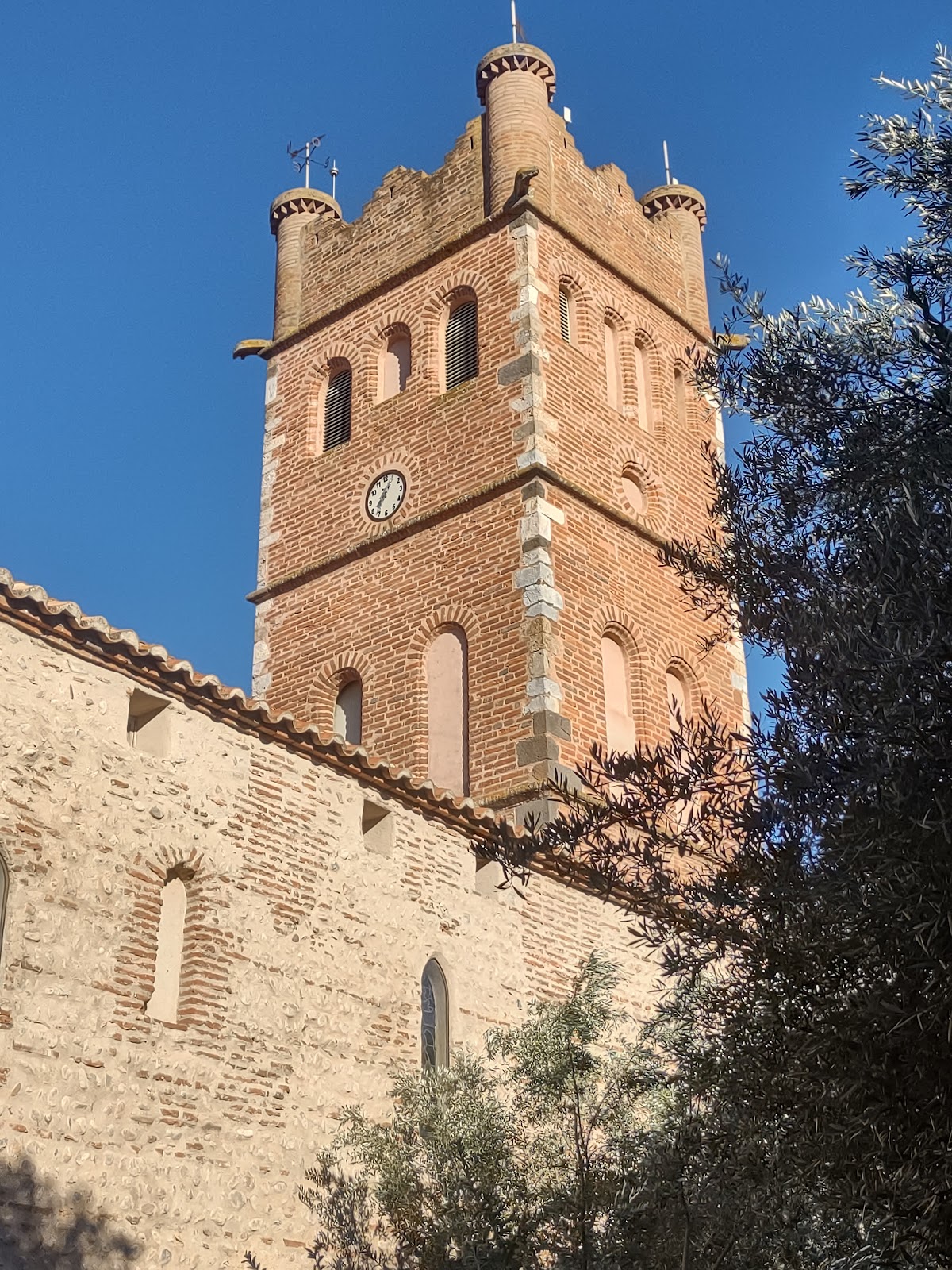
Adjacent to the castle’s core stands the Romanesque chapel of Saint-Martin, originally constructed in 1075 and serving as the parish church. This chapel features a simple single nave capped by a wooden roof, and a semicircular apse vaulted during the 12th century. In the 13th and 14th centuries, the apse was heightened to support a fortified tower, and a smaller chapel was annexed to the north side of the nave, reflecting evolving defensive and religious needs.
Within the castle grounds, a central courtyard, or patio, was framed by galleries upheld by stone columns. This feature dates from the 14th century, partly coinciding with the erection of much of the current outer fortifications. The castle’s construction materials reveal its long history: earlier Romanesque walls were made using orderly rows of river cobbles, while later 14th-century additions combined bricks with cobbles, and modern interventions display brickwork crowning the walls.
Behind the chapel, to the northeast, stands a large ice well known as a “pou del gel,” built in 1688. This deep, insulated pit was used to store ice before refrigeration and remained in use until it was abandoned following the French Revolution.
Downhill from the castle, the old village was once enclosed by defensive walls, marked by at least three gates and fourteen towers called “bestorres.” Of these towers, two remain today. Noteworthy surviving elements include the so-called “Flip-flop” or Angle Tower and fragments near the former Porta del Mar and the site known as Pixa Cabrera.
Since the 1960s, concerted restoration and stabilization work has been carried out on the castle and the village ruins, preserving remaining walls, the chapel, and other features. These efforts continue to protect the site and allow a clearer understanding of its medieval character.
Nearby sites