Château de Fitou: A Medieval Castle in France

Site at a Glance
- Rating
- 3.3
- Popularity
- Very Low
- Country
- France
- Primary era
- Medieval
- Eras represented
- Medieval
- Civilizations
- French
- Site type
- Military
- Remains
- Castle
On this page6 sections
History
Château de Fitou is a medieval castle in France, in the commune of Fitou in the Aude department. Its construction date is unknown, although a Roman villa may have occupied the site earlier. The locality appears in a testament dated 990 as in vila de Fictorius, when it was bequeathed to Ermangaud of Narbonne, a member of the Narbonne nobility.
Lordship and conflict
The territory associated with the castle covered more than 3,000 hectares and reached the frontier of Salses. The Perignan family held full seigneurial rights over Fitou. These were hereditary rights of local lordship and jurisdiction, and the family granted vassals, or subordinate landholders bound by feudal ties, the titles and rights within its authority.
Fitou’s strategic position repeatedly exposed the castle to warfare. It was besieged, burned, and rebuilt several times, passing successively through the hands of many lords. After the fall of Montségur, a fortified settlement that had become a major Cathar stronghold during the Albigensian Crusade, the Lord of Niort, described as a Cathar heretic, converted to Christianity and settled at the castle. The Cathars were members of a medieval Christian dualist movement condemned by the Catholic Church and suppressed in southern France during that crusade.
The Spanish attack and later ownership
In 1635, Cardinal Richelieu, the chief minister of Louis XIII, directed French policy during the war with Spain that formed part of the wider Thirty Years’ War. Twenty-seven months after war was declared, Spanish forces advanced on Fitou in two columns. One came from Claira with 2,000 infantry and 400 cavalry. The other came from Salses with 12,000 infantry and 1,200 cavalry. Despite its walls, the hamlets, village, and castle capitulated during the first assaults.
The Aragon family was the last seigneurial house to occupy Château de Fitou, remaining there until the French Revolution in 1789, the upheaval that transformed France’s political and social order. The castle was looted and burned in 1843. A later prefectural report ordered its destruction, and the ruins were then used for a long period as a stone quarry for building work in the present village. Because the ruins overlooked the village and the municipality could not finance restoration, the building was sold to a private owner.
Restoration and protection
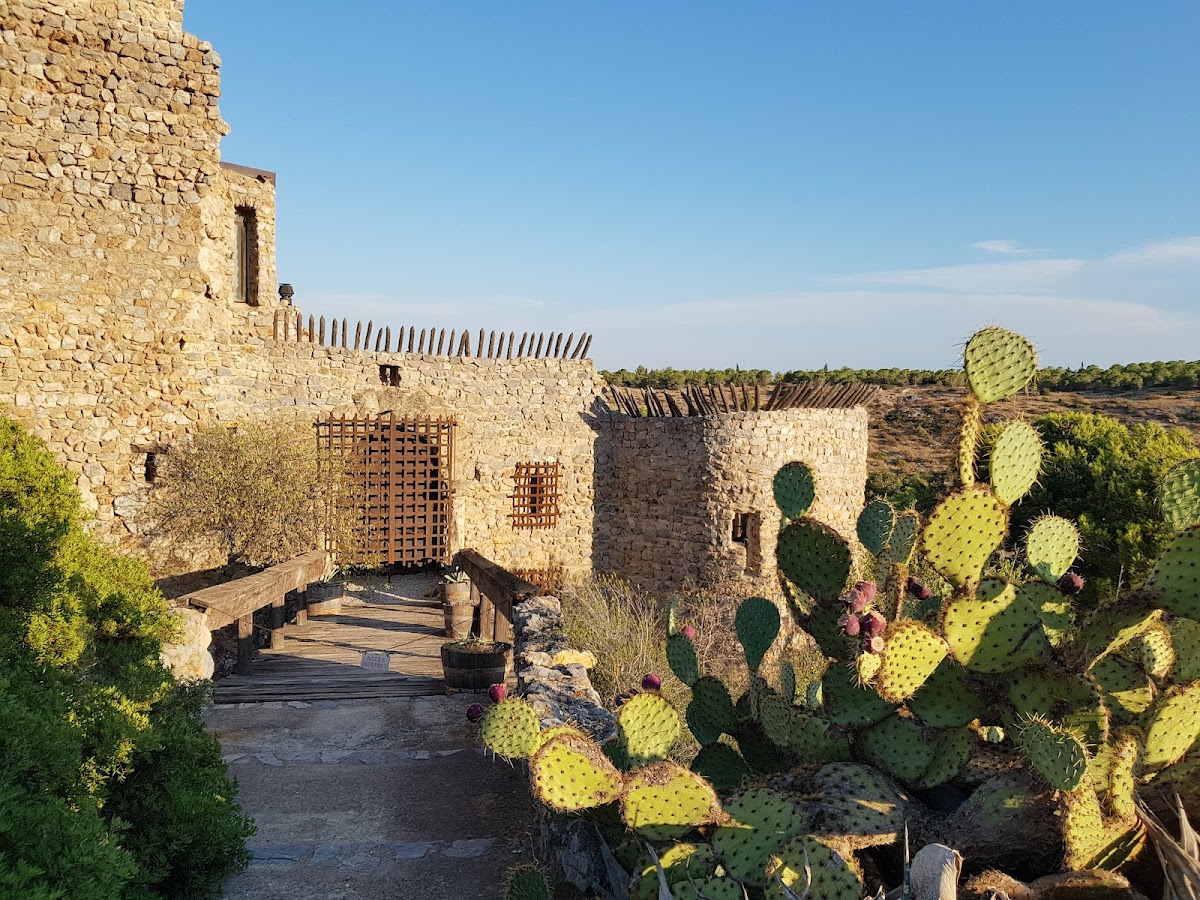
Monsieur and Madame Gaillot, Parisian antique dealers, began restoring the castle in 1972. The work was approximate, and the building later served successively as a discotheque and a museum. It was sold again in 2015. Château de Fitou has been listed as a French historic monument since 1948, a state heritage-protection designation for buildings and sites of recognized cultural importance. Its surroundings have been listed as natural sites since 1942.
Remains
Castle fabric and setting
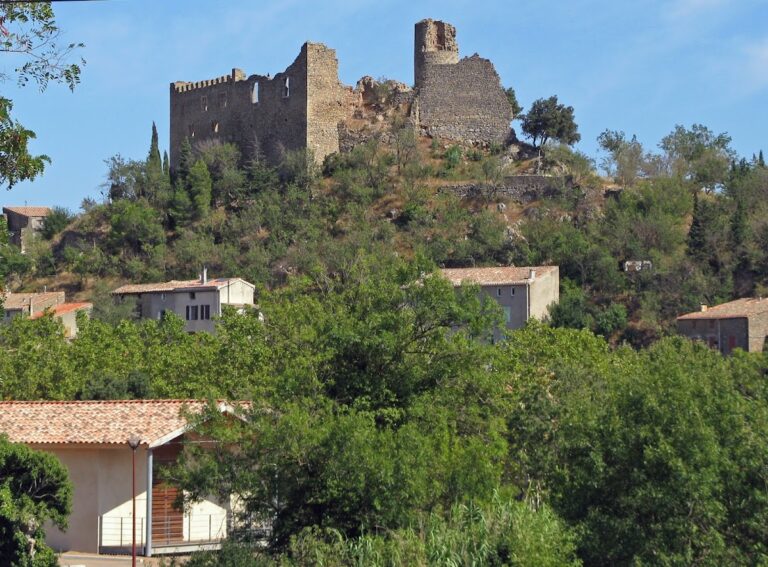
The castle occupies approximately 1,000 square metres on a site above the village of Fitou, with views toward the Leucate lagoons and the sea. The medieval building rises to about 35 metres. Its physical fabric reflects repeated destruction and rebuilding, with successive phases altering the structure over time.
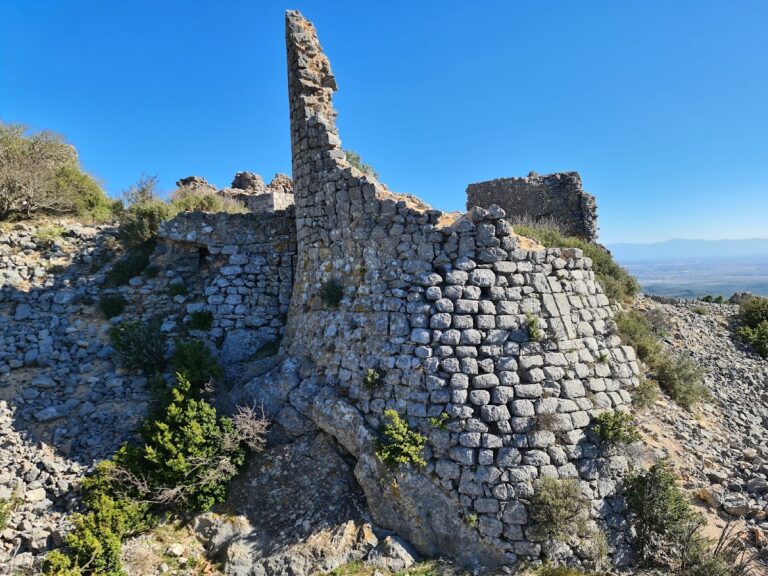
Long use of the ruins as a source of building stone reduced the surviving fabric before the restoration begun in the twentieth century. The restored structure therefore represents a building shaped by repeated rebuilding, later dismantling, and an approximate modern reconstruction rather than a single untouched medieval phase.
Nearby sites