Castle Skuhrov: A Gothic Castle Ruin in Czechia
Site at a Glance
- Rating
- 4.5
- Popularity
- Very Low
- Country
- Czechia
- Primary era
- Medieval
- Eras represented
- Medieval, Modern
- Civilizations
- Holy Roman Empire, Kingdom of Bohemia
- Site type
- Military
- Remains
- Castle
On this page9 sections
History
Castle Skuhrov is a Gothic castle ruin in Czechia near Skuhrov nad Bělou, probably founded at the end of the thirteenth century. Its early history is uncertain. The Dalimil Chronicle, a medieval Czech rhymed chronicle, mentions Mutina of Skuhrov from the Drslavic family among the leaders who resisted the forces of Otto V of Brandenburg, a thirteenth-century ruler whose troops intervened in Bohemian affairs after the death of King Ottokar II. However, the more probable founder was Jan of Meziříčí, who died after 1312.
The lords of Meziříčí
Jan’s son Tas first used the byname “of Skuhrov” in 1303. After Jan’s death, the estate was divided between Tas and his brother Vznata. Vznata received Křižanov in 1338, while Tas retained Skuhrov. Tas served Charles IV, King of Bohemia and Holy Roman Emperor, and was last mentioned in 1359.
Skuhrov then passed to Tas’s sons, Jan and Vznata. After 1361, Jan alone held the estate, and in 1367 he also possessed Rychmberk Castle. He probably died soon afterward, leaving Skuhrov to his brother Vznata, who died before 1384. Although much of Vznata’s property reverted to the ruler because he left no eligible heir, the Skuhrov estate remained with the lords of Meziříčí.
Transfer to the Častolovice family
In 1386, Skuhrov was held by the brothers Jan and Jaroslav of Meziříčí, who probably inherited the castle, although their connection with the earlier owners is unclear. In 1387, they sold Skuhrov and Rychmberk to Půta of Častolovice and Boček of Kunštát and Poděbrady. On 17 June that year, the purchasers agreed to hold half of each estate while keeping them under joint ownership. Before 1390, Půta inherited Boček’s share.
Půta later transferred Skuhrov as a dowry to Anna of Oświęcim, the wife of his son Půta II of Častolovice. On 2 June 1396, he enlarged the dowry to include Rychmberk, Solnice, and other property. After Půta II died in 1403, Anna administered the estate, first from Rychmberk and later from Kłodzko.
Late medieval decline
Events at Skuhrov are not known for the period up to 1454. In that year, the castle reverted to the ruler as an escheat, meaning property returned to the ruler when its holder died without an eligible heir. King Ladislaus the Posthumous, King of Bohemia and Hungary, granted Skuhrov to Zdeněk of Konopiště of the Šternberk family, who transferred it to George of Poděbrady, later King of Bohemia.
Historian Tomáš Durdík proposed that George of Poděbrady probably had to conquer Skuhrov after Jan Kolda of Žampach seized it. The castle may have been damaged during this conflict. In 1495, William of Pernštejn was purchasing the Skuhrov estate, but the sale contract referred only to the town. From that time, the town belonged to the Potštejn estate. When the estate was sold in 1558, Skuhrov Castle was described as deserted.
Protection of the ruins
The ruins have been protected as a cultural monument of the Czech Republic since the designation recorded in 1964. The municipality of Skuhrov nad Bělou is the present owner.
Remains
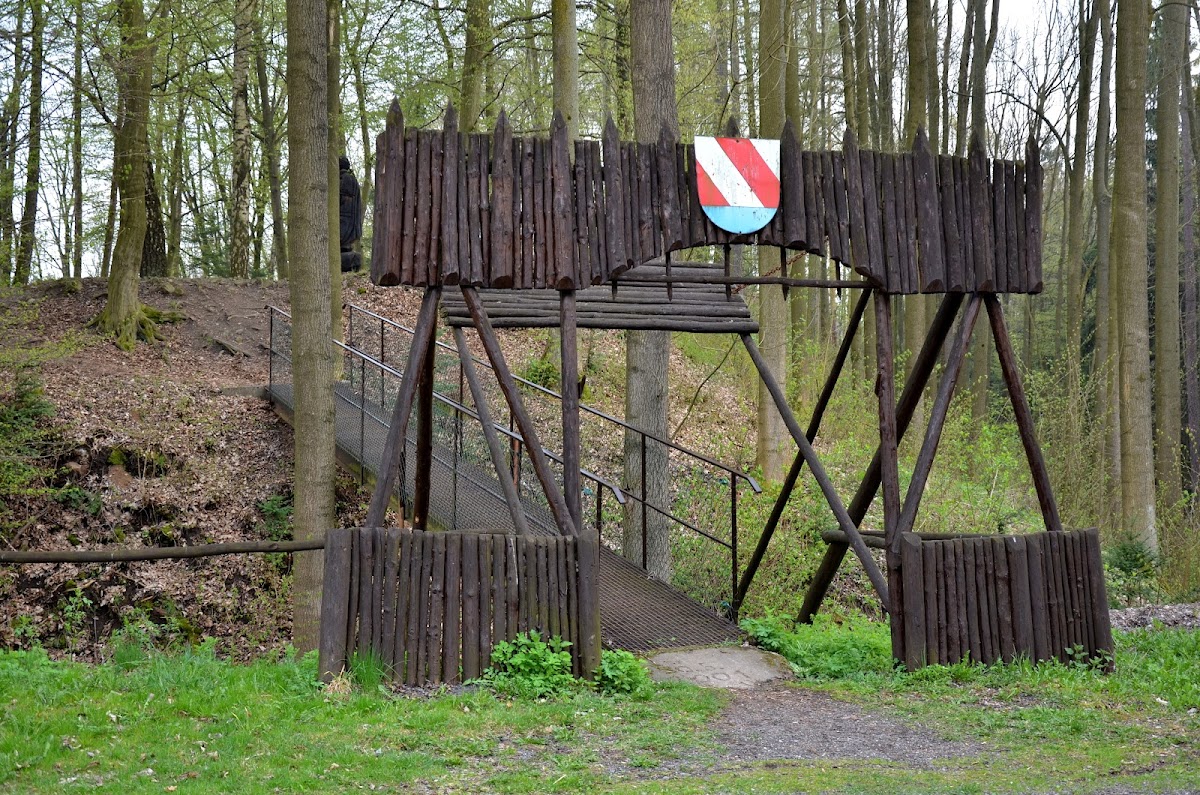
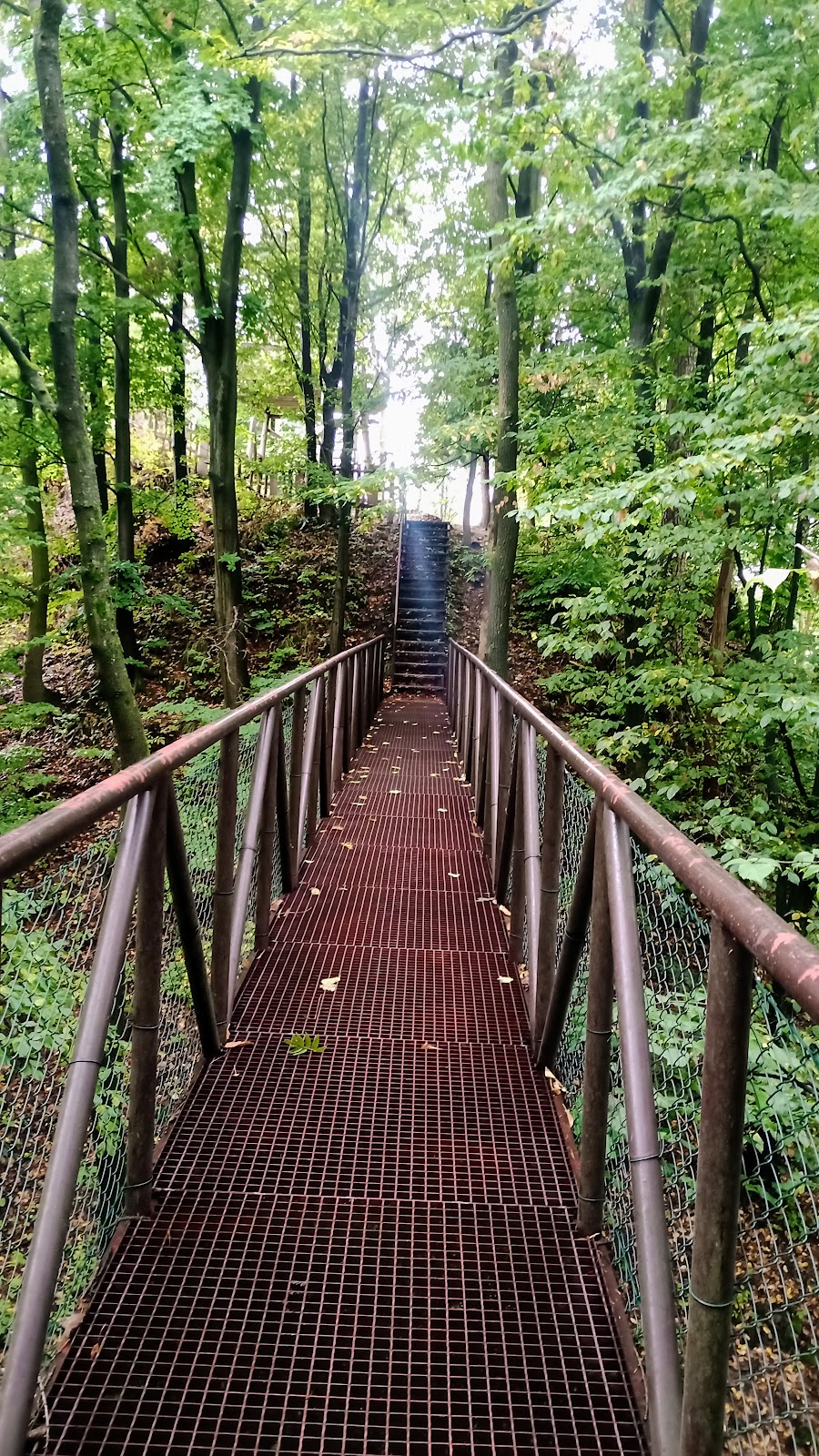
Castle Skuhrov occupies a promontory above the right bank of the Bělá stream. The site consists of a forecourt and a slightly trapezoidal castle core, separated and protected by ditches and ramparts. Its Gothic defensive arrangement survives most clearly in the perimeter wall of the core and in the earthworks surrounding the approach.
Forecourt defenses
The entrance probably led through a tower-like gate in the northeastern corner of the forecourt. A zwinger, or outer defensive passage between lines of fortification, surrounded the front and western sides, with an additional ditch beyond it. A second neck ditch protected access to the castle core. It continues along the western and southern sides, where it is accompanied by an outer rampart.
Castle core
The castle core had a slightly trapezoidal plan. Its perimeter wall is the best-preserved part of the ruin, while buildings formerly occupied the southern and eastern sides. The rounded northeastern corner was once interpreted as a bergfried, the principal defensive tower of a medieval castle, but the surviving masonry does not indicate that a tower stood there. Based on a wall running parallel to the front wall, Tomáš Durdík classified Skuhrov hypothetically either as a castle centered on a shell wall or, more probably, as a castle with two major palace buildings.
Theater remains
Behind the former front wall is a large rectangular depression. It is the surviving remnant of an orchestra pit belonging to a theater dating from 1949, adding a later layer to the physical history of the castle site.