Castle of Bonilla de la Sierra: A Medieval Episcopal Fortress in Spain

Visitor Information
Google Rating: 4.2
Popularity: Low
Country: Spain
Civilization: Unclassified
Site type: Military
Remains: Castle

History
The Castle of Bonilla de la Sierra is located in the municipality of Bonilla de la Sierra, Spain. It was originally constructed during the 12th century by the Christian kingdoms of medieval Castile.
The castle’s early history centers on its ecclesiastical ownership, as it served as a summer residence for the bishops of Ávila. From the 14th century onward, the castle underwent significant renovations, indicated by the presence of various episcopal coats of arms marking different construction phases. These changes reflect the importance of the castle not only as a seasonal home but also as a political and religious center where church authority blended with civil power.
Throughout its medieval history, the castle hosted important events. Notably, an Episcopal Synod took place within its walls on July 4, 1384, convened by Bishop Diego de los Roeles. The castle also provided refuge in 1440 for King Juan II, who was protected by Bishop Lope de Barrientos amid political turmoil of the time.
Several bishops were instrumental in shaping the castle’s form and function. Sancho Blázquez Dávila, who held office from 1312 to 1348, initiated extensive remodeling projects that largely defined the castle’s medieval character. Later, in 1552, Bishop Diego de Álava undertook repairs focusing on the palace area and the Mirón gate. Renovations continued sporadically into the 17th and 18th centuries under figures such as Bernardo Atayde de Lima Perera, José del Yermo y Santibáñez, and Fray Julián de Gascuña, ensuring the castle’s upkeep and adaptation.
The castle remained in ecclesiastical hands and served as a summer residence until the 19th century. Its ownership changed following the Desamortización, a period of secularization and confiscation of church properties. Additionally, the castle saw habitation during the relocation of the Episcopal Palace of Ávila, which began in 1771. In more recent times, the castle has passed into private ownership and has undergone restoration efforts to preserve its historical fabric.
Remains
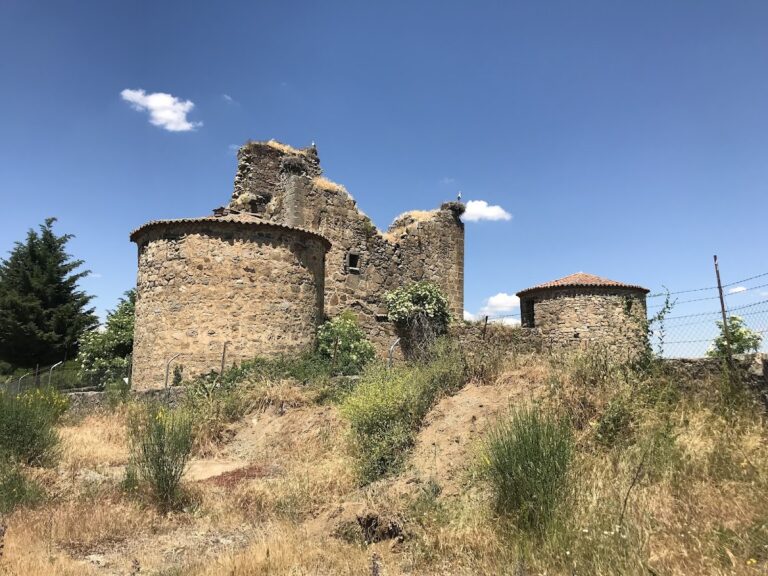
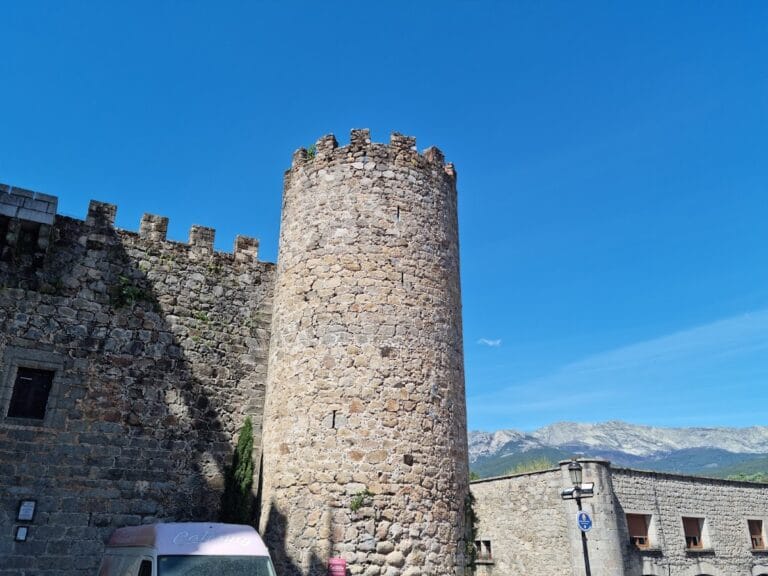
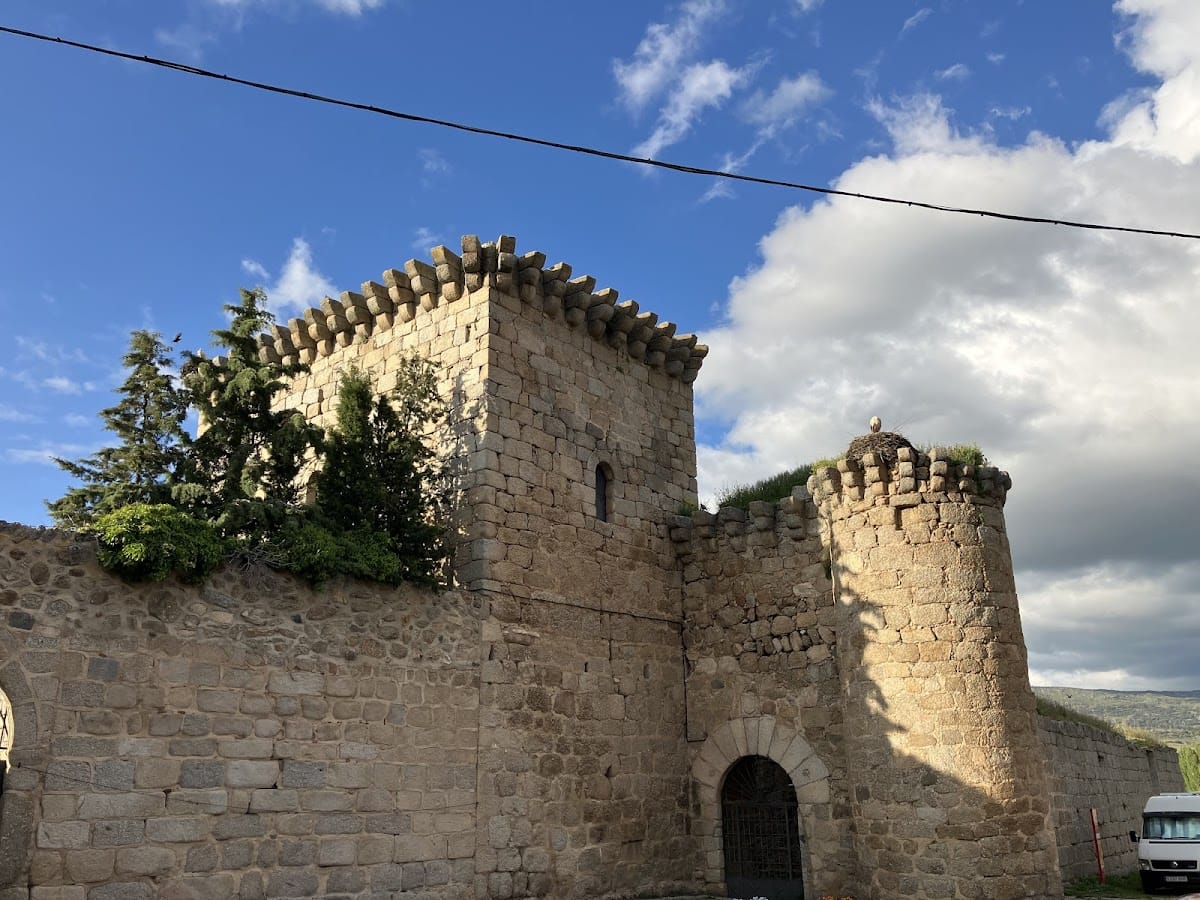
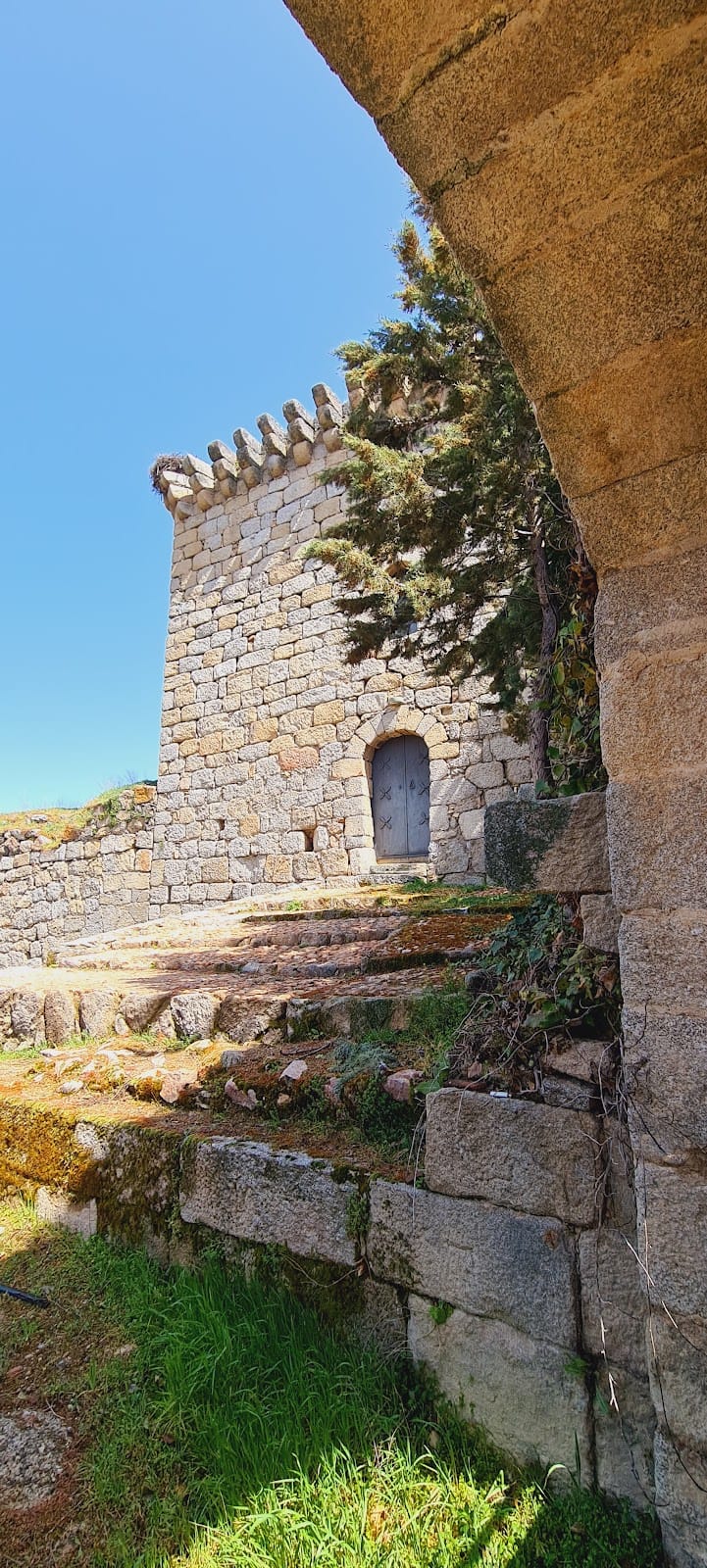
The Castle of Bonilla de la Sierra is situated within a broader fortified enclosure, with the castle itself positioned at the northwestern corner. This placement originally strengthened one of the enclosure’s now-lost gates. The main entrance to the castle was located on its west side, safeguarded by both a corner bastion and the prominent keep tower. Over time, alterations included the creation of a new gate at the southwest corner and a high-level entrance to the keep tower that lies outside the primary enclosure. Several semicircular arched posterns, small secondary doors often used as emergency exits, are present and have undergone considerable restoration.
The core of the castle dates back to the 14th century and consists of a square courtyard surrounded by multi-story rooms. Many of these rooms experienced rebuilding or modifications during renovations in the 16th century. Among these are a porch area, a granary divided into three chambers, the main keep tower, and stables constructed of brick and adobe. There is also a section known as the “rabbit courtyard,” which forms part of the compound’s internal spaces.
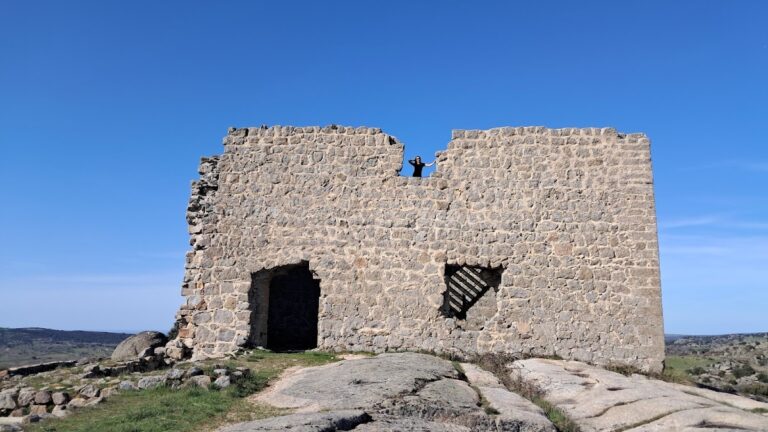
The keep tower stands as the most well-preserved structure within the castle. Its ground floor features a flat ceiling decorated with painted designs, while the second floor contains a brick barrel vault supported by transverse arches adorned with geometric motifs. Although the topmost floor of the tower has been largely lost, the lower levels retain vivid wall paintings. These include a red dado—a lower wall panel—divided into sections featuring geometric and plant-inspired patterns. Among the figurative decorations are a knight carrying a shield with a striped design influenced by Mudéjar (a style developed by Muslim artisans in Christian territories), scenes of two women engaged in conversation, two men dressed in 14th-century attire, two knights jousting, and a centaur playing a lyre. These images are bordered above by a sawtooth-shaped frieze, an ornamental band adding to the decorative scheme.
Collectively, the remaining walls, gates, rooms, and richly painted interiors demonstrate the castle’s layered history, combining defensive purposes with residential and ceremonial functions associated with its role as an episcopal stronghold.
Nearby sites