Persenbeug Castle: A Classicist Castle in Austria


Site at a Glance
- Rating
- 4.4
- Popularity
- Low
- Country
- Austria
- Primary era
- Early Modern
- External website
- Open
- Eras represented
- Medieval, Early Modern
- Civilizations
- Holy Roman Empire
- Site type
- Domestic
- Remains
- Castle
On this page5 sections
History
Medieval Fortress and the 1045 Disaster
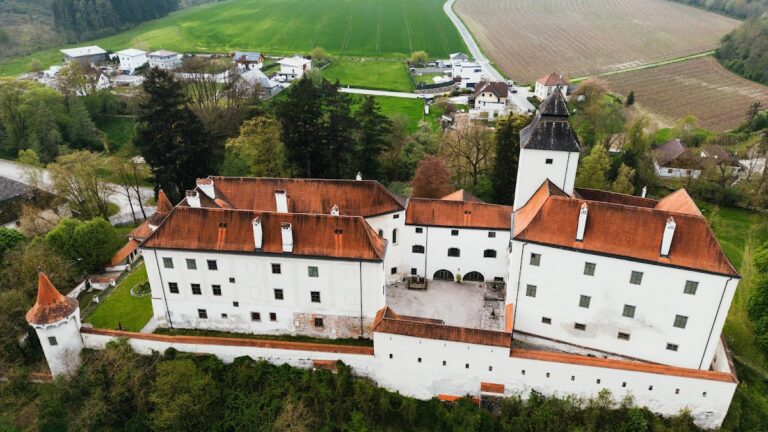
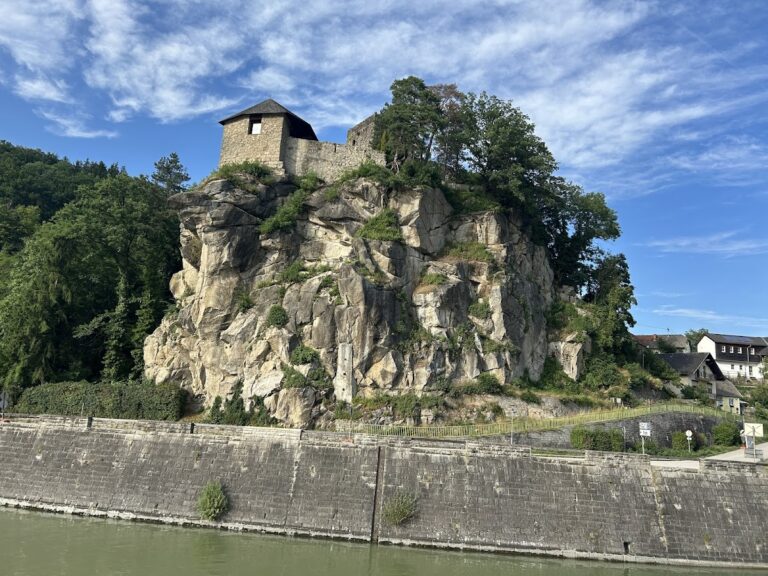
Persenbeug Castle is a Classicist castle in Austria, in the municipality of Persenbeug-Gottsdorf. Its predecessor fortress was established on Bösenberg above the river, where the site was first recorded in 907 after Sieghart, Count of Sempt and Ebersberg, seized and fortified it.
The Sempt-Ebersberg line ended in 1045 with the death of Adalbero II. During the formal settlement of his estate at the castle, King Henry III, a medieval German king who later became Holy Roman Emperor, was present when the floor of the knights’ hall collapsed beneath the assembled company. Henry escaped with minor injuries. Bruno, Bishop of Würzburg, and Altmann, Abbot of Ebersberg, were killed, and Adalbero’s widow, Richlind, is also said to have died in the disaster. A knights’ hall was a large ceremonial and communal room used for gatherings, feasts, and formal proceedings.
Habsburg and Hoyos Ownership
Persenbeug changed hands repeatedly in the following centuries but remained in Habsburg possession until 1593. It then passed to the Hoyos family, who expanded the complex and gave it the architectural form associated with the present castle.
Imperial Estate and Dynastic Birthplace
On 3 December 1800, Emperor Francis I of Austria purchased the castle and the Persenbeug estate as private property. Around the same time, the Gutenbrunn estate also entered his private holdings. Through several inheritances, the two estates later passed to Emperor Franz Joseph I, who gave them to his daughter Marie Valerie in 1916.
The future Emperor Charles I of Austria was born at Persenbeug Castle on 17 August 1887. Charles I was the last Austrian emperor, reigning from 1916 to 1918 as the Habsburg-Lorraine dynasty ruled the Austrian Empire and later the Austro-Hungarian monarchy. The castle and its associated estate are currently owned by descendants of Marie Valerie from the Habsburg-Lorraine and Waldburg-Zeil families. The estate covers approximately 13,700 hectares, predominantly forested, and includes Schloss Rorregg in the Yspertal. Persenbeug Castle is legally protected as a historic monument.
Remains
Persenbeug Castle is a Classicist castle building whose setting derives from an earlier fortified site on Bösenberg above the river. The predecessor fortress occupied the elevated position, while the present architectural form belongs to the expansion undertaken by the Hoyos family after 1593.
The medieval knights’ hall was part of the earlier castle complex and served as the setting for the 1045 estate settlement. Its floor collapsed under the weight of the gathering, linking this architectural space directly to one of the site’s most consequential recorded events.
Nearby sites