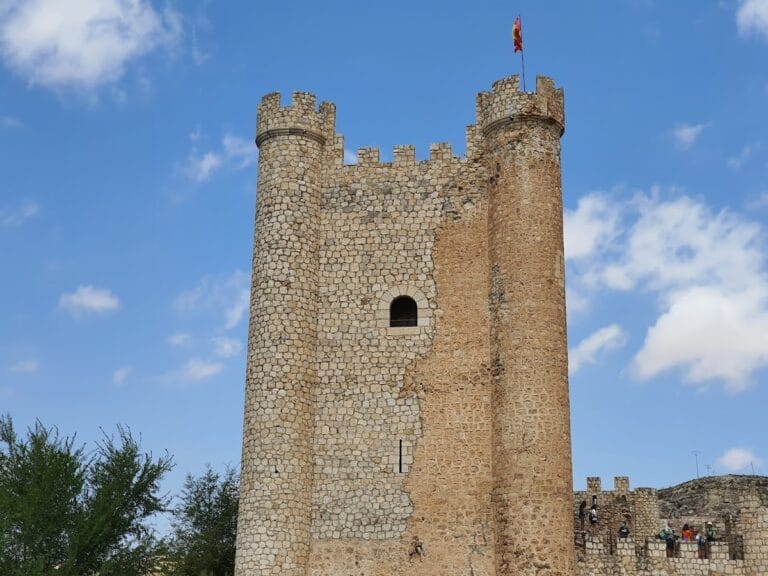
Castle of Ayora: A Historic Fortress in Spain



Visitor Information
Google Rating: 4.4
Popularity: Low
Official Website: ayora-turismo.es
Country: Spain
Civilization: Unclassified
Site type: Military
Remains: Castle

History
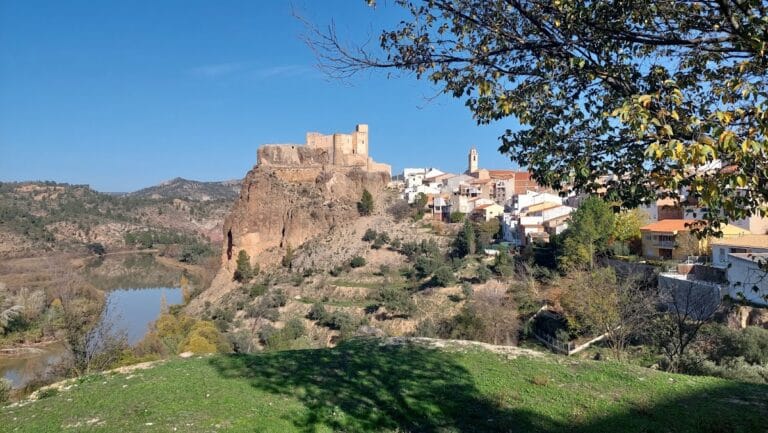
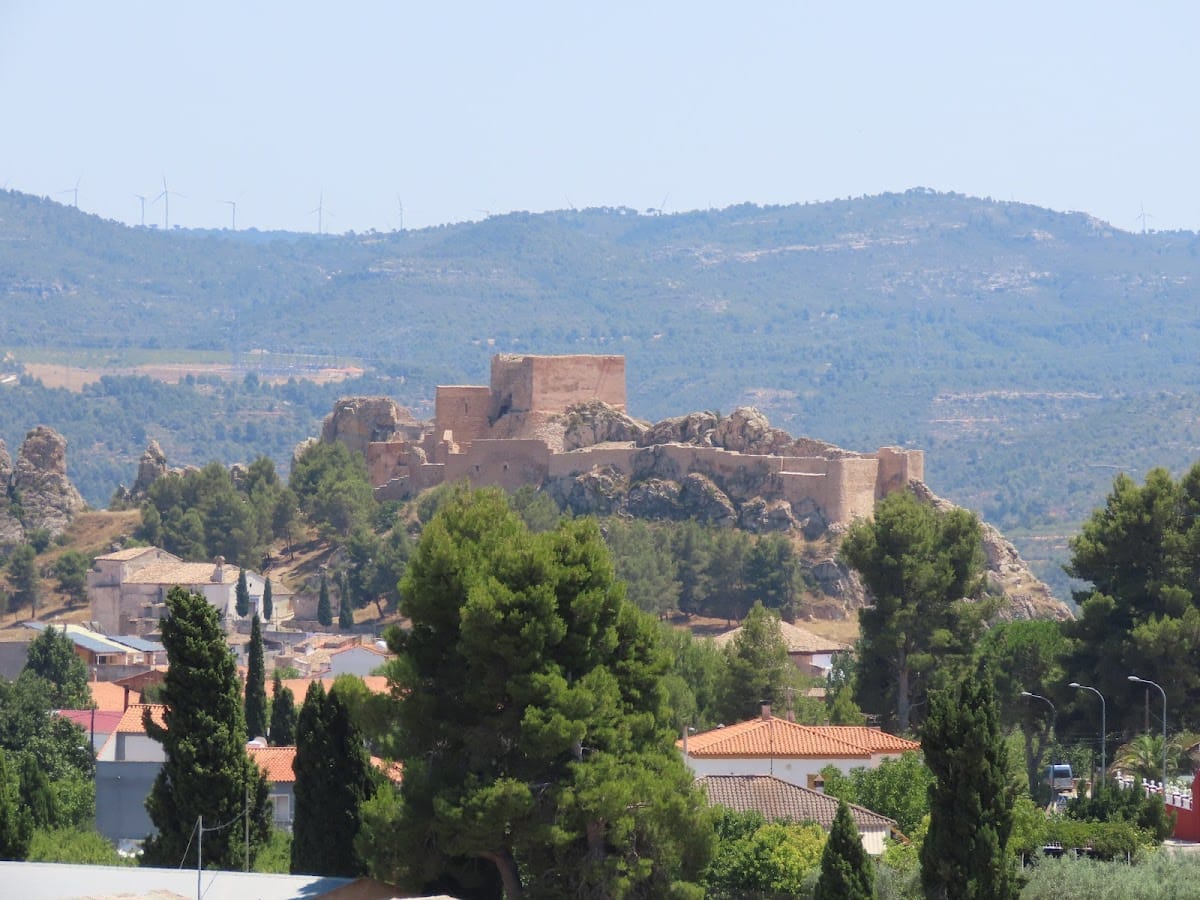
The Castle of Ayora is located in the town of Ayora in Spain. Its origins trace back to an earlier Muslim fortress, which occupied a strategic hilltop at 552 meters above sea level in the center of Ayora. This original structure was noted by the 12th-century Muslim geographer Muhammad al-Idrisi, indicating its early significance in the region.
Following the Christian Reconquista in the mid-13th century, the castle was substantially rebuilt. Between 1239 and 1243, the Aragonese reconquered the Ayora Valley, and the castle was reconstructed atop the Muslim foundations. Control over the area alternated between the kingdoms of Castile and Aragon through various treaties, including the Treaty of Almizra in 1244, the Treaty of Campillo in 1281, and the Treaty of Elche in 1305. Ultimately, these agreements integrated the valley and its castle into the Kingdom of Valencia, reflecting the complex political landscape of medieval Spain.
During the 14th and 15th centuries, the castle functioned as a feudal lordship. It came under the ownership of Admiral Bernardo de Sarriá before being acquired in 1492 by Don Rodrigo Díaz de Vivar y Mendoza, who was the first Marquis of Cenete. His daughter Mencía de Mendoza inherited the fortress and undertook important renovations in the 16th century, including the construction of a new southern gate known as the Puerta Falsa.
In the early 17th century, the region experienced turmoil connected to the Moriscos—Muslims who had converted to Christianity. After a rebellion against royal authority, these families were expelled in 1609, resulting in the near depopulation of the Ayora Valley. This demographic change had a lasting impact on the castle’s surrounding area.
The castle suffered significant damage during military conflicts in the 18th and early 19th centuries. In 1707, troops loyal to King Philip V attacked and burned it amid the War of the Spanish Succession, leading to its abandonment. Further destruction followed in 1812 when French forces occupied the site during the Napoleonic wars. In recognition of its historical value, the Castle of Ayora was declared a Bien de Interés Cultural, a protected cultural heritage site, in 2006.
Remains
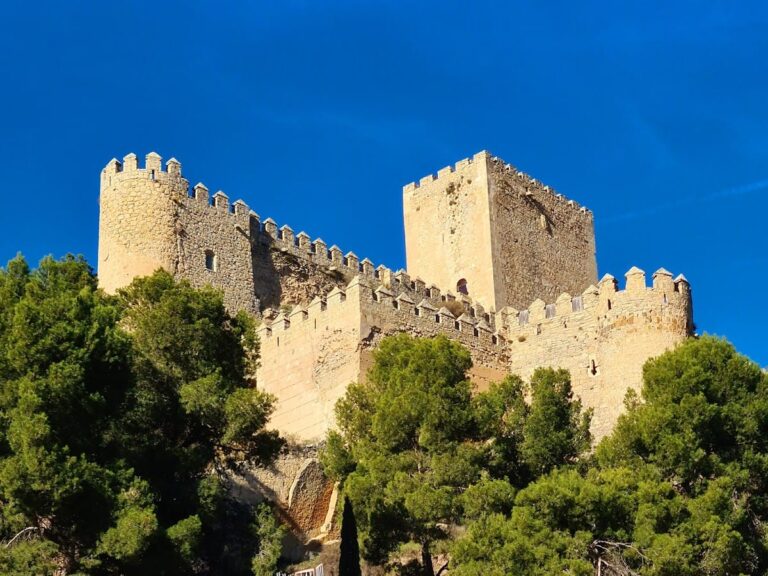
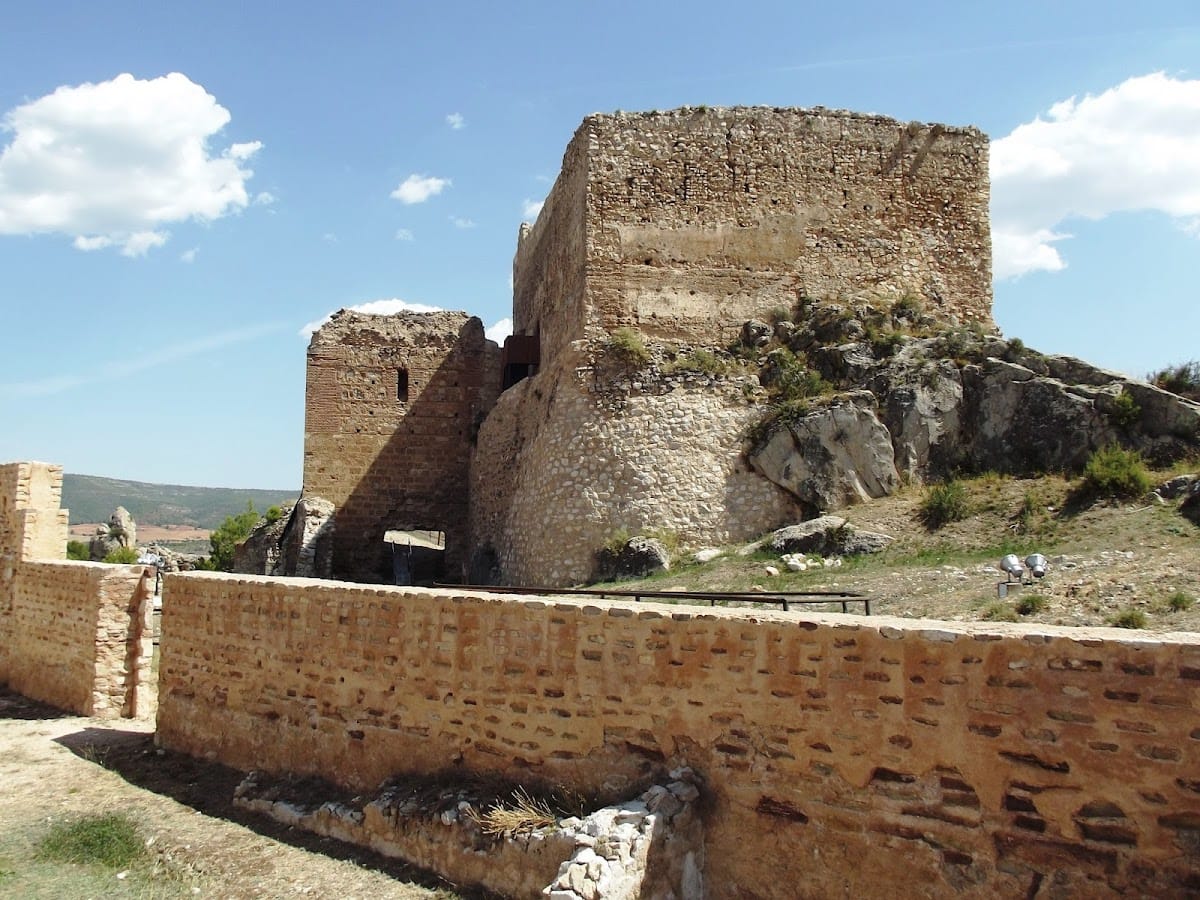
The castle’s plan is notably elongated, shaped by the contours of the hill on which it sits. At its center stands a large square keep, also called the tower of homage, built using masonry combined with finely cut stone blocks known as ashlar. This construction incorporates remnants of earlier Muslim rammed earth techniques, demonstrating a blend of architectural influences over time.
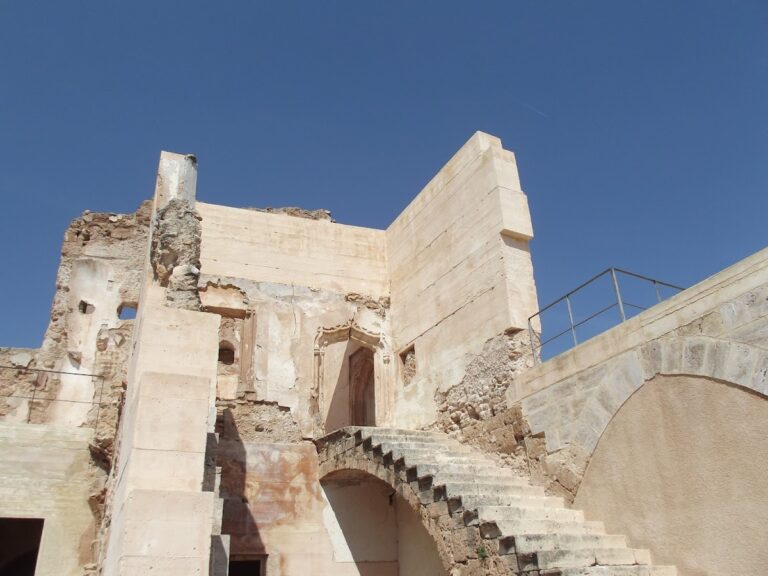
The fortress complex includes a multi-story palace residence with four floors, which served as the noble living quarters. Two fortified courtyards are found within the castle grounds. The larger, named Plaza de Armas, is distinguished by its geometric pebble pavement, a decorative feature laid directly on the ground. To the south lies a smaller plaza, identified as the patio of the palace-fortress once inhabited by the Marchioness of Cenete.
Additional sections of the castle accommodated housing for soldiers and servants, along with practical facilities such as cisterns—known locally as aljibes—for collecting and storing rainwater. Gardens were also part of the site’s layout, contributing to its residential and defensive functions.
Defensive elements include roughly 900 meters (about 0.62 miles) of walls standing approximately six meters high. Several of these walls are reinforced by towers, mostly square in shape except for one semicircular tower. The fortifications were complemented by moats and other water defenses, helping to secure the castle against enemy attacks.
Access to the castle was controlled via two main gates. The northern entrance connected the castle with the upper neighborhood of the town, known as Barrio Alto. The second, called Puerta Falsa, was constructed in the 16th century under Mencía de Mendoza’s direction. This gate is notable for its semicircular arch made of reddish limestone ashlar stones. It is framed by an asymmetrical stone molding, styled as an alfiz—a rectangular border commonly seen in Islamic architecture. Above the gate once hung the coat of arms of the Marquisate of Cenete, though it has been lost over time.
Near the Puerta Falsa remain fragments of a decorative baseboard crafted to imitate a column attached to the wall, complete with a carved capital and base. Above the archway are two corbels, which originally supported a machicolation—an overhanging defensive feature allowing defenders to drop objects or substances onto attackers below. Today, access to the Puerta Falsa is blocked by a quarry situated directly in front, which caused this gate to cease functioning as the castle’s main entrance.
Together, these remains provide insight into the castle’s evolution through centuries of occupation, reflecting shifts in military technology, residential needs, and stylistic influences from both Islamic and Christian traditions.
Nearby sites