Castle of Allemagne-en-Provence: Medieval Keep and Renaissance Residence


Site at a Glance
- Rating
- 3.9
- Popularity
- Low
- Country
- France
- Primary era
- Medieval
- External website
- Open
- Eras represented
- Medieval, Early Modern
- Civilizations
- County of Provence, French
- Site type
- Domestic
- Remains
- Castle
On this page8 sections
History
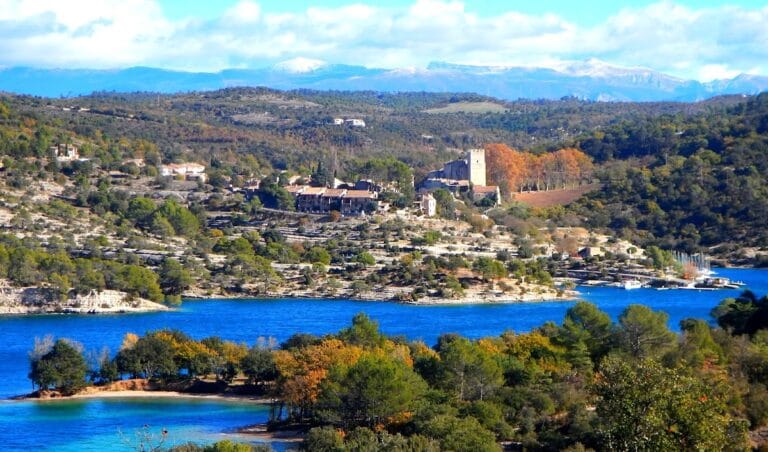
Castle of Allemagne-en-Provence is a historic castle in France, begun in the early fifteenth century in the Gothic style after an earlier keep had been recorded at the site. It stands near the Colostre, a tributary of the Verdon, and was initially intended as a residence. The castle was classified as a French historic monument in 1986.
The Castellane stronghold
The barons of Castellane held the site. After being expelled from their fief for supporting the revolts of Marseille, they took refuge here in the mid-thirteenth century behind an enclosure with five towers. An earlier keep, the strongly fortified principal tower of a medieval castle, was documented in 1380.
The present castle was begun by François de Castellane and completed by his son, Melchior de Castellane, at the beginning of the fifteenth century. The building therefore grew from an earlier defensive foundation into a residence for the Castellane family.
Conflict and Renaissance development
In 1586, Jeanne de Grasse held the castle for sixteen days against the Catholic League, a Catholic political and military movement active during the French Wars of Religion. She was waiting for a Protestant relief army led by her husband, Nicolas du Mas de Castellane. Nicolas was killed by a musket shot as he approached the castle after the battle.
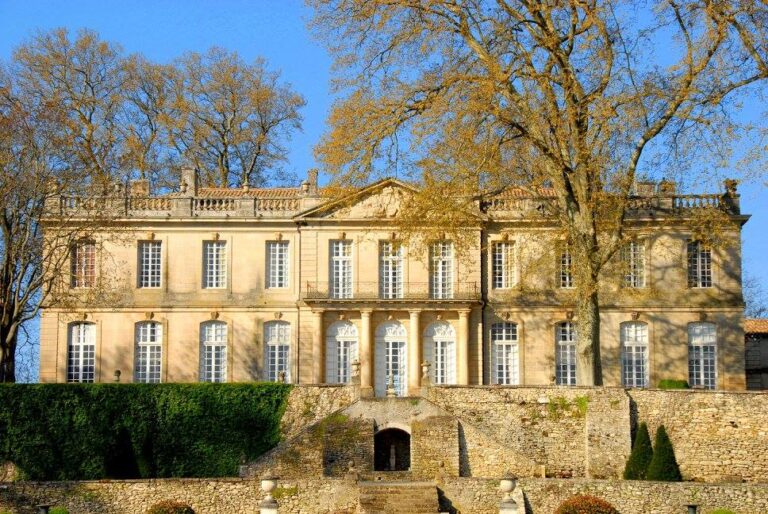
The Castellane family retained ownership until the end of the sixteenth century. During the sixteenth century, the castle was expanded with residential buildings around a rectangular courtyard, and richly decorated windows were inserted into the building. These changes gave the complex the character of a Renaissance manor, a residence shaped by architectural forms and ideals that spread through Europe from the Renaissance onward.
Later ownership and changing uses
After the Castellane period, the castle passed through several Provençal families. The family of the Marquis Rippert-Monclar began building work and restoration in 1839, and his son, François Rippert-Barret, Marquis of Monclar, continued the campaign.
In 1936, François Rippert-Barret’s widow bequeathed the castle to the free schools of the dioceses of Digne and Avignon. Shortly after the Second World War, the confectioners’ union of Apt purchased it and converted it into a holiday camp, a use that continued until 1977. Mr. and Mrs. Ruger then purchased the castle. It remains privately owned, and its historic-monument classification dates from an order of 2 September 1986.
Remains
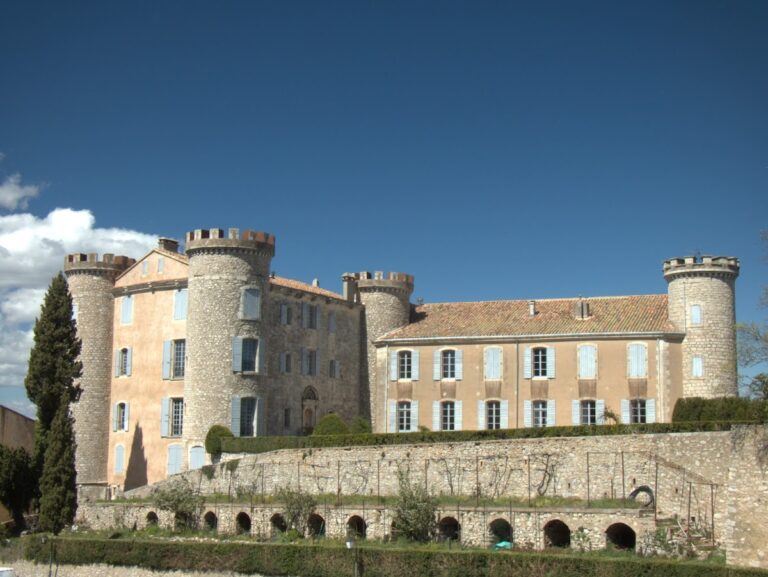
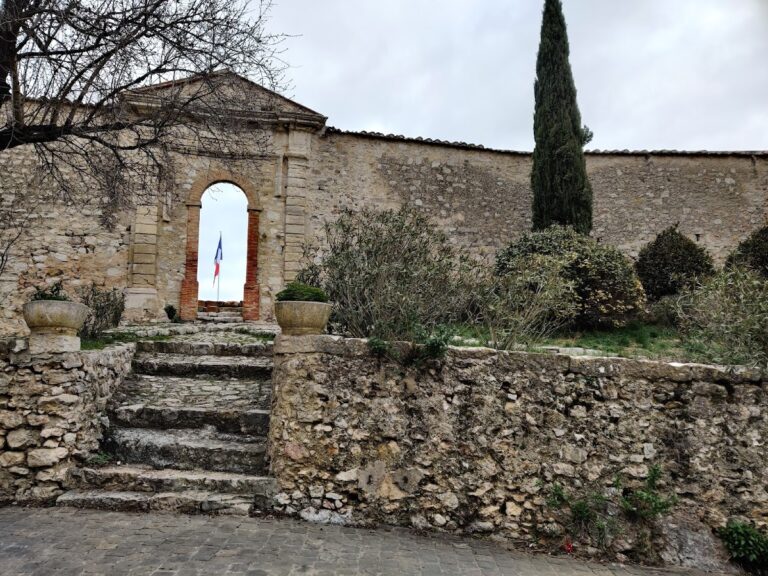
The surviving complex brings together a medieval keep, a Renaissance manor, and a Provençal farmhouse in a Gothic architectural setting near the Colostre. Its layout includes residential buildings arranged around a rectangular courtyard and round towers flanking the complex.
The medieval keep
The castle originally included a large square keep. This strongly fortified principal tower represents the medieval element of the complex and links the present residence to the earlier fortified site recorded in 1380.
The Renaissance residence
Sixteenth-century alterations transformed the castle’s residential character. Richly decorated windows were inserted into the building, while additional living quarters were arranged around the rectangular courtyard. These features form the Renaissance manor within the larger castle complex.
Courtyard, towers, and farmhouse
The residential buildings are organized around a rectangular courtyard and are flanked by round towers. Alongside the medieval and Renaissance elements, the complex includes a Provençal farmhouse, giving the castle its combined character as a fortified residence and regional domestic ensemble.
Nearby sites