Castillo del Collao: An Early Medieval Fortress in Cantabria, Spain


Visitor Information
Google Rating: 3.4
Popularity: Very Low
Google Maps: View on Google Maps
Country: Spain
Civilization: Unclassified
Remains: Military

History
Castillo del Collao is an early medieval fortress situated in the municipality of Camargo, Spain. Constructed by local communities in the Cantabrian region during the early Middle Ages, it played a strategic role between roughly the late 8th and early 11th centuries.
Radiocarbon dating indicates that the fortress was established and actively used from around 760 to 1020 AD, with an estimated margin of error spanning approximately 110 years. This timeframe places its origin in the period following the decline of Roman authority in the region, when local populations fortified hilltops for defense amid shifting political structures. While no specific rulers or military occupations are recorded, the site’s construction aligns with a broader pattern of fortifications built across Cantabria during this era. Castillo del Collao was the largest of about thirty known fortresses erected in the area, reflecting its importance within the early medieval landscape.
Following its period of active use, the site appears to have been abandoned sometime in the early 11th century. No documented events detail its later history or subsequent reoccupation. In recognition of its archaeological value and state of preservation, Castillo del Collao was officially designated as a Cultural Heritage Site (Bien de Interés Cultural) in 2003.
Remains
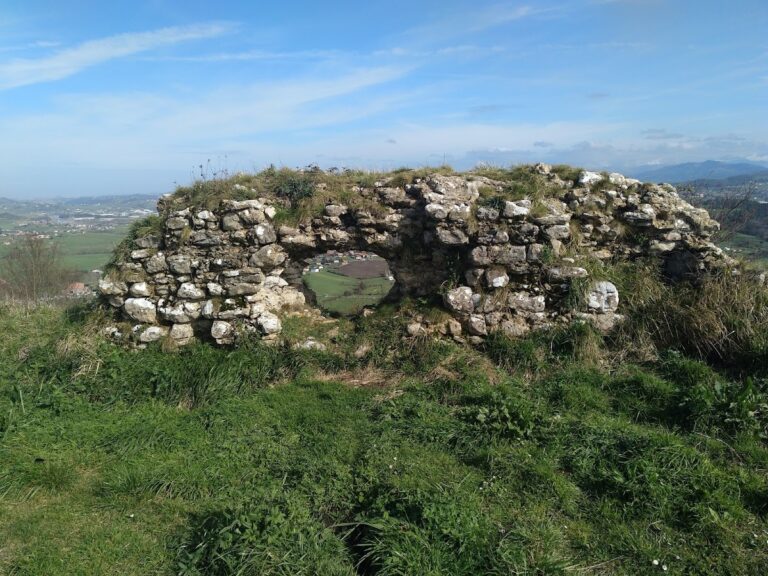
The fortress occupies a hilltop position at 96 meters above sea level, covering an area of 512 square meters. Its design includes a defensive stone wall measuring more than 2.5 meters in thickness. This wall was built using two parallel faces of carefully arranged limestone blocks, with the space between them filled with rubble to provide stability. The surrounding wall encloses a rectangular courtyard, known locally as the patio de armas, which forms the central open area within the fortress.
Inside the enclosure, archaeologists uncovered the foundations of several rooms that differ from the fortress’s main keep tower. This tower stands out for its rectangular shape and was constructed using finely cut limestone ashlar blocks placed upon a massive base of large, roughly hewn limestone blocks arranged in a cyclopean manner. Positioned near the entrance, the tower was integrated into the defensive wall, presumably to strengthen the gateway and serve as a lookout point.
Today, what remains of the fortress includes primarily the foundations and lower portions of the walls, with surviving wall heights reaching up to 2.5 meters. Despite its ruined condition, Castillo del Collao is among the best-preserved early medieval castles in the Cantabrian region.
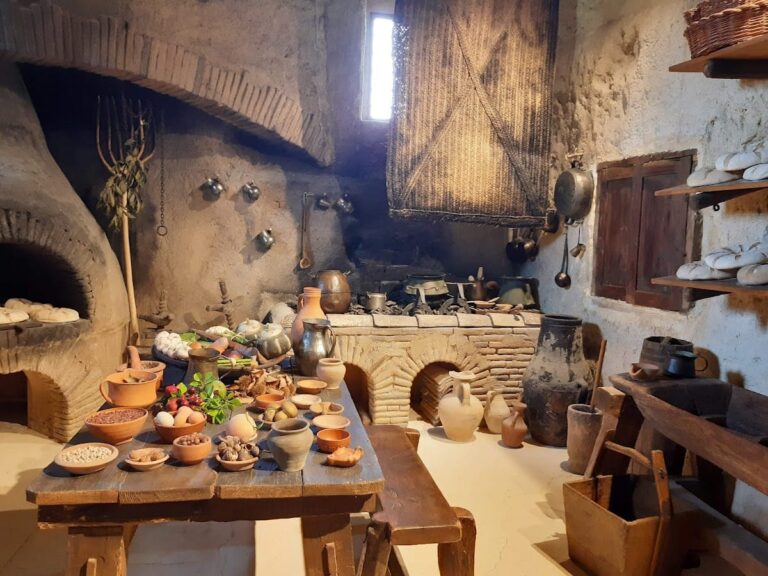
Excavations carried out around the year 2000 revealed various artifacts that shed light on the daily life and defensive activities at the site. Among the finds were numerous ceramic vessels, ranging from simple undecorated pots to striated and painted jars, indicative of domestic use. A collection of iron arrowheads implies the presence of armed defense and conflict. Additional objects include everyday tools such as knives, musical instruments fashioned from bone flutes, and a terracotta figurine depicting a man wearing a tunic, suggesting cultural or symbolic expressions.
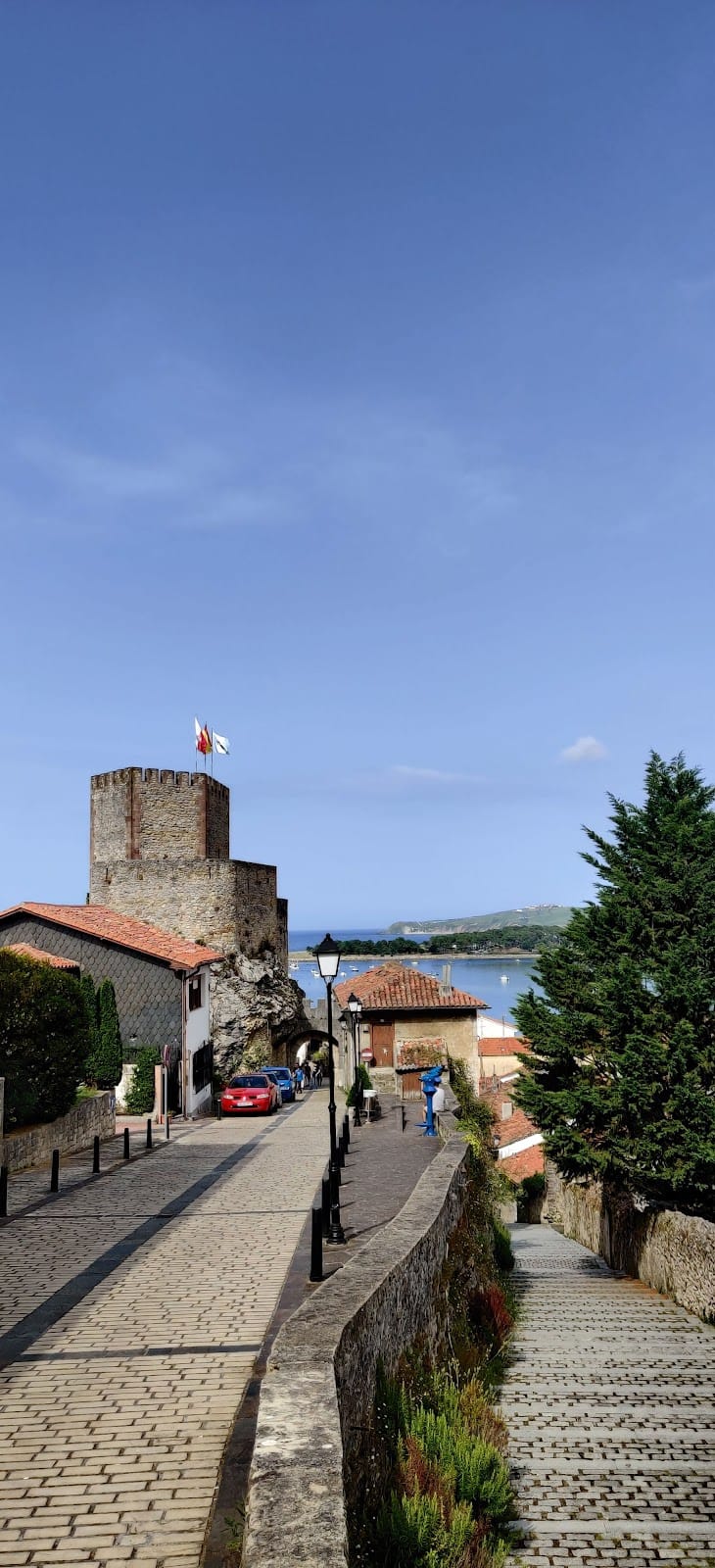
One particularly notable artifact is a gilded bronze applique adorned with designs of monstrous heads, which may have served either decorative or emblematic purposes within the fortress. The location provides commanding views over the Bay of Santander, as well as the Pas and Camargo valleys, underscoring its strategic position. A designated lookout area (mirador) remains part of the site, highlighting the importance of surveillance in its original function.
Nearby sites