Castillo de Sobradillo: A Historic Fortress in Spain

Visitor Information
Google Rating: 4.5
Popularity: Very Low
Google Maps: View on Google Maps
Country: Spain
Civilization: Unclassified
Remains: Military

History
The Castillo de Sobradillo is situated in the municipality of Sobradillo, Spain. This fortress was constructed by the Castilian kingdom during the early 15th century as a defensive stronghold on the border with Portugal.
Its origins trace back to a 12th-century watchtower that stood near the Águeda River, a natural boundary between the two kingdoms. Alfonso de Ocampo commissioned the building of the castle atop this earlier tower, intending to protect the territory from Portuguese incursions. The castle’s first known documentary reference comes from the reign of Enrique II of Castile (mid-14th century), when it was owned by his brother, Count Sancho, and his wife Beatriz of Portugal. This familial connection reveals the castle’s role in the complex political and military interactions between Castile and Portugal during this period.
The fortress remained in the hands of this family until 1508, at which point Pedro Ocampo, lord of Sobradillo, took control of the castle through forceful means, reflecting ongoing local power struggles. Despite its age, by the year 1643 the castle still housed a garrison of 120 men, although it was then described as old and deficient in defensive capabilities, indicating a decline in its military importance.
In the 18th century, ownership passed to the Marquisate of Cardeñosa. During this era, the castle suffered damage caused by Portuguese attacks, which contributed to its progressive deterioration. After the mid-19th century, the Spanish state assumed control of the castle ruins in 1851. For a long period thereafter, the site remained unmaintained until regional authorities, the Junta de Castilla y León, took over in 1985 with the aim of restoring and preserving the remains. Since then, the Castillo de Sobradillo has been protected under Spanish heritage legislation established in 1948 and reinforced in 1985.
Throughout its history, the castle functioned as a fortified military position guarding the frontier as well as a residence for the noble lords, supporting their soldiers and servants within its walls.
Remains
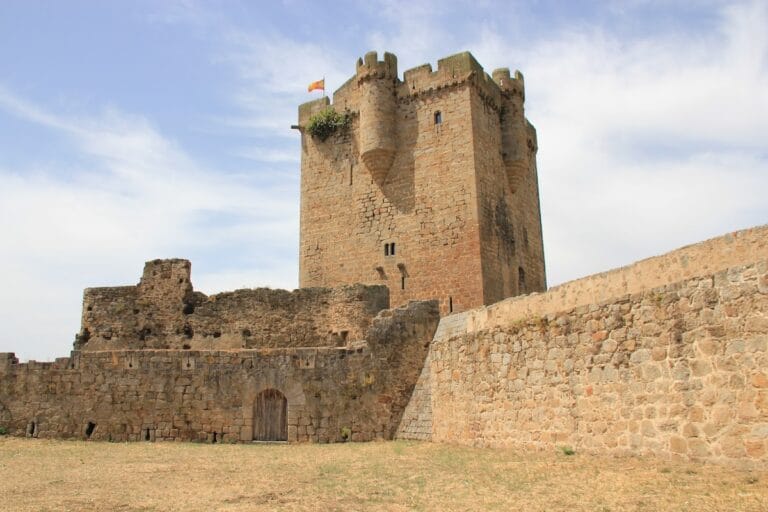
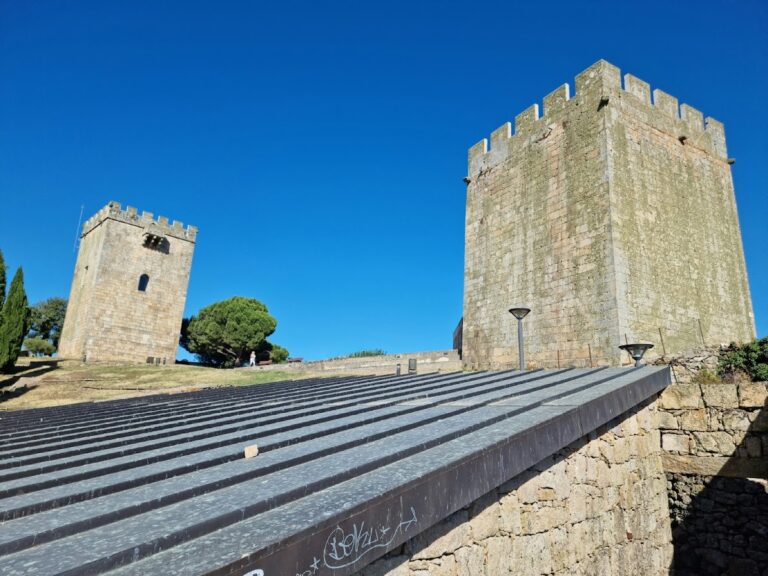
The Castillo de Sobradillo presents as a tower-shaped fortress with a layout organized into three levels divided by wooden floors. Constructed primarily from masonry using ashlar stones—finely cut blocks shaped to fit together—the structure retains elements that highlight its defensive purpose, including corners reinforced for strength and bartizans, which are small overhanging turrets providing vantage points for surveillance or archery.
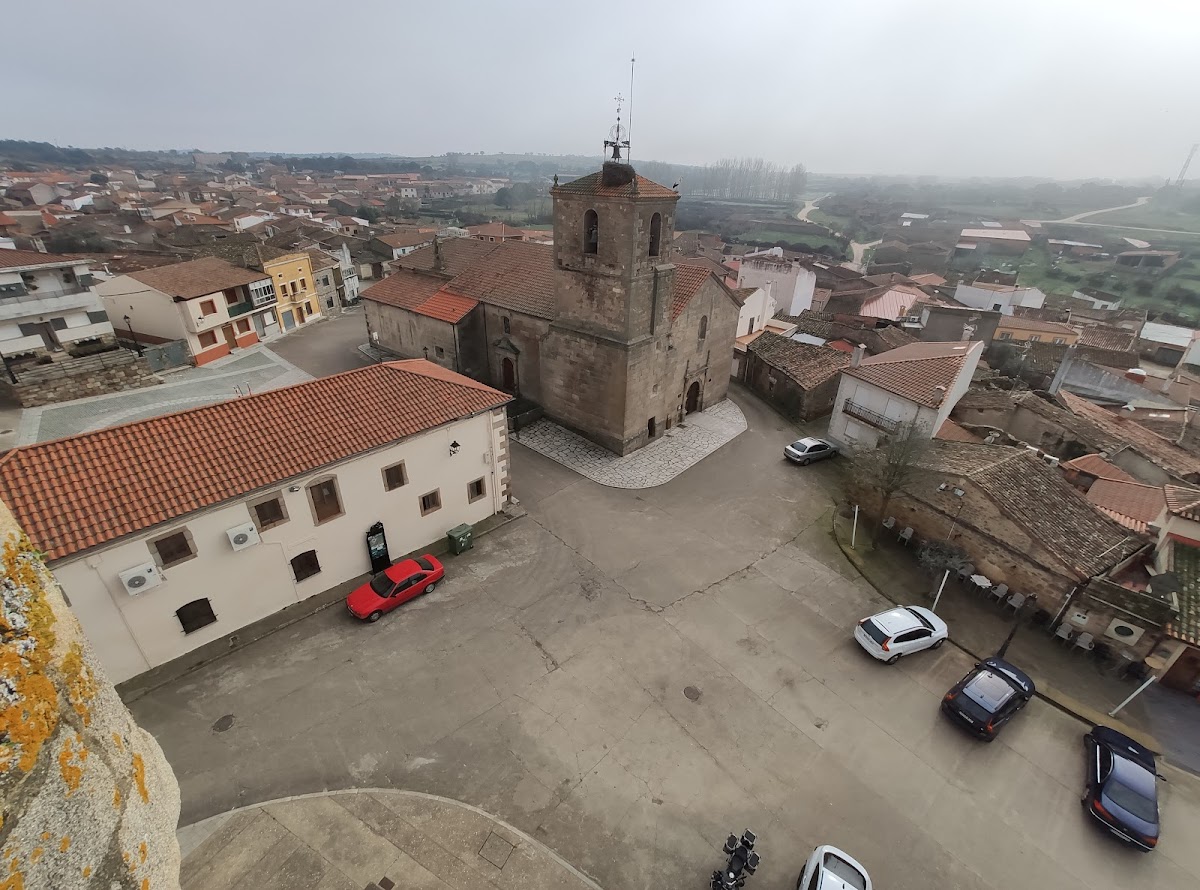
The remains today mainly consist of the watchtower, known in Spanish as the atalaya, and fragments of a medieval palace where the noble occupants once lived. The castle’s original courtyard has been transformed into a plaza, reflecting changes in use after the decline of the building’s military function.
Inside, the second floor holds the vestiges of a large fireplace, indicating its past residential use and the need for heating in the living quarters. The surviving stonework shows the architectural methods of the early 15th century, built solidly for defense yet accommodating domestic needs.
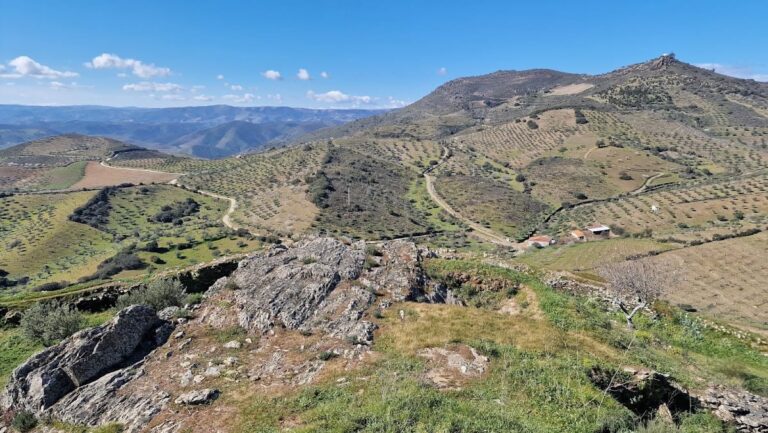
The fortress occupies a natural defensive position near the Águeda River, which historically served as a physical barrier against enemy forces. Restoration and cleaning efforts carried out between 1995 and 2000 focused on stabilizing and preserving these key structural elements, ensuring the castle’s remains provide insight into its layered history of military and noble use.
Nearby sites