Castillo de Olvera: A Historic Fortress in Spain


Visitor Information
Google Rating: 4.6
Popularity: Medium
Google Maps: View on Google Maps
Official Website: www.olvera.es
Country: Spain
Civilization: Unclassified
Remains: Military

History
Castillo de Olvera stands in the town of Olvera, Spain, and was originally built by the Arabs towards the end of the 12th century. It formed part of the defensive network of the Nasrid Kingdom of Granada, serving to protect the frontier in southern Iberia during a period marked by frequent military conflict.
Following its capture by Castilian forces, the castle experienced a series of Christian modifications. These changes reflect the transition of power in the region as the Christian kingdoms expanded southward during the Reconquista. The castle was adapted and remodeled to suit new defensive needs and aesthetic preferences under Christian rule. Over time, it remained an important stronghold as political control shifted in the area, though detailed records of specific rulers or military events connected to the castle are not preserved in the available sources.
In recognition of its historical and architectural importance, particularly its blend of Islamic and Christian features, Castillo de Olvera was declared a Cultural Interest Asset (Bien de Interés Cultural) in 1985. It lies within a protected Historic-Artistic Ensemble, and since 1999, municipal regulations have provided it with integral protection, ensuring the conservation of its structure and surrounding elements.
Remains
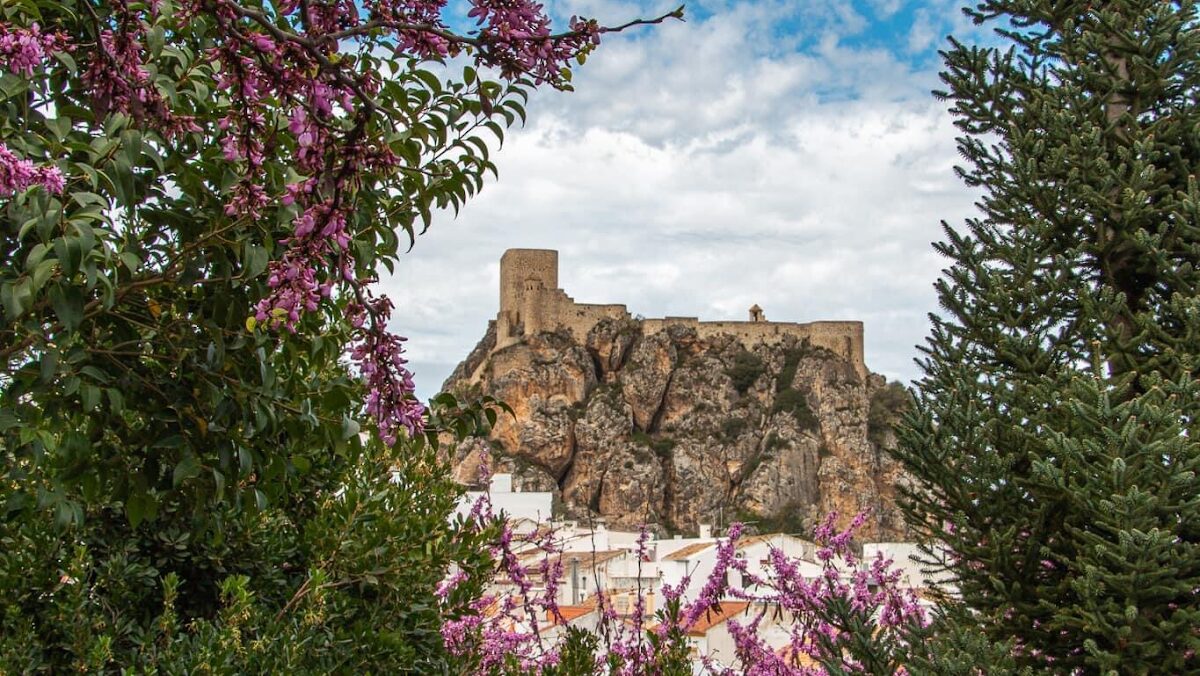
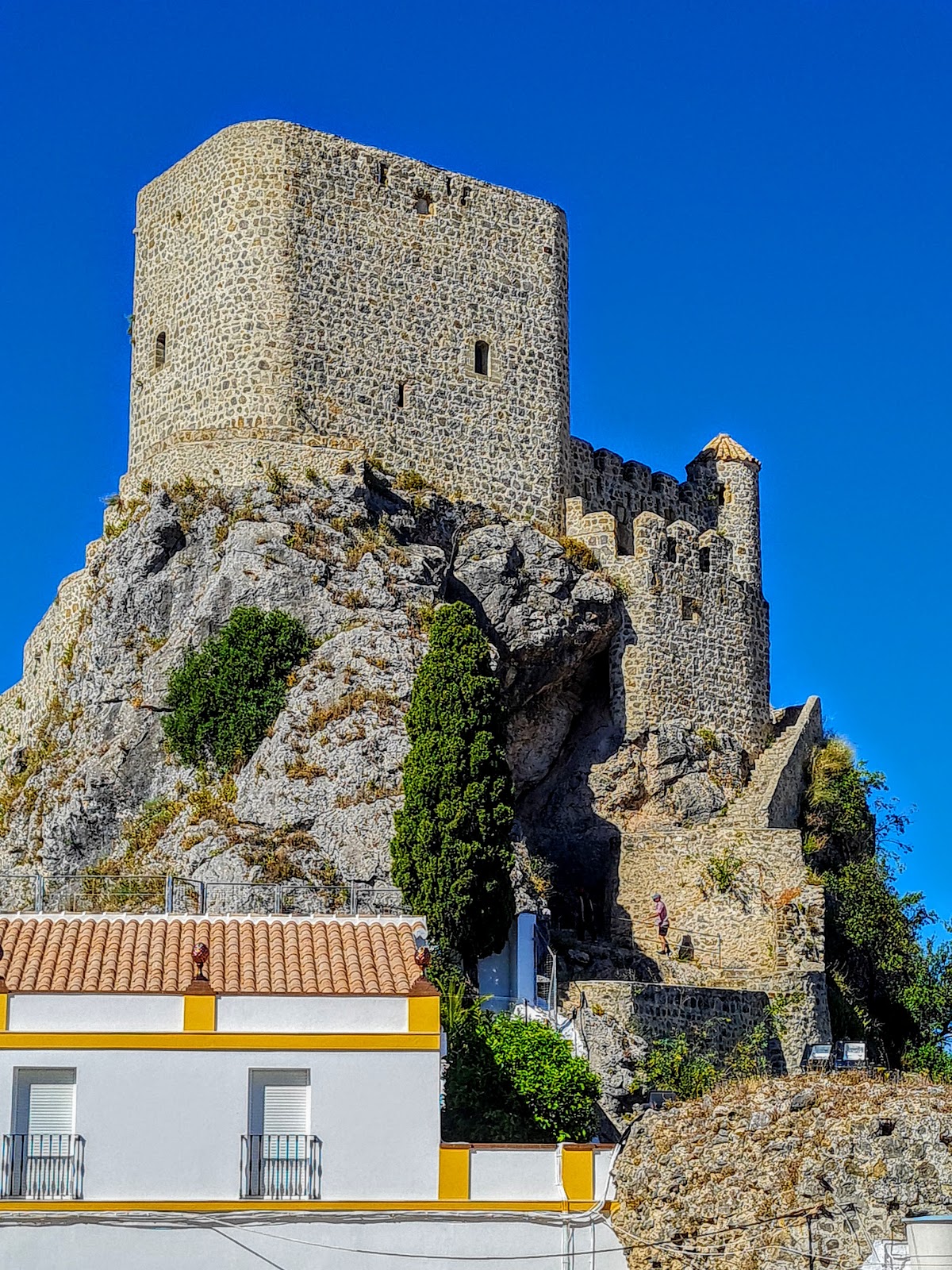
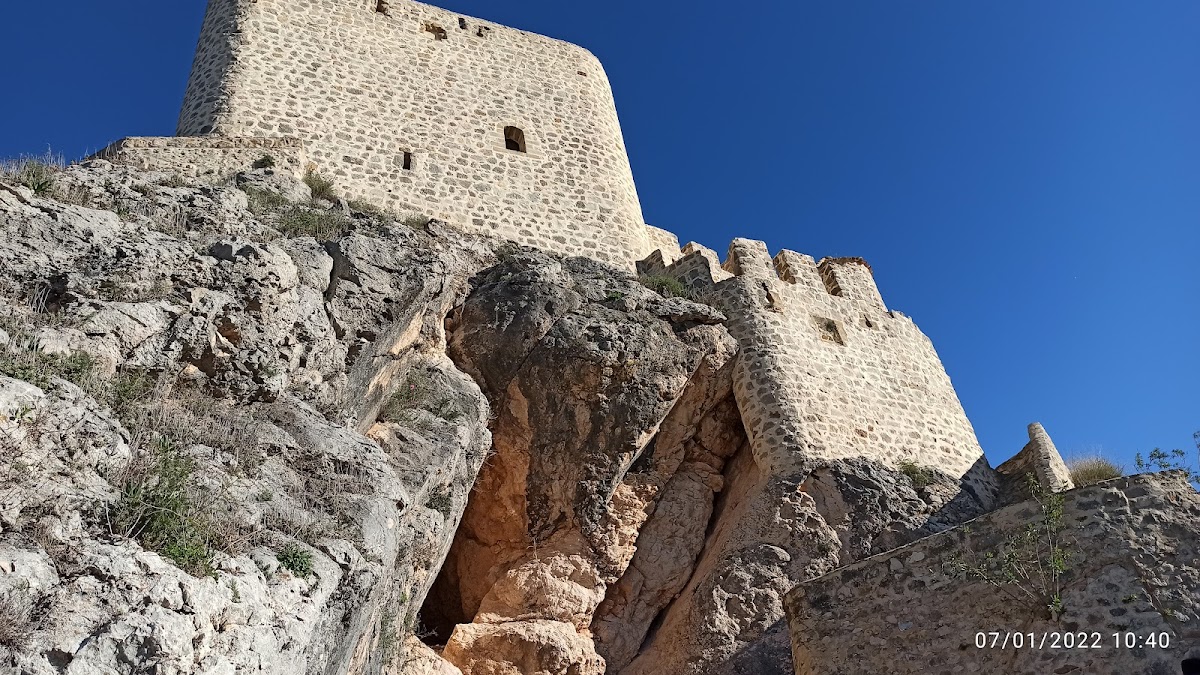
The castle occupies a rocky hilltop, rising 623 meters above sea level, which is the highest point in Olvera. Its design adapts closely to the natural shape of the rock, resulting in an elongated triangular layout that follows the contours of the terrain. The walls are built from masonry, composed of irregularly shaped stones laid in courses and held together by mortar, a technique typical of medieval fortress construction in the region.
The entrance to the fortress is notable for its strategic defenses; it features a single gateway protected by a barbican, an outer defensive work in front of the main gate, which once displayed heraldic carvings such as a coat of arms. Inside the enclosure, a prominent rectangular keep tower with rounded corners stands at the southern end. This tower has two levels covered by barrel vaults—a type of curved ceiling shaped like a half-cylinder—and is accessed by spiral staircases. The original main doorway to the tower is located more than five meters above ground, which would have provided extra protection against attackers. Access to this door was made possible by a later-added cylindrical platform shaped like a drum.
Surrounding the main enclosure, the castle includes a curtain wall equipped with a wall walk, a path along the top of the walls allowing defenders to patrol and defend the fortress. Beneath the surface, there is an underground enclosure alongside two cisterns, or water storage tanks, one of which supplies water directly to the keep, ensuring a secure water source during sieges. Portions of the nearby defensive walls that once enclosed the neighboring village, known locally as the cerca de murallas, have also survived. Up until recent times, visitors entered the castle through rooms of a house that was built adjoining the castle walls, demonstrating the integration of the fortress into the fabric of the modern town.
Nearby sites