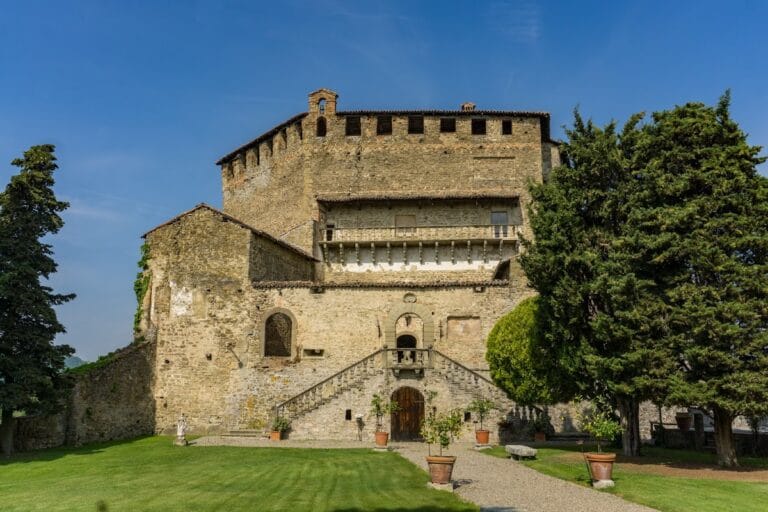
Castello di Scrivellano: A Medieval Fortress in Travo, Italy


Visitor Information
Google Rating: 4.2
Popularity: Very Low
Google Maps: View on Google Maps
Country: Italy
Civilization: Unclassified
Remains: Military

History
The Castello di Scrivellano, located in the municipality of Travo, Italy, occupies a strategic position on the foothills overlooking the left side of the Trebbia valley. Its origins trace back to the medieval period when it was crafted as a fortified stronghold, reflecting the needs of local noble families and military contingents of that era.
The earliest known mention of the site, historically referred to by its Latin name Scrovellanum, appears in chronicles from 1234. During this year, the castle was destroyed by forces aligned with the Guelph faction of Piacenza, which received support from militias from Cremona. This military action followed an unsuccessful attempt by these forces to compel nobles who had sought refuge in nearby Rivergaro to submit. This episode highlights the castle’s involvement in the regional conflicts of northern Italy during the early 13th century.
In 1312, the castle came under the control of Francesco Scoto who seized it following orders from his father, Alberto. This event signals a transfer of influence and indicates the castle’s ongoing importance in local power dynamics. Subsequently, it passed into the hands of the Anguissola family, an aristocratic lineage granted a comital (count) title in 1438, which marked the castle as part of their noble holdings.
By the late 16th century, the castle was owned by Count Camillo Landi, as recorded by the historian Bolzoni in 1595. However, the structure endured significant damage inflicted by Spanish troops during conflicts of the era. Its weakened state led to the castle’s sale in 1644 by Counts Ottaviano, Alessandro, and Carlo Landi to Carlo Antonio Novati, with a transaction price of 15,000 lire. Despite this change in ownership, the Landi family eventually regained possession and maintained it until the close of the 18th century.
In the 19th century, the castle came into the possession of the Romani family. It was from this family that the fortress took its current name, Castello dei Romani. The historical record then notes a notable event on August 15, 1972, when a northern tower of the castle suffered severe damage from a fire fueled by straw and hay stored on site. This fire destroyed the tower’s wooden floor and roof, adding to the castle’s long history of conflict and change.
Remains
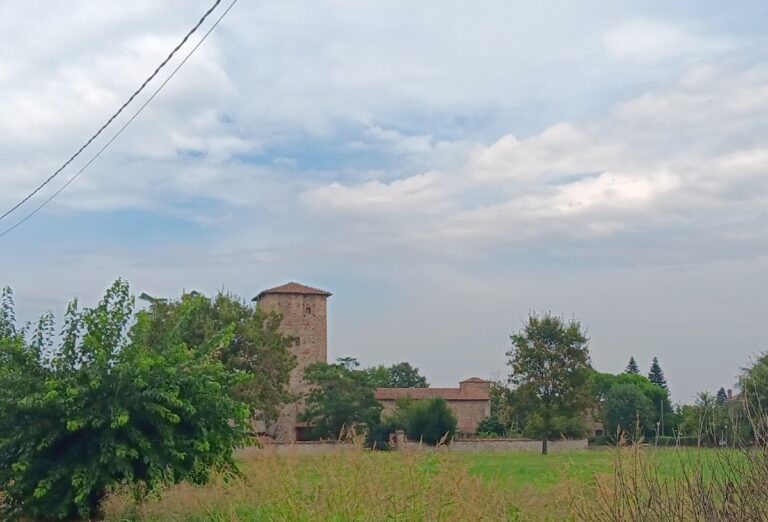
The surviving structure of Castello di Scrivellano consists primarily of a rectangular main building that has undergone various renovations and modifications throughout its existence. Its design suggests a functional medieval fortress that balanced defensive needs with residential use for its noble owners.
One of the most prominent features is a tower with a square base. This tower features an entrance that has since been sealed off and is supported by two large stone corbels. These corbels are believed to have once held a drawbridge, a defensive element typical of medieval castles that would have provided controlled access and enhanced protection against attackers.
To the north of the main building stands another tower, which remains but is in a severely deteriorated condition due to the fire of 1972. This fire destroyed significant wooden features of the tower, including its floor and roof, leaving it partially ruined.
Stone is the principal material visible in the remaining masonry, notably in the corbels and main structural walls. Wooden elements, now largely lost, once formed floors and roofing and played an essential role in the castle’s layout. The castle’s placement on the slope of the Trebbia valley foothills underlines its strategic positioning, though no specific details are documented about additional surrounding structures or fortifications.
Together, these remnants offer a glimpse into the medieval military architecture of the region, revealing adaptations made through centuries of use and ownership changes while documenting damage sustained through both warfare and accidental fire.
Nearby sites