Castello di Monte Ursino: A Medieval Fortress in Noli, Italy

Visitor Information
Google Rating: 4.5
Popularity: Low
Google Maps: View on Google Maps
Country: Italy
Civilization: Medieval European
Remains: Military

History
The Castello di Monte Ursino stands on the summit of Monte Ursino hill in the municipality of Noli, Italy. It occupies the site of an earlier fortification, built initially by the inhabitants of this Ligurian coastal settlement during a period of significant transformation in the early medieval era.
Around the 10th century, facing the need for stronger defenses and healthier living conditions, many coastal communities including Noli relocated from seaside locations to higher ground. Following a major fire around 900 AD that devastated the area, the inhabitants rebuilt Noli atop Monte Ursino hill, which offered a commanding view over the sea and the surrounding terrain. By the year 1004, Noli is recorded as a fortified borough, indicating a well-established and protected settlement.
The earliest fortification at the site comprised a single tower positioned on the hilltop, serving as a military lookout and defensive stronghold. Subsequent centuries saw considerable enlargement of the castle’s defenses, with walls and additional structures gradually spreading down the hillside. This expansion culminated around the 15th century, when the castle’s fortifications enclosed not only the hilltop but also the newly developed settlement on the plain below, which now forms the historic center of Noli. With this shift, the original hilltop village was slowly depopulated.
Throughout the medieval period, the Del Carretto family, who held feudal lordship over Noli, played a central role in supporting and directing the castle’s military and defensive development. The castle’s strategic location allowed it to oversee maritime routes along the Ligurian coast and control access to an important Roman road crossing the nearby hill area of Voze, a route that remained in use until the 1700s. The defensive walls associated with the castle extended beyond the hilltop to encircle the entire borough, reinforcing Noli’s security within the turbulent context of the Italian city-states known as Comuni.
Remains
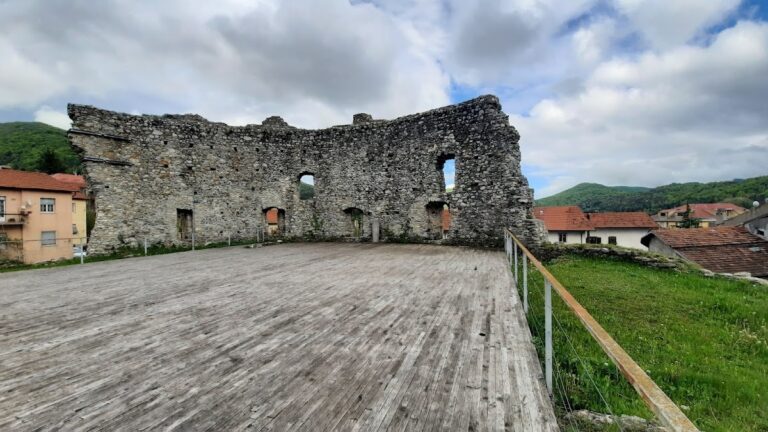
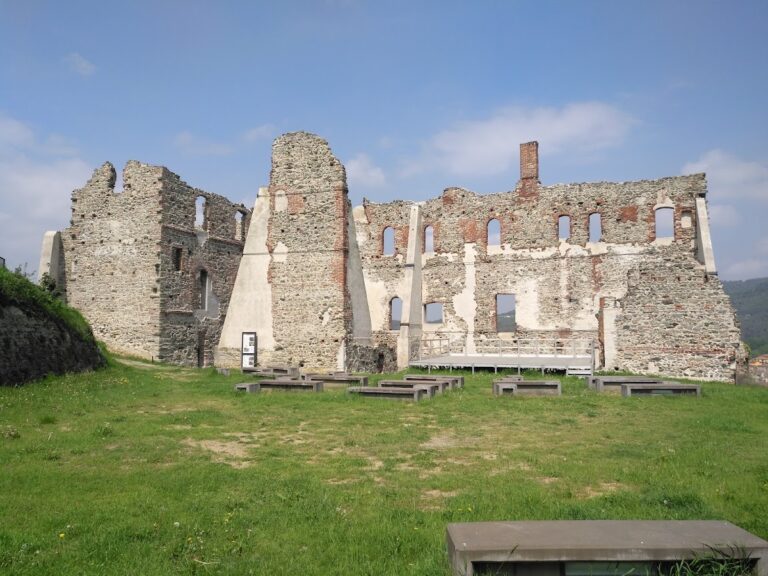
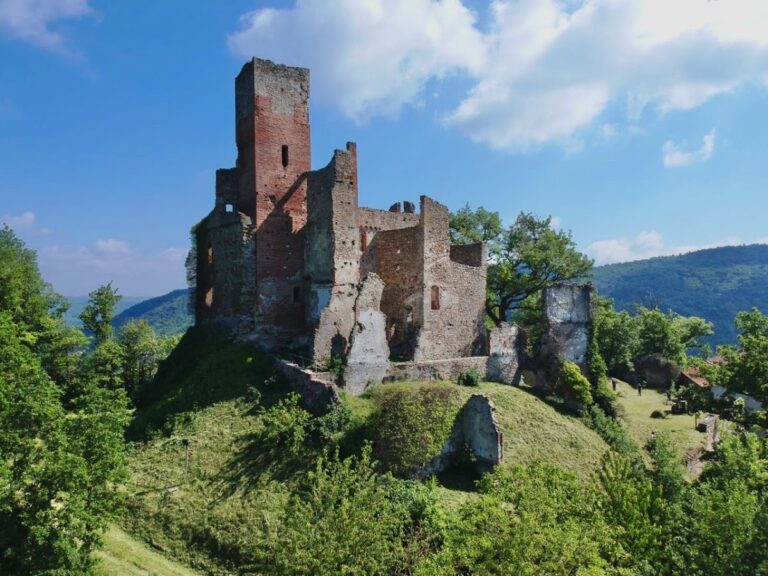
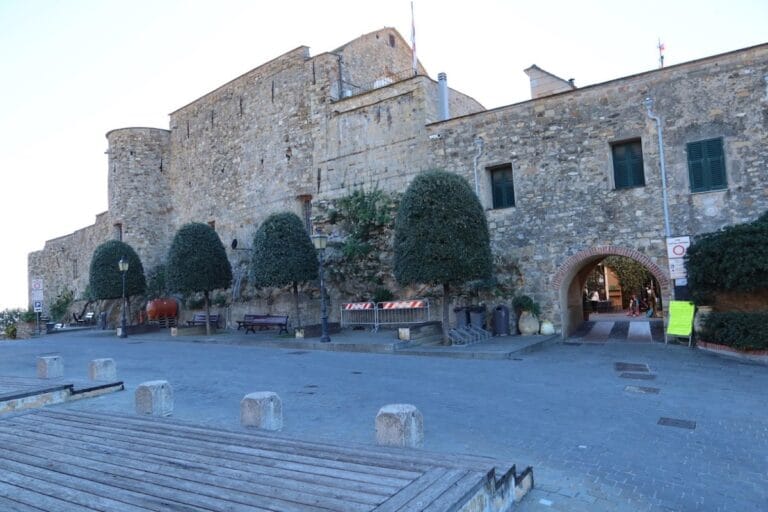
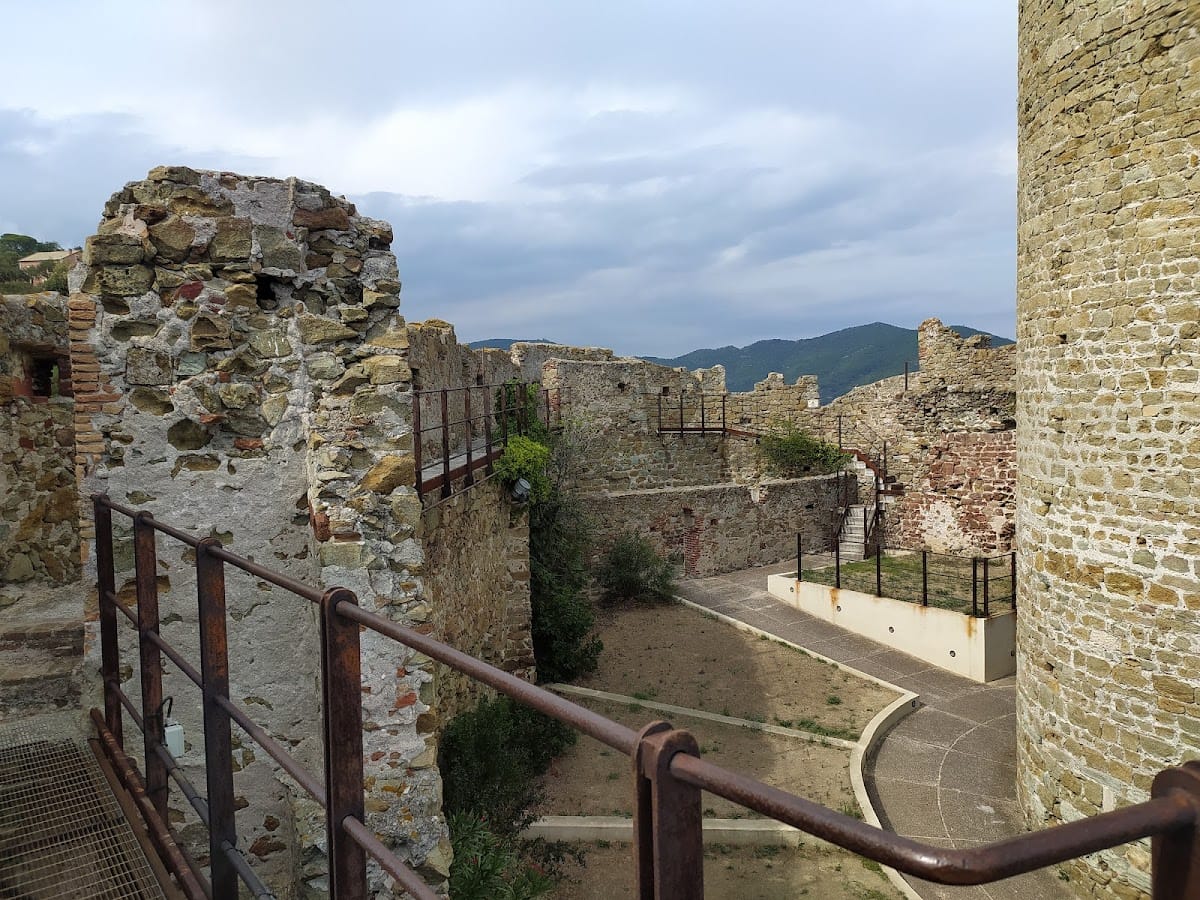
The Castello di Monte Ursino presents a well-preserved example of medieval military architecture characteristic of western Liguria’s incastellamento, a process of fortifying settlements during the Middle Ages. The fortress is centered around a tall cylindrical tower, known as a maschio, located at the highest point of Monte Ursino hill. This tower formed the core defensive structure and was surrounded by thick fortress walls enclosing soldiers’ quarters and other military facilities.
From this central nucleus, two layers of defensive walls descend the hill, enclosing a progressively larger area as they reach downward. These fortifications still survive largely intact and together they surround both the hilltop site and the adjacent lower village that developed later. Along the sloping sides of Monte Ursino, circular towers are situated at regular intervals, enhancing the defensive strength by providing vantage points and positions for archers or other troops.
Access to the castle was carefully controlled through gates fortified with a distinctive defensive arrangement, part of which remains visible today. This system included an external tower connected to the main walls by a masonry walkway, allowing defenders to launch counter-attacks against any assailants who managed to reach the gate area. The walls and towers are constructed from local stone, assembled with durable masonry techniques typical of medieval fortifications.
Overall, the castle’s structure and enclosing walls survive as some of the region’s most complete examples of medieval defensive design, illustrating the military strategies and settlement patterns that shaped the coastal communities of Liguria throughout the Middle Ages.
Nearby sites