Museo Diocesano: Albenga’s Museum of Archaeology and Sacred Art


Site at a Glance
- Rating
- 4.7
- Popularity
- Low
- Country
- Italy
- Primary era
- Early Modern
- External website
- Open
- Eras represented
- Classical, Medieval, Early Modern, Modern
- Civilizations
- Lombard, Roman
- Site type
- Museum
On this page13 sections
History
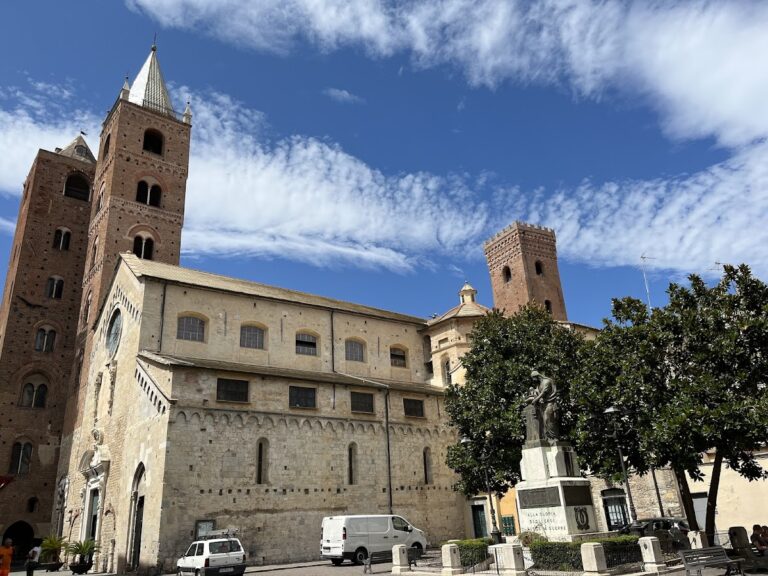
Museo Diocesano is a museum of archaeology and sacred art in Albenga, Italy, established in 1981 within the historic episcopal palace of the Diocese of Albenga-Imperia. The palace incorporates medieval buildings dating from the eleventh and twelfth centuries, together with later additions and renovations, while the museum presents material from Albenga Cathedral, its baptistery, and churches across the diocesan territory.
Foundation and episcopal palace
The museum was inaugurated on 15 May 1981 by Alessandro Piazza, then bishop of Albenga. Its creation followed cooperation among the Diocese of Albenga, authorities responsible for archaeological, architectural, artistic, and historical heritage, the International Institute of Ligurian Studies, and the Ligurian Region. Restoration of the episcopal palace took place between 1947 and 1981, and rooms were prepared to house the developing collection.
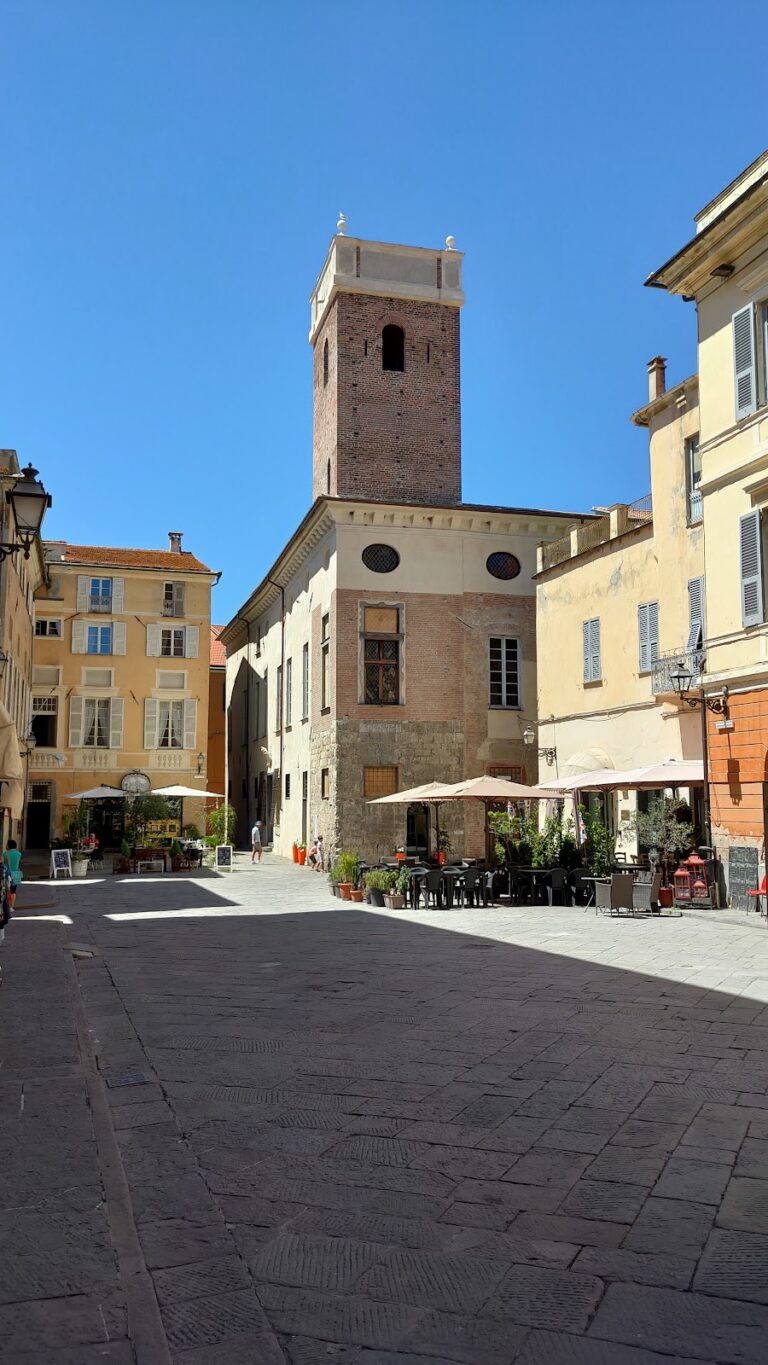
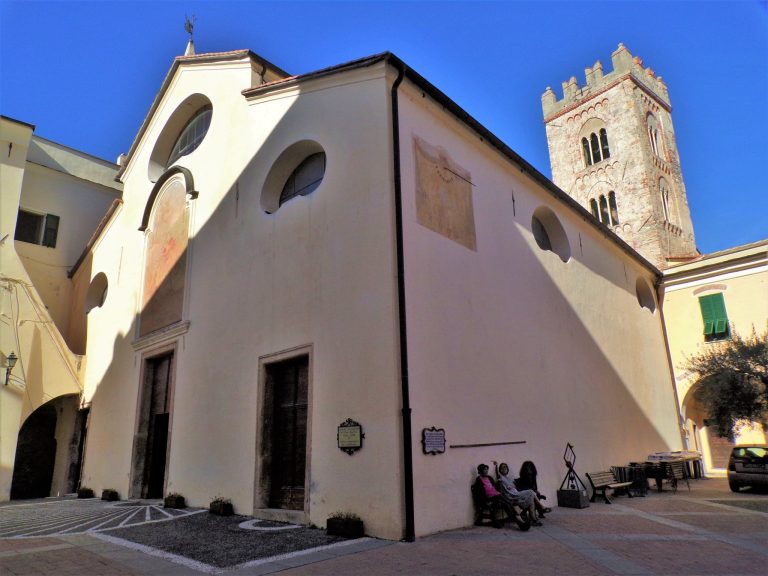
The palace stands in Albenga’s old town and includes an internal courtyard. Its oldest parts belong to the eleventh and twelfth centuries, while further buildings and alterations were incorporated during the mid-fifteenth, sixteenth, and seventeenth centuries. The museum route occupies the first floor, or piano nobile, and follows rooms that once served as reception halls, a bishop’s chamber, a private chapel, a study, and other episcopal spaces.
Museo Diocesano is administered by the Diocese of Albenga, which also manages visits to the Albenga Baptistery. The institution has an affiliated branch at Cervo, the Museo Diocesano dell’Alta Valle dell’Arroscia. Fiorenzo Gerino was its first director and remained in office until 1 February 2017, when Mauro Marchiano succeeded him. The displays have continued to be reorganized, including the relocation in 2025 of Bernardo Raibado’s A Diocese of Albenga to the corridor between the Tapestry Room and the Vestment Room.
Archaeology and cathedral collections
The archaeological holdings include evidence from the Roman period onward. Excavations beneath Albenga Cathedral between 1948 and 1967 produced many of the remains now preserved in the museum. Further objects came from late-nineteenth-century work in the baptistery directed by Alfredo D’Andrade, an architect, restorer, and heritage official involved in archaeological and architectural conservation in Italy.
Among the cathedral finds are inscribed stone fragments, including the funerary inscription of the deacon Donatus, dated 571. It is described as one of the oldest Christian testimonies in the western part of the region. Archaeological work linked to the restructuring of the cathedral floor also produced ceramics. The floor had been laid at least seven levels over the centuries, and pottery recovered from deposits used to even out differences in height reflects local, regional, and Mediterranean exchange.
The museum preserves part of the cathedral treasure, the collection of liturgical and devotional objects associated with the cathedral. It includes furnishings and reliquaries dating chiefly from the fifteenth to the seventeenth centuries, together with paintings, sculptures, textiles, tapestries, and other works transferred from churches and oratories throughout the diocese.
Remains
Medieval rooms and archaeological displays
The museum’s rooms retain the varied fabric of the former episcopal residence. The Lamboglia Room preserves features of the palace’s Gothic phase, including a ribbed vault supported near its centre by a reused late-Roman column. Pointed-arch doorways survive in the walls, although they are now blocked. Named after the archaeologist Nino Lamboglia, known for his research in Liguria, the room contains material from the cathedral excavations.
Among these objects are inscribed stone fragments, fragments of a pluteus, a decorated stone screen or panel used within a church, and a carved slab bearing a peacock. The peacock relief is attributed to Lombard craftsmen active in Albenga in the eighth century. Baptistery objects include fifth- or sixth-century amphorae formerly kept in the building’s original roof, two marble slabs from an arcosolium tomb beside the entrance, an eighth-century carved lunette, and a fifth- or sixth-century sandstone transenna decorated with interlacing. An arcosolium is a wall tomb beneath an arched recess, while a transenna is a pierced or patterned stone screen.
The Lamboglia Room also displays Bernardo Raibado’s A Diocese of Albenga, painted in 1627. The work depicts the diocese with the boundaries and parishes it possessed at that time. Three paintings by Raffaele Resio at the entrance show views of Albenga Cathedral.
Ceramics and early religious paintings
The Ceramics Room contains pottery recovered during archaeological work associated with the cathedral floor. Tableware fragments and imported pieces came from the Iberian Peninsula, Tuscany, northern Italy, Pisa, Savona, Albissola, Valencia, and Andalusia. The range of material includes vessels from the fourteenth and fifteenth centuries, as well as later Ligurian production.
The oldest pieces include bowls, dishes, and jugs associated with early maiolica, tin-glazed earthenware regarded here as the first tin-glazed ceramic produced in the region. Some were made in Pisan or Savonese workshops between the fourteenth and fifteenth centuries. Ligurian or Savonese monochrome sgraffito pottery, used during the fifteenth and sixteenth centuries, has white, ochre, or green glaze and predominantly cross-shaped decoration. Sgraffito is made by scratching a design through a surface layer to reveal the material below.
Iberian vessels from the fourteenth and fifteenth centuries use blue decoration and metallic lustre. Tuscan ceramics, particularly those from Montelupo Fiorentino, were valued during the fifteenth and sixteenth centuries for their colours and elaborate ornament. Pisa sgraffito pieces made with the “point and stick” technique include bowls, jugs, and cups with S-shaped motifs and central bands. Later Savonese and Albissola maiolica includes blue decoration on turquoise, green, or blue-and-white glazes, plant forms resembling calligraphy, quartered designs, a piece with a putto’s head, and fragments recalling Valencian azulejos, or decorated glazed tiles.
The room also contains paintings from churches in the diocese. A fourteenth-century Madonna and Child from Santa Maria in Fontibus in Albenga has a Sienese character and is attributed to the Master of Saint Mary of the Castle. Other works include half of a predella, the base of an altarpiece, showing the Apostles, made between the fourteenth and fifteenth centuries by Nicolò da Voltri for the Oratory of Santa Maria del Castello at Diano; a fifteenth-century tabernacle front from Diano San Pietro with the Crucified Christ and the Man of Sorrows; and a Saint Anne Metterza from Diano Castello dating from the second half of the fifteenth century.
Two side panels from a 1501 polyptych, an altarpiece made of several panels, depict Saint Eligius and Saint Ampelius. The room also holds a probable crest panel showing the Brothers in Adoration of the Cross, made in the second half of the sixteenth century by Giulio De Rossi for the Oratory of Santa Croce at Diano San Pietro. A large sixteenth-century ciborium by the same artist, made for the Church of Saints James and Nicholas at Castellaro di Prelà, takes the form of a six-sided small temple with a figure on each side.
Room of Verdure and cathedral treasure
The Room of Verdure, also called the Alcove Room, was probably the bishop’s bedroom. Much of its original fifteenth-century fresco decoration survives. The scheme draws on the fourteenth-century decoration of the Palace of the Popes at Avignon and uses illusionistic dark curtains covered with flowers, plants, and animals to divide sleeping and living areas. Coffered sections of the ceiling and areas of the walls retain the coats of arms of Albenga’s bishops.
The room houses reliquaries, liturgical vessels, and chalices from the cathedral treasure. A reliquary is a container made to preserve or display a religious relic. Important examples include the bust reliquary of Saint Calocero, dating from the fourteenth or fifteenth century, and the head reliquary of Saint Verano, made by Bernardo Furco and donated to the cathedral in 1475. Other reliquaries take the form of the arms of Saints Calocero and Verano, made respectively in the 1490s and in 1501.
The collection also includes an ex veste relic of white silk satin with silver thread, adapted into a cope from a shoulder veil associated with Blessed Maria Cristina of Savoy. A cope is a semicircular liturgical vestment worn over other garments. The room’s other works include the Gambarana Crucifixion, painted around 1530 by Raffaello De Rossi for a cathedral altar, and a thirteenth-century white-marble Madonna and Child from Santa Maria in Fontibus, described as the oldest statue of the Virgin in the diocese.
Old Chapel
The Old Chapel occupies the first floor of a tower later incorporated into the palace, beside the Caruggio del Vescovo and Via Bernardo Ricci. After Albenga’s major fire of 1418, it became the bishop’s private chapel. During the episcopate of Napoleone Fieschi, between 1459 and 1466, the room received an extensive fresco cycle. Later plastering and the installation of a suspended ceiling destroyed much of the decoration, while paintings remain on the umbrella vault, in a northern wall niche, and on other wall sections.
The vault is divided into eight compartments containing the Evangelists and Doctors of the Church. They surround a black-stone roundel carved with the Agnus Dei, the Christian representation of Christ as the Lamb of God. The walls show scenes from the Life of the Virgin, including a niche with the Madonna and Child between Saint John the Baptist and the Archangel Michael. The cycle combines artistic languages from Liguria, Piedmont, and Provence and is attributed to the unidentified painter known as the Master of Lucéram.
The chapel also contains the 1457 Altarpiece of Cesi, probably by the Lombard painter Francesco Grasso, from the Oratory of Santa Maria at Cesi. Other works include Agostino da Casanova’s 1526 Madonna and Child from the Oratory of San Sebastian at Cà di Carli in Prelà, and a sculpture of Christ from the first quarter of the fifteenth century, made for the Church of San Martino at Rèzzo by an artist of the Ligurian-Lombard school.
Room of Coats of Arms
The Room of Coats of Arms is the largest room on the museum route. Its name comes from the arms of Albenga’s bishops, painted along the base of the vault in chronological order. Renaissance alterations associated with bishops Carlo Cicala and Luca Fieschi survive in the room, with their names appearing on the fireplace and on the frames of the doors and windows.
Paintings range from fifteenth- and sixteenth-century panels to seventeenth-century canvases by artists of the Genoese Baroque. The principal work is Guido Reni’s Martyrdom of Saint Catherine of Alexandria, commissioned by the banker Ottavio Costa for the church dedicated to that saint and begun around 1606. Giovanni Lanfranco’s Miracle of Saint Verano was painted shortly before 1616 for the Costa Chapel in Albenga Cathedral. The room also contains Saint John the Baptist, commissioned by Costa for the oratory beneath that dedication and made broadly at the time of the original Caravaggio painting from which it was copied.
Other works include Domenico Fiasella’s Annunciation from the Church of Saint James at Diano Calderina and Orazio De Ferrari’s Saint James. Additional paintings are presented in temporary displays.
Tapestry Room
The Tapestry Room has a Venetian-style terrazzo floor made from coloured stone fragments of different sizes. The name of Bishop Raffaele Biale is set at its centre. Four principal tapestries and two smaller pieces between the windows furnish the room.
The four principal tapestries were made in Brussels around the middle of the seventeenth century from wool and silk. Their colours include blue, amaranth, green, yellow, ochre, and grey, and their construction uses five warp threads. They depict episodes from the youth of Moses: his abandonment on the Nile and rescue, his being entrusted by Pharaoh’s daughter to a nurse, his testing, and his receipt of the crown from Pharaoh. The two pieces between the windows were made in Oudenaarde during the seventeenth century and show a hunting scene and a meeting scene.
Red Room and episcopal reception
The Red Room formerly served as the bishop’s audience and reception hall. Genoese red silk damask hangings made in 1775 remain on the walls and give the room its name. Two nineteenth-century landscape paintings above the doors were repaired during the second half of the twentieth century after damage from the 1887 earthquake.
Eighteenth-century furniture in the Genoese Baroque style includes corner cabinets, consoles, chairs, and a canopy. The arrangement follows a layout associated with Bishop Gaetano Alimonda’s reception of the cardinalate in 1879. The room also displays Francesco Maria Schiaffino’s eighteenth-century Madonna and Child in Glory, a silver processional statue of Saint Michael the Archangel made in 1793, and portraits of the Genoese archbishops Giovanni Battista Spinola the Elder and Giovanni Battista Spinola the Younger. The two archbishops were the uncle and brother of Giorgio Spinola, bishop of Albenga from 1691 to 1714.
Vestment Room
The Vestment Room was created in the former study of Bishop Raffaele De Giuli, who held office from 1946 to 1963. Its cases contain bishops’ clothing, altar furnishings, and other religious textiles. The oldest is a red-and-gold silk paliotto from the last quarter of the fourteenth century, showing the Madonna and Child with eight saints inside a three-lobed arched frame. A paliotto is a decorated textile or panel placed at the front of an altar.
Other textiles include an eighteenth-century Rococo set consisting of a chasuble, stole, and chalice veil with gold-thread decoration, probably made in a Genoese workshop; a white silk gros de Tours cope with a moire finish; and a white vestment comprising a chasuble and tunic with a silver rocaille buckle made by the Turetta workshop in 1778. A later cope bears Bishop Carmine Cordiviola’s coat of arms on its silver buckle.
A case is dedicated to Monsignor Luciano Angeloni, who was born in Porto and later served as an apostolic nuncio in several countries. It contains vestments and medals he left to the museum.
New Chapel and reliquary room
The New Chapel stands at the end of the museum route. It formerly served as the bishop’s chapel and retained that function until the episcopate of Mario Olivieri, bishop of Albenga until 2016. Its current appearance results from several interventions, especially those undertaken after the 1887 earthquake. The raised presbytery contains an eighteenth-century altar turned toward the congregation; sculptor Ernesto Muratorio reoriented it during work in the 1980s.
Smooth, slender columns with gilded stucco Corinthian capitals surround the altar and support a small coffered dome. Its centre bears the sacred tetragrammaton, the four-letter Hebrew name of God used in Jewish and Christian religious contexts. The remainder of the chapel has a late-Baroque “carpet-pattern” maiolica floor made in eighteenth-century Neapolitan manufacture.
A small room reached through a side door from the Vestment Room has a barrel vault painted with the Lord, surrounding angel heads, and the coat of arms of Bishop Luca Fieschi. It preserves sixteenth- and seventeenth-century reliquaries associated with bishops and other members of the Albenga clergy.