Castello di Spotorno: A Coastal Defensive Fortress in Italy

Site at a Glance
- Rating
- 3.5
- Popularity
- Low
- Country
- Italy
- Primary era
- Medieval
- Eras represented
- Medieval, Early Modern
- Civilizations
- Unclassified
- Site type
- Military
- Remains
- Castle
On this page4 sections
History
Castello di Spotorno is a defensive castle-fortress in Italy, positioned above the coastal town of Spotorno. Built before or during the feudal lordship of the bishops of Savona, it formed part of the Diocese of Savona’s feudal possessions by 1180. A feudal bishopric was a territory in which a bishop exercised both religious and secular authority, including control of land and fortified sites.
Medieval Destruction and Rebuilding
The fortress was demolished in the early thirteenth century and rebuilt in 1218. In 1227, the people of Noli and Segno destroyed it again. They were allies and supporters of the Republic of Genoa, a powerful maritime state whose political and territorial interests extended along the Ligurian coast.
Later Ownership and Military Decline
The castle was rebuilt once more between the fourteenth and sixteenth centuries, when it acquired its present quadrangular form. In 1333 it became the property of the Municipality of Savona. During the second half of the sixteenth century, ownership passed to the De Loterio family, which retained possession until the outbreak of the First World War.
The recorded holders of Castello di Spotorno included the Bishop of Savona, the Municipality of Savona, the Republic of Genoa, and the De Loterio family. Its strategic military function ended in the sixteenth century. In 1933, the castle was placed under the protection of the Soprintendenza ai Beni Architettonici, the Italian state authority responsible for historic buildings and architectural monuments. It is recognized as part of Italy’s national heritage.
Remains
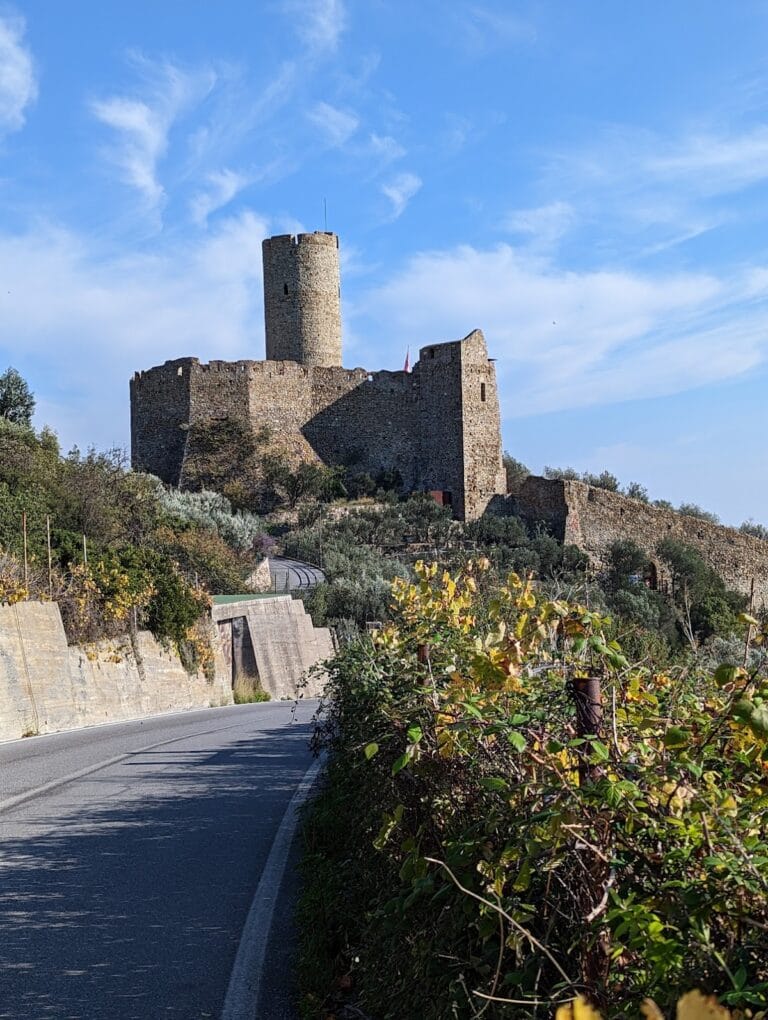
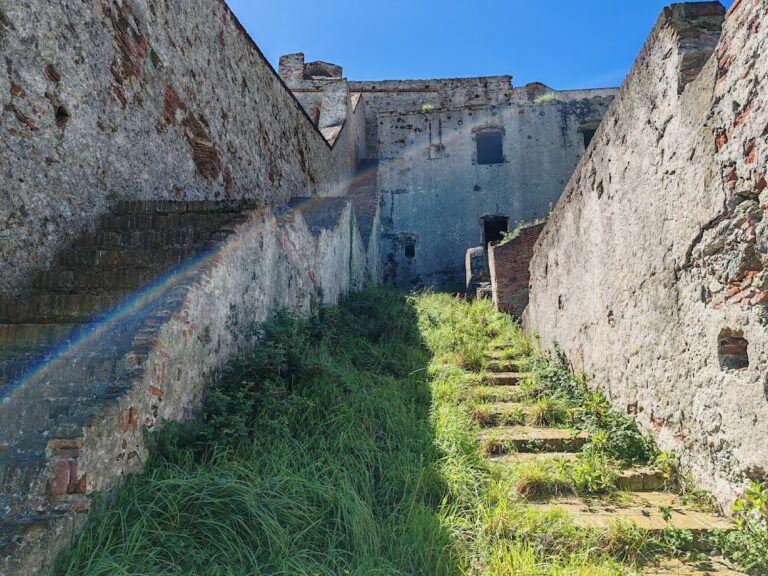
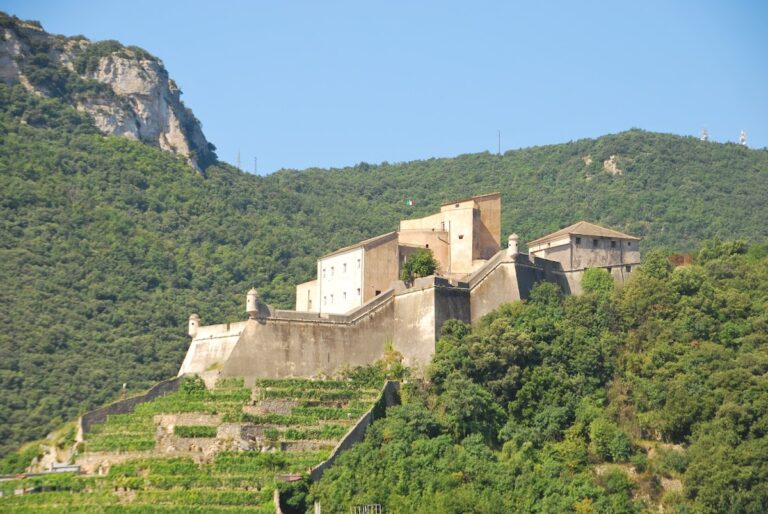
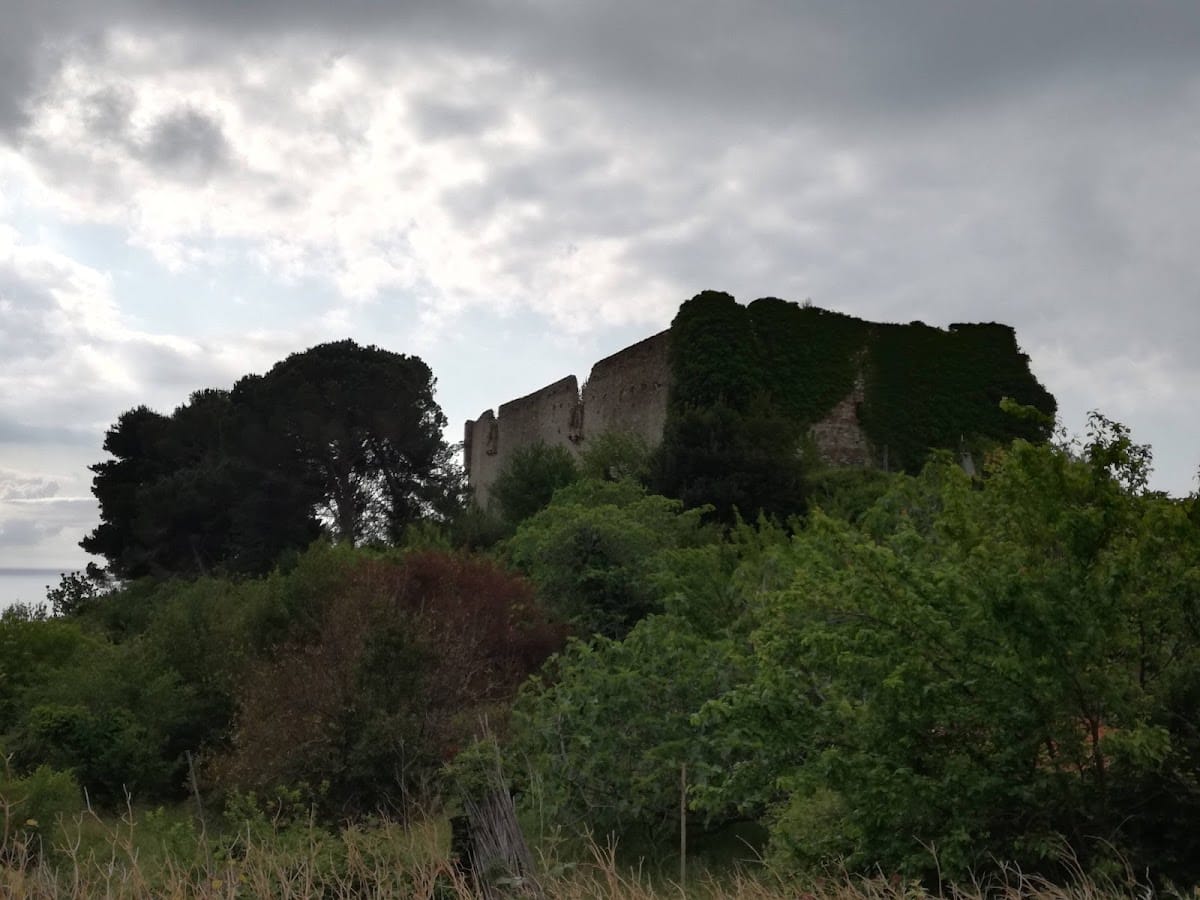
Castello di Spotorno occupies a semi-elevated hill north of the modern settlement of Spotorno, overlooking the town. Its surviving structure is arranged on a quadrangular plan, the form acquired through rebuilding between the fourteenth and sixteenth centuries. The castle-fortress now survives as ruins on the hilltop.
Nearby sites