Castle of Nucetto: A Medieval Fortification in Italy

Site at a Glance
- Rating
- 4.4
- Popularity
- Very Low
- Country
- Italy
- Primary era
- Medieval
- External website
- Open
- Eras represented
- Medieval
- Civilizations
- Holy Roman Empire
- Site type
- Military
- Remains
- Castle
On this page8 sections
History
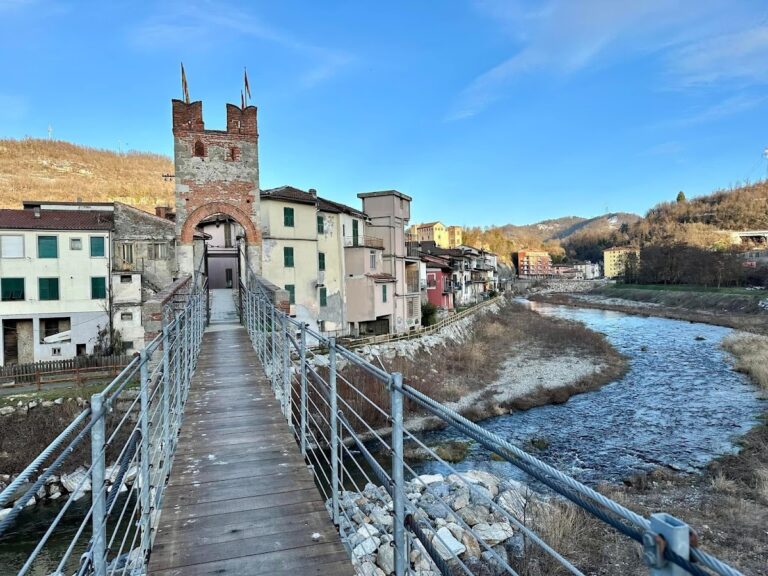
The Castle of Nucetto is a medieval fortification in Nucetto, Italy, built during the eleventh century, probably beginning around AD 1000 in the reign of Arduino, the ruler crowned king of Italy. Its position near a bridge over the Tanaro River gave it strategic importance because the crossing linked Piedmont and Liguria through the Upper Tanaro Valley.
From the Aleramici to the Marquisate of Ceva
The castle passed to the Aleramici, a medieval noble dynasty whose members held territories in northwestern Italy, including the Marquisate of Ceva. The later Ceva di Nucetto branch originated from this connection. Giorgio II of Ceva the Dwarf, a marquis of Ceva, subsequently strengthened the castle and improved its appearance.
Conflict and Restoration
In 1414, the castle was seriously damaged during conflicts between Savoy and the Marquisate of Ceva. After the hostilities ended, the marquises of Ceva regained control and restored the fortification.
The castle was later donated, together with the city of Asti, to Beatrice of Portugal. Through her marriage to Charles II of Savoy, a fifteenth-century ruler of the Duchy of Savoy, Beatrice became duchess, and the castle entered the Savoyard territories. A marquisate was governed by a marquis, while a duchy was governed by a duke or duchess.
Napoleonic Damage and Modern Protection
During the Napoleonic Wars, the castle was briefly involved in hostilities. French troops then partly destroyed it to prevent its use by the opposing coalition.
In 2020, the Municipality of Nucetto acquired the castle with the aim of enhancing it for tourism. The site is recognized as Italian national heritage.
Remains
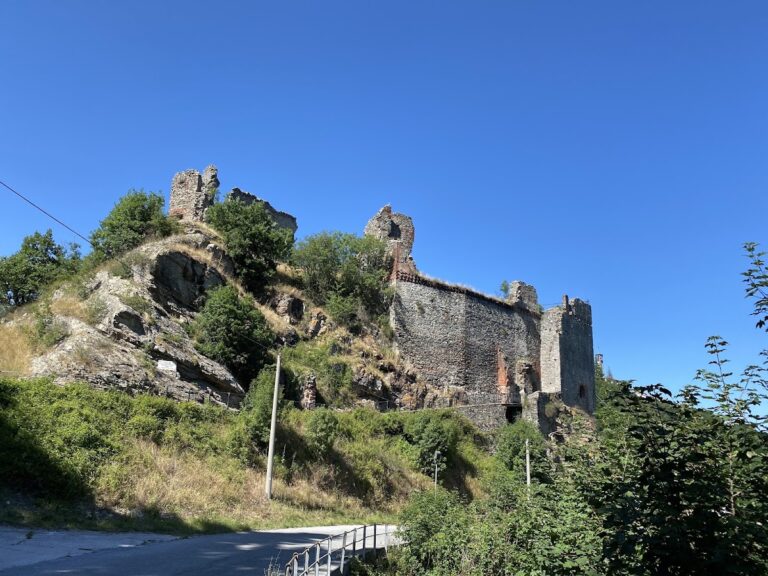
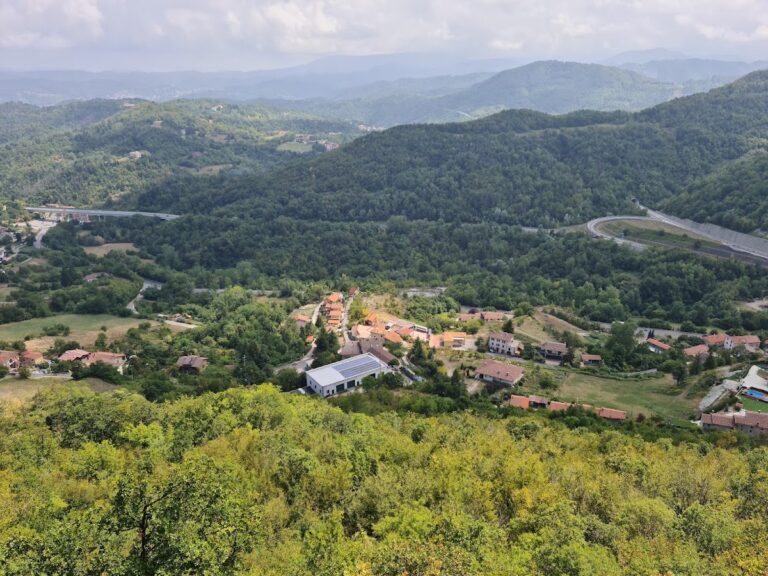
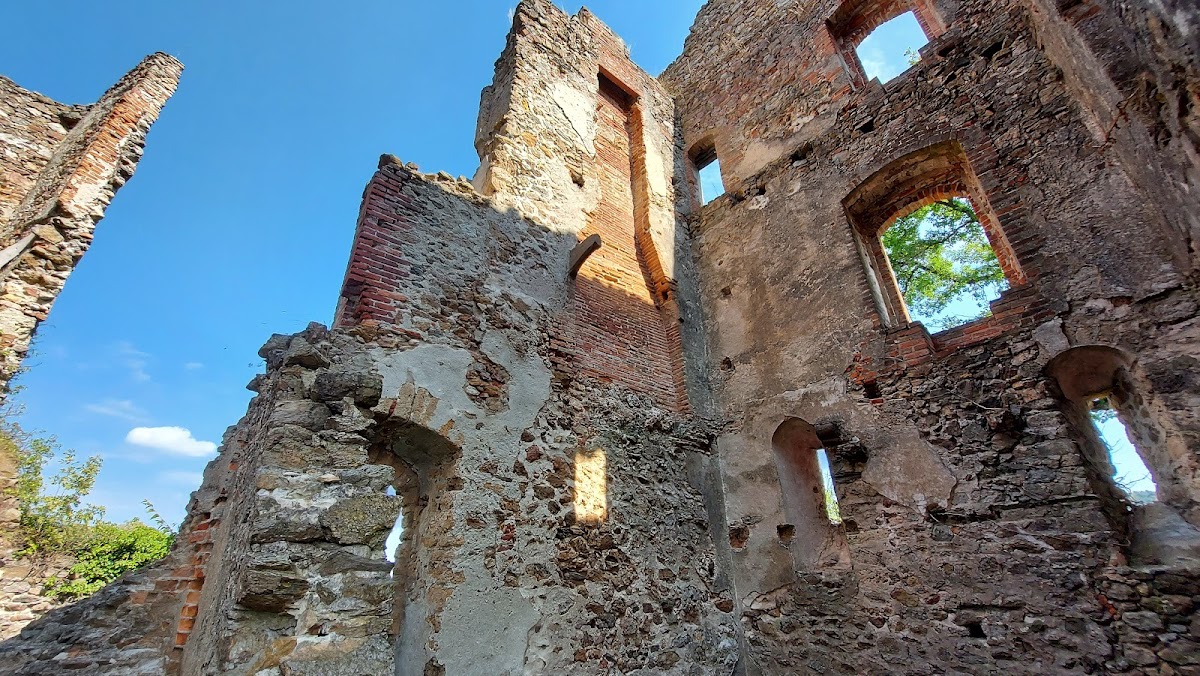
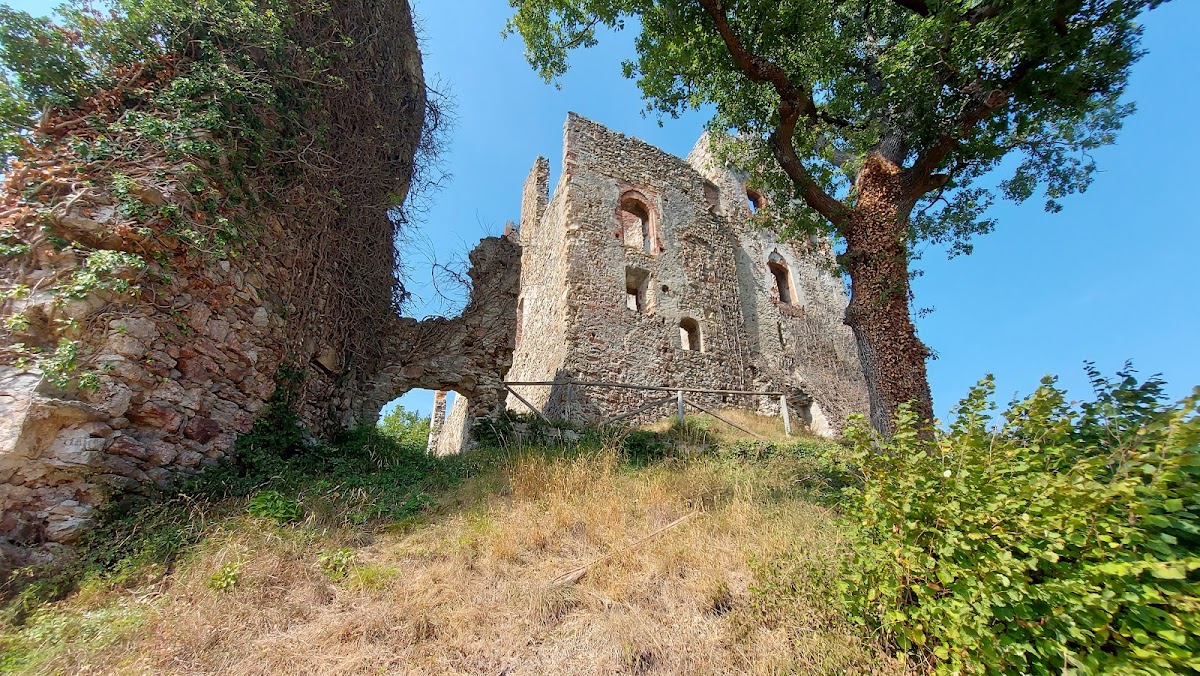
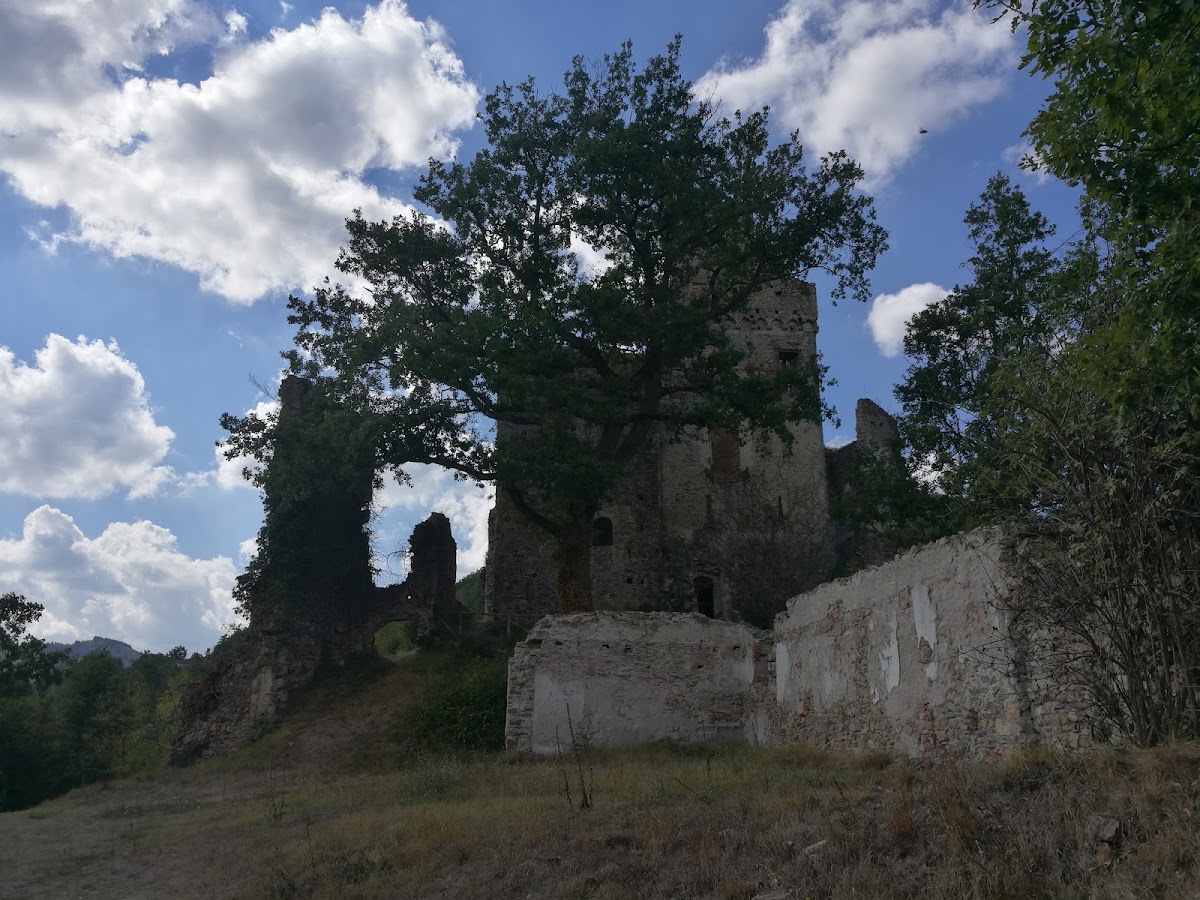
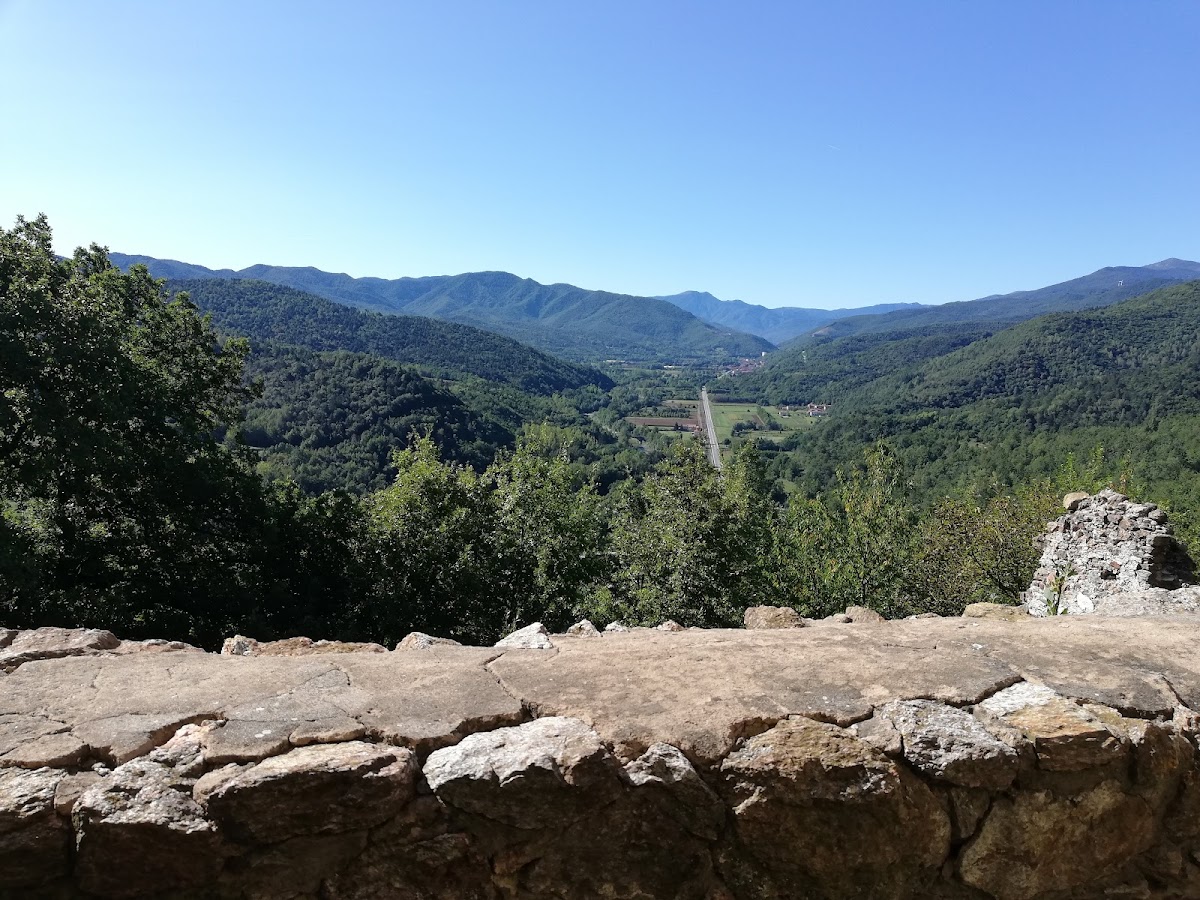
The surviving castle stands at approximately 600 metres above sea level on a mountainous spur descending from the Mongia-Tanaro watershed toward the main Tanaro Valley. It overlooks the centre of Nucetto, and its elevated position makes the ruins visible from a considerable distance while providing views over the Tanaro Valley. Built of stone and brick, the medieval fortification now survives in a precarious condition.
Fortification and Adjacent Church
Castle Ruins
A tall tower and much of the perimeter masonry remain standing. These surviving elements preserve the outline of the fortified site and reflect its construction in stone and brick. The remaining structure is at risk of collapse, giving the standing tower and perimeter walls a fragile physical condition.
Church of Saints Cosmas and Damian
A small church dedicated to Saints Cosmas and Damian stands beside the castle. It formerly served as Nucetto’s parish church and is now deconsecrated, forming a separate religious feature within the surviving castle setting.