Castello di Gabbiano: A Renaissance Noble Residence in Tuscany


Visitor Information
Google Rating: 4.8
Popularity: Low
Official Website: www.castellogabbiano.it
Country: Italy
Civilization: Unclassified
Site type: Military
Remains: Castle

History
Castello di Gabbiano is located in San Casciano in Val di Pesa, Italy. It was originally constructed during the Renaissance period by a branch of the Bardi family in the early 15th century, reflecting the flourishing culture of noble estates in Tuscany at that time.
In the following years, this noble residence came into the possession of Tommaso Soderini, father of Pier Soderini, who served as gonfalonier, a chief magistrate of the Florentine Republic. Under Soderini ownership, the castle remained an important seat connected to Florence’s political elite. However, after the Medici family regained control of Florence, the Soderini family was forced into exile as part of the Medici’s consolidation of power. This political shift led to the castle’s abandonment and deterioration.
The castle remained in disrepair until 1623, when it was restored and returned to the Soderini family. A commemorative plaque above the main entrance records this restoration and mentions the poor condition of the building at that time. Throughout the 19th century, ownership passed to the Rosselli Del Turco family, who contributed to its history by adding a chapel in the neoclassical style, reflecting the tastes of their era. Later, the Lemmi family acquired the estate and carried out extensive restoration work to preserve and enhance the castle.
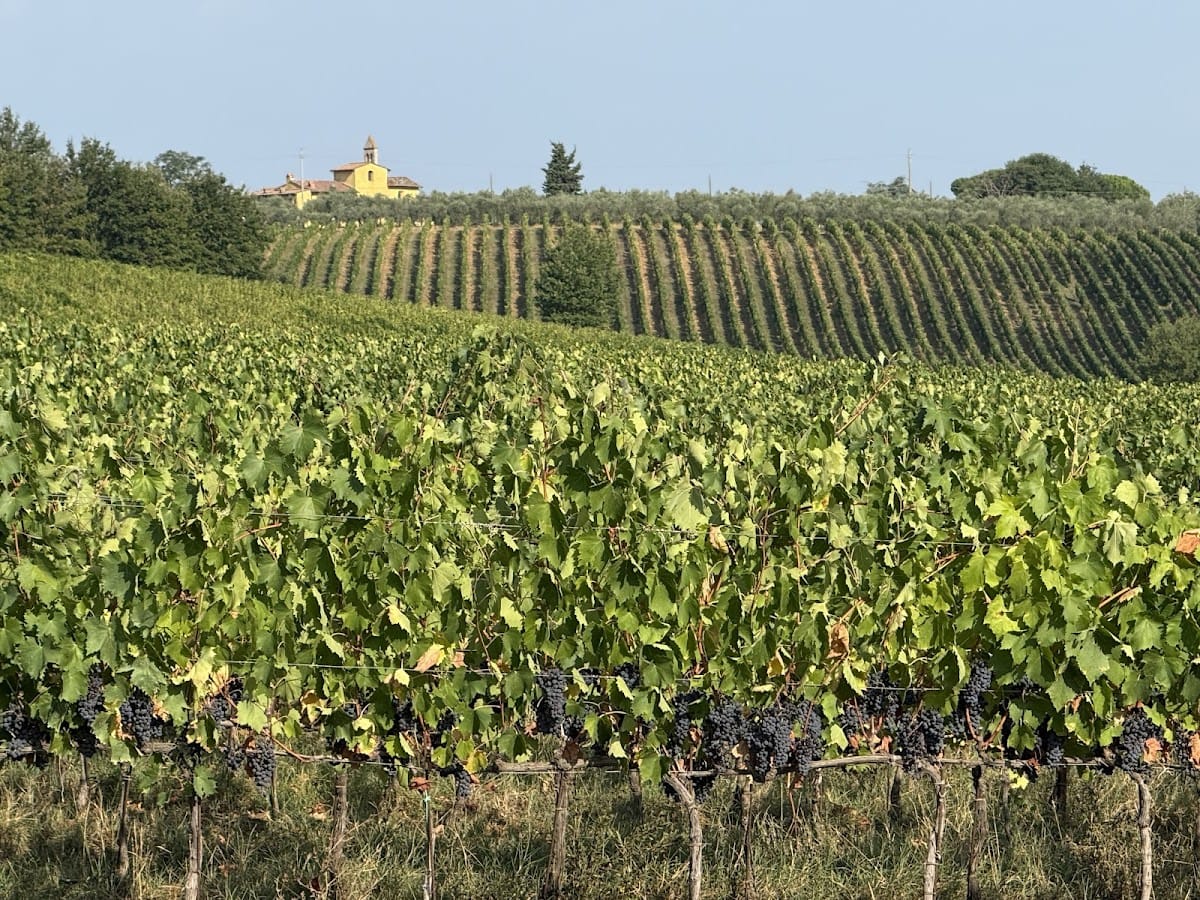
In the 20th century, the property changed hands to notable figures including the writer Arnaldo La Cagnina, known as the second husband of Claude d’Orléans. Subsequently, the castle came under the ownership of the Arcaini family, and today it operates as a winery controlled by the Beringer Blass group. This progression demonstrates the ongoing use and adaptation of the estate across centuries.
Remains
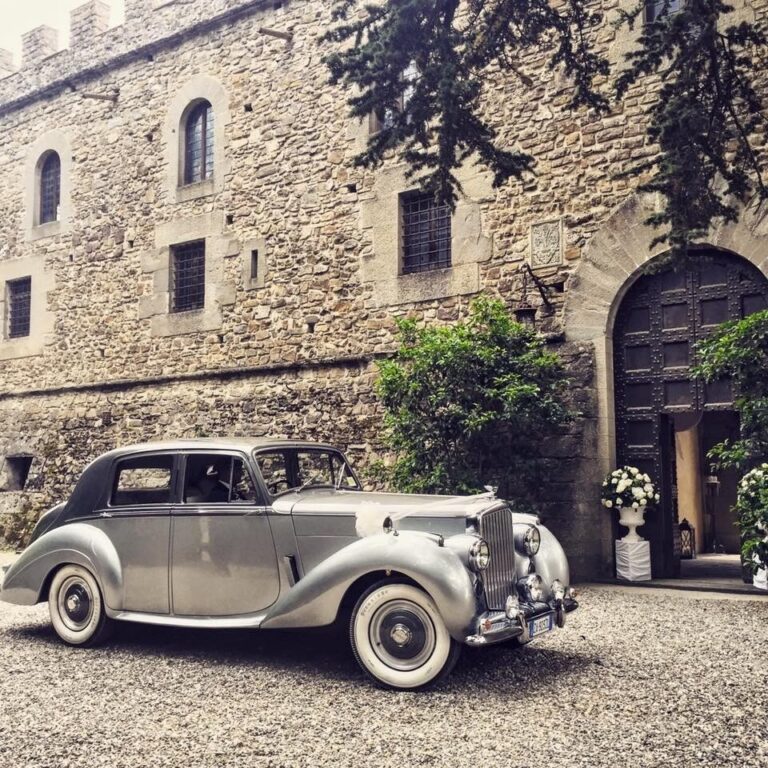
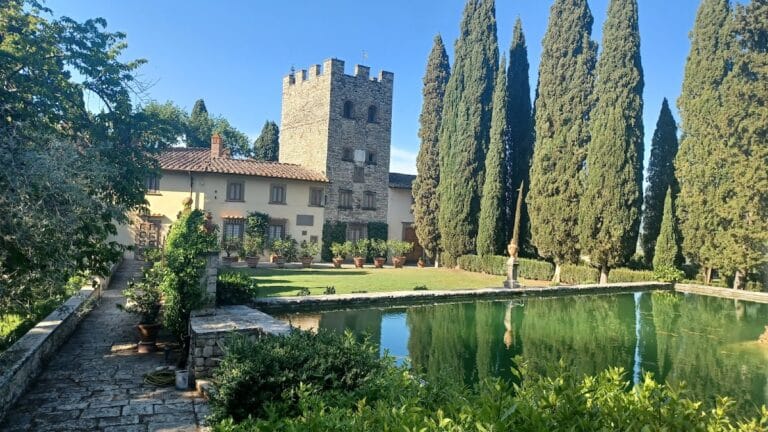
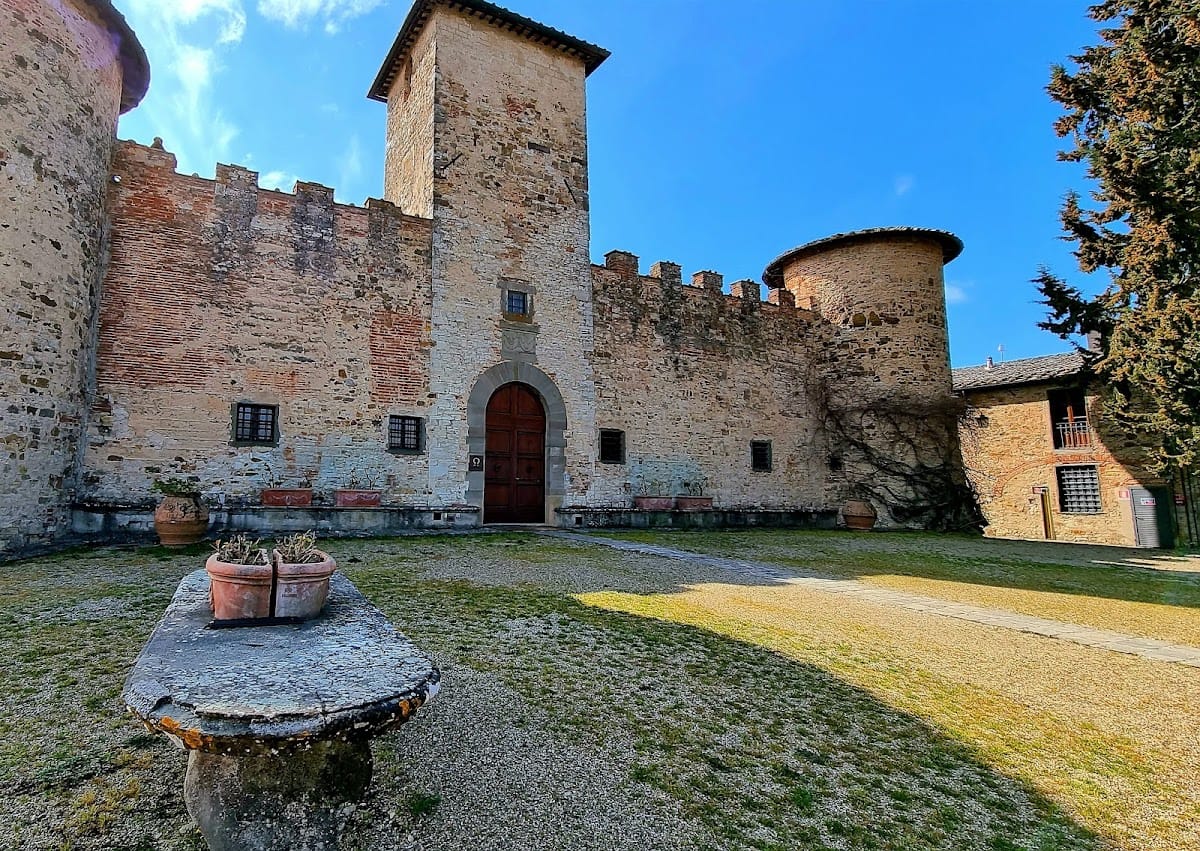
The Castello di Gabbiano presents an imposing quadrangular form, anchored at each corner by cylindrical towers. These towers were added after the mid-15th century, in a manner similar to the nearby Castello di Meleto, combining both defensive strength and an enhanced visual presence. The castle’s main façade features a central tower with a square base, which likely represents the original structure around which later expansions were built. The masonry of this tower is distinguishable from that of the curtain walls connecting the cylindrical towers, highlighting its earlier construction phase.
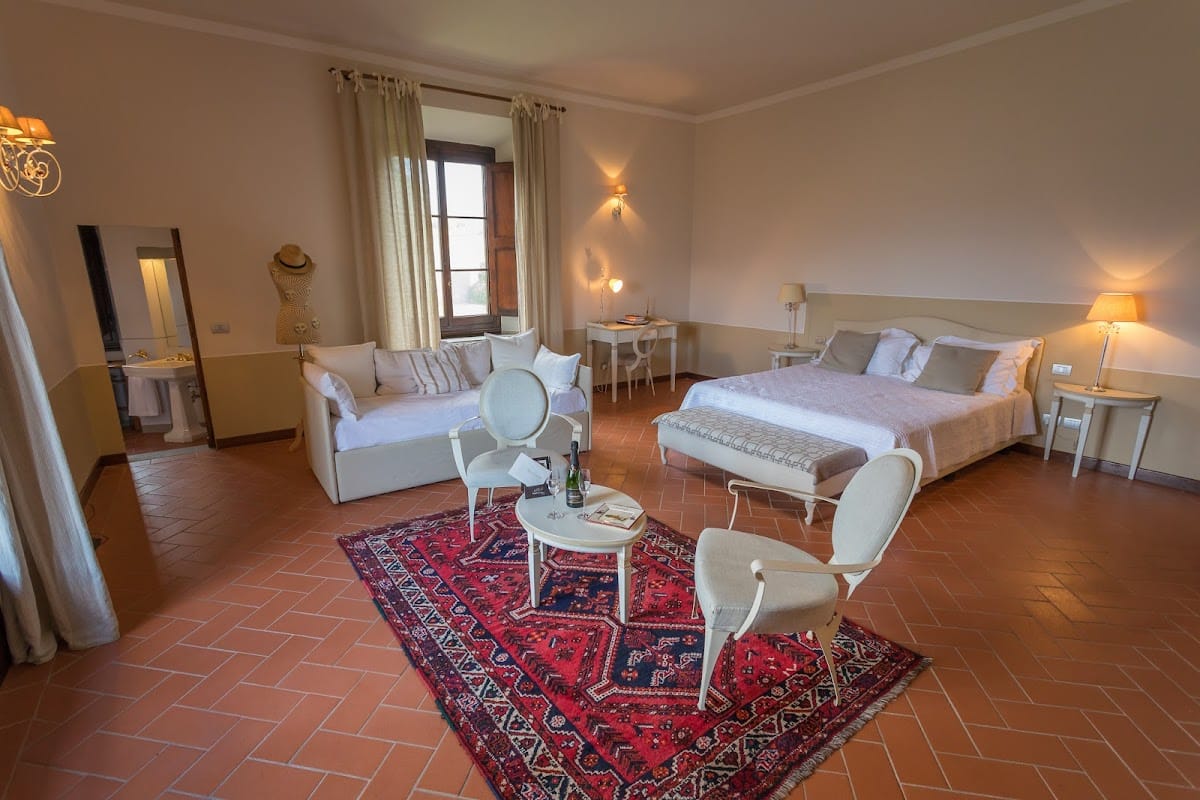
Inside, the 19th-century renovations brought significant decorative changes, particularly within the corner towers. These rooms were adorned with frescoes illustrating idyllic and Arcadian scenes, reflecting a romanticized vision of rural life and harmony with nature common during that period. The main hall is noted for its restored coffered ceiling, a ceiling design featuring recessed panels, which adds to the historical ambiance of the interior.
The addition of a neoclassical chapel by the Rosselli Del Turco family further enriched the castle’s architectural diversity. This chapel demonstrates the evolving religious and aesthetic expressions of the castle’s owners during the 19th century. Above the main entrance, a plaque remains in place to commemorate the castle’s poor state during the restoration carried out in the early 17th century, serving as a tangible reminder of its periods of decline and renewal.
Together, these elements reveal the layered history of the castle’s construction and decoration, illustrating shifts in ownership, function, and architectural style over several centuries. The castle today stands as a preserved Renaissance noble residence adapted through centuries of changing tastes and uses.
Nearby sites