Castle of Verrazzano: A Historic Tuscan Castle and Wine Estate
Site at a Glance
- Rating
- 4.7
- Popularity
- Medium
- Country
- Italy
- Primary era
- Early Modern
- External website
- Open
- Eras represented
- Medieval, Early Modern
- Civilizations
- Grand Duchy of Tuscany, Republic of Florence
- Site type
- Domestic
- Remains
- Castle
On this page11 sections
History
Castle of Verrazzano is a historic castle and agricultural estate in Italy, near Greve in Chianti. Its present form was built between the late fifteenth and early sixteenth centuries, while the property developed from an earlier defensive stronghold associated with vineyards and olive plantations. The estate later became a Tuscan villa and remains connected with Chianti Classico wine and olive-oil production.
Medieval stronghold and the Da Verrazzano family
A manuscript dated 1170 records the stronghold and its vineyards. The surviving crenellated tower is identified with the thirteenth-century phase of the site. The castle belonged to the Florentine Da Verrazzano family, members of the Guelphs, a medieval Italian faction generally associated with support for the papacy and opposition to the pro-imperial Ghibellines.
Two sons of the family died at the Battle of Montaperti in 1260, a major conflict in the wider Guelph-Ghibelline struggle in Tuscany. Ser Chiaro da Verrazzano was exiled to Rome, but returned after the Guelph party was restored and his possessions were returned.
Renaissance castle and Tuscan villa
The present castle rose between the late fifteenth and early sixteenth centuries. Tradition identifies it as the birthplace in 1485 of Giovanni da Verrazzano, the Florentine navigator and explorer associated with the discovery of the bay of present-day New York.
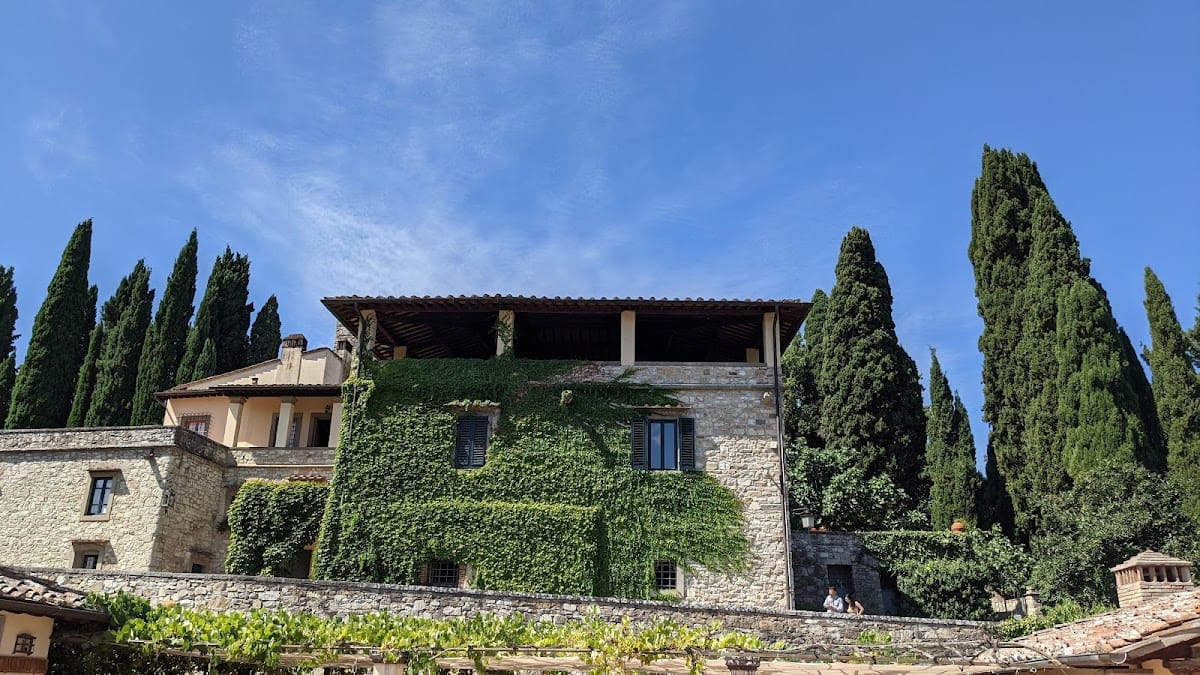
In a later phase, the castle was converted into a residence for the estate’s ruling family. During the seventeenth century, it became a Tuscan villa with a farm estate and an Italian-style garden. This transformation connected the residential complex more closely with agricultural production, including the vineyards that had been associated with Verrazzano since at least the twelfth century.
Ridolfi, Olympic, and Cappellini ownership
After the Da Verrazzano family became extinct in 1819, the estate passed to the Florentine Ridolfi family. In 1936, Luigi Ridolfi, a Florentine sports administrator and chairman of the athletics federation, made the rooms and grounds available for training by the Italian Olympic team.
The Cappellini family has owned the estate since 1958. Under its direction, extensive restoration was undertaken with support from the Superintendency for Monuments of Florence, and a modern winery was established. The property continues to function as an agricultural and wine-producing center, known for Chianti Classico wine and olive oil.
Remains
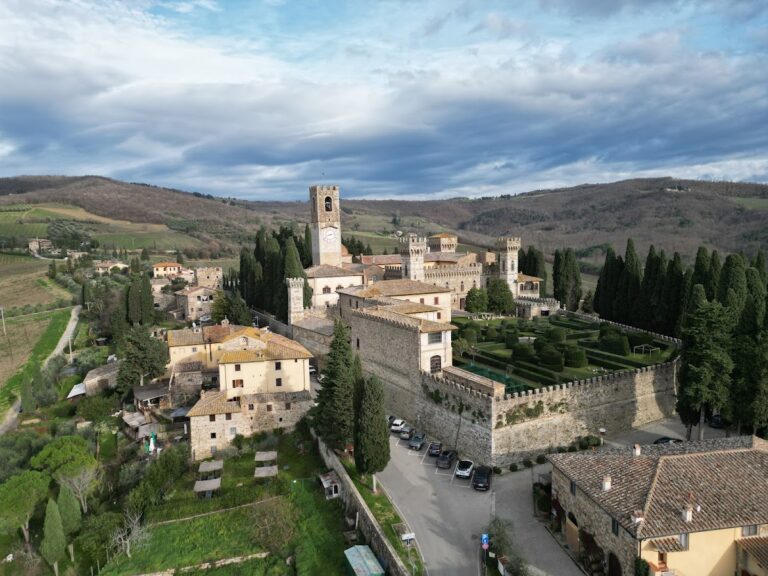
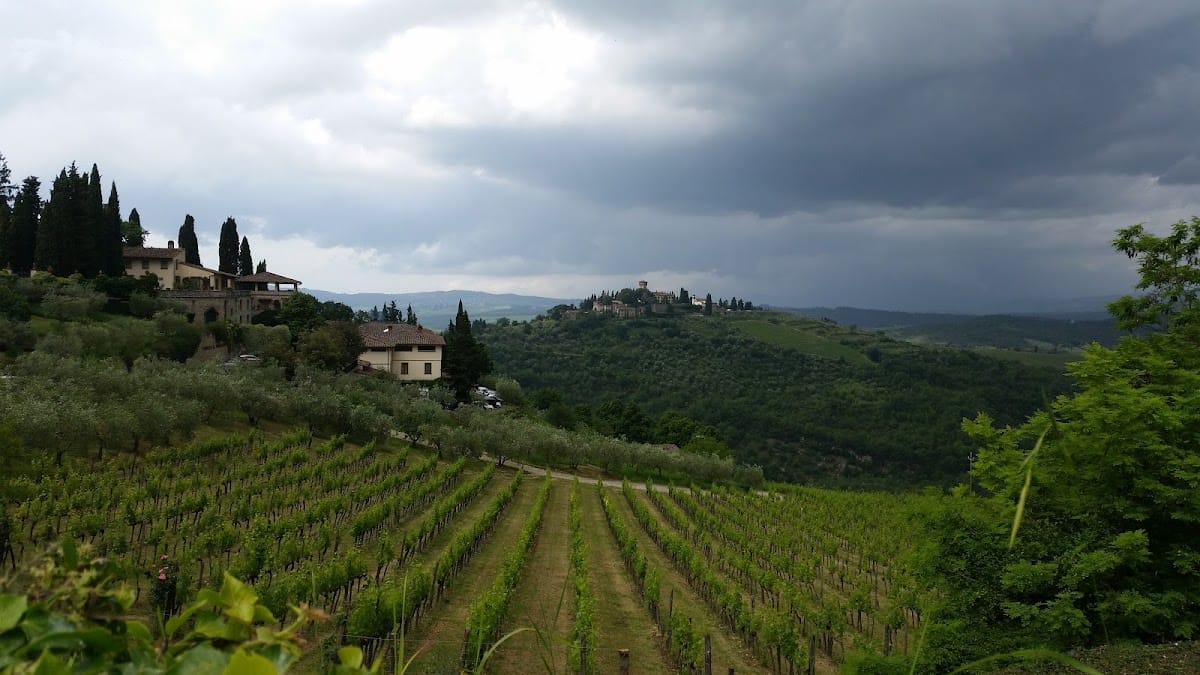
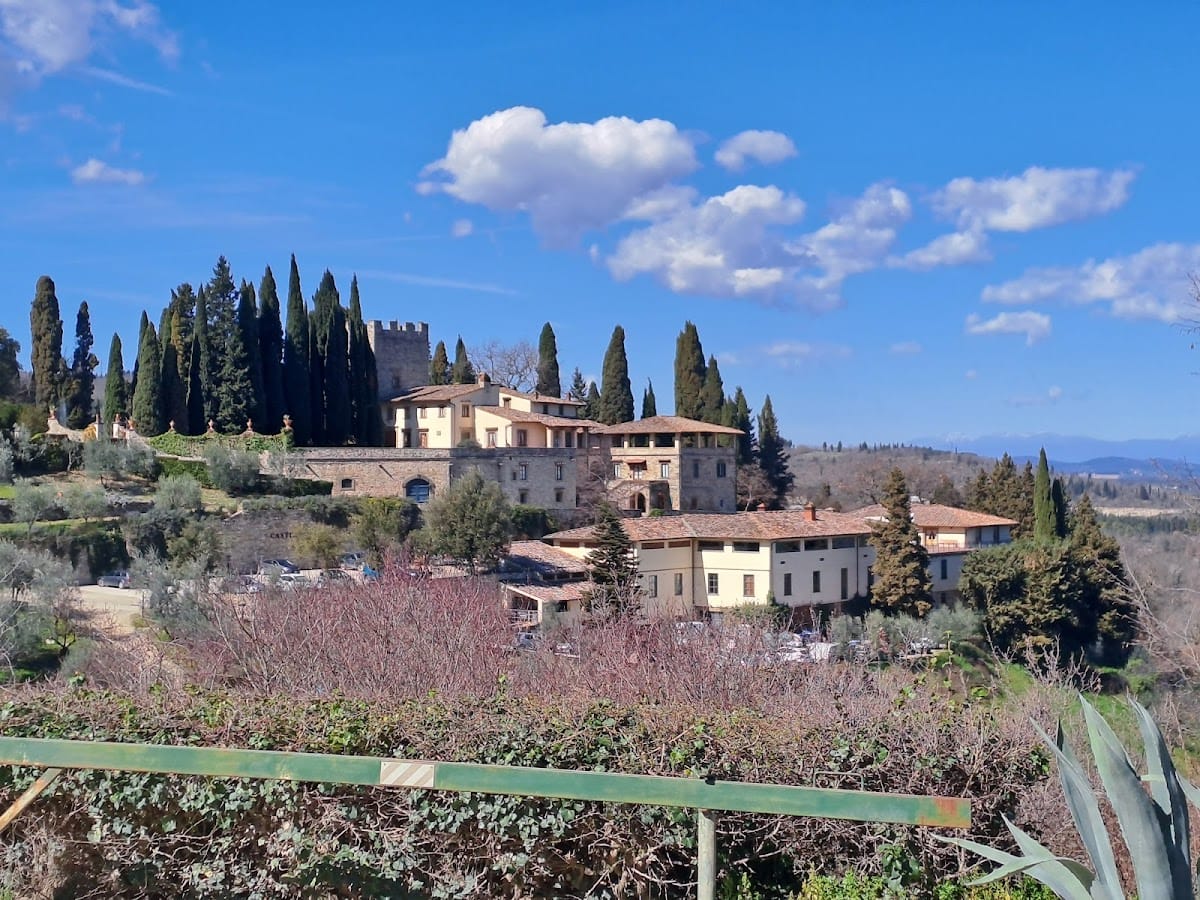
Castle of Verrazzano stands on a hill at an elevation of 348 metres near Greve in Chianti. The complex brings together the castle, a medieval defensive remnant, a chapel, a historic wine cellar, a Tuscan farm complex, and an Italian-style garden. Vineyards surround the castle, continuing an agricultural association mentioned in the 1170 manuscript preserved in the library of the Abbey of Passignano.
Medieval and religious features
Crenellated tower
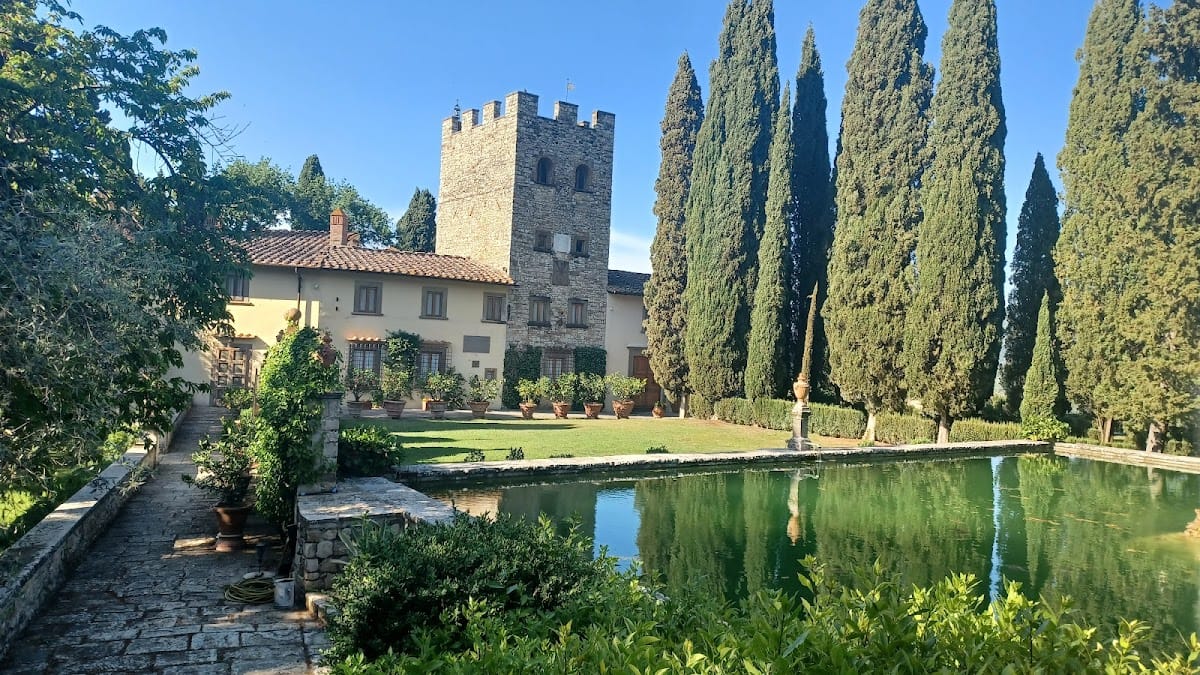
A crenellated tower dating from the thirteenth century is regarded as the surviving part of the earlier defensive stronghold. Its position within the later estate preserves a physical link with the site’s medieval phase, when the stronghold was associated with the protection of vineyards and olive plantations.
Chapel
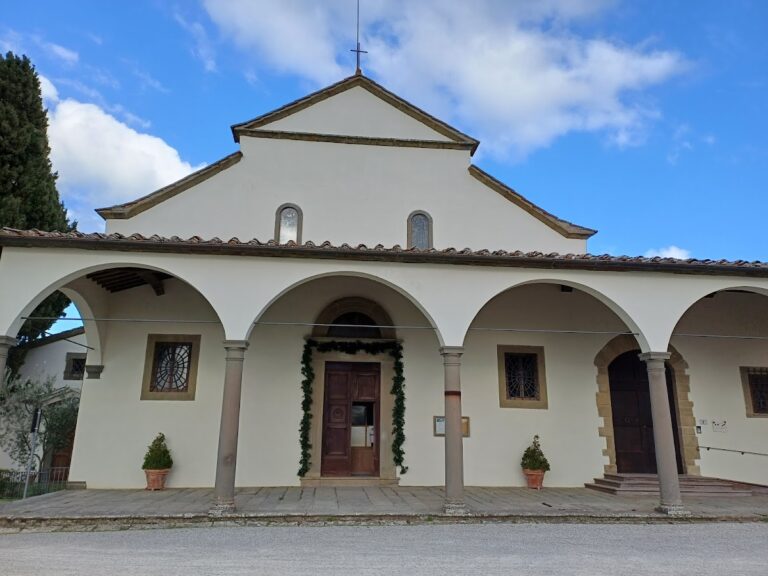
A chapel adjoins the castle. Inside it is a panel painting by the Florentine painter Domenico Ghirlandaio, titled The Eternal Father. Ghirlandaio was a leading late fifteenth-century artist known especially for religious frescoes and panel paintings.
Villa and agricultural estate
Historic wine cellar
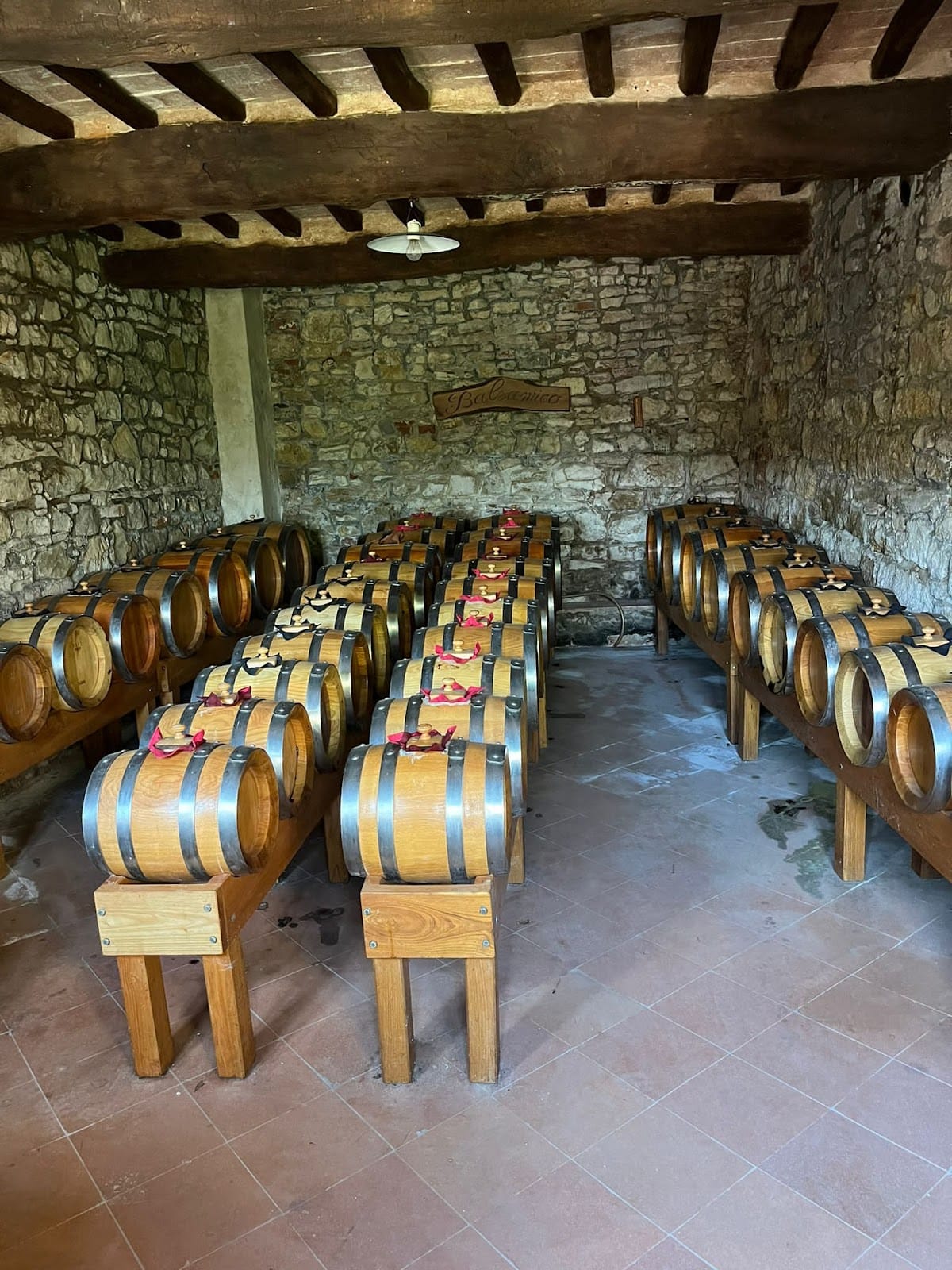
The historic wine cellar dates from the sixteenth century. It forms part of the estate’s long wine-producing tradition, which is also reflected in the vineyards surrounding the castle and in the earlier written reference to Verrazzano’s vineyards.
Farm complex and Italian-style garden
The estate includes a Tuscan farm complex and an Italian-style garden. Both reflect the property’s transformation into a villa during the seventeenth century, when the castle became part of a larger residential and agricultural landscape.