Castello Arabo Normanno: A Historic Fortress in Castellammare del Golfo, Italy



Visitor Information
Google Rating: 4.2
Popularity: Low
Google Maps: View on Google Maps
Country: Italy
Civilization: Unclassified
Remains: Military

History
The Castello Arabo Normanno is located in Castellammare del Golfo, Italy. This fortress traces its origins to the Arab civilization, which established it in the 10th century atop earlier defensive structures.
During the Arab period, the castle was constructed on a promontory and was accessible via a drawbridge connecting it to the mainland. After Arab control, the Normans expanded the fortress, adapting it to their military needs. Following this, the castle became a stronghold under Swabian rule, when walls and towers were added to strengthen its defenses.
In the early 14th century, control of the castle shifted between the Angevins and the Aragonese. After reclaiming it in 1316, the Aragonese partially demolished certain fortifications along with one of the towers. By the mid-16th century, a third tower known as “il Baluardo” was constructed, supplementing the two earlier battlemented towers named “San Giorgio” and “della campana.”
Later enhancements included a second ring of defensive walls with three formal gates, completed in 1587. During this time, the original drawbridge was replaced by a permanent masonry bridge, which remains visible today. Over the centuries, the castle passed through the hands of several noble families, including Raimondo di Peralta and the Luna family. It also came under the ownership of Francesca Balsamo Aragona, the princess of Roccafiorita.
In the 19th century, the castle’s role shifted from military use to serving as a prison. Early in the 20th century, the last private owner, lawyer Giuseppe Cassarà, undertook excavations and restoration projects to uncover and preserve parts of the structure. Today, the castle is publicly owned and houses “La Memoria del Mediterraneo,” a museum complex that explores the region’s water mills, productive industries, archaeology, and maritime history.
Remains
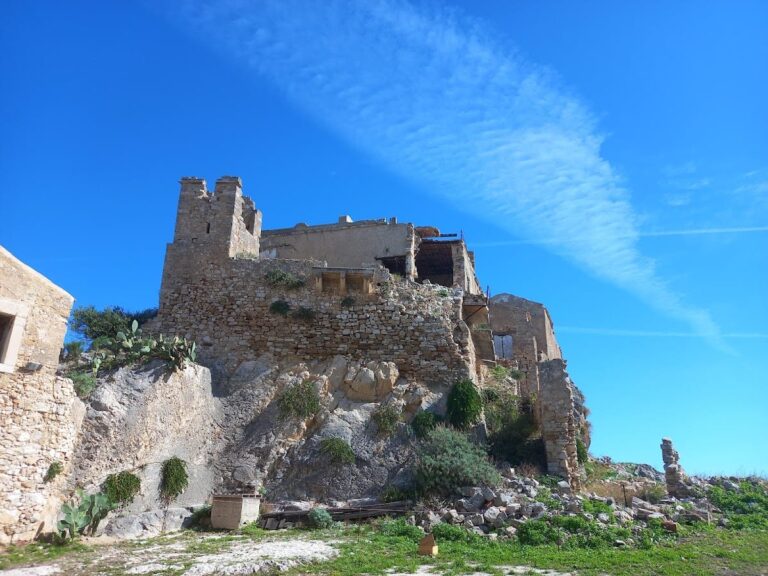
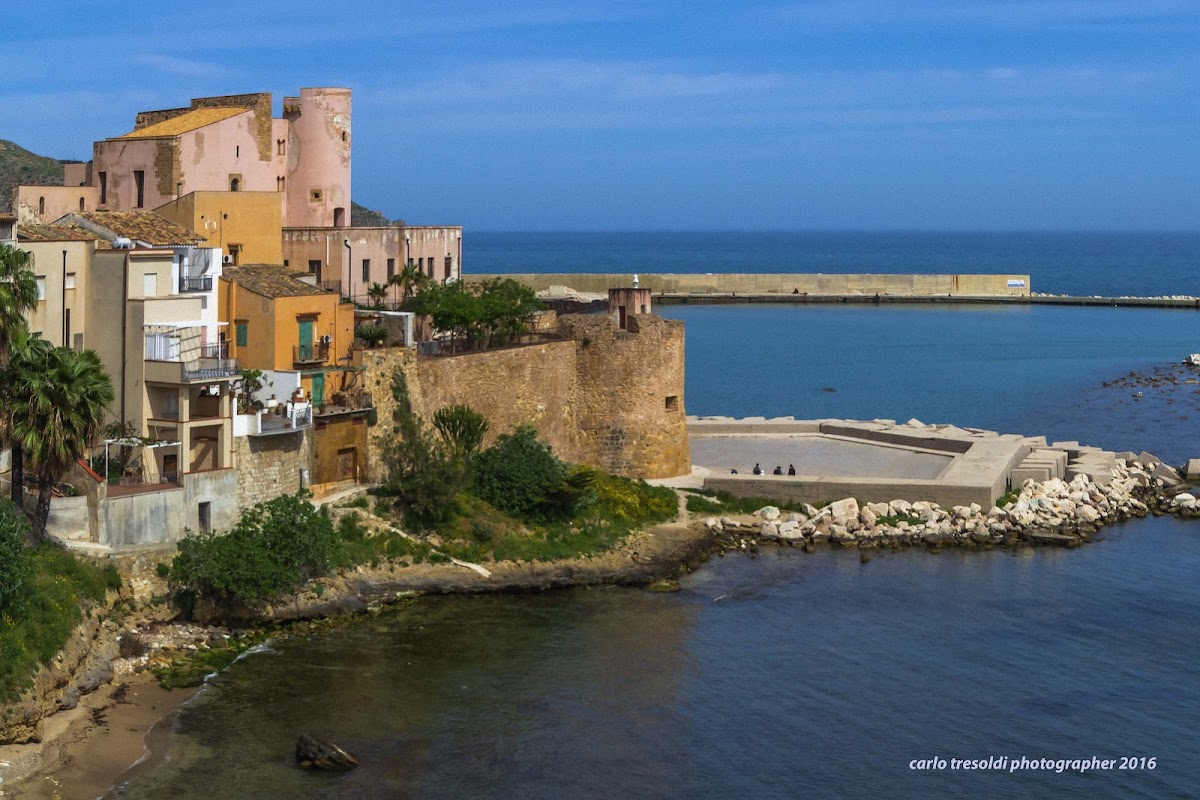
The Castello Arabo Normanno stands as a coastal fortress originally surrounded by seawater, built on a rocky promontory overlooking the sea. This natural position was defended by a drawbridge that linked the castle to the mainland; this bridge was later replaced by a masonry one, which still exists.
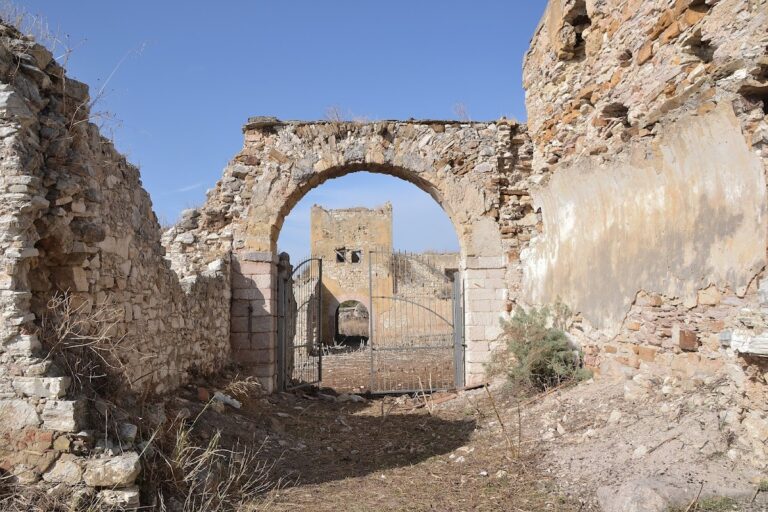
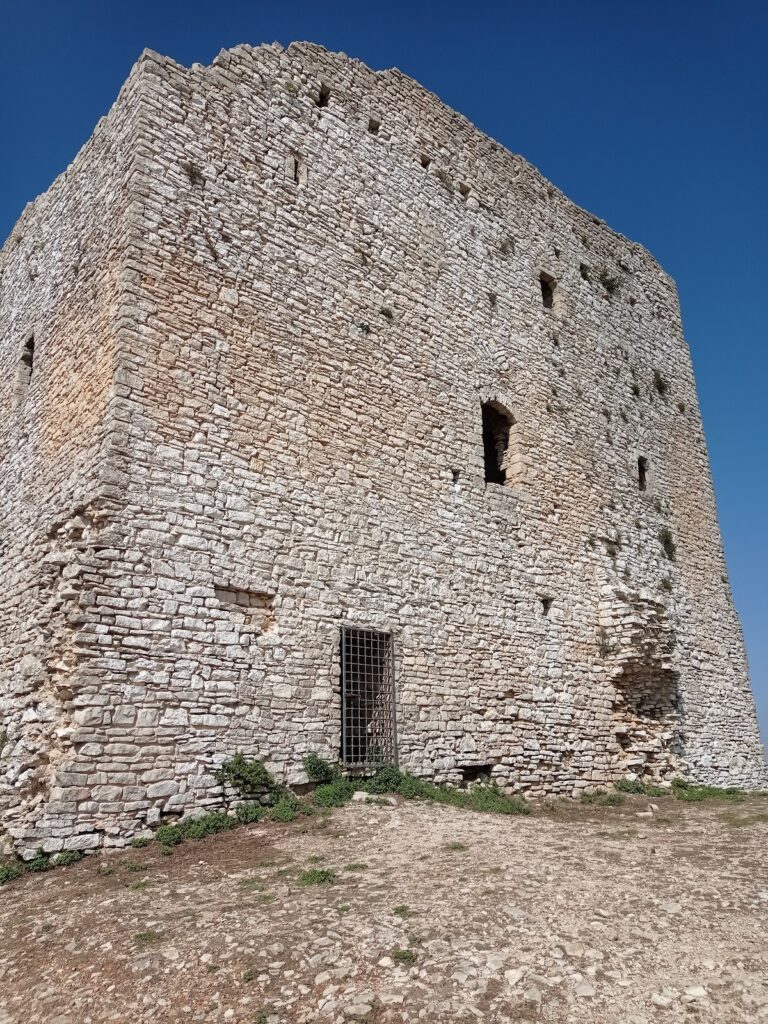
The fortress is enclosed by extensive defensive walls reflecting multiple historical layers of construction. The earliest Arab and Norman phases established the core fortifications, later reinforced by Swabian additions of walls and towers. Among the prominent features are two battlemented towers from earlier periods, called “San Giorgio” and “della campana.” A third tower, named “il Baluardo,” was added in 1537, enhancing the castle’s defensive capabilities.
By 1587, a second line of walls was completed, incorporating three access gates that provided controlled entry to the fortress. These fortifications exemplify the evolving military architecture from the Arab to the Renaissance era.
In front of the castle lies a naturally enclosed rock basin known as the “vasca della regina,” or the queen’s basin. Local tradition holds that this basin was used by the castle’s queen, linking this feature to the fortress’s domestic history.
During the 20th century, systematic excavations revealed underground chambers and other structural elements within the castle. These efforts, carried out during restoration by Giuseppe Cassarà, have helped document the castle’s layered construction phases. Today, the visible remains include the defensive walls, towers, the masonry bridge, and other structural components that offer insight into the castle’s long and varied history.
Nearby sites