Castell de Vila-seca: A Medieval and Neo-Gothic Castle in Spain


Visitor Information
Google Rating: 4.5
Popularity: Medium
Google Maps: View on Google Maps
Official Website: castellvila-seca.cat
Country: Spain
Civilization: Medieval European
Remains: Military

History
Castell de Vila-seca is located in the town of Vila-seca in Spain and traces its origins to the medieval period. The earliest known reference to the site dates back to between 1162 and 1168, when the lands of Vila-seca—then known by its Latin name Villa sicca—were awarded as a fief to the knight Ramon d’Olzina. This grant was made jointly by three authorities of the Camp de Tarragona: King Alfons el Cast, Archbishop Bernat Tort, and the noble Guillem d’Aguiló. While the original documents and their 1208 reconfirmation by King Pere el Catòlic do not specifically mention a castle, it is believed that Ramon d’Olzina established the first fortified structure on the site during this period.
By the end of the 12th century, Vila-seca was divided into two distinct jurisdictions. One, referred to as Vila-seca del Comú, was controlled by the chamberlain of Tarragona and the lord of Reus, while the other, Vila-seca de Solcina, fell under the authority of the Olzina family. Conflicts arose between these two lordships around 1340, led by Bernat d’Olzinelles of Vila-seca del Comú and Bernat d’Olzina of Vila-seca de Solcina. By 1378, control of both feudal territories had shifted into ecclesiastical hands. Subsequently, in 1390, King Joan I sold his rights over the area to Archbishop Ènnec de Vallterra.
Ownership evolved in the following century as the Olzinelles family came to hold rights over Vila-seca de Solcina. Records from 1417 note Joannes de Ulsinelles as the lord of the castle, indicated by the Latin title “miles dominus castri Villaesiccae de Solcina,” which identifies him as a knight and lord of the fortress. Later in the 15th century, Bernat de Saportella assumed lordship and took part in the Catalan civil war siding with King Joan II. The Saportella family maintained jurisdiction until 1520.
A significant change occurred in 1525 when Archbishop Pere de Cardona, then lord of Vila-seca del Comú, purchased both the castle and jurisdiction of Vila-seca de Solcina from Tadeu de Saportella. This unification brought the two previously separate Vila-secas under the single name Vila-seca de Solcina. During the 16th century, the area faced frequent raids from Barbary corsairs, prompting the construction of defensive walls around the town to protect its inhabitants.
The castle’s ownership transitioned several times after the 17th century. In 1680, it was sold by the Archbishop of Tarragona to mossèn Valls, who is most likely the knight Lluís de Valls. Soon after, mossèn Jardí and later Josep Vidiella from Tivissa became owners. In 1683, Dutch consul Joan Kies Noë acquired the property and adapted it into a rural house reflecting Dutch architectural styles, notably preserving only the main tower from the original medieval structure.
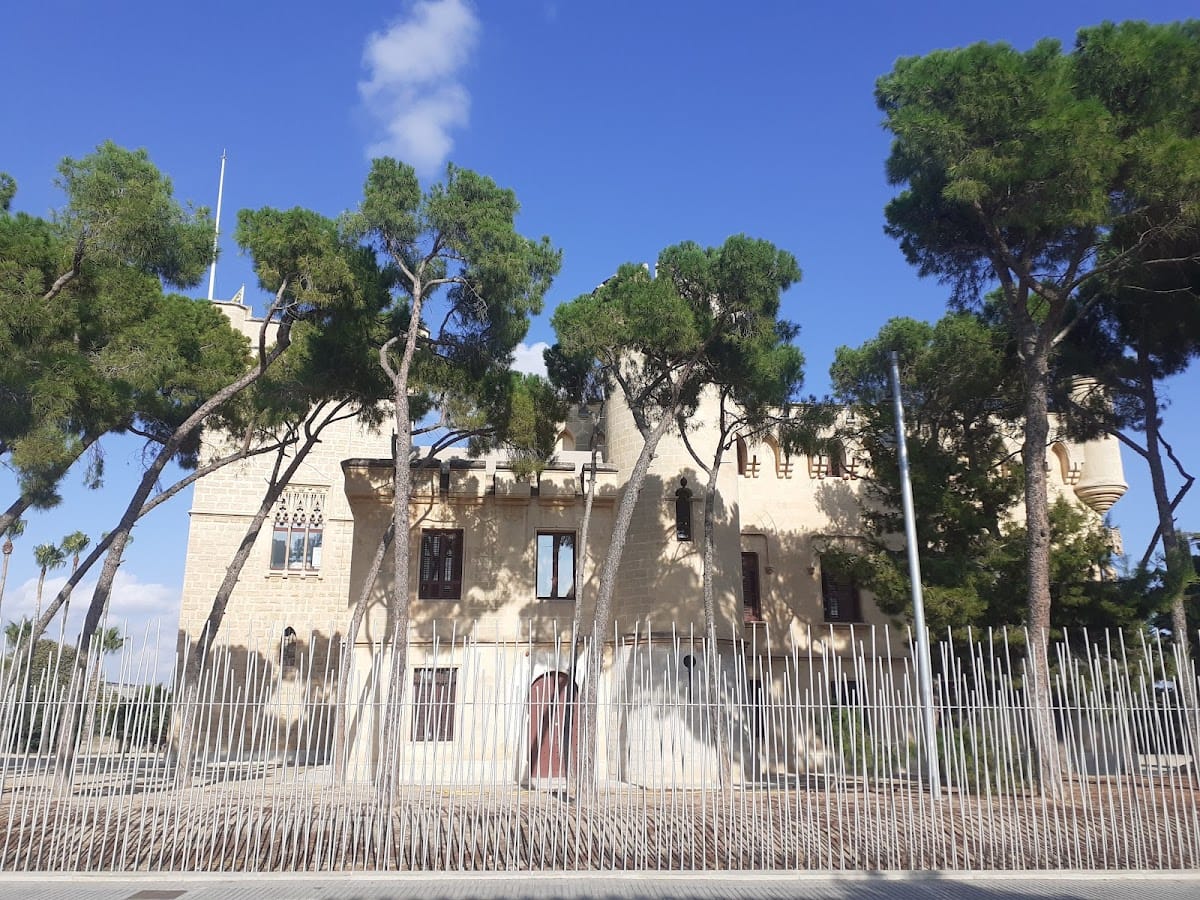
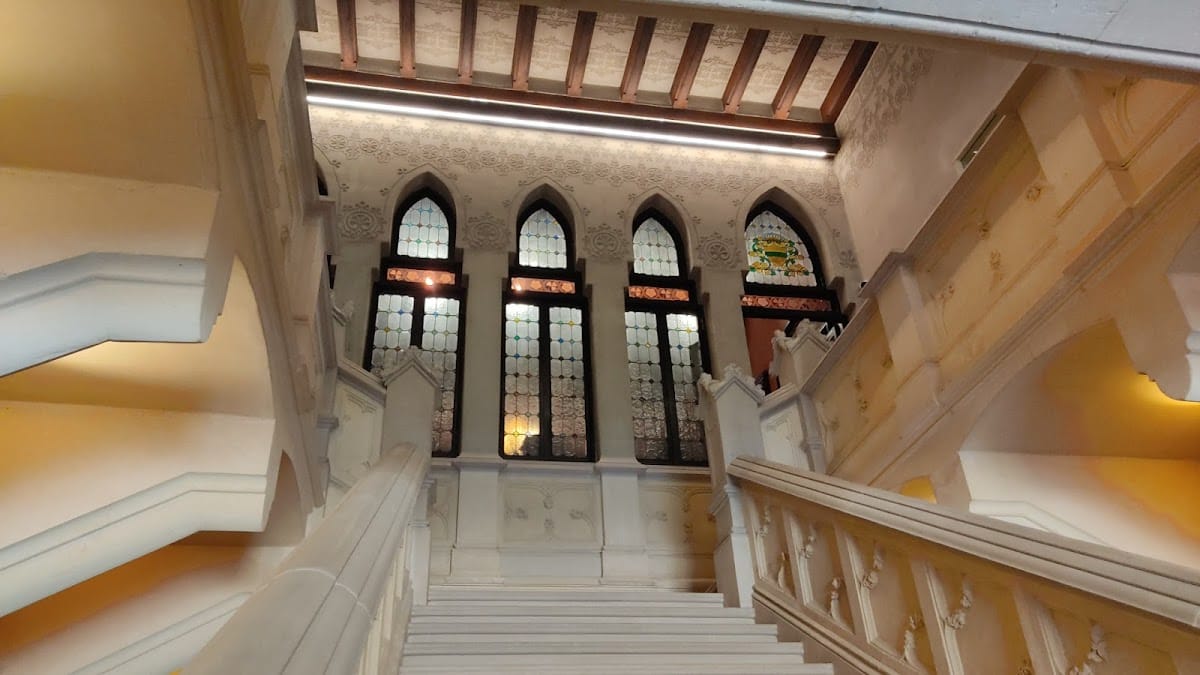
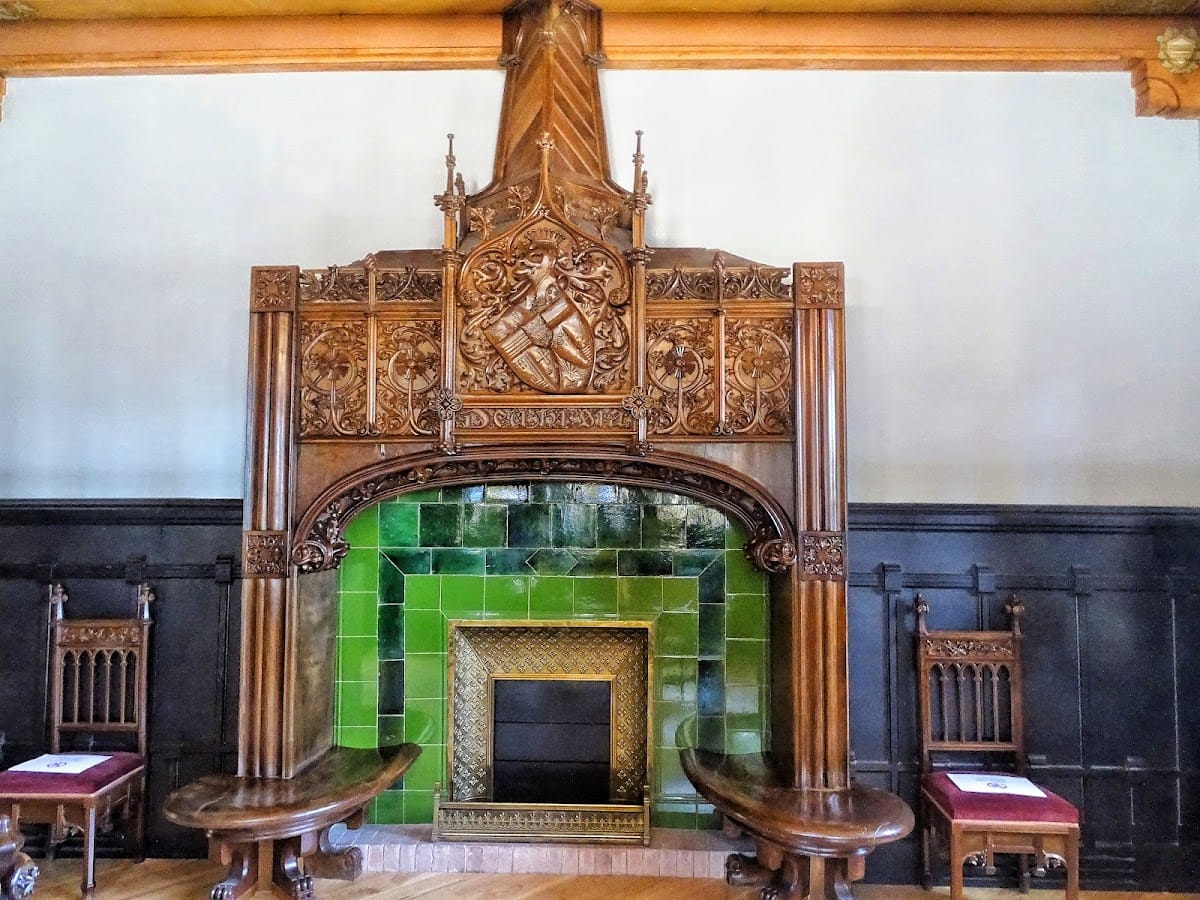
The castle underwent a major transformation toward the end of the 19th century. Antoni Kies Muñoz sold it in 1899 to Isidre Sicart i Torrents, who had been honored with the title Count of Sicart by Pope Pius IX in 1875. The count commissioned architect Enric Fatjó i Torras to remodel the castle extensively. This renovation imparted the building with a neo-Gothic style influenced by the historicist trends of central and northern Europe that were popular at the time.
Since 2005, the Vila-seca City Council has owned the castle and its adjacent garden. The municipality undertook restoration efforts to adapt the site for cultural use, preserving its layered history while opening it as an exhibition space for the community.
Remains
The surviving structure of Castell de Vila-seca consists primarily of a rectangular building with two levels that reflect its complex evolution from medieval fortress to 19th-century rural residence. The ground floor was historically allocated for practical functions such as stables and storage rooms for farming tools. A central staircase within the entrance hall connects this lower level to the upper noble floor, indicating the division between working and residential spaces within the building.
The upper floor is distinguished by a series of窗 windows arranged like a gallery, locally known as a llotja. This floor also incorporates small turrets with Nordic architectural motifs, a characteristic introduced during the 19th-century remodeling. At the top, the roof terrace features defensive elements such as machicolations—openings through which defenders could drop objects on attackers—and battlements, underscoring a stylistic revival of medieval fortification features that contrast with the building’s residential adaptations.
The main tower, known as the Torre d’Olzina, stands out as the oldest part of the castle. Its ashlar masonry—large, carefully dressed stone blocks—dates back to the Roman period, suggesting the tower was originally part of a defensive installation constructed during the Christian repopulation to secure the territory against raids. This tower’s interior measures approximately 5.10 by 4.25 meters, with walls nearly two meters thick, emphasizing its defensive purpose.
Inside, the ground floor of the tower is nearly cubic and is covered by a Lombard vault, a type of slightly pointed stone ceiling, reaching a height of 6.20 meters. This vaulting technique reflects medieval construction methods. An original entrance placed high on the tower’s upper level (called a portelló) remains visible as a ruinous remnant, hinting at how defenders might access the fortifications. The north side has a lintelled door, an opening topped by a horizontal beam rather than an arch. This doorway was somewhat modified over time: initially partly obstructed by a pillar supporting a connecting bridge to the main house, it was later widened for easier access.
Narrow slit windows, known as loopholes, are found on the tower’s east and west sides. These provided light and allowed defenders to observe and defend against enemies while remaining protected. In the castle’s neo-Gothic renovation, these loopholes were transformed into small, decorative windows consistent with the romanticized medieval style of the 19th century.
The tower’s first floor was adapted into a lookout space during the later modifications. Its upper terrace extends above the medieval structure, creating a contained empty area that separates the original building from the new additions. Before the extensive 19th-century work, the castle’s walls were composed of rubble stone masonry visible from only one dressed side and had a limited number of defensive openings mostly facing the north, the side considered least vulnerable.
During the 1800s renovations that gave the castle much of its present-day appearance, exterior walls were clad with uniform ashlar blocks to provide a refined surface. Large windows were inserted on the noble floor to introduce more light, replacing smaller medieval openings. The building’s height was also increased at the top, finished off with machicolations, battlements, and projecting corner turrets that recalled traditional defensive features but functioned primarily as decorative elements.
Of all these features, the ground floor of the tower remains the most intact part of the original medieval fortress, preserving the solid defensive craftsmanship from centuries past amid layers of architectural change.
Nearby sites