Castell de Vilafortuny: A Medieval Castle and Archaeological Site in Spain

Site at a Glance
- Rating
- 4.3
- Popularity
- Low
- Country
- Spain
- Primary era
- Medieval
- External website
- Open
- Eras represented
- Iron Age, Medieval
- Civilizations
- Iberian
- Site type
- Military
- Remains
- Castle
On this page14 sections
History
Castell de Vilafortuny is a medieval castle and archaeological site in Spain, within the municipality of Cambrils, built in the late eleventh century on a hill previously occupied by an Iberian settlement probably belonging to the Cossetans. It became the centre of the Vilafortuny estate and of a municipality bearing the same name. The settlement appears in Cambrils’ charter of 1152, while the oldest specifically cited document concerning the castle dates from 1162.
Foundation and medieval lordship
In 1152, the settlement was assigned to Guillem de Fortuny. Two years later, Guillem Fortuny declared that he recognized only the count of Barcelona as his lord and would obey no other lord. Vilafortuny was mentioned as a boundary with Cambrils in 1178, and its church was serving the local population by 1194.
The castle and its rights passed through several ecclesiastical and aristocratic arrangements. In January 1220, Bernat de Benaiges and his wife Maria entered monastic life, he at Santes Creus and she at Vallbona de les Monges, both medieval Cistercian monasteries. Each assigned 1,000 sous secured on Castell de Vilafortuny to the monastery entered by the other, while they also made further donations to the archbishop of Tarragona.
In 1292, King James II exchanged the rights and tithes he held at Vilafortuny with the archbishop of Tarragona for rights at Mont-roig and Alcover. In December 1391, Archbishop Ènnec de Vallterra bought back all the rights that the king still held over Vilafortuny. The settlement was also associated with the Comuna del Camp, a medieval political and administrative association of communities in the Camp de Tarragona, and was recorded as a fief of Joan d’Olzinelles.
War, depopulation, and changing ownership
In 1341, Arnau Roger de Pallars was lord of Vilafortuny when the archbishop warned him to prepare for war with Castile. In 1377, royal troops defeated the forces of the archbishop and the city of Tarragona before Vilafortuny. The episode became known as the “bad expedition of Vilafortuny.”
In 1398, Maria, the wife of the knight Pere Cortit, acquired the castle and its territory as the highest bidder at a public auction. The sale by Pere Moliner and his wife Valença was authorized by the archbishop. Vilafortuny was becoming depopulated, and in 1442 its new lord, Galceran Desprats, obtained privileges from the Tarragona council for people willing to settle there.
During the Catalan Civil War, the Crown seized Vilafortuny. In 1481, King Ferdinand the Catholic returned it to Francesc Jordà, a doctor of the Royal Council and the legitimate successor of Pere Sacalm, a citizen of Barcelona.
Pirate attacks and early-modern jurisdiction
Pirates and corsairs attacked coastal settlements in the surrounding region during the fifteenth and sixteenth centuries. In July 1582, seven Saracen galleons landed at Vilafortuny and destroyed the castle.
In 1591, the Royal Audience of Catalonia, a royal institution of justice and administration, awarded ownership to Àngela de Salbà, wife of Alexandre d’Alentorn, and ordered Francesc de Soldevila i Castellví to leave. In 1599, King Philip III granted Àngela de Salbà jurisdiction over the territory of Vilafortuny, extending twelve maritime miles, together with the right to hold a weekly market and an annual fair.
In 1619, Àngela de Salbà and Alexandre d’Alentorn authorized Rafael Mosset, a canon of Tarragona Cathedral, to recognize the archbishop as the castle’s feudal lord. Their descendants continued to hold the property. In 1702, their heir Josep Galceran de Pinós i de Rocabertí received the title of marquis of Barberà from King Philip V. In 1704, the Royal Ordinary Court of Barcelona awarded him and his mother the inheritance of his grandmother Àngela de Salbà.
Rebuilding and estate life
In 1760, Josep Galceran de Pinós i de Pinós-Urries-Alentorn-Sacirera, third marquis of Barberà, sold the castle, its surrounding lands, and the civil and criminal jurisdiction of the territory to the Reus merchant Salvador de March i Bellver for 23,000 lliures. The castle was then completely ruined, and March had it rebuilt.
After the reconstruction, ownership passed through the descendants Francesc de March i de Santgenís, Joaquim de March i de Bassols, Joaquim de Miró i de March, and Ferran de Miró i d’Ortafà. It later passed to the Castellarnau family of Tarragona and to the marquess of la Mesa de Asta.
The estate functioned as an agricultural and livestock property. Its installations included oil and wine presses, a cellar, a water mine with a basin, large pig pens, and pasture for calves and cattle. A chapel provided a place for Mass when the owners visited or when colonies were staying at the estate.
War, development, and restoration
During the Spanish Civil War, Republican militiamen attacked the castle, after which the International Brigades, foreign volunteer units that fought for the Spanish Republic, occupied it. Troops built wooden trenches with gun embrasures for cannons in the Vilafortuny pine grove to defend the coast. Local farmers dug shelters beneath their farmhouses or beneath carob trees.
On 15 January 1939, Francoist forces occupied Camp de Tarragona. A small military group approached the castle to announce the change of regime, but the troops stationed there had shortly beforehand fled north. The castle was not bombed during the war.
During the tourism boom, the Curt group, a company belonging to the Rumasa group, acquired the castle and built an urban development around it. After a period of abandonment, the Aparici family acquired the property in 2000. A later restoration by the current owner retained the keep and the bridge leading to the walled enclosure. Castell de Vilafortuny was designated a local cultural-interest asset on 8 March 2006. In modern use, the restored building has accommodated a restaurant and has also been used for weddings and banquets.
Archaeological investigation in 2019 showed that the castle occupies the highest part of an Iberian oppidum, a fortified settlement usually placed on elevated ground and enclosed by defensive walls. The settlement is provisionally attributed to the Cossetans, an Iberian people who occupied part of the northeastern Iberian Peninsula before and during the Roman period. Initial indications suggest that the walled settlement may have been affected by the Second Punic War, the conflict between Rome and Carthage fought mainly from 218 to 201 BC.
Remains
Iberian settlement and castle setting
Castell de Vilafortuny stands within the settlement associated with the early twelfth-century village of Vilafortuny and occupies the highest part of an earlier Iberian archaeological site. Remains beneath and around the castle indicate a walled settlement or oppidum. The evidence points provisionally to a Cossetan community, while some parts of the archaeological site still require investigation.
Castle complex
Main building
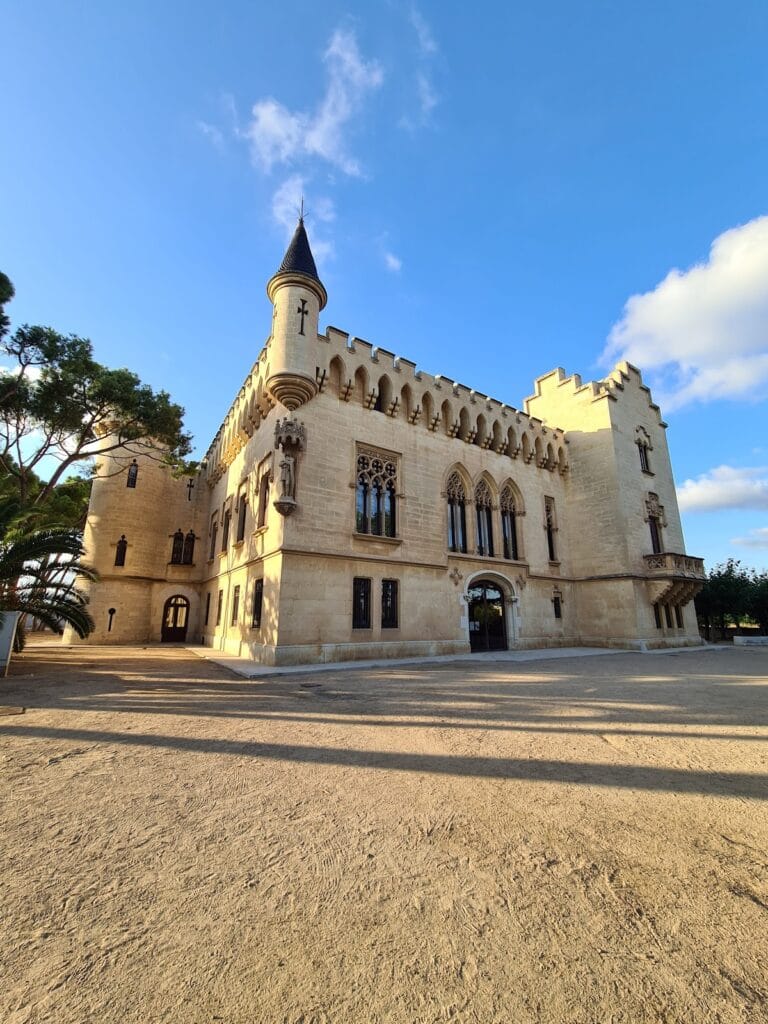
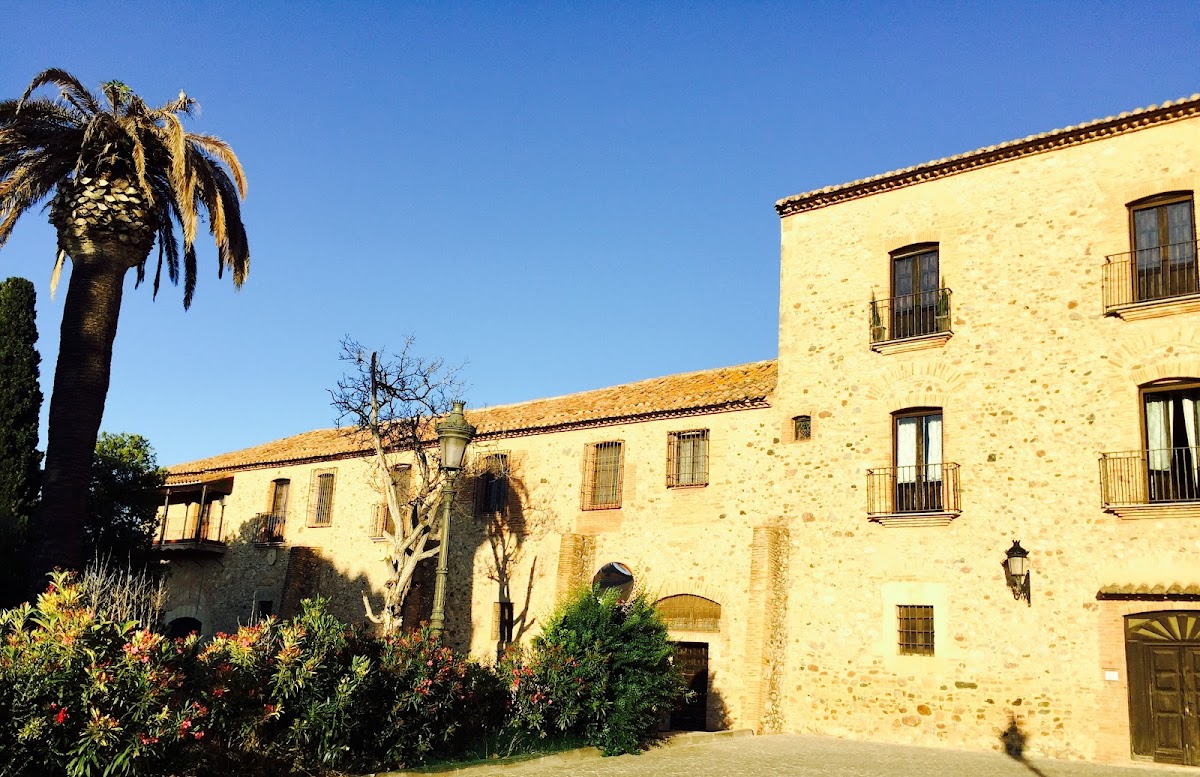
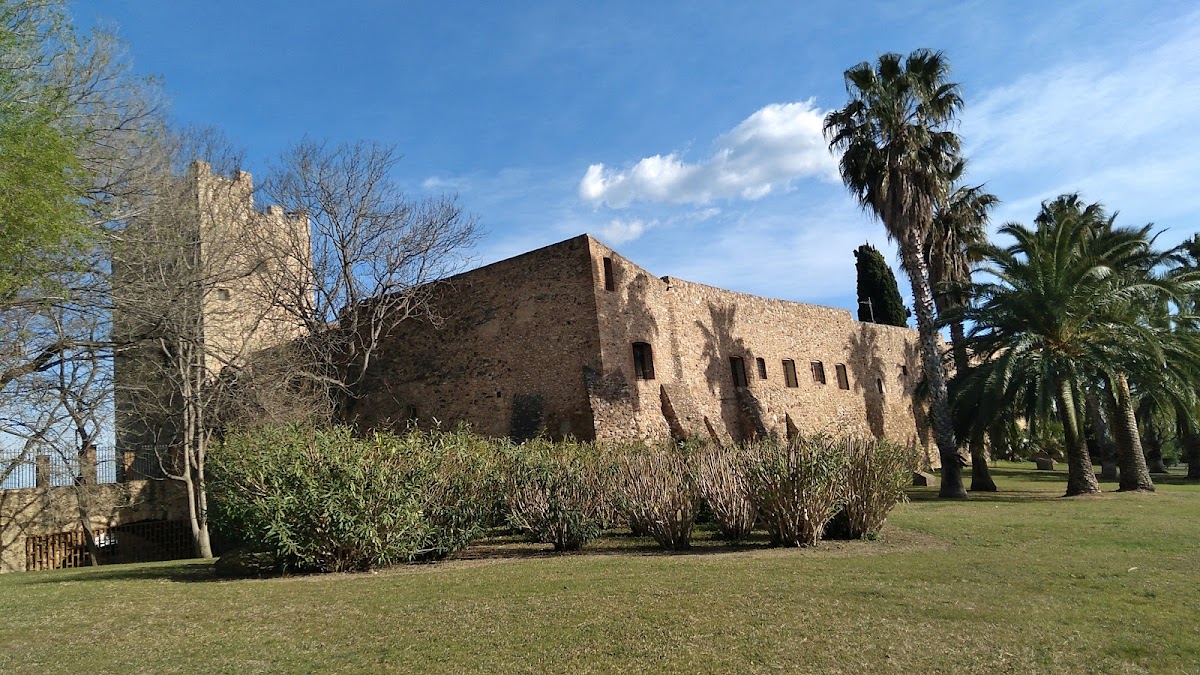
The surviving castle has a rectangular plan, two storeys, and a two-pitched roof. Extensive restoration has altered the building, and few elements of the medieval structure remain. The façades were formerly covered with cement. The current owners removed this covering, exposing the original stonework.
Courtyard chapel
An interior courtyard contains a small chapel topped by a bell gable. The chapel formed part of the castle complex and also served the estate’s religious life, providing a place for Mass when the owners visited or when colonies were staying there.
Tower and entrance bridge
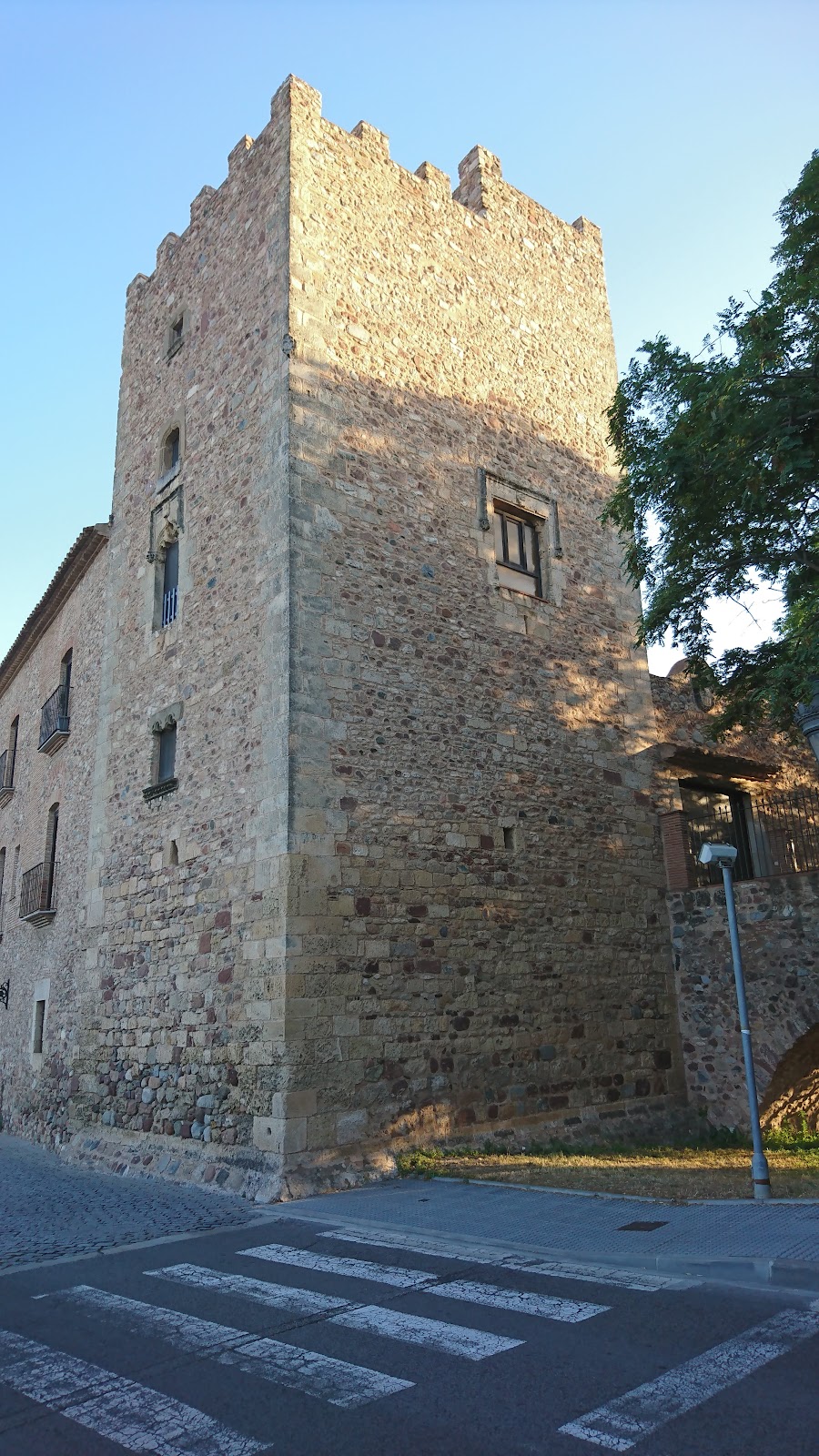
A square-plan tower crowned with crenellations forms part of the complex. The access bridge leading to the walled enclosure has been retained through the later restoration. Together, the tower and bridge remain among the identifiable elements of the fortified arrangement.
Medieval architectural details
Some windows retain medieval-period lintels decorated with arabesques and ogee arches. These surviving details provide a connection with the earlier building within a complex whose present form is largely the result of later rebuilding and restoration.
Agricultural and service features
The estate’s working installations included an oil press, a wine press, a cellar, and a water mine with its basin. Large pig pens and pasture for calves and cattle supported livestock production. These features formed part of the wider agricultural complex associated with the castle.