Castell de Santa Florentina: A Historic Castle in Canet de Mar, Barcelona



Visitor Information
Google Rating: 4.5
Popularity: Medium
Google Maps: View on Google Maps
Official Website: castelldesantaflorentina.com
Country: Spain
Civilization: Medieval European
Remains: Military

History
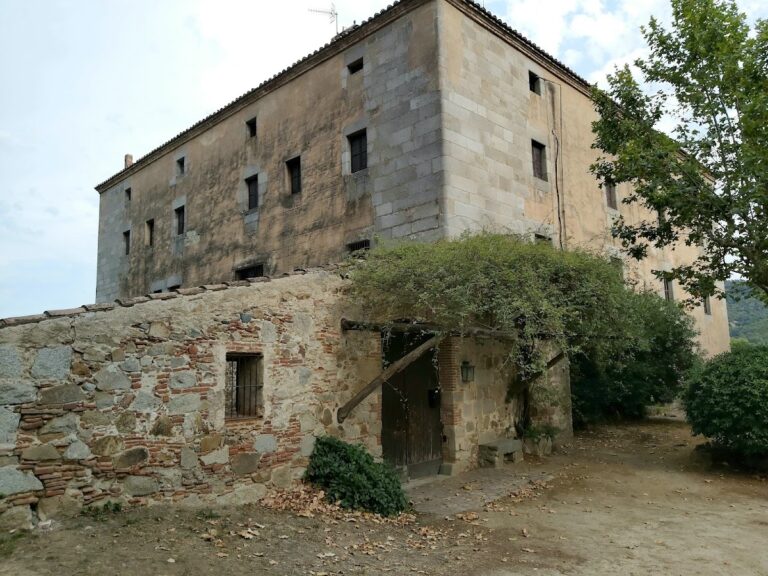
The Castell de Santa Florentina is located in Canet de Mar, Barcelona, Spain. Its origins trace back to a Roman fortification established on the site, which later became the foundation for a medieval fortified house built in the 11th century. The earliest recorded owner was Gaudamir de Canet in 1024. By 1041, the knight Gilabert de Canet had enhanced the medieval defenses by constructing towers at the fortified entrance, contributing to the site’s military architecture.
The property remained in the Canet family lineage through the 13th century, with Ferrer de Canet noted as an owner until his death in 1251. Over the following centuries, ownership passed through several families, including the Peguera family in the 15th century. During this century, the castle suffered damage when it was burned amid the remences conflicts, a series of peasant revolts in Catalonia. Afterward, the building was expanded to repair and strengthen its structure.
In 1521, Salvador Spano acquired the estate, and by the late 16th century, his family had allied with the Montaner family through marriage. The Montaners became prominent owners, and in the early 20th century, Ramon de Montaner i Vila commissioned a major remodeling and enlargement of the castle. This work, carried out between 1900 and 1910 by the modernist architect Lluís Domènech i Montaner, transformed the castle’s appearance while preserving its medieval character. In 1908, King Alfonso XIII granted Ramon de Montaner the noble title of Count of the Vall de Canet during his visit.
The Montaner family maintained ownership until 1964, after which the property was divided among descendants. The original fortified house, known as Casa Forta, remained with the Capmany family branch, while the modernist section was sold in 2014 to a Russian company. The castle has also gained cultural significance as a filming location, notably for the sixth season of the television series Game of Thrones in 2015. Since 1949, it has been officially protected as a Bien Cultural d’Interès Nacional, recognizing its historical and cultural importance.
The castle’s throne room features a painting by Pau Béjar that illustrates the legend of the Catalan shield and Count Guifré el Pilós, a symbolic figure in Catalan history. This artwork connects the site to regional myths and traditions, enriching its historical narrative.
Remains
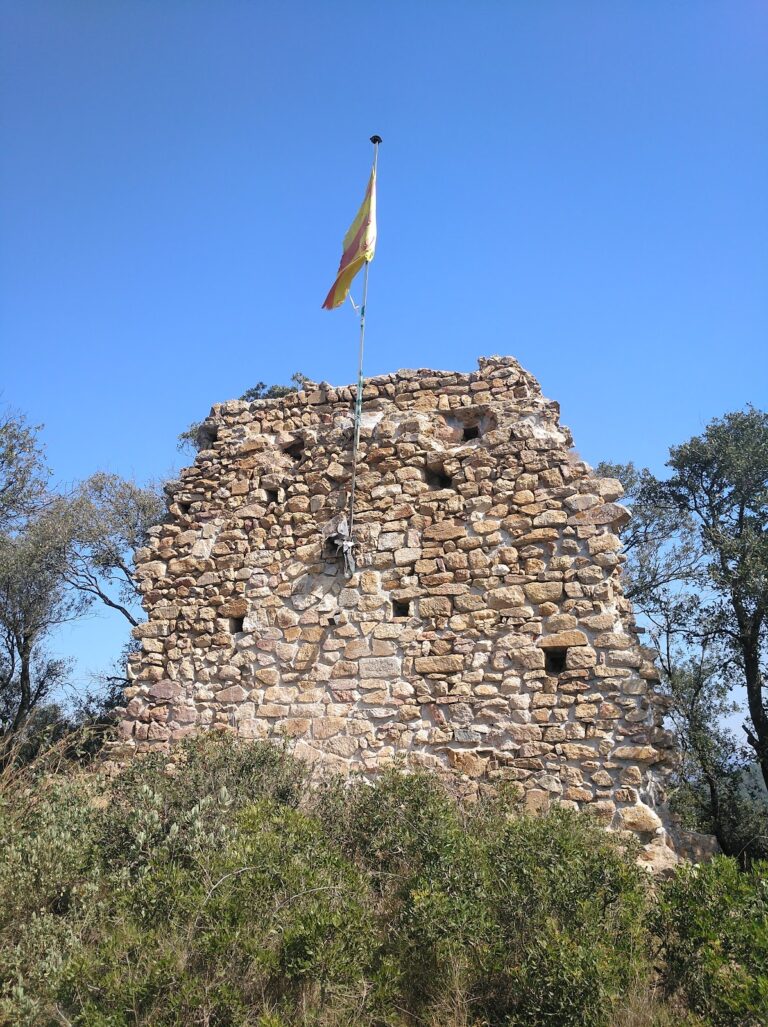
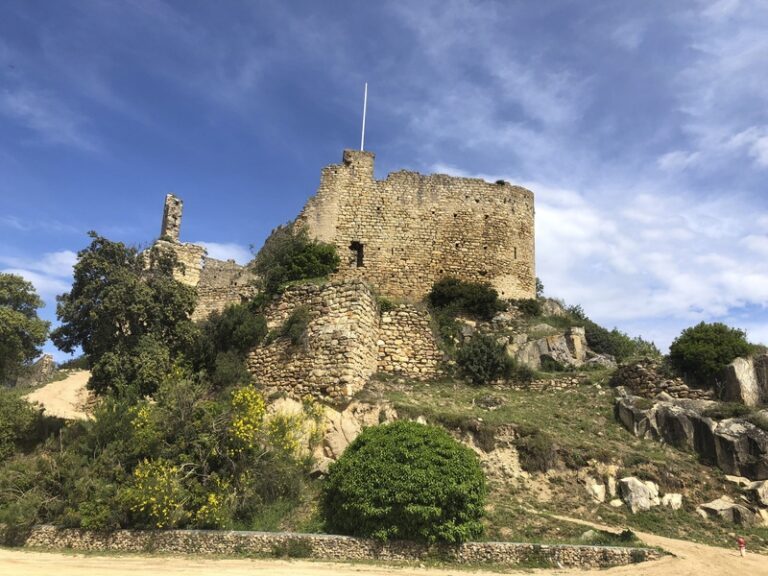
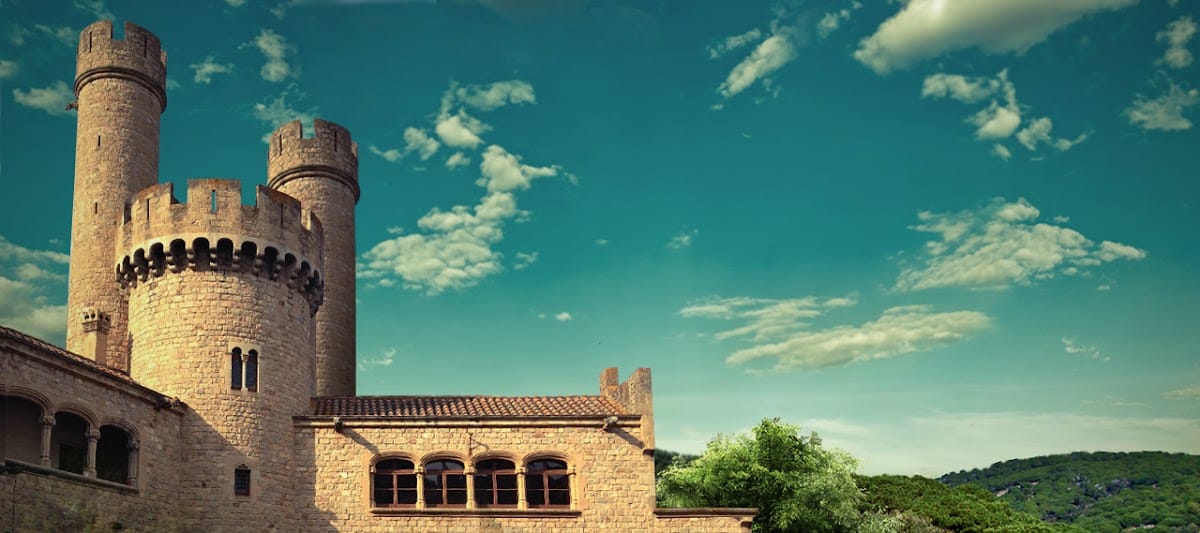
The Castell de Santa Florentina preserves elements from its Roman and medieval past alongside early 20th-century modernist additions. The site’s layout includes remnants of the original Romanesque structure, notably a rectangular tower and an adjacent rectangular room with embrasures, located in the northeast sector. These medieval defensive towers, though altered over time, remain integral to the castle’s overall design.
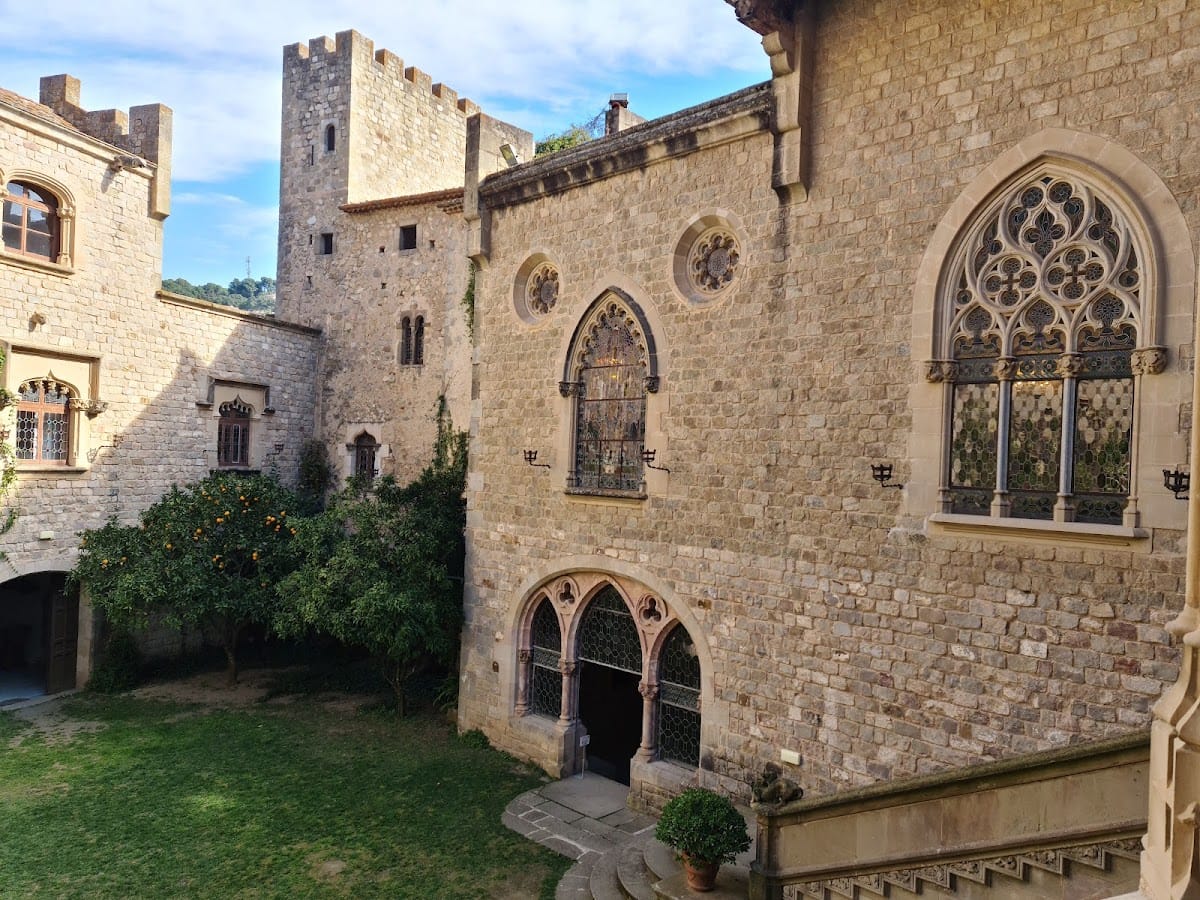
The castle’s current form largely reflects the extensive renovations by Lluís Domènech i Montaner, who incorporated architectural elements from other locations. Among these is a Gothic gallery relocated from the Santuario del Tallat, which was integrated into the modernist expansion. The façade is adorned with sculptural works by Carles Flotats i Galtés, including decorative gargoyles.
Inside, the castle contains a crypt designed by Domènech i Montaner, where Florentina Malató i Suriñach, wife of Ramon Montaner, is buried. The interior decoration features stained glass windows, wrought iron details, coffered ceilings, and sculptures created by prominent Catalan modernist artists of the early 1900s. These artistic elements have been preserved and contribute to the castle’s unique character.
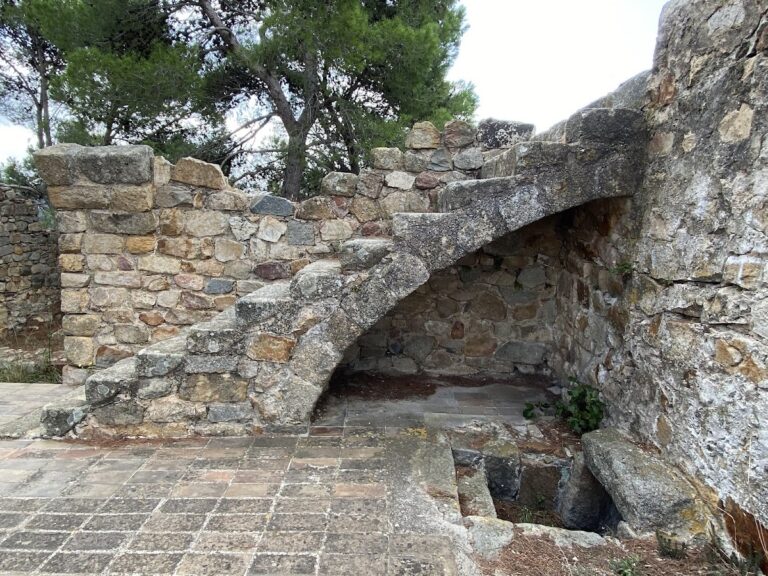
The complex retains its medieval defensive character through the preserved towers and fortified elements, which are harmoniously combined with the modernist expansions. The castle’s materials and construction techniques reflect its layered history, with stone and masonry from the Roman and medieval periods visible alongside the newer architectural features.
Nearby sites