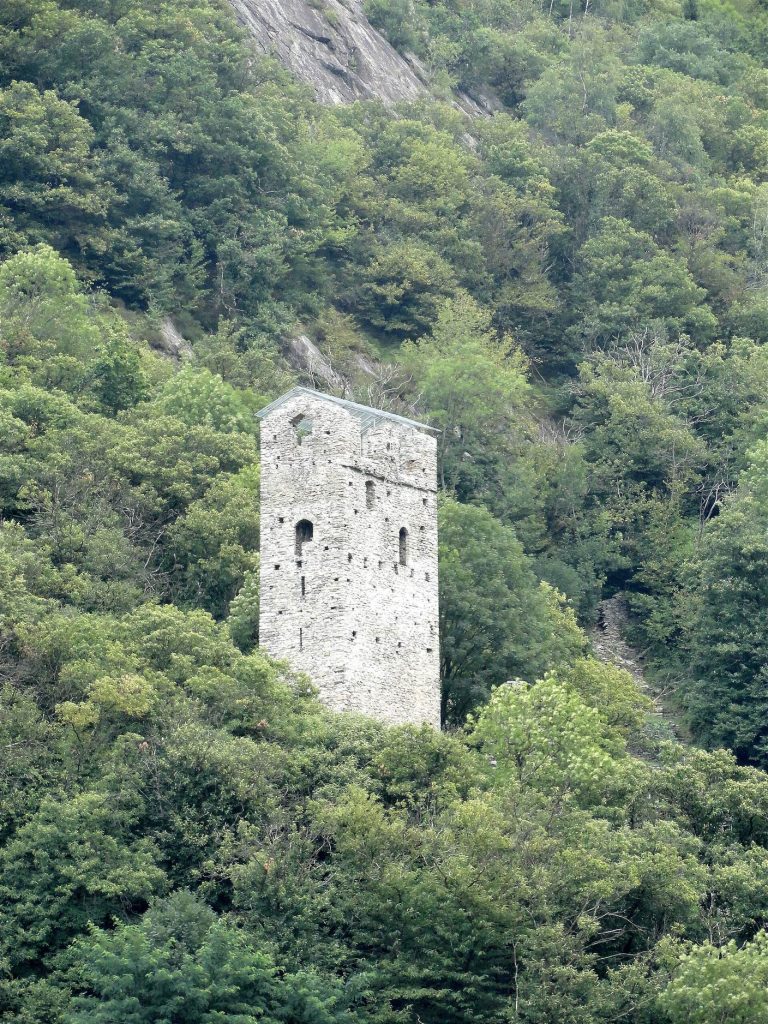
Castelgrande: The Fortress Controlling Bellinzona’s Alpine Routes


Site at a Glance
- Rating
- 4.7
- Popularity
- Medium
- Country
- Switzerland
- Primary era
- Medieval
- External website
- Open
- Eras represented
- Medieval, Modern
- Civilizations
- Carolingian, Duchy of Milan, Holy Roman Empire, Swiss
- Site type
- Military
- Remains
- Castle
On this page14 sections
History
Castelgrande is a historic fortress in Bellinzona, Switzerland, whose hill was fortified by the Romans during the late 1st century BC and whose visible medieval fabric mainly dates from 1250 to 1500. Rising above the old town, it controlled Alpine routes converging around Bellinzona, including the Gotthard, San Bernardino, Lukmanier, and Nufenen routes, as well as earlier crossings over the Greina and San Jorio passes.
Prehistoric and Roman stronghold
The hill was occupied from at least the early Neolithic period. Finds from the 4th millennium BC in the Bellinzona area are concentrated on Castelgrande, indicating the importance of the site long before its later fortifications.
A Roman fort was established on the gneiss outcrop during the reign of Augustus, the first Roman emperor, probably in the late 1st century BC after Rome conquered the Alpine region in 16–15 BC. The fort was abandoned during the 1st century AD and rebuilt and greatly enlarged in the mid-4th century.
Late Roman and early medieval defenses
Under the emperors Diocletian and Constantine, Castelgrande formed part of a defensive chain of castles and watchtowers protecting northern Italy. Its garrison could accommodate a cohort of several hundred men. In 475, the fortress resisted and defeated a force of about 900 Alemannic soldiers.
After the collapse of the Western Roman Empire, the Ostrogoths, the Byzantine Empire, and the Longobards successively controlled Bellinzona. The Longobards, a Germanic people who established a kingdom in Italy from the late 6th century, maintained Castelgrande as a permanent garrison against Frankish and Alemannic raids. A Frankish attack in 590 was repulsed.
Bellinzona passed to the Frankish Kingdom in 774. Castelgrande remained a military base and a refuge for the surrounding population during periods of warfare. The Franks strengthened earlier walls and added a chapel, apartments, towers, and barracks. An apparent accidental fire destroyed the southern part of the complex around 800.
Episcopal and imperial rule
In 1002, Marquis Arduino of Ivrea confirmed Castelgrande as property of the Bishop of Como. After Arduino’s defeat, King Henry II renewed the grant in 1004. The bishop controlled the inner keep, later known as the Bishop’s Palace, while nobles connected with the episcopal court commissioned further towers and buildings within the castle.
During the Investiture Controversy, the medieval struggle between popes and secular rulers over the appointment of bishops and other church officials, Bellinzona and Castelgrande came under the Hohenstaufen rulers. In 1180, Emperor Frederick I transferred the town to the jurisdiction of Como. Como supported Emperor Frederick II from 1239, and Frederick strengthened Castelgrande, but Milanese forces led by Simone di Orello captured the town and castle in 1242.
Bellinzona returned to Como in 1249, but control remained contested. Castelgrande was besieged in 1284, 1292, and 1303, reflecting the fortress’s position in the struggle for the Alpine approaches.
Milanese expansion and conflict
Under the Visconti, the ruling dynasty of Milan before the Sforza, Bellinzona prospered through trade and Castelgrande was enlarged. The Visconti formally received feudal rights over the town in 1396. During the second half of the 14th century, the long Murata wall was built across the Ticino valley to protect and tax traffic using the Gotthard route.
After Duke Gian Galeazzo Visconti died in 1402, Bellinzona changed hands repeatedly. Alberto di Sacco of Val Mesolcina controlled it from 1403, and Uri and Obwalden took the town in 1419. Milan recaptured it in 1422 after the Swiss Confederation rejected Milan’s offer to buy the town. Milanese victory over the Swiss at the Battle of Arbedo on June 30, 1422, secured its control for the time being.
A tower later known as Sasso Corbaro was built outside the town during the unrest after 1402. Following another unsuccessful Swiss attack in 1478, Milan strengthened Castelgrande and the other fortifications. Much of the castle’s visible fabric belongs to the expansion and rebuilding that took place from the late 13th through the late 15th centuries.
French invasion and Swiss administration
In 1499, Louis XII of France invaded the Duchy of Milan and occupied Bellinzona, placing about 1,000 troops in Castelgrande. A revolt drove the French from the town during the winter of 1499–1500. After Ludovico Sforza was captured, Bellinzona submitted to the Swiss Confederation on April 14, 1500. Uri, Schwyz, and Unterwalden jointly administered the town until the creation of the Helvetic Republic in 1798.
Once Castelgrande and Bellinzona’s other fortifications were no longer needed against the Swiss, their military importance declined. The walls deteriorated, and flooding destroyed a section of the Murata in 1515. Castelgrande retained a small garrison with outdated artillery before later serving as a cantonal arsenal and prison.
Restoration and heritage status
After the Act of Mediation in 1803, Castelgrande became the property of the newly independent canton of Ticino. Nineteenth-century federal defenses along the Gotthard included new barracks and strengthened walls at Bellinzona. These works were designed to resemble the medieval fortifications and were incorporated into the Castelgrande complex. An attempt to sell the castle in 1881 found no buyer.
Initial repairs began around 1900. A major repair project started in 1953, followed by a principal reconstruction directed by the Ticino architect Aurelio Galfetti. Lasting roughly a decade and completed in 1992, the work restored and repurposed buildings, converted the grounds into a park, and turned central halls into museum rooms. Restoration of Castelgrande and its hill continued more broadly from 1982 to 2000.
Castelgrande, the other two Bellinzona castles, the city walls, and the Murata were inscribed together as a UNESCO World Heritage Site in 2000 under criterion (iv), which recognizes an outstanding example of a building or architectural ensemble illustrating a significant stage in human history. The property was renamed Fortress of Bellinzona in 2023.
Remains
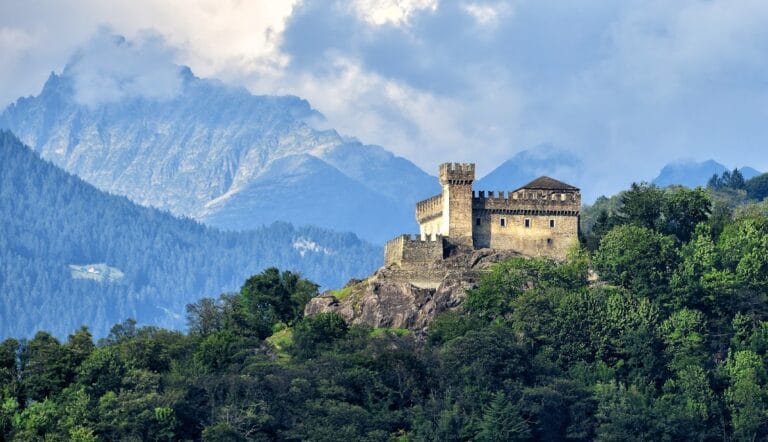
Castelgrande occupies a massive gneiss hill above Bellinzona’s old town. Its nearly vertical northern side, steep southern slope, and relatively level summit, about 150–200 metres in diameter, determined the alignment of the defenses. The castle complex covers approximately 150 by 200 metres and is connected by defensive walls with the town and Montebello. Archaeological traces from the prehistoric and Roman phases lie beneath a complex whose surviving structures are mainly medieval, with extensive additions and alterations from the 19th and 20th centuries.
Baileys and central defenses
The interior is now largely open and level, while foundations and archaeological evidence reveal a formerly much denser arrangement of buildings. The Dukes of Milan demolished many structures to create space for three large baileys, enclosed areas within a castle separated by defensive walls, for the temporary accommodation of troops stationed at Bellinzona. Walls radiate from the central 14th-century Terre Nera and divide the summit into these three areas.
Eastern bailey and keep
The eastern bailey contains the former keep complex, including the 13th-century Torre Bianca, or White Tower, which rises 27 metres. The castle also has the 28-metre Torre Nera, or Black Tower. The keep complex includes the Bishop’s Palace, mentioned in the 12th century and possibly incorporating masonry from a 10th- or 11th-century building.
Southern wing
The South Wing forms the southern boundary of the castle. It was built in two stages during the 13th and 15th centuries on the foundations of an earlier structure. A western building served as an arsenal in the 19th century, was completely renovated in the 20th century, and now contains a restaurant.
Chapels and western bailey
Archaeological research identified two chapels in the eastern bailey, represented by their foundations. The western bailey contains the ruins of a church possibly dedicated to the Madonna. The walls and buildings around the baileys were repeatedly raised, extended, rebuilt, and linked with the town defenses under the Dukes of Milan. The northern cliff face received a protective wall during the 14th or 15th century.
Museum and archaeological evidence
The South Wing contains a museum presenting approximately 6,500 years of human presence on the hill, from the first Neolithic settlement to the 20th century. Its displays include decorated ceilings from Casa Ghiringhelli and the former Albergo della Cervia, together with a collection associated with the mint of Bellinzona.
Murata valley wall
The Murata extends westward from Castelgrande and originally reached the mountain slope on the right bank of the Ticino River. It is a massive crenellated double wall enclosing a vaulted passage about 2 metres wide and 4–5 metres high. Construction began in 1422. After 1478, the first structure was demolished and replaced in 1486–1487. Flooding destroyed the section near the river in 1515, while its gates were demolished during the 19th century.