Castell de Ribes: A Medieval Fortress in Sant Pere de Ribes, Spain


Visitor Information
Google Rating: 4.4
Popularity: Low
Official Website: www.santperederibes.cat
Country: Spain
Civilization: Unclassified
Site type: Military
Remains: Castle

History
The Castell de Ribes stands in the municipality of Sant Pere de Ribes, Spain, and was constructed during the medieval period by the Christian authorities of the Bishopric of Barcelona. Its origins extend back to the late 10th century, making it an important early medieval fortress that played a role in the control and repopulation of the region.
The castle first appears in historical records on May 6, 990, when Bishop Vives of Barcelona issued a charter granting privileges for settlement. In this document, the fortress was referred to as “castrum nuncupatum Bello loco qui vocitantur Ribas,” linking it to the surrounding area later known as Bell-lloc or Sota-Ribes. Following severe damage caused by Almanzor’s raids—military campaigns led by the Muslim leader Almanzor—the bishop entrusted the fortress to the Ribes family with the charge of rebuilding and encouraging new settlers in the area.
During the late 10th century, the castle became entangled in a conflict of control between the Bishopric and Geribert, who served as regent viscount of Barcelona. Geribert was granted possession of the castle, but this led to a long-standing struggle for authority. The bishop defended his claim by obtaining papal bulls, decrees issued by the pope, that threatened Geribert with excommunication if he failed to relinquish control, underscoring the strong ecclesiastical interest in the site.
In the early 11th century, specifically in 1039, Folc Geribert returned the fortress to the bishopric, which soon granted it to Mir Geribert in 1041. Mir Geribert’s son, Ramon Mir, established the Ribes family lineage tied to the castle. The Ribes family maintained possession of the castle and its surrounding jurisdiction for several centuries, solidifying their local feudal presence.
The late 14th century saw a significant change in ownership when Bishop Ramon d’Escales purchased all rights to the castle and its jurisdiction in 1389-90. This act brought the castle fully back under episcopal authority until the abolition of feudal rights during the 19th century. In 1620, control of the castle passed to the municipality of Ribes, who has since been responsible for its preservation.
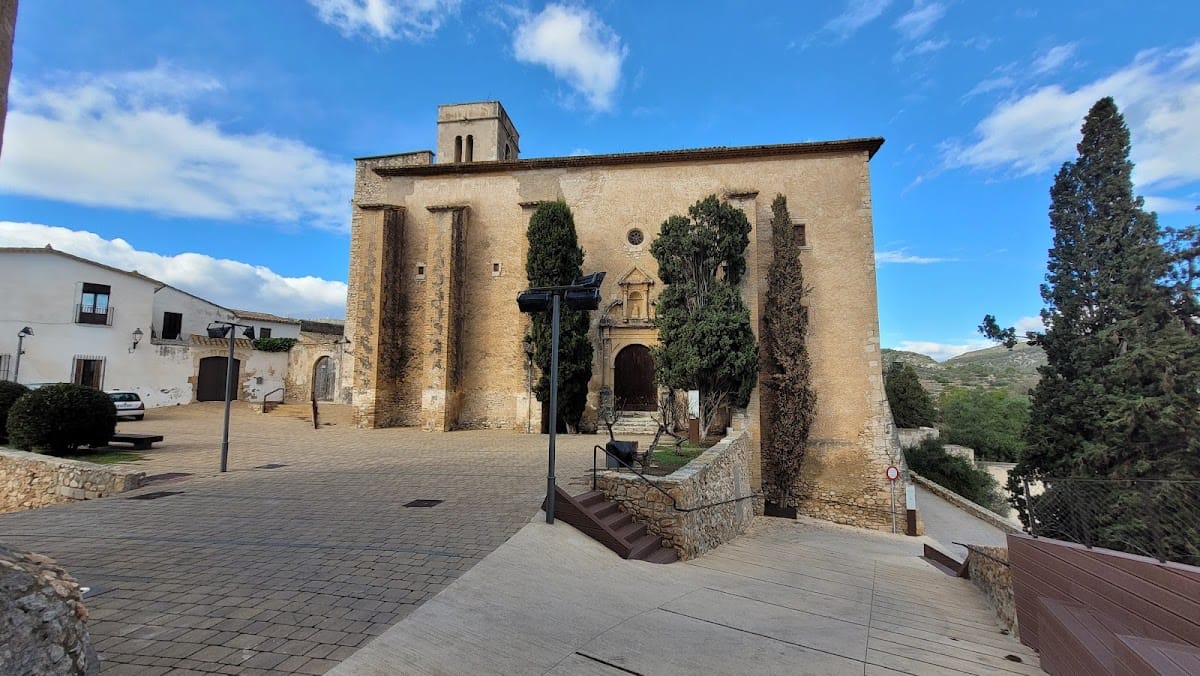
Over the centuries, the castle has served a variety of civic functions beyond its original military role. It has been used as storage, a retail shop, an archive, and even a prison. In modern times, the fortress was also the home of the dancer José de Udaeta for over thirty years. The castle is situated on a steep hill near the old parish church of Sant Pere de Ribes and forms part of the historic neighborhood known as Sota-Ribes, which preserves its medieval legacy.
Remains
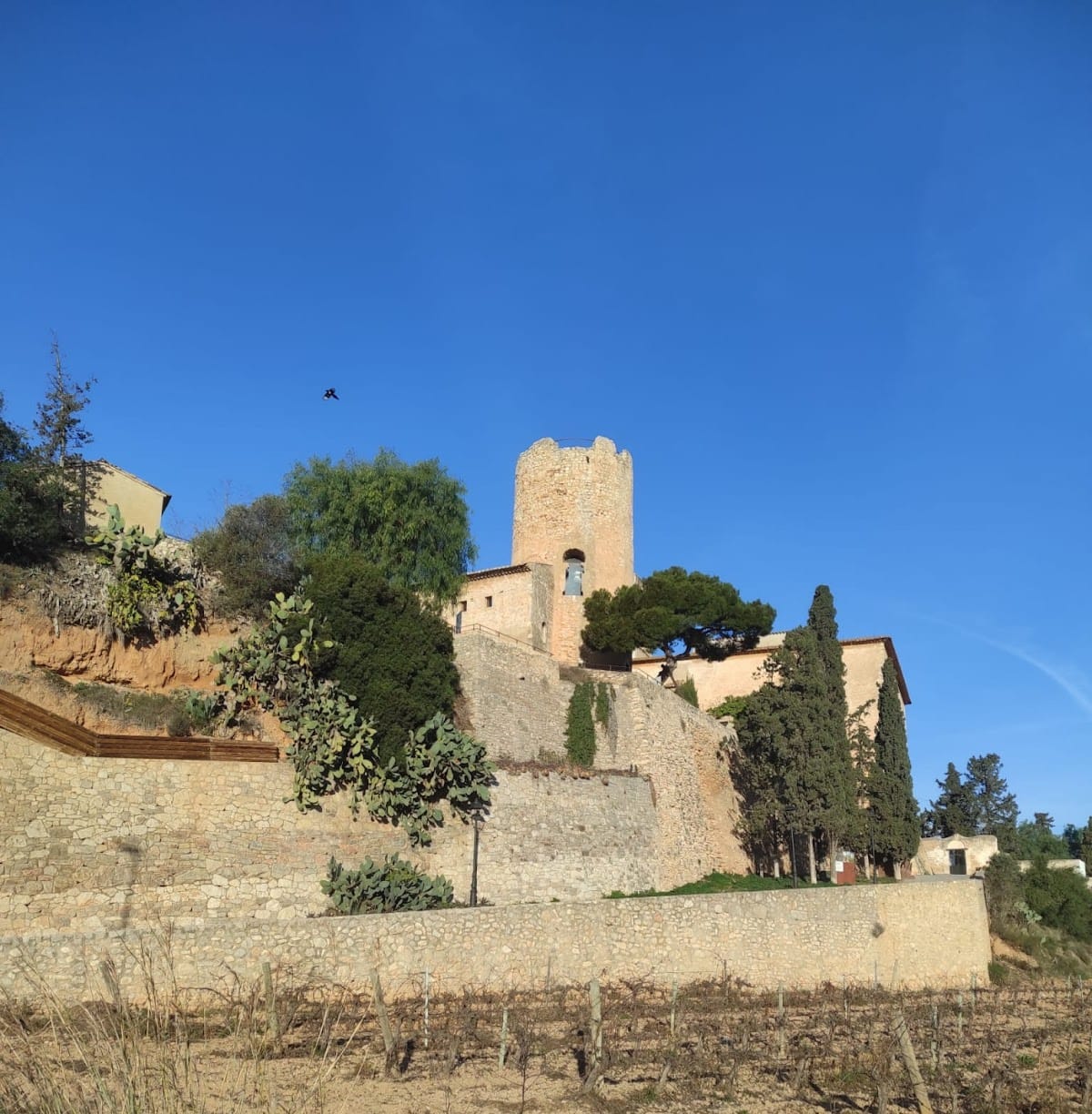
Today, the most prominent and well-preserved feature of the Castell de Ribes is its cylindrical tower, the sole surviving element of the original medieval fortress. The tower rises approximately 19 meters high with a diameter of about 7 meters, showcasing a distinctive profile that transitions from a cylindrical base to a truncated cone shape near the top. Its exterior is uniformly coated in plaster, though original openings remain visible, including a high entrance door facing south and horseshoe-shaped arched windows near the uppermost floor. A drainage channel can be seen on the tower’s southwest side.
Built from rounded, unhewn limestone blocks arranged in horizontal layers or courses, the tower’s walls are notably thick, ranging from 1.5 to 1.8 meters, a feature typical of medieval defensive architecture designed to resist attack. The foundations exhibit a bulbous form and are composed of lime concrete mixed with uncut stone, anchoring the structure firmly to the hilltop.
Inside, the tower includes two vaulted floors. The lower chamber, elevated on a robust plinth nearly 3.5 meters tall, is covered by a lowered brick dome, creating a solid and curved ceiling. Above this sits a larger second room with a height of approximately 7.8 meters, featuring a vault constructed from rubble stone, lime mortar, and reed molds that once shaped the concrete as it set. The high entrance door sits roughly 8 meters above ground level, accessible originally only by a removable wooden structure for security purposes. The door’s opening is rectangular, guarded by a roughly formed horseshoe arch with large, flat stone slabs serving as the jambs and lintel. The lintel itself is made from a small arch of three wedge-shaped stones known as voussoirs.
A narrow ledge encircles the tower’s interior 50 centimeters below the door, with holes indicating where wooden beams once supported a floor. Additional beam holes higher up suggest the existence of a second wooden floor that was eventually replaced with a stone vault, reflecting changes made over time to improve the tower’s durability.
While the castle once had a much larger footprint, what remains today comprises the tower alongside two adjoining buildings. The structure’s architectural style predates the introduction of Lombard decorative elements in the region and is attributed to the late 10th or early 11th century. This timing coincides well with historical documentation that mentions the castle in the 990 settlement charter, confirming its importance in the early medieval landscape of Catalonia.
Nearby sites