Castell de Miravet: A Historic Fortress in Catalonia, Spain


Visitor Information
Google Rating: 4.3
Popularity: Medium
Google Maps: View on Google Maps
Country: Spain
Civilization: Unclassified
Remains: Military

History
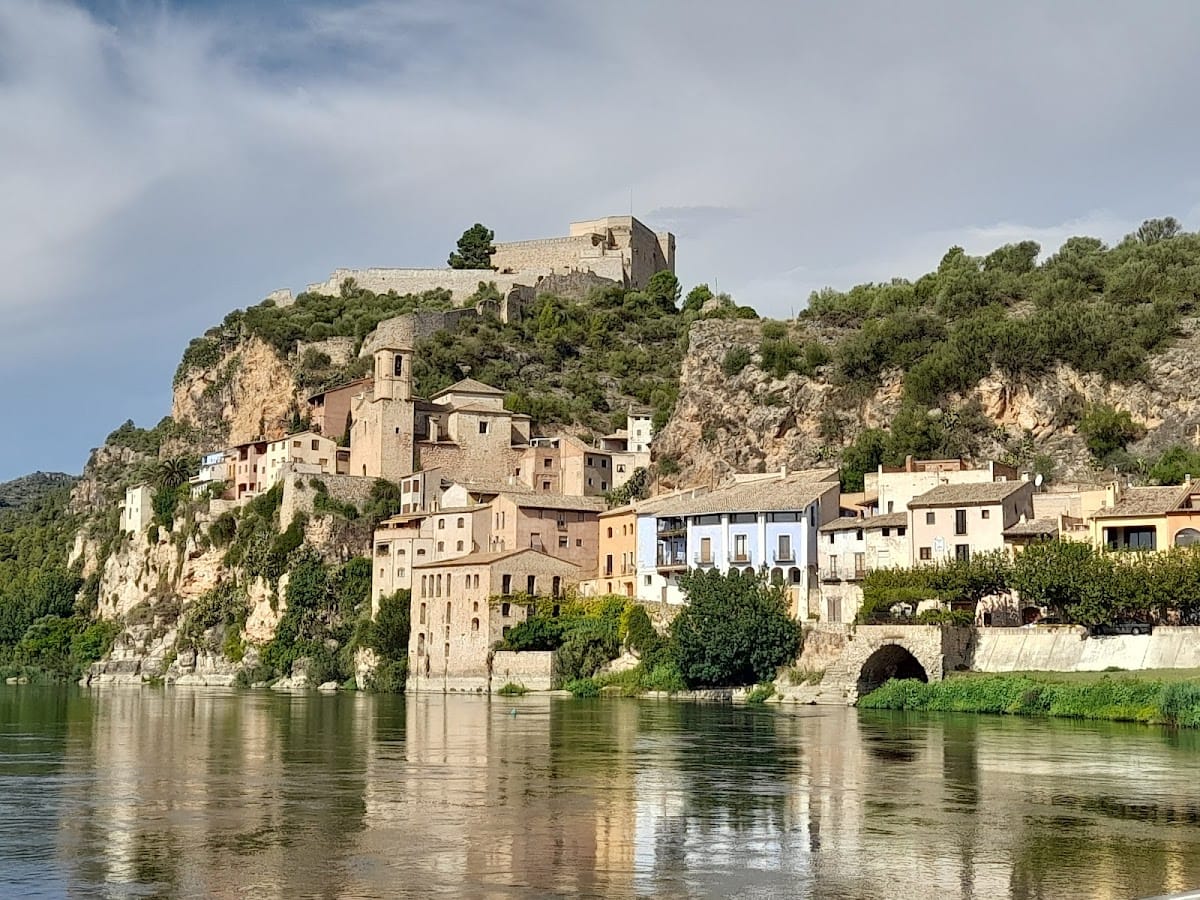
Castell de Miravet stands near the town of Miravet in present-day Spain. Its origins date back to the 11th century when the Moors, who controlled much of the Iberian Peninsula, established it as a formidable fortress in southern Catalonia. This early construction secured the site as an important defensive position during Islamic rule.
In 1154, following the advancing Christian Reconquista, the castle was transferred by Ramon Berenguer to the Knights Templar. Under their control, Miravet became a strategic stronghold from which the Templars extended their influence across the region. Their tenure witnessed construction efforts aimed at reinforcing the fortress to suit their military and administrative needs.
In December 1308, after enduring a lengthy siege, the Templars surrendered the castle to the forces of King James II of Aragon. Subsequently, ownership passed to the Knights Hospitaller, who managed the site until 1385. Thereafter, the castle entered royal possession, marking a shift from religious-military orders to direct crown control.
Throughout the 17th and 18th centuries, Castell de Miravet endured turbulent times tied to regional conflicts. It sustained damage during the Segador Revolt (two major wars in Catalonia centred on demands for recognition of Catalan rights in the 1640s). The castle resisted Spanish royal forces in 1643 but ultimately fell to them by 1650. In 1707, during the War of the Spanish Succession, control shifted to supporters of King Philip V. Later, during the Carlist Wars of the 19th century, the castle’s ownership alternated between liberal and absolutist factions. Particularly in the Third Carlist War, Miravet was a significant Carlist base until liberal forces reclaimed it in 1875.
In the 20th century, Castell de Miravet passed into private hands in 1935. However, the castle soon became embroiled in the Spanish Civil War (1936–1939). Francoist troops occupied it in April 1938, but Republican forces briefly recaptured the site during the Battle of the Ebro in July of the same year. Later that year, in November, Francoist control was restored. After extensive restoration efforts completed in 1994, the castle was officially recognized as a cultural heritage site in 1995.
Remains
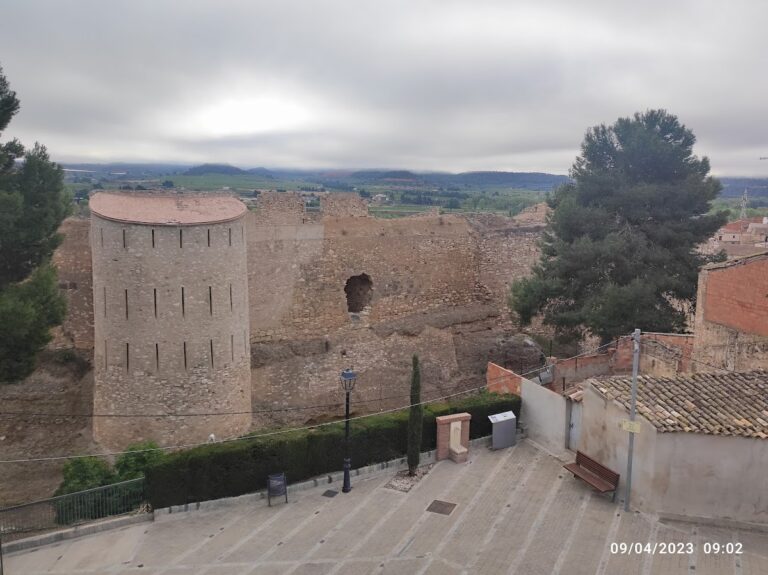
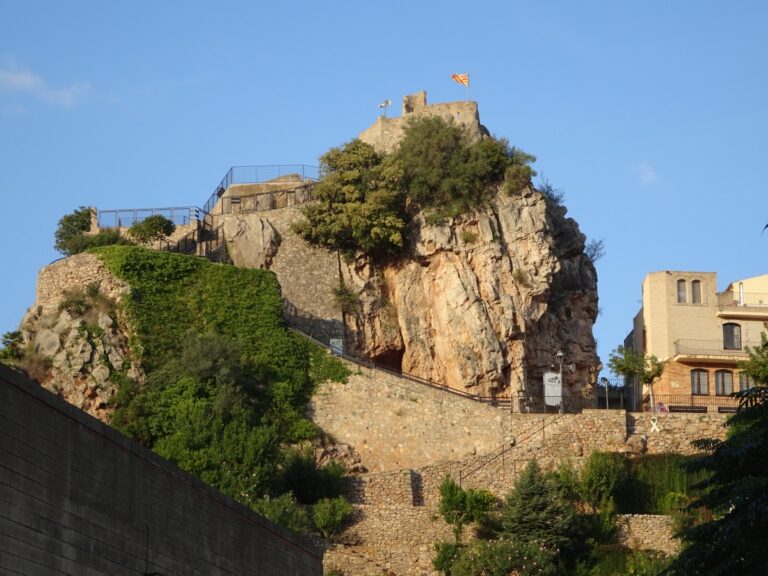
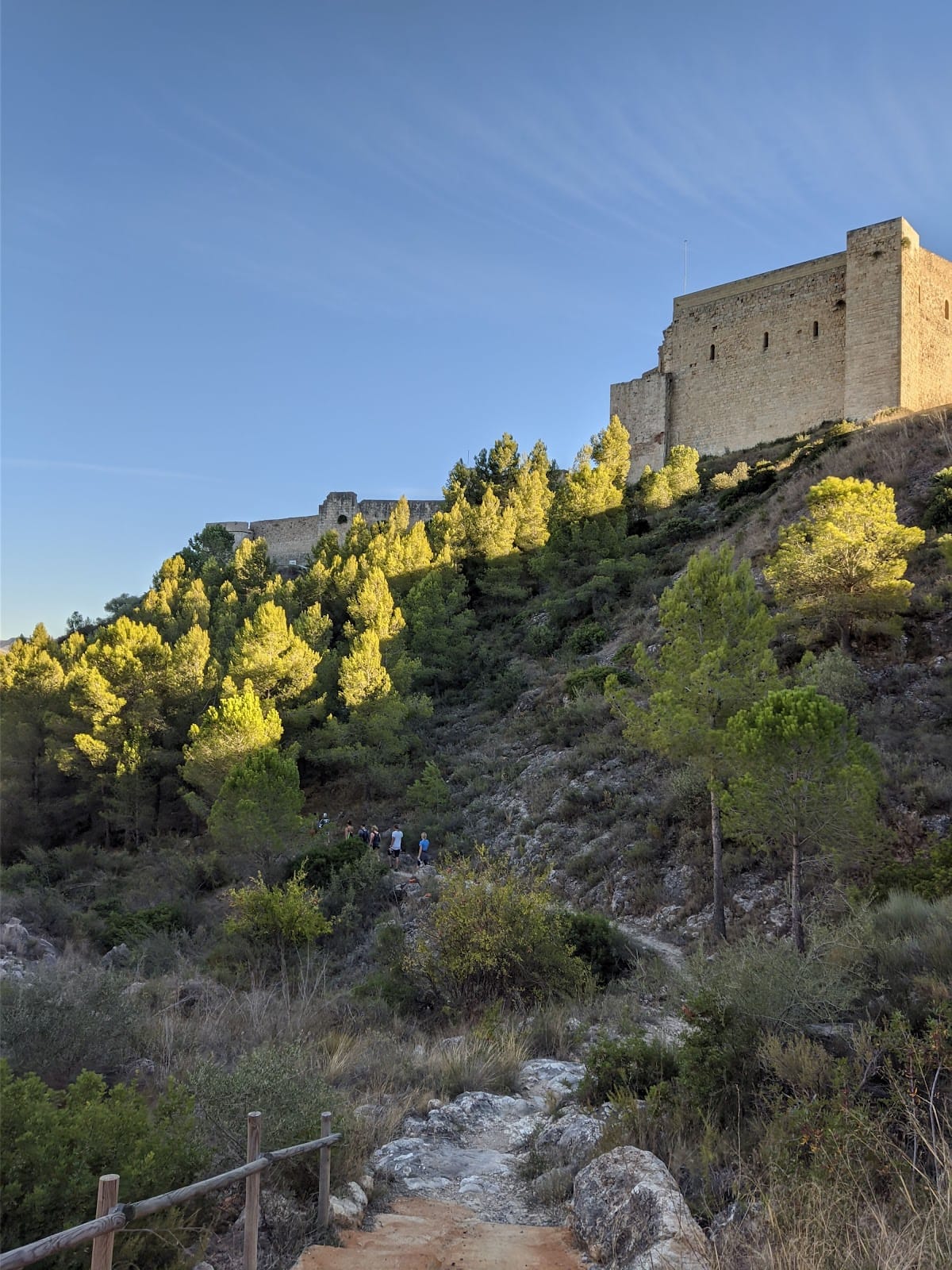
Castell de Miravet is perched atop a rocky hill 220 meters above sea level and overlooks the surrounding landscape, including the town of Miravet itself. The castle is naturally defended by the nearby river and encircled by a sturdy defensive wall reaching up to 25 meters high. The fortress’s layout combines elements rooted in the Andalusian period with substantial modifications introduced by its later Christian occupants.
A deep moat, cut directly into the rock at the location now used as the parking area, was intended to prevent attackers from tunnelling beneath the walls, demonstrating the strategic foresight applied to its defense. The outer walls, characterized by their consistent construction, suggest a rapid building phase, with some sections preserving earlier masonry from the Andalusian fortress that preceded later work.
The Knights Templar reinforced the walls with carefully shaped rectangular white stone blocks laid in tight rows. Their walls have few openings to maximize defense. Notably, the upper part of the western wall near the central tower still bears traces of a machicolation, a stone projection that allowed defenders to drop stones or boiling substances onto enemies attempting to scale the wall below.
The main gate, dating from the 17th century, marks the fortress’s weakest defensive element and was strengthened with the addition of towers and a barbican—a fortified outwork protecting the entrance path. This approach to the castle is deliberately winding, exposing attackers to gunfire from multiple angles. The stonework here contrasts with earlier masonry: smaller, less precisely cut blocks replace the large, finely dressed stones of the adjacent 13th-century Templar tower.
Along the northern perimeter, five towers are spaced to provide overlapping lines of fire without gaps, offering a comprehensive defense of the access route. This section was remodeled in the 17th and 18th centuries to better resist contemporary artillery, employing a combination of masonry, rammed earth, and wooden formwork. Though appearing less solid than earlier construction, these walls remain thick enough to withstand cannon fire.
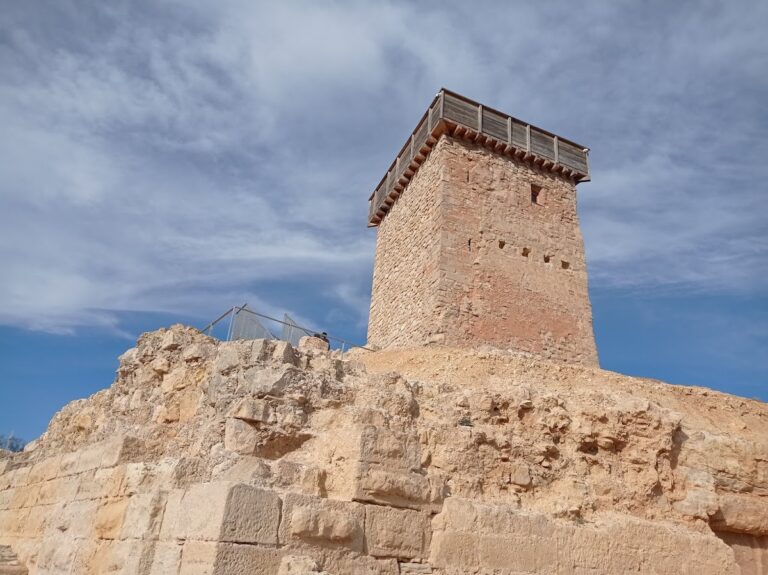
The “Treasure Tower,” standing above an older Andalusian wall, reinforces the northern defenses overlooking the castle’s base entrance. This tower earned its name from serving as the repository for the Templar order’s correspondence and valuables in Catalonia and Aragon. When the Templars surrendered in 1308, the castle reportedly contained a significant treasure, including hundreds of gold and silver coins from various currencies of the time.
The large lower courtyard, or albacar, extends over roughly 12,000 square meters and originally housed essential support buildings such as warehouses, stables, pens, workshops, a water reservoir, and gardens. These service structures have not survived physically but are well documented in historical records. The perimeter walls of this enclosure correspond to the original Andalusian fortifications designed to shelter civilians in times of conflict and have remained largely unchanged despite evolving military needs.
Four defensive towers protect the entrances on the northern wall of the albacar, while the eastern wall features narrow openings adapted in the 18th century to facilitate artillery fire from secure positions. The southern side benefits from natural protection provided by cliffs and the adjacent river. Altogether, this enclosure forms the first line of defense, partially wrapping around the upper castle.
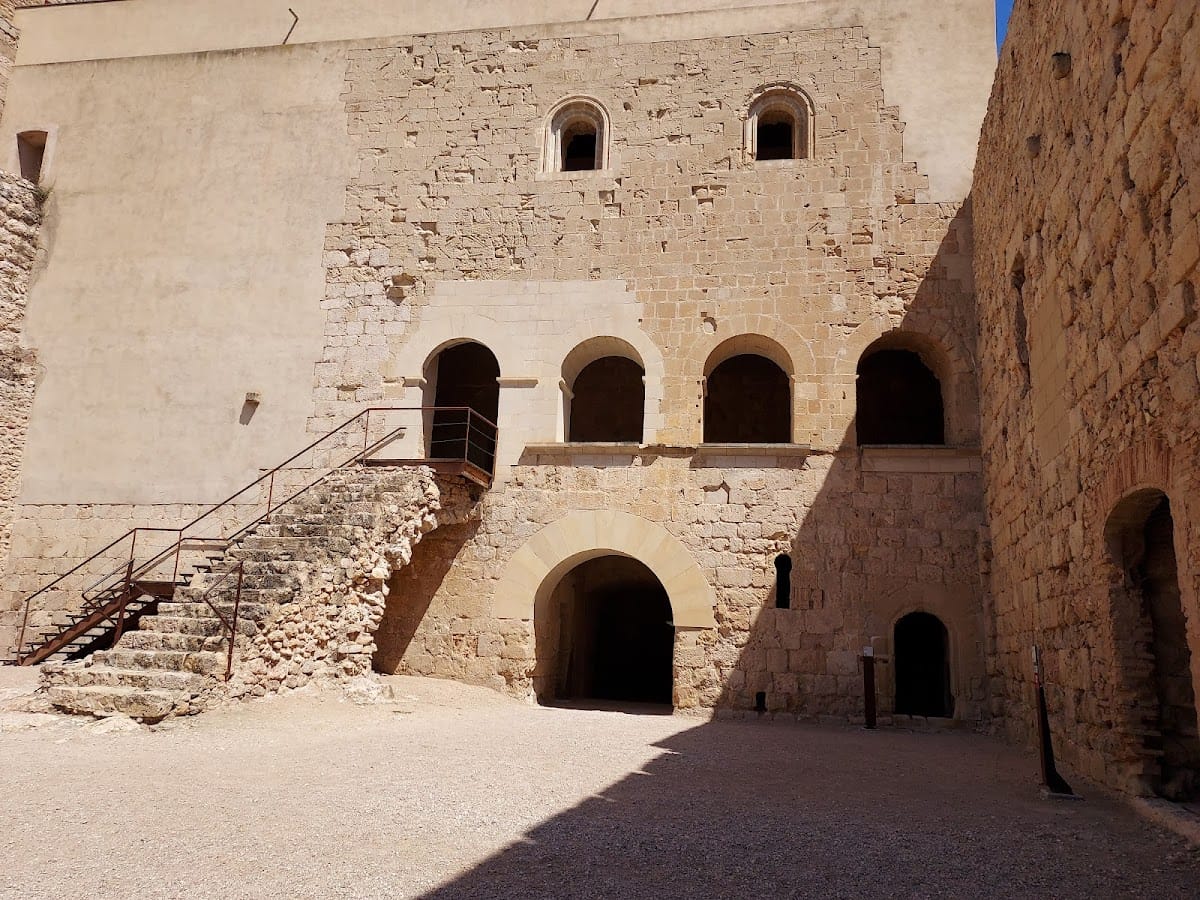
Among the surviving buildings inside the lower courtyard, the stable stands out as dating back to the Templar period, identified by its stone masonry and decorative features on its lower wall. Its original purpose is uncertain, but records show it served as a stable or possibly a cowshed from the 14th to 17th centuries. During this time, architectural changes included adding a ramp in place of stairs and leveling the floor to align with the doorway, leaving feeding troughs beneath. The vaulted ceiling has partially collapsed, and a second floor, once used as a hayloft, was later added.
The castle’s lower terraces were originally formed by stepped hillside levels, which in the 16th century were filled in with soil to create a flat area supporting a new defensive wall. Although no buildings stand there today, this space previously held small storage areas, animal pens, gardens with olive trees and mulberry cultivation, and occasionally served as a burial site.
Extending beyond the lower terraces, the medieval walls reach down the mountain slope. These walls are thinner than other sections and have not undergone later modifications. Their considerable height was effective at deterring attacks, with defenders stationed on crenellated battlements able to use bows and other weapons. A narrow walkway along the tops of these walls permits passage of only one person at a time, emphasizing the controlled movement required during defense.
Nearby sites