Castell de Calafell: A Medieval Fortress in Spain

Visitor Information
Google Rating: 4.4
Popularity: Medium
Official Website: visit.calafell.cat
Country: Spain
Civilization: Unclassified
Site type: Military
Remains: Castle

History
The Castell de Calafell is a medieval fortress located in the town of Calafell, Spain. Its origins date back to the early 11th century, built by the local Christian nobility during a period marked by territorial consolidation in the region.
The castle first appears in historical documents in 1037, connected to a land dispute that identifies Bernat Otger as its original proprietor. By the late 12th century, the castle had acquired religious significance with the chapel inside dedicated to the Holy Cross, mentioned in a testament from 1189. Over time, ownership transferred through prominent local families, including the Castellbisbal and the Palou families. During the reign of King Ferdinand II of Aragon, efforts were made to reclaim properties like the castle for the royal crown, reversing earlier sales made under King Pere III.
In the seventeenth century, around 1640, the fortress suffered destruction amid conflicts of the period, leading to its ruin. However, it was rebuilt in the following century, during the 18th century, when significant alterations took place such as the addition of an access staircase. The castle’s church played a vital role in community life, serving as both parish church and cemetery chapel until 1935. It once housed a Romanesque statue of the Virgin of the Cave, the town’s patron saint, which was destroyed during the Spanish Civil War. Today, the castle stands as a protected cultural heritage site, recognized nationally for its historical importance.
Remains
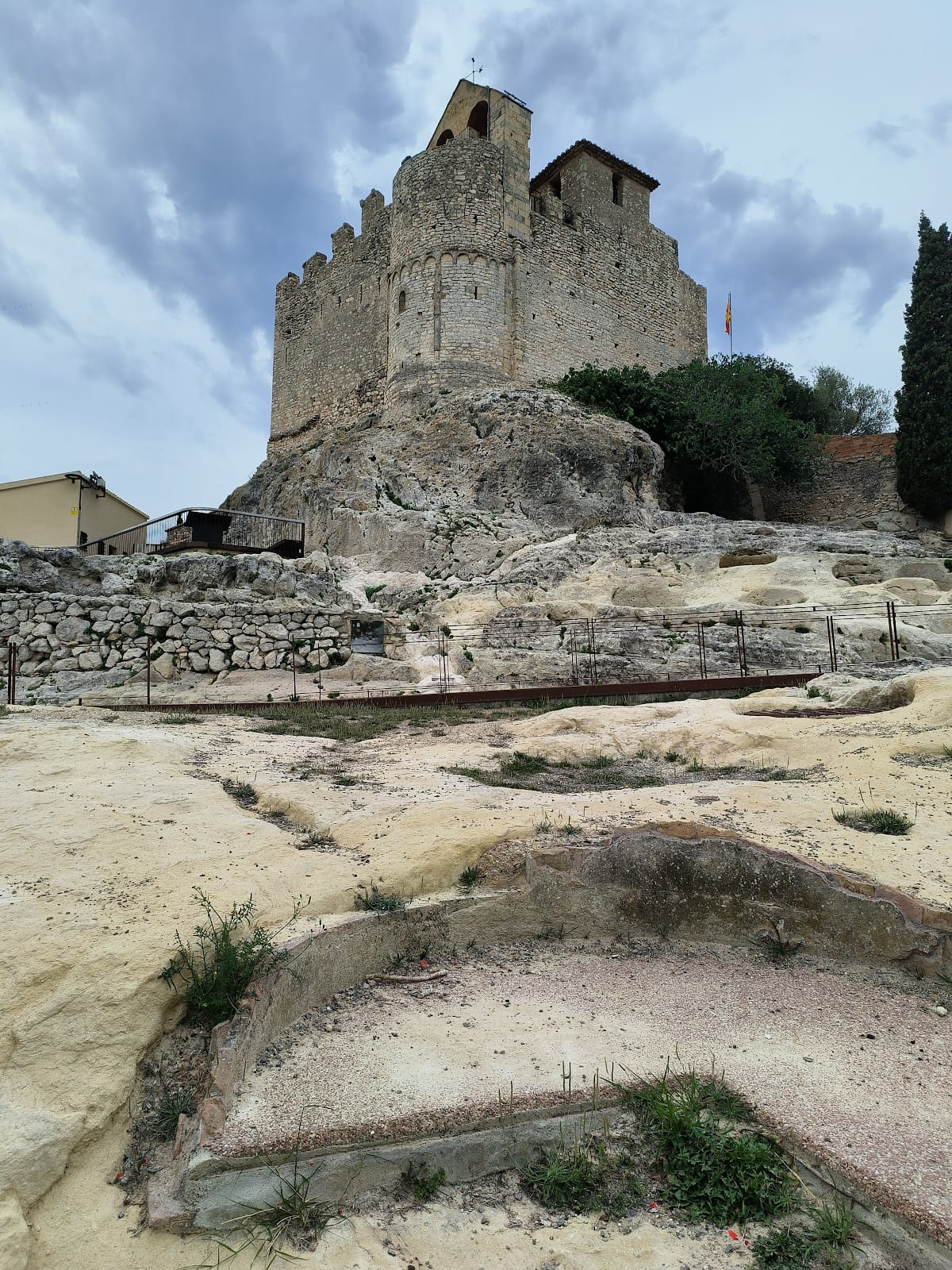
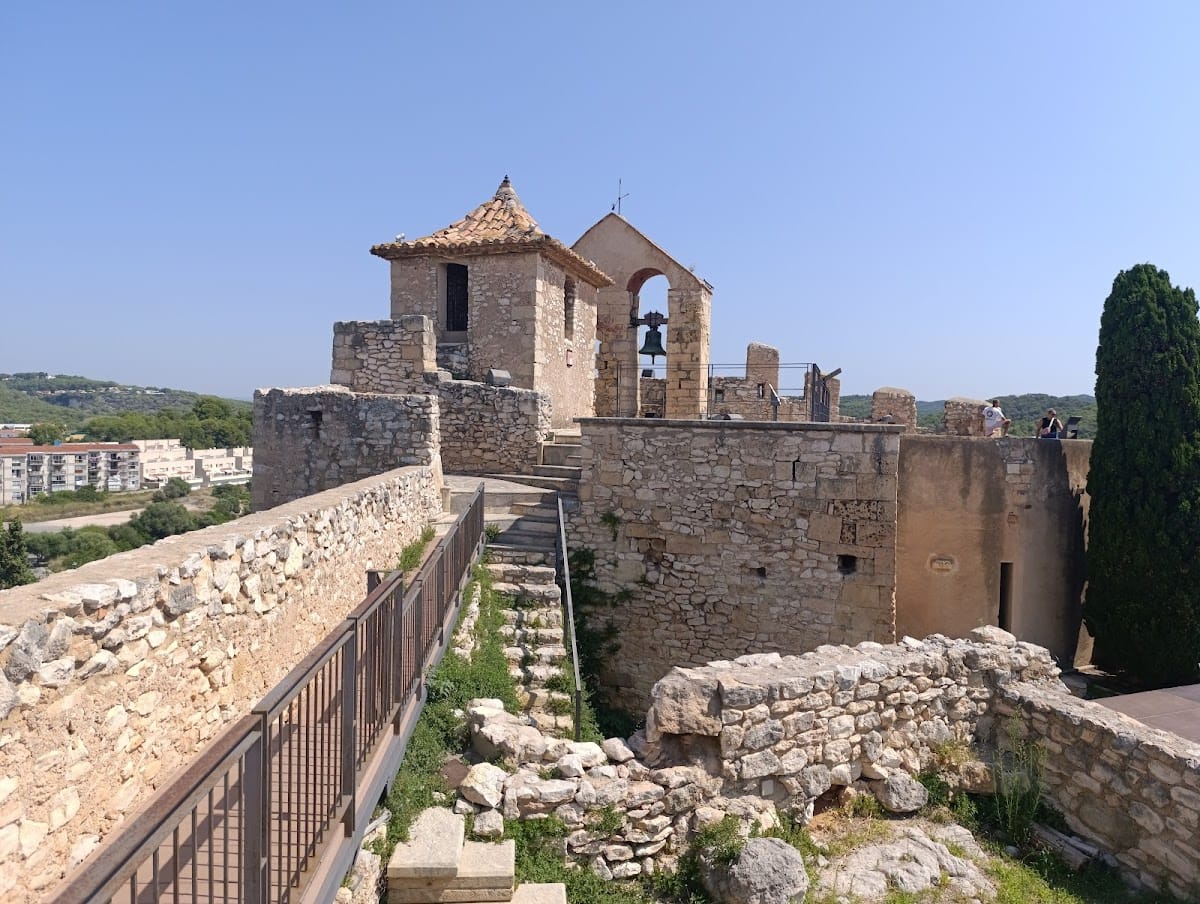
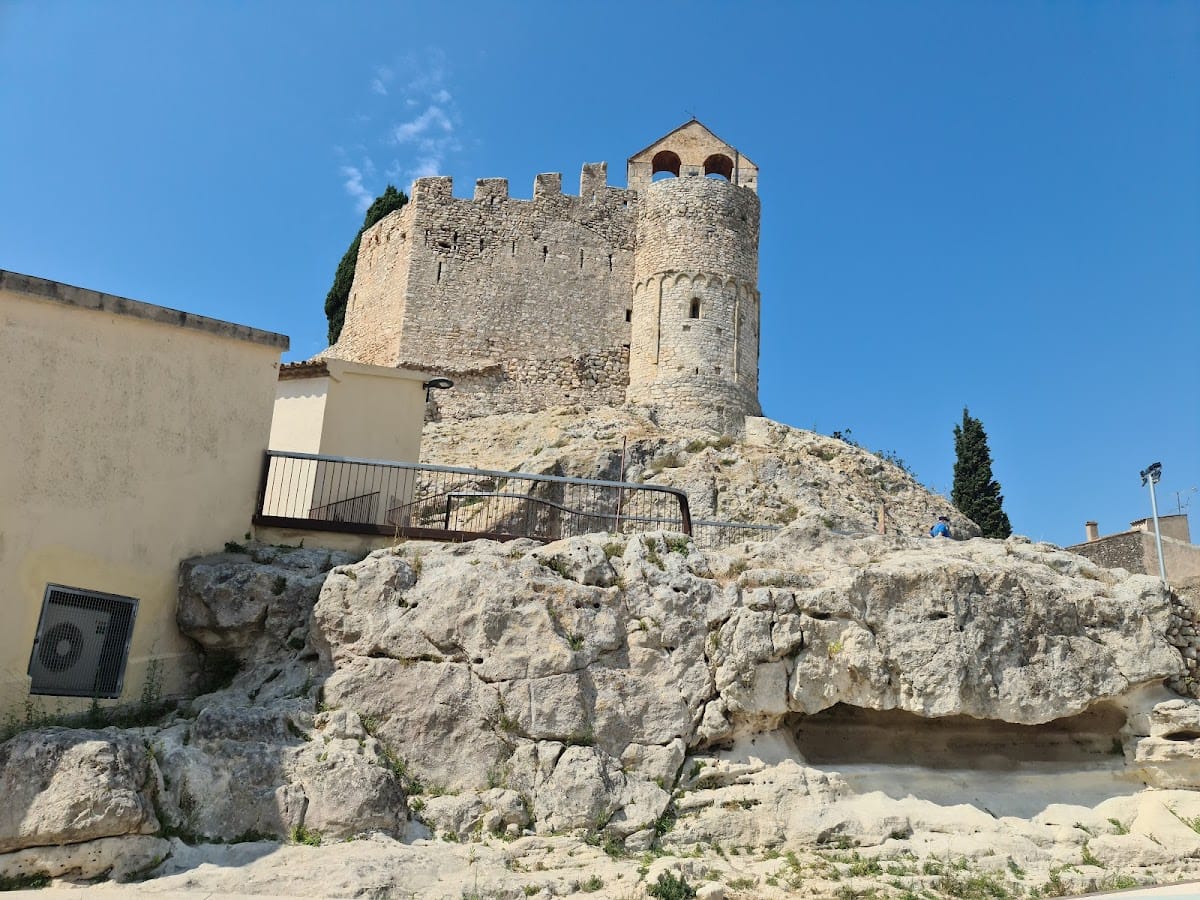
Nestled atop a hill about 58 meters above sea level, the Castell de Calafell follows the natural contours of the terrain with its elongated fortified enclosure. Constructed predominantly from rubble masonry, the walls have undergone modifications during the 15th and 16th centuries to accommodate evolving military technology. These walls display a distinctive herringbone pattern, known as opus spicatum, and house two types of defensive openings: early rectangular loopholes and later variants with rounded bases and rectangular tops designed for firearms.
Upon entering the castle, the oldest portion, likely dating back to the 11th century, is found on the left side, opposite the chapel. The areas to the right and front of the entrance, developed between the 12th and 14th centuries, are characterized by battlements that enhanced the fortress’s defensive capabilities. The Romanesque chapel of Santa Creu forms part of the castle’s eastern section. It consists of a single nave covered by a barrel vault supported by a transverse arch, ending in a semicircular apse adorned with decorative bands known as Lombard bands. Beneath this apse lies a crypt containing Gothic-style wall paintings, positioned at a higher level relative to the nave.
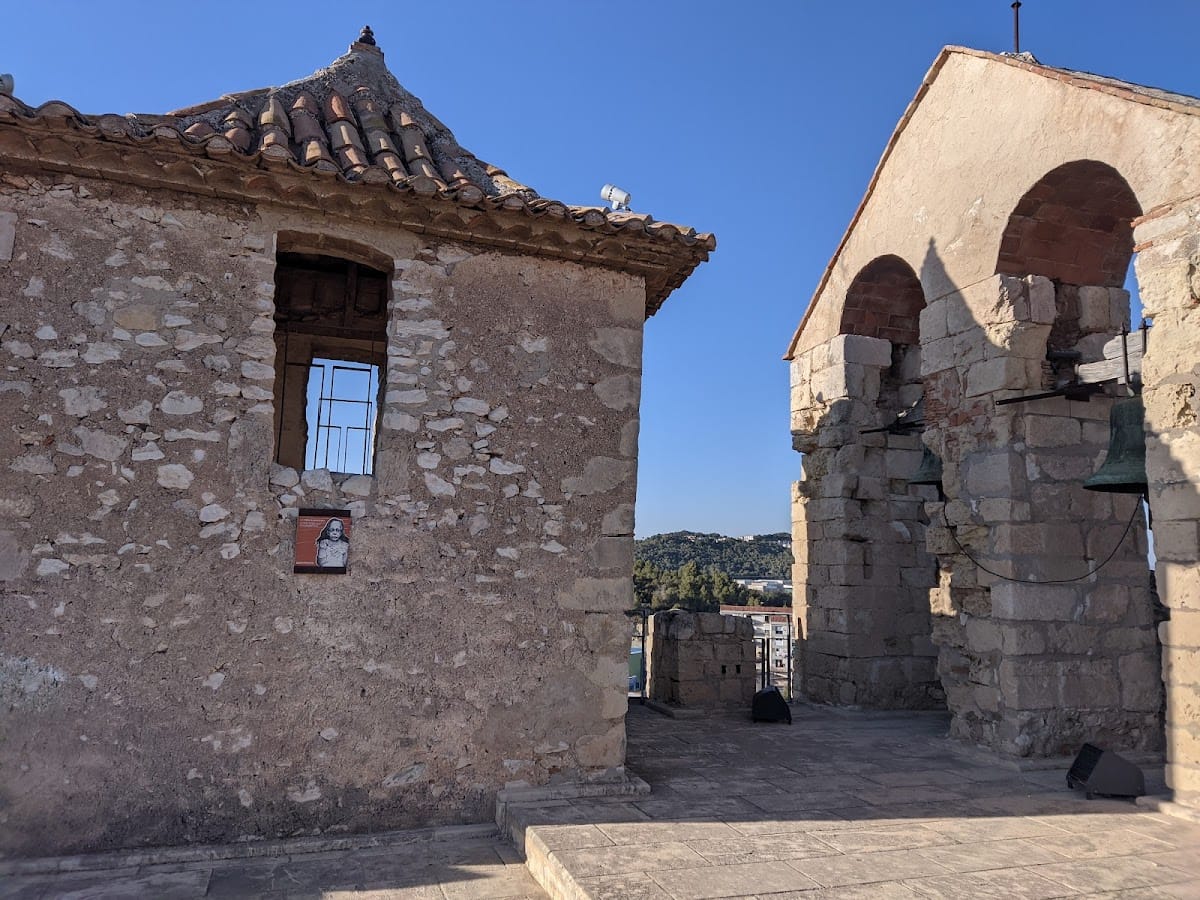
Later adaptations transformed the apse into a defensive tower, with the addition of a bell gable at the meeting point of the apse and nave. A second nave was added on the southern side by removing part of the original church wall; this extension also features a barrel vault and concludes with a semicircular chapel serving as the entrance. Above the initial nave, a structure called a “comunidor” was erected, used for spiritual functions. Decorative paintings on the Romanesque apse show stylistic affinities with artworks found in the Chapel of the Holy Sepulchre at Olerdola.
Under the church’s floor lies an ancient burial ground, with anthropomorphic tombs carved directly into the rock, dating from the 11th and 12th centuries. Despite the destruction the fortress endured in the 17th century, the present remains of the church and defensive walls are well preserved, offering insight into the castle’s long history and architectural evolution.
Nearby sites