Castell d’Amposta: A Historic Castle in Amposta, Spain



Visitor Information
Google Rating: 4.1
Popularity: Low
Google Maps: View on Google Maps
Official Website: invarquit.cultura.gencat.cat
Country: Spain
Civilization: Unclassified
Remains: Military

History
Castell d’Amposta is located within the town of Amposta in modern-day Spain. Its origins trace back to the Iberian period, where early archaeological evidence reveals a small section of defensive wall and several storage pits. By the 10th century, the site saw an Andalusian presence, likely serving as a lookout point and a place of refuge for scattered local populations during this period.
The castle first appears in written records in 1097 linked to Count Ramon Berenguer III, who granted Amposta to Count Artal of Pallars in a transaction aimed at establishing a castle. However, it is uncertain whether Ramon Berenguer III ever occupied the site effectively. Later, after Ramon Berenguer IV conquered the area, he handed Amposta to the Order of the Hospital of Saint John of Jerusalem in 1150. This act founded the commandery of Amposta, which eventually named the priorate known as Castellania d’Amposta.
The Knights Hospitaller replaced earlier structures with a new castle built in stone, reflecting Crusader military architectural influences. The construction received royal support in the form of funds and timber rights, demonstrating the importance placed on developing a fortified presence. In 1280, King Peter the Great exchanged Amposta for other towns, bringing the castle under direct royal control while the priorate kept its traditional name. During this time, the crown undertook renovations, including internal buildings, new towers on the outer defenses, and strengthened walls facing the river.
Initially, the castle was granted as a fief to Pere de Sanaüja and became a contested stronghold due to its strategic position overseeing river and sea access. In the 14th century, those responsible for the castle’s defense, known as alcaids, were appointed by royal authority or sometimes by the local ruling class of Tortosa. In 1384, control passed to the Order of Saint George of Alfama through royal concession.
During the Catalan civil war, the castle was held by forces loyal to the city of Tortosa opposing King John II. The site endured a lengthy siege lasting from October 1465 until June 1466 before surrendering to the king’s troops. After the conflict, the monarch granted the castle to the Navarrese noble Pere de Peralta, who ceded certain rights to the Archbishop of Zaragoza. From 1470 onward, Tortosa sought to lease the castle to exercise greater influence over the trade routes along the Ebro River.
The castle suffered damage both from the civil war siege and from pirate raids in the 16th century. Over time, it fell into ruin and was abandoned. Stones from the dilapidated structure were removed for use in other local buildings, as shown in records documenting a permit issued to the abbot of Benifassà for repurposing materials.
Remains
The castle occupied a prominent position within Amposta’s urban area, perched on a high river-facing terrace at the meeting point of the Ebro River delta plain and a Quaternary geological terrace. Natural defenses protected the north and west flanks, while the south and east sides were fortified by a complex set of two dry moats arranged in an “L” shape. These moats connected at both ends to the river, creating three distinct areas: a main enclosure, an intermediate enclosure between the moats, and an additional independent section east of the main area.
Among the surviving features, a section of the original river-facing wall near the water level remains. This wall includes a Gothic blind ogival (pointed) arch rising over six meters high, built from carefully shaped wedge-like stones known as voussoirs. The arch likely served as structural support related to the castle’s fortifications.
Next to the entrance and adjacent to an earlier Andalusian wall fragment lie six semi-underground rooms dating from the 14th or 15th century. These spaces, constructed with well-cut sandstone blocks and topped with substantial stone slab floors, appear to have been used as storage rooms connected to the castle’s provisioning and collection of tithes, the latter being a form of tax or offering.
A third moat diverts off from the eastern portion of the site, isolating an area that housed the noble sector of the castle known as Celòquia. Although substantially ruined, this section has been the focus of modern conceptual reconstructions seeking to understand its layout.
The main gate of the town was guarded by the Hospital Tower, situated in the intermediate enclosure between the two moats. Today, only its foundations can be seen.
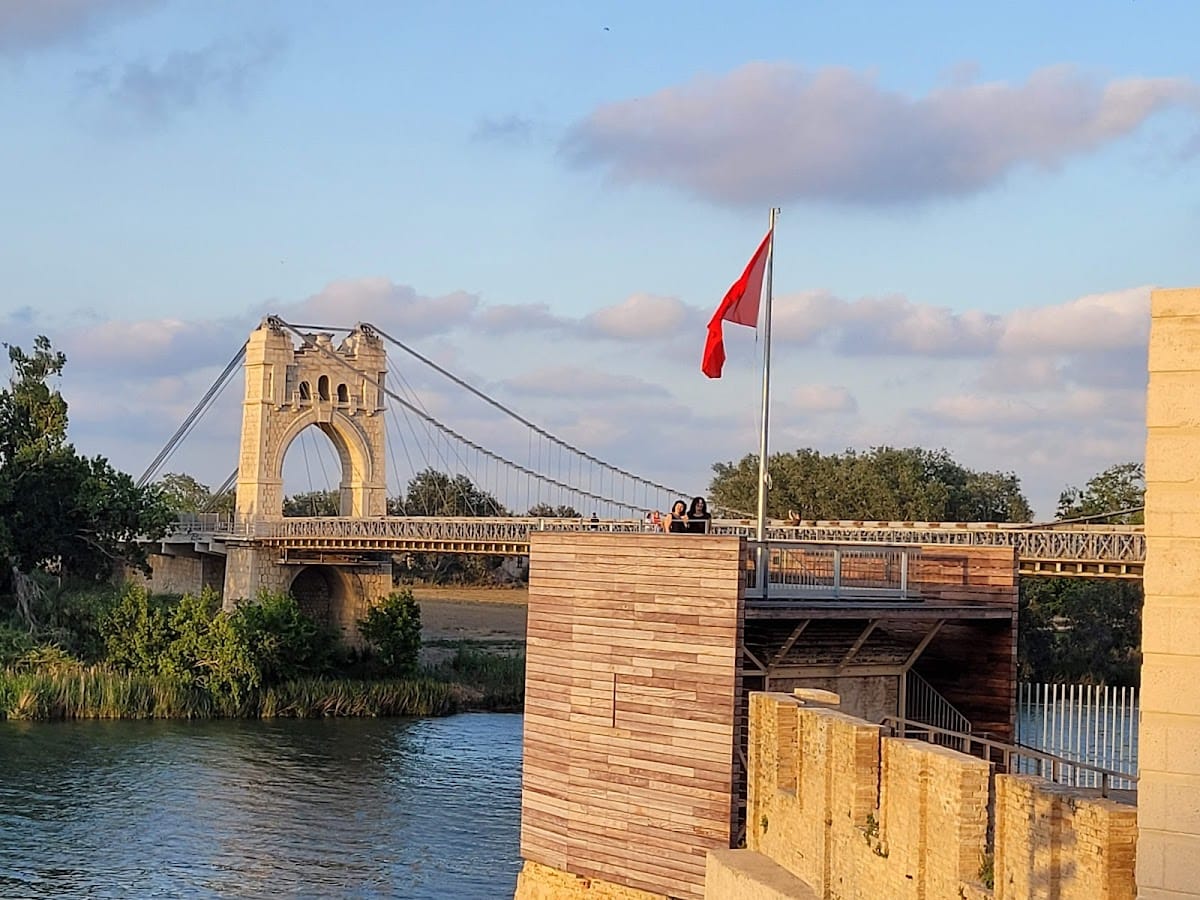
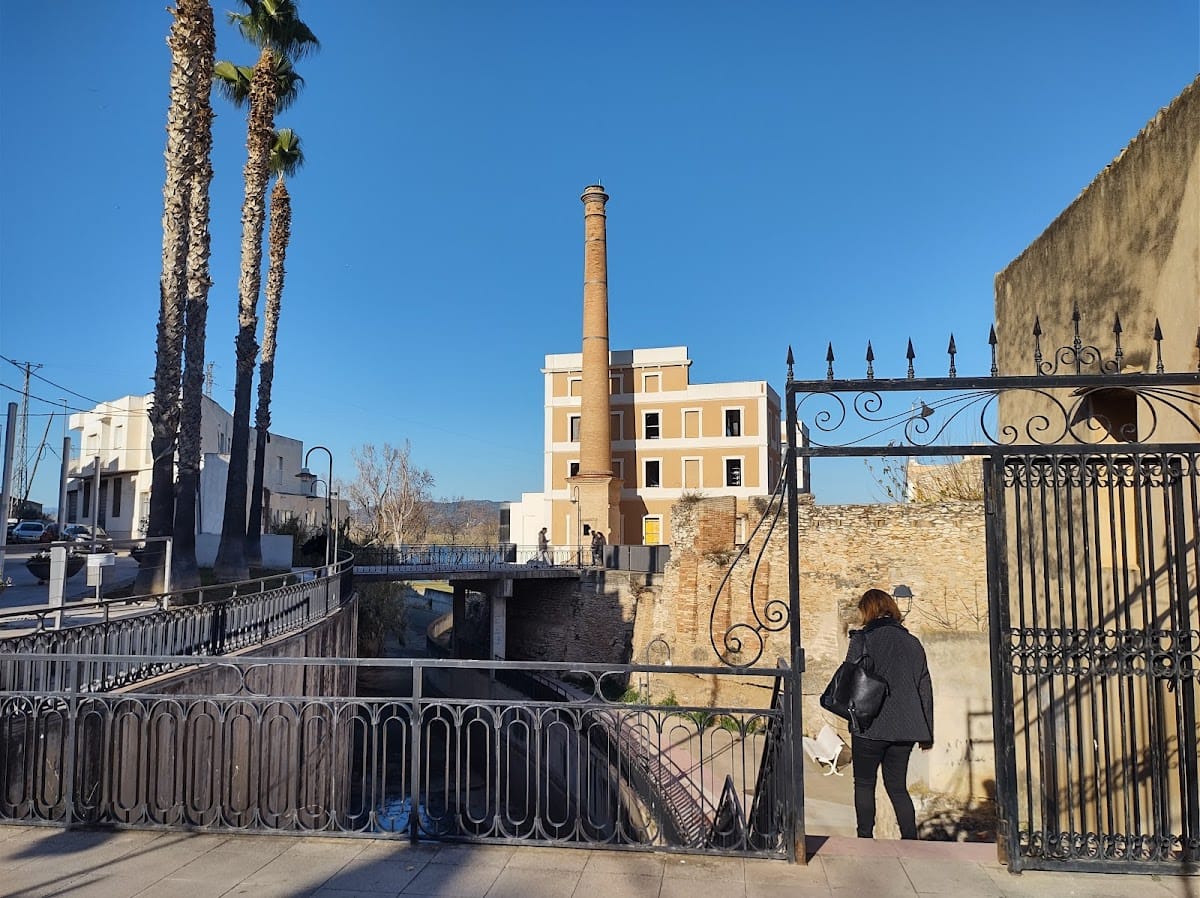
The first moat roughly follows the course of what is now the local canal and Fossat street, stopping near the base of the modern suspension bridge. The second moat, excavated into solid conglomerate rock and dating back to the 10th century, measures about six meters deep and eleven meters wide, narrowing as it approaches the river bank.
Linked to the outer defensive wall and running alongside the moat’s sloping side, a narrow wall-walk (or chemin de ronde) survives measuring around 1.4 meters in width. This walkway would have been used by defenders to patrol the perimeter.
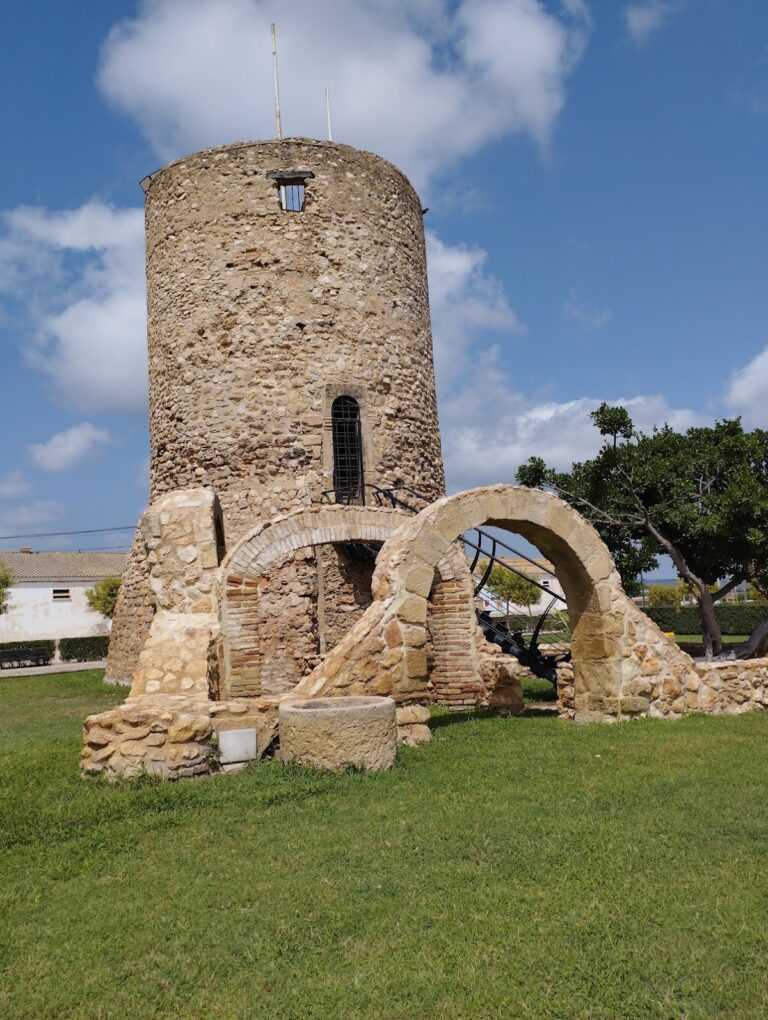
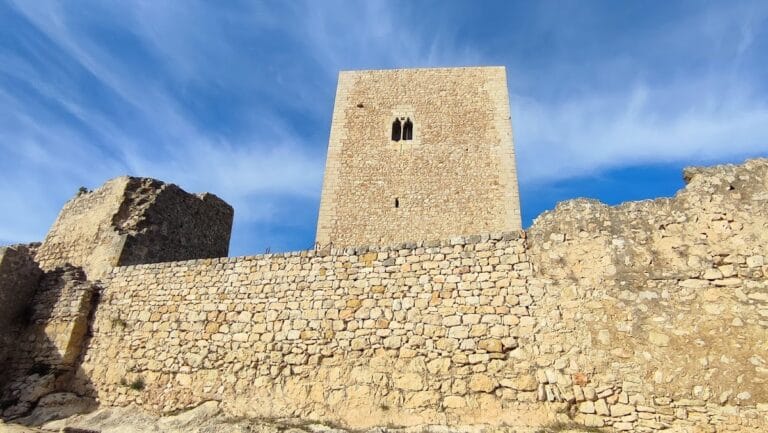
At the corner where the two moats meet stands the rectangular Saint John Tower, now repurposed as the base for the nearby Cercós rice mill chimney. This robust tower, erected between the late 14th and early 15th centuries, measures approximately 11.75 by 9.20 meters and has walls 2.4 meters thick, built with ashlar stone blocks held together by mortar. It currently remains about five meters high.
In contrast to other castles belonging to military orders along the Ebro River, Castell d’Amposta lacks the typical layout of upper and lower enclosures on elevated ground. Instead, it takes advantage of its river terrace position and relies heavily on its intricate moat defenses. The site’s limited remains from the Andalusian period suggest that subsequent builders did not incorporate these earlier structures extensively into the medieval castle’s design.
Nearby sites