Burg und Schloss Allstedt: A Historic Royal Palace and Castle in Germany

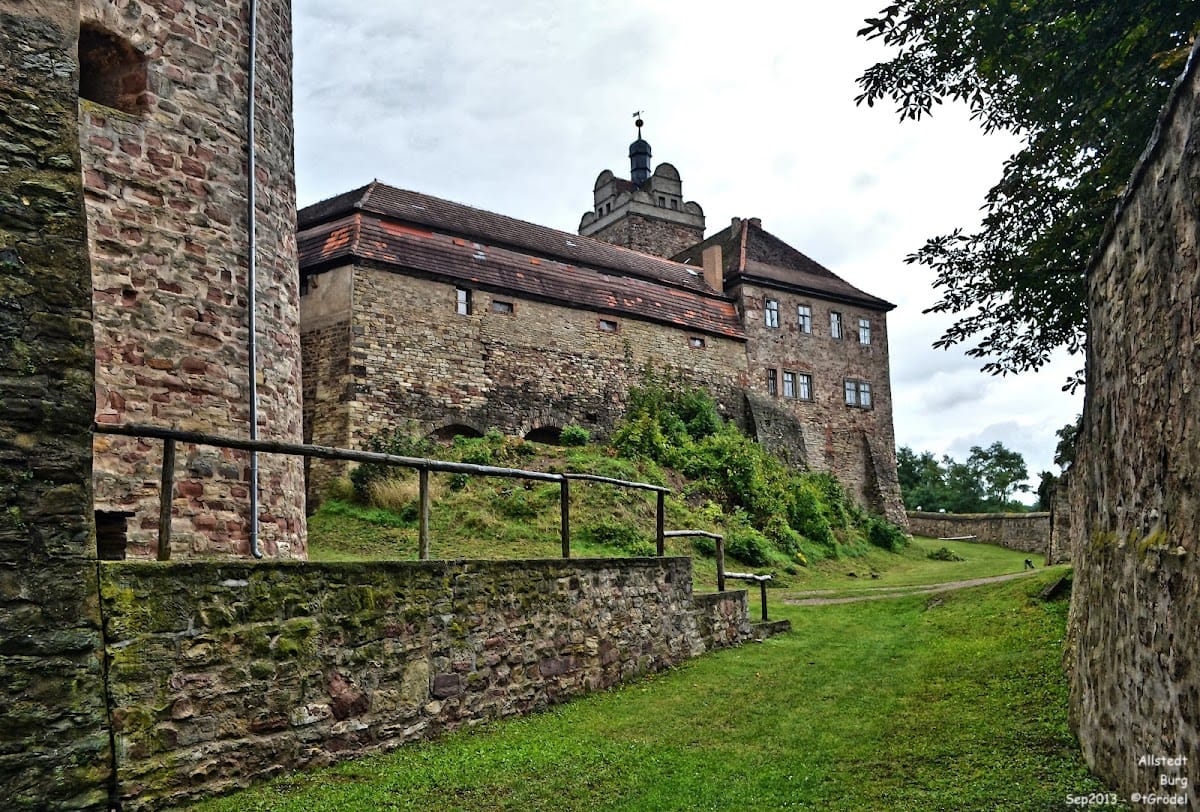

Visitor Information
Google Rating: 4.3
Popularity: Low
Official Website: www.schloss-allstedt.de
Country: Germany
Civilization: Unclassified
Site type: Military
Remains: Castle

History
Burg und Schloss Allstedt is located in the municipality of Allstedt, Germany, and was originally established by the Ottonian dynasty as a royal palace, also known in German as a Königspfalz. Its earliest recorded mention dates back to the year 777, and it appears under the name “urbs Altstediburg” between 880 and 899 in the Hersfeld tithe register, indicating its importance within the early medieval royal estate system.
During the 10th century, Allstedt served as a royal center within the Ottonian realm. Notably, King Heinrich I issued important official documents here in 935, underscoring the site’s administrative function. Later, in 979, Emperor Otto II confirmed donations of chapels and church tithes from Allstedt to the nearby monastery of Memleben, linking the palace to the religious institutions of the period. These royal activities illustrate the site’s standing as a key residence and administrative hub within the Ottonian kingdom.
From around 1150, the castle and the surrounding royal forest were placed under the custodianship of the Vögte, or stewards, of Allstedt. By the mid-14th century, the site became the administrative center of the Pfalzgrafschaft Sachsen-Allstedt, a territorial county formed between 1348 and 1356 during the rule of Emperor Karl IV. This status represented a significant political reorganization, transforming the royal palace into the heart of a regional lordship within the Holy Roman Empire.
Ownership changed to the noble Querfurt family between 1369 and 1496, who carried out large-scale construction projects. They demolished the old Ottonian structures and erected new wings, curtain walls, and gatehouses, establishing much of what sets the complex’s form today. This period marked a shift from a purely royal dwelling to a fortified noble residence reflecting the changing modes of governance and defense.
Following the Querfurts, control passed to the Ernestine branch of the Wettin dynasty from 1496 to 1526. Under their stewardship, the estate saw further extension, including the addition of the east wing. The period is also notable for Thomas Münzer’s sermon in 1524, delivered on the grounds, which openly criticized arbitrary rule and foreshadowed broader social upheavals during the Reformation era.
Throughout the 16th century, ownership of the castle was fluid, with pledges to counts of Mansfeld and Stolberg, before returning to the Ernestine Wettins in 1575. This cycle of ownership changes reflects the complex political alliances and financial pressures of the time, with the castle serving various noble interests.
In the late 17th century, the castle underwent alterations to its upper floors and was transformed into a residential palace, adapting the medieval fortress to more comfortable living arrangements. The chapel received a significant renovation in 1721, reshaping it into its current form. Around 1746 and 1747, an ambitious Baroque front palace was begun, though the project was only partially completed, leaving much of the medieval structure intact.
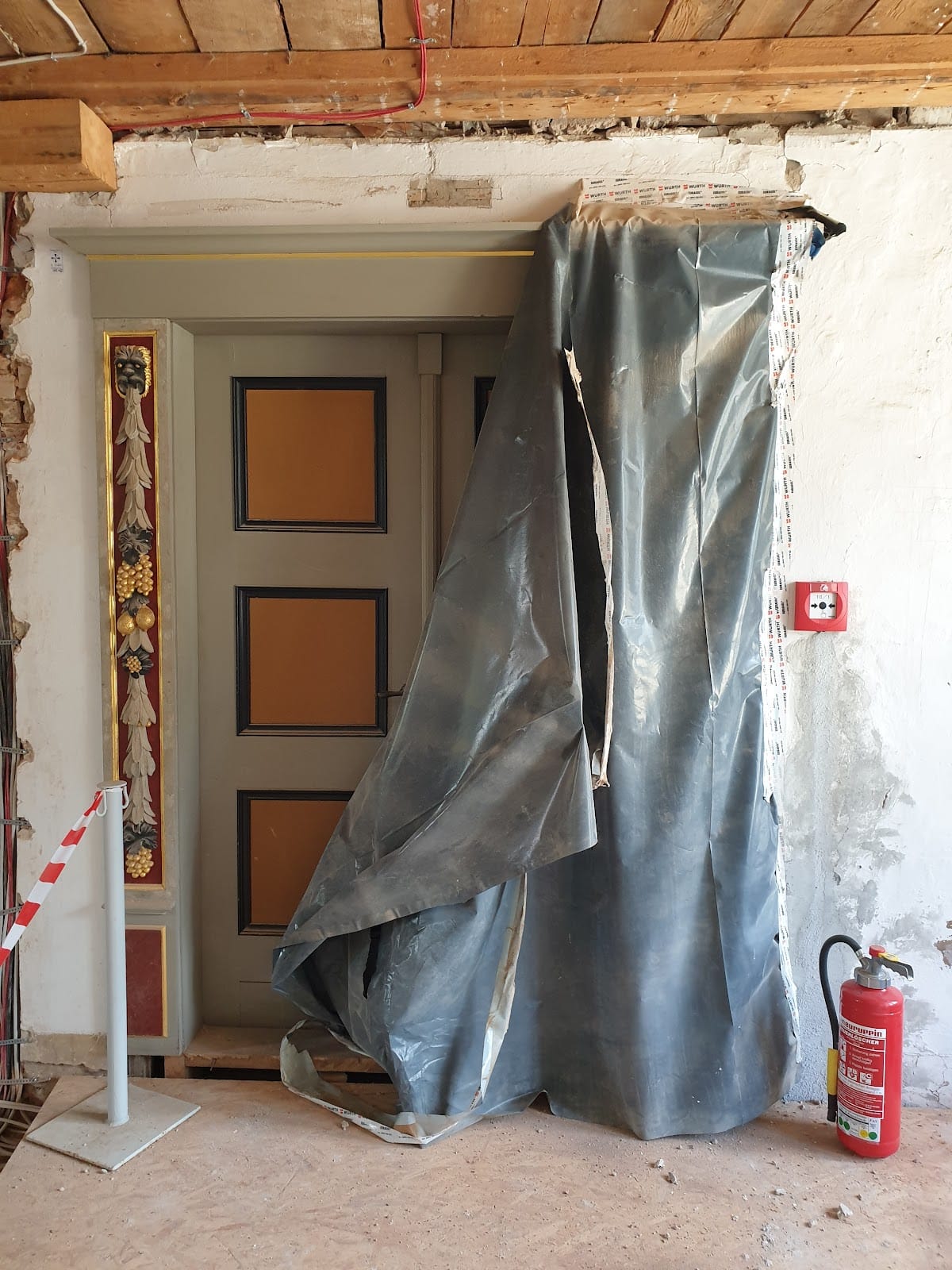
By the 20th century, the castle’s historic furnishings were removed in 1926. Comprehensive archaeological and architectural investigations led by Reinhard Schmitt in the late 1980s and early 1990s provided detailed insights into the site’s evolution. Since 2022, the Kulturstiftung Sachsen-Anhalt has owned the castle and commenced restoration work guided by conservation principles, with certain areas closed for several years to ensure careful preservation.
Remains
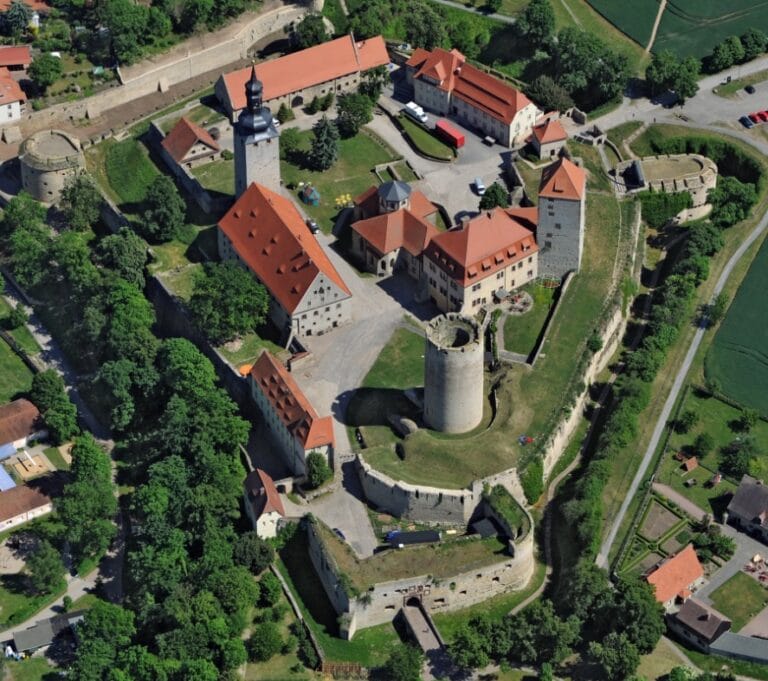
The castle complex at Allstedt is positioned on a spur stretching westward about 800 meters northeast of the town’s historic center. Its layout is defined by three progressively arranged sections, separated by remnants of deep moats and groups of buildings, characteristic of fortified medieval estates. To the east, a large depression is interpreted as the site of a former neck ditch, a defensive trench that once protected access to the castle hill.
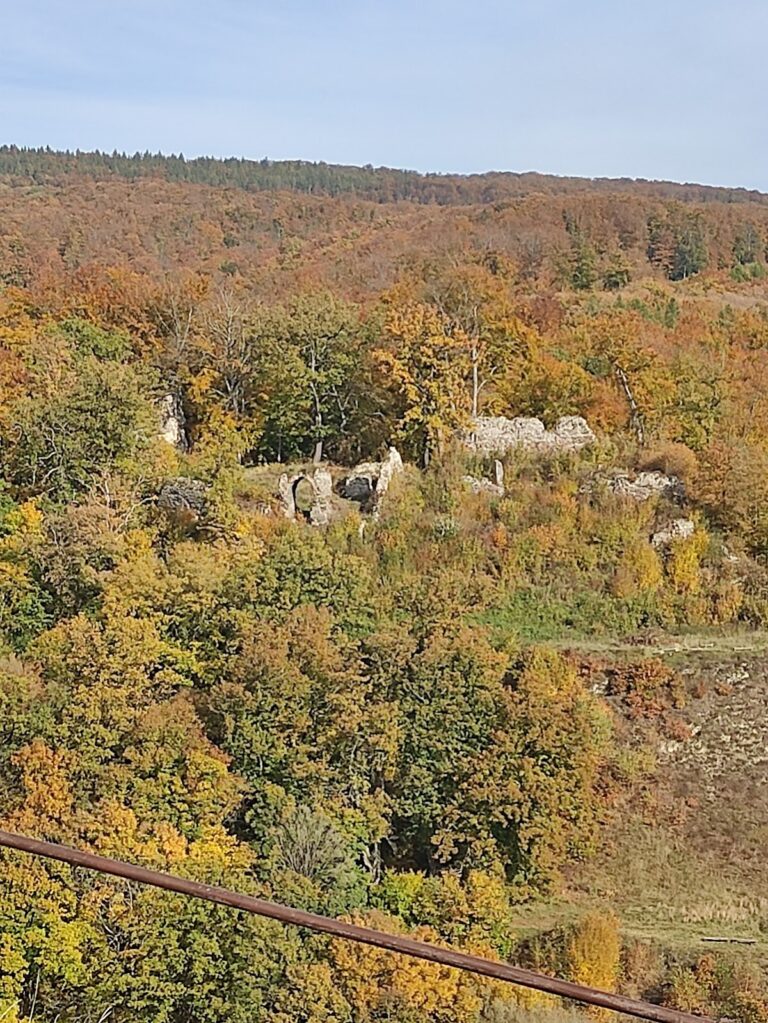
Excavations during the 1960s uncovered the upper portions of a broad moat, approximately 12 meters wide, which once encircled the castle hill and separated it from the surrounding plateau. This moat is believed to date back to Ottonian times, providing tangible support for the identification of the site as the royal palace mentioned in early medieval documents.
The oldest visible constructions presently standing date from the mid-13th century. One prominent early feature is a residential tower located on the right side of the entrance, estimated to have been built around the year 1400. This tower would have combined defensive and domestic functions, offering both protection and living space.
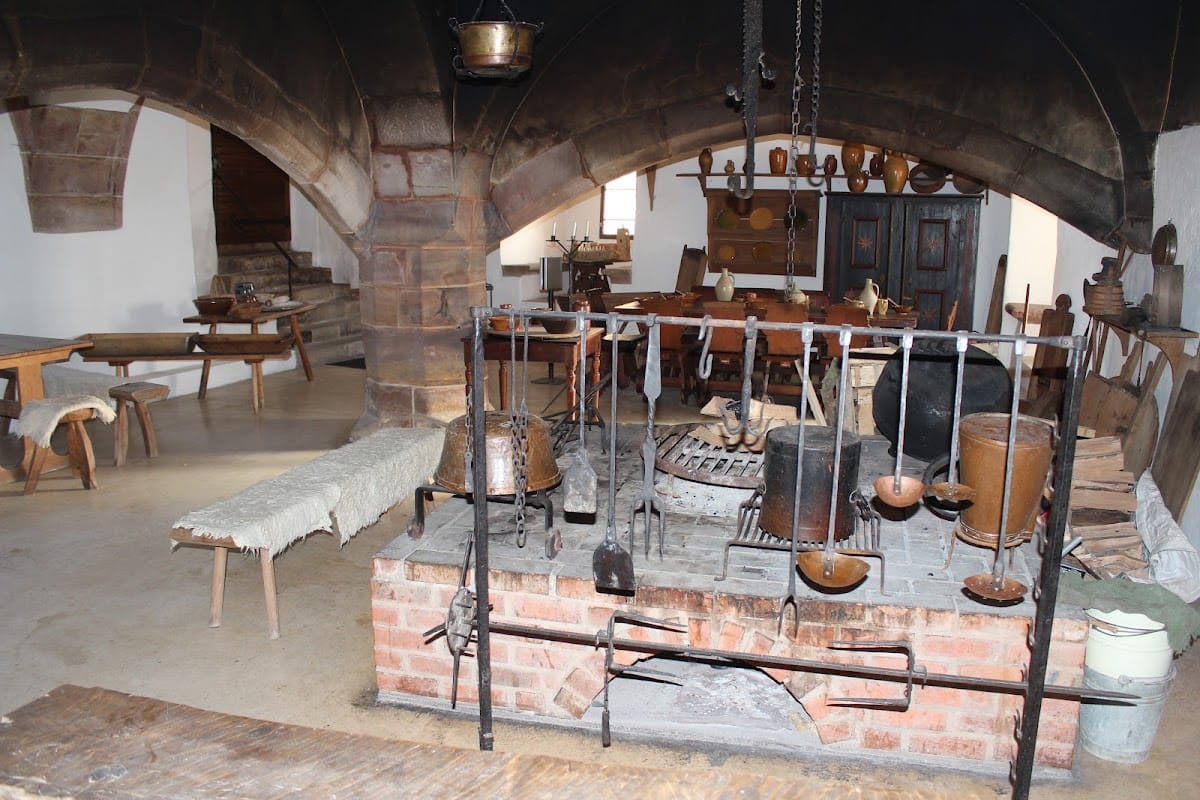
During the 14th and 15th centuries, the Querfurt family added substantial structures, including the north and west wings. These contained notably the great hall, kitchen, and a large chamber, central spaces for administration, ceremonies, and daily noble life. To the south and east, they erected shield walls—thick, defensive stone walls protecting crucial parts of the castle—and built gatehouses to control access, establishing the complex’s footprint that largely determines its present shape.
The Ernestine Wettins expanded the castle between 1496 and 1526, adding the east wing and several auxiliary buildings, enhancing the site’s residential and representative aspects. The chapel, which underwent a complete rebuild in 1721, now stands in the Baroque style, reflecting the tastes and religious practices of the early 18th century.
A Baroque front palace was initiated in 1746 and 1747 to adorn the castle’s entrance side, though it was only partly realized. This preserved much of the medieval character of the core castle even as newer architectural fashions were introduced.
The castle’s outer bailey, known as the Vorburg, comprises the south castle with its east and west wings, a gate tower, and two cavalier houses—buildings likely used by officers or higher-ranking servants. Adjacent stables formed part of the functional support of the estate. Since 2017, this section has been repurposed for commercial and hospitality uses and includes a beer garden opened in 2019.
Since 1993, a local association has illuminated the castle at night, contributing to the site’s visibility and supporting ongoing minor conservation measures. This community engagement complements the structured restoration efforts ensuring preservation of this historically rich site.
Nearby sites