Grillenburg: A Ruined Medieval Lowland Castle in Germany


Site at a Glance
- Rating
- 4.4
- Popularity
- Low
- Country
- Germany
- Primary era
- Medieval
- Eras represented
- Medieval
- Civilizations
- Holy Roman Empire
- Site type
- Military
- Remains
- Castle
On this page8 sections
History
Grillenburg is a ruined medieval lowland castle in Germany near Grillenberg, in the district of Mansfeld-Südharz. Built for ministeriales, medieval service-dependent elites who served rulers and ecclesiastical institutions as officials and military retainers, the small castle may have begun around 1200 in the Romanesque period, which preceded the Gothic era.
Origins and Medieval Lords
Grillenberg appears in the Hersfeld tithe register in 880/890, although this early reference does not connect the settlement with a castle. The fortress is first documented in 1217, when Tidericus de Grellenberch was recorded as a vassal of the Archbishopric of Magdeburg. Castle retainers from the Muser and von Morungen families were recorded at Grillenburg in 1286.
Control of the lordship changed during the conflicts of the later Middle Ages. In 1347, Margrave Frederick the Serious of Meissen, a frontier ruler or military governor, acquired the lordship from the Duke of Brunswick, who had held it with the Margraviate of Landsberg. During the Halberstadt Bishops’ Feud, a struggle between Bishop Albert II of Halberstadt and territorial lords in the Harz region, Grillenburg became contested. The Counts of Mansfeld captured the castle in 1362.
Later Feudal Control and Decline
Duke Magnus of Brunswick owned Grillenburg in 1366 and exercised patronage rights over Sittichenbach Abbey from the castle. These rights concerned the appointment or support of clergy and the religious administration of the abbey. In 1483, members of the von Morungen family, including George von Morungen, held Grillenburg as feudal vassals. The castle belonged again to Elector Ernest of Saxony in 1485 before passing to the Counts of Mansfeld.
When George von Morungen died in 1547, the lordship reverted as an expired fief, meaning that its feudal tenure had ended and returned to the superior lord. It then passed to the Saxon administrative office of Sangerhausen, a territorial unit of government. By that time, the castle was already in ruins. Grillenburg was regarded as derelict from the beginning of the seventeenth century.
Remains
Castle Layout and Masonry
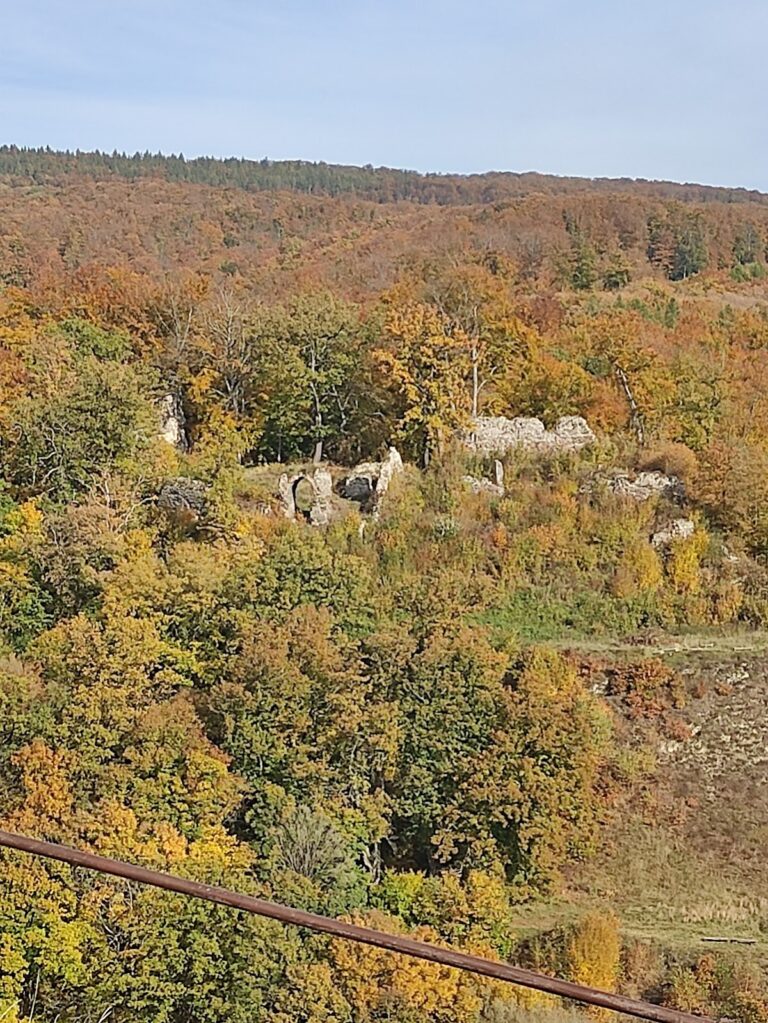
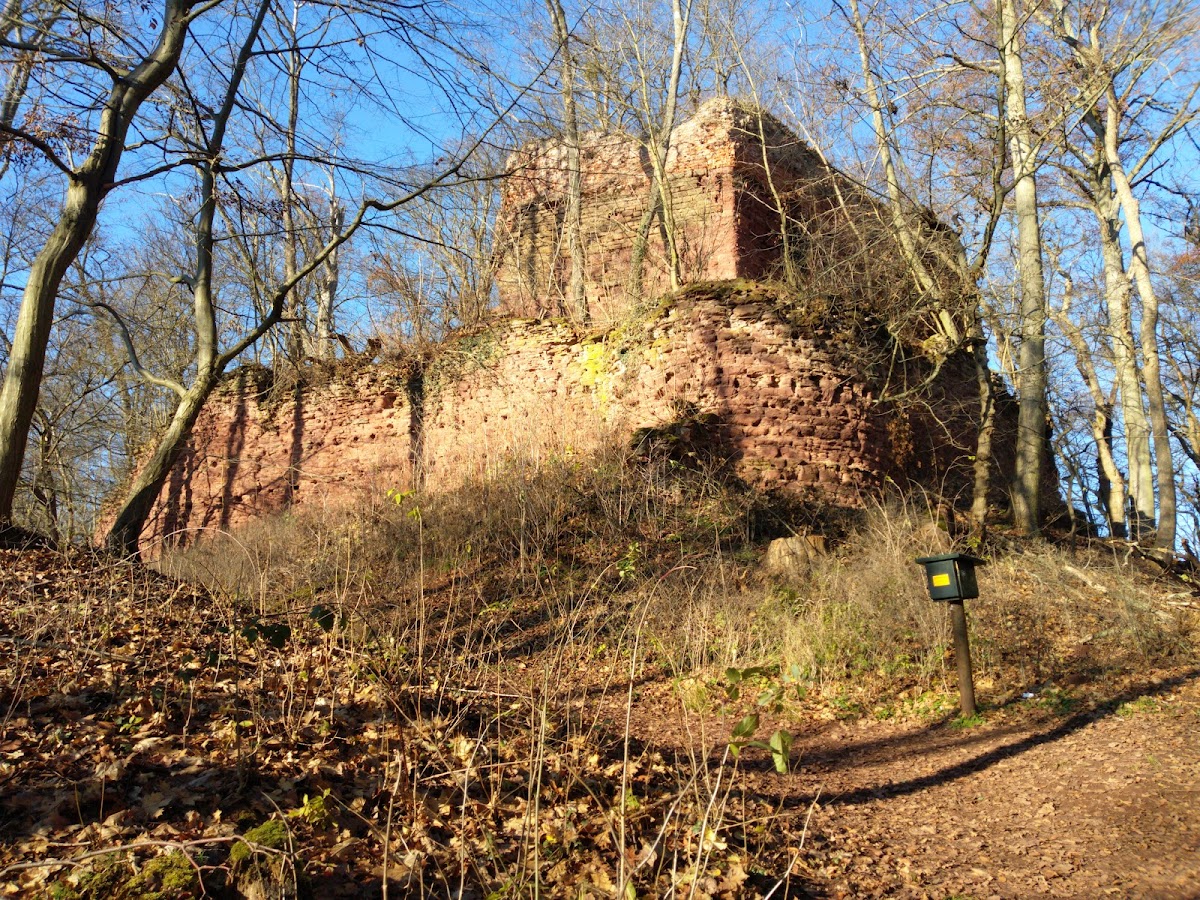
Grillenburg stands on a hill 312.5 metres above sea level, approximately 350 metres northeast of the village church. The site originally extended for about 200 metres in length and 70 metres in width. Substantial wall remains survive across the ruined castle, including masonry from the core castle and defensive features that outline its former arrangement.
Core Castle
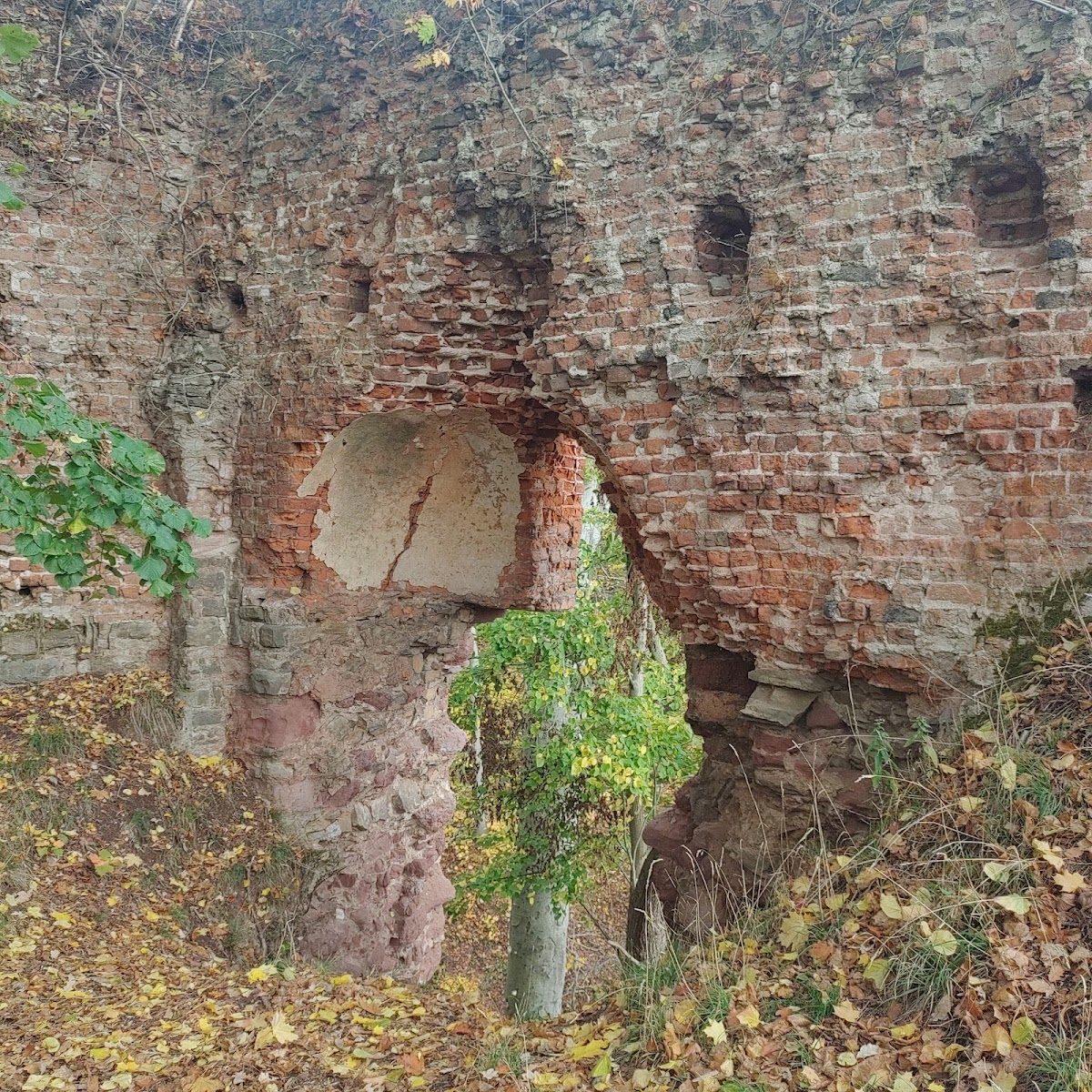
The lower sections of the walls are built from large rusticated ashlar blocks, carefully dressed stone units with a roughened outer face. This masonry belongs to the original Romanesque fortification. A later building phase is visible in brick masonry and dates to the fourteenth century, when the castle’s fabric was altered after its early medieval construction.
Defensive Works
The surviving defenses include a shield wall, a strong wall protecting the most vulnerable side of a castle, together with a zwinger, an outer defensive enclosure between the main walls and an external barrier. The ramparts of the neck ditch, a ditch cut across the approach to a fortified height, also remain. These elements formed the castle’s principal defensive system around the core.
Surrounding Earthworks
An earthwork about 100 metres east of Grillenburg may have served as a counter-fortification when the Counts of Mansfeld captured the castle in 1362. A counter-fortification was a secondary defensive work intended to oppose or control a primary fortified position.
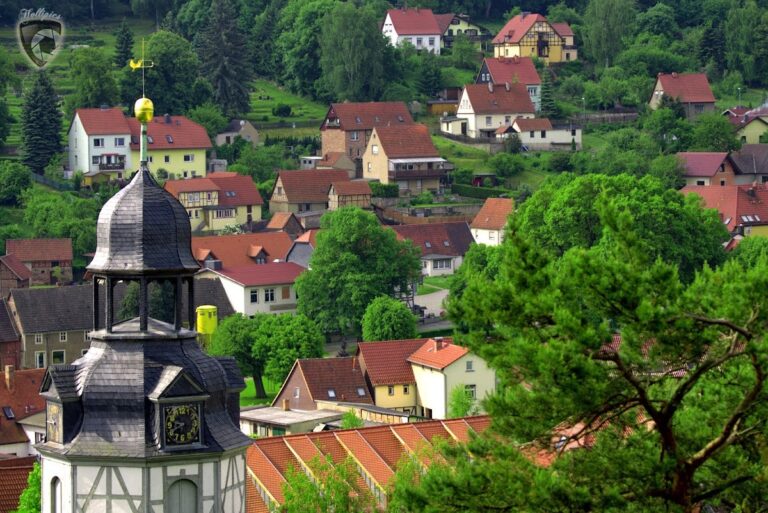
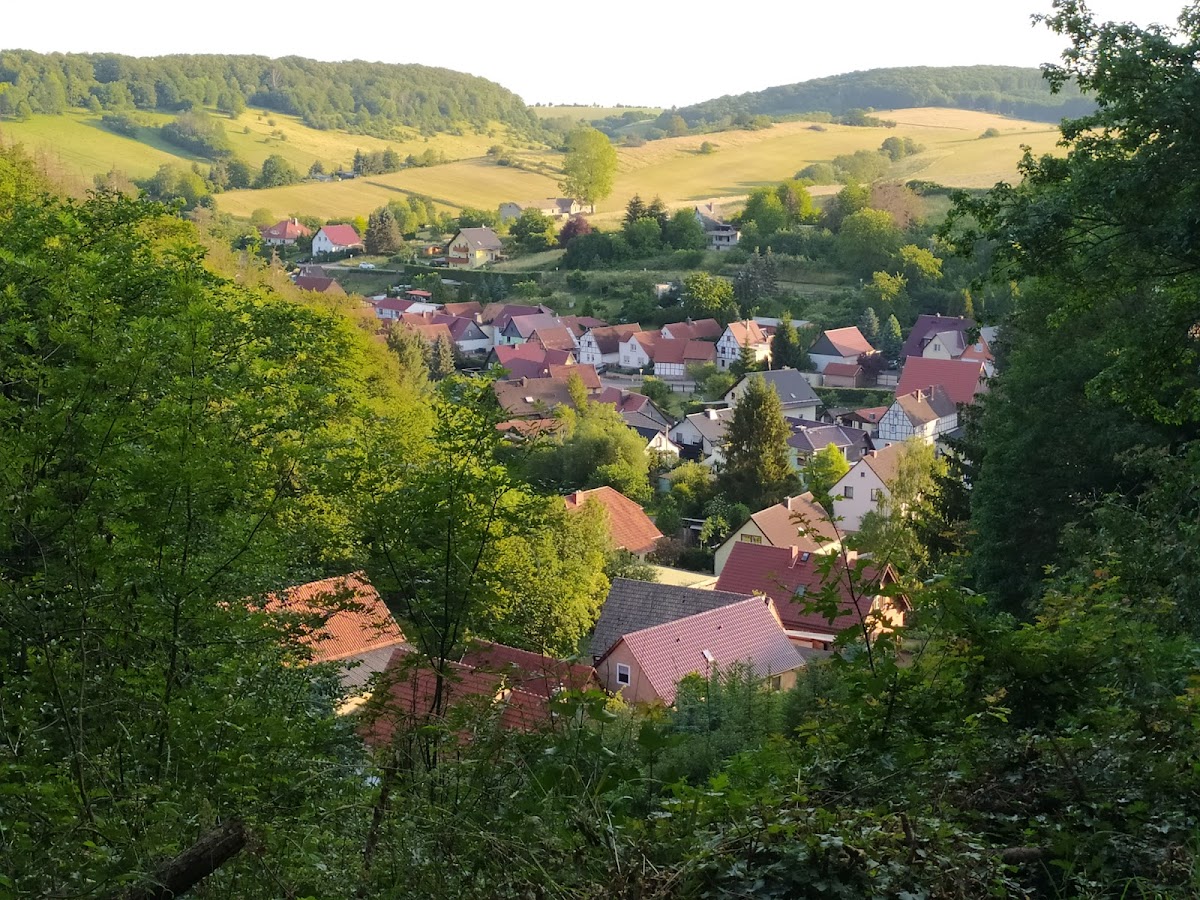
Although the ruin lies immediately beside Grillenberg, it is geographically within Obersdorf. The site stands in the Lower Harz, within the Harz Nature Park and the South Harz Karst Landscape Biosphere Reserve, and in the Gypsum Karst Landscape Pölsfeld nature reserve.