Burg Bornstedt: A Ruined Hilltop Castle in Germany


Site at a Glance
- Rating
- 4.8
- Popularity
- Low
- Country
- Germany
- Primary era
- Medieval
- External website
- Open
- Eras represented
- Medieval
- Civilizations
- Holy Roman Empire
- Site type
- Military
- Remains
- Castle
On this page7 sections
History
Burg Bornstedt is a ruined hilltop castle in Germany, probably associated with an imperial castle or fortified settlement as early as the eighth century. The site stood on a height in the Hornburg Saddle, east of Bornstedt, and was recorded around 880 as “Brunstediburg” in the Hersfeld Tithe Register, a medieval record of places and their obligations to provide a tenth of their agricultural produce to a religious institution.
Early Lords and Imperial Warfare
In the twelfth century, the Lords of Bornstete or Burnstede held the castle. In 1115, Emperor Henry V stationed troops there during the fighting at Welfesholz against the Saxons. Henry V ruled as Holy Roman Emperor from 1106 to 1125. Around 1120, Esico II became the first known owner to take his name from the castle, being described as its lord.
Mansfeld Ownership and the Castle Legend
After several changes of ownership, Burg Bornstedt came into the possession of the Counts of Mansfeld in 1301. This noble family held it until 1780. The castle began to fall into decay in 1615, marking a long decline in its use and physical condition.
The alternative names Schweinsburg and Schweinsberg are linked to a siege legend. During the attack, the defenders supposedly made their last pig scream repeatedly, leading the besiegers to believe that the castle still had plentiful provisions. Discouraged by this impression, the attackers abandoned the siege. The coat of arms associated with surviving descendants of the Bornstedt family shows a red battlemented wall topped by a battering ram.
Remains
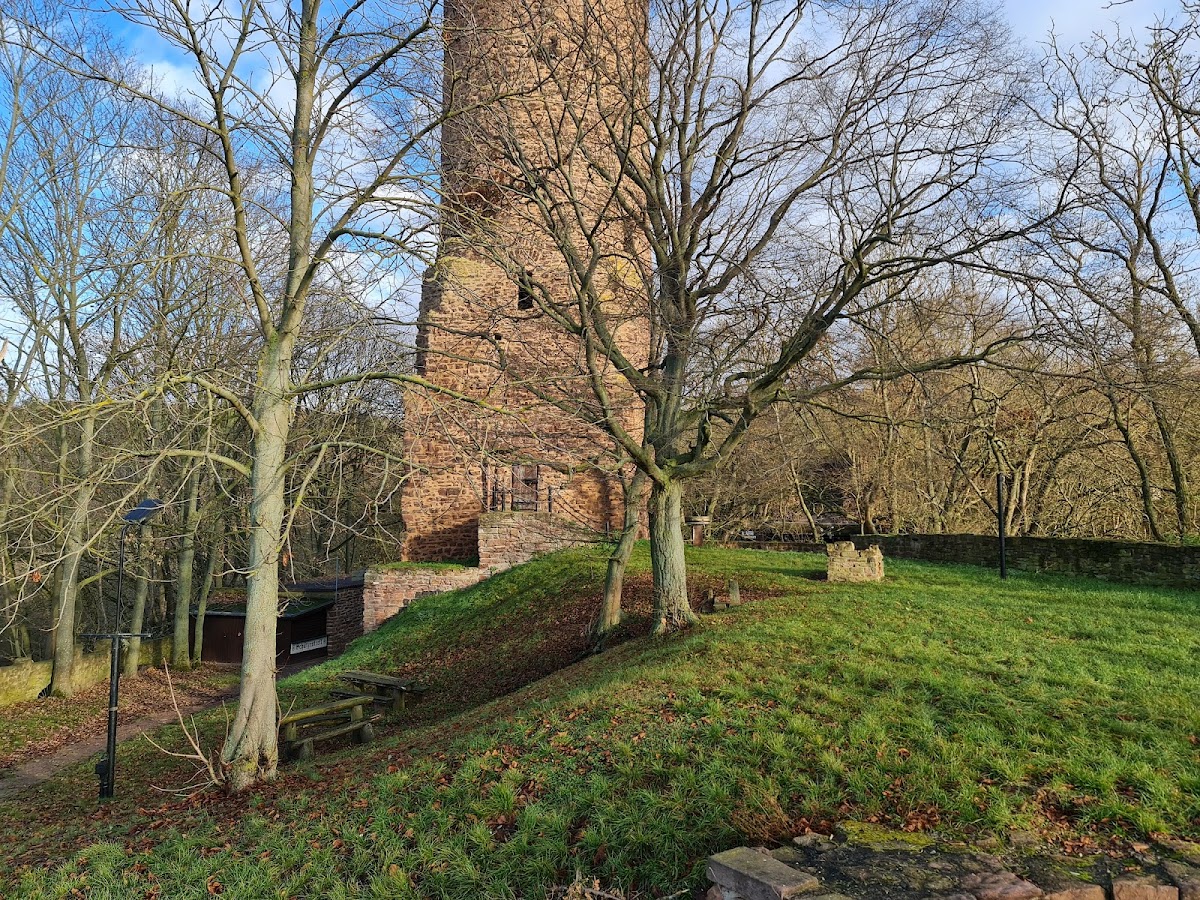
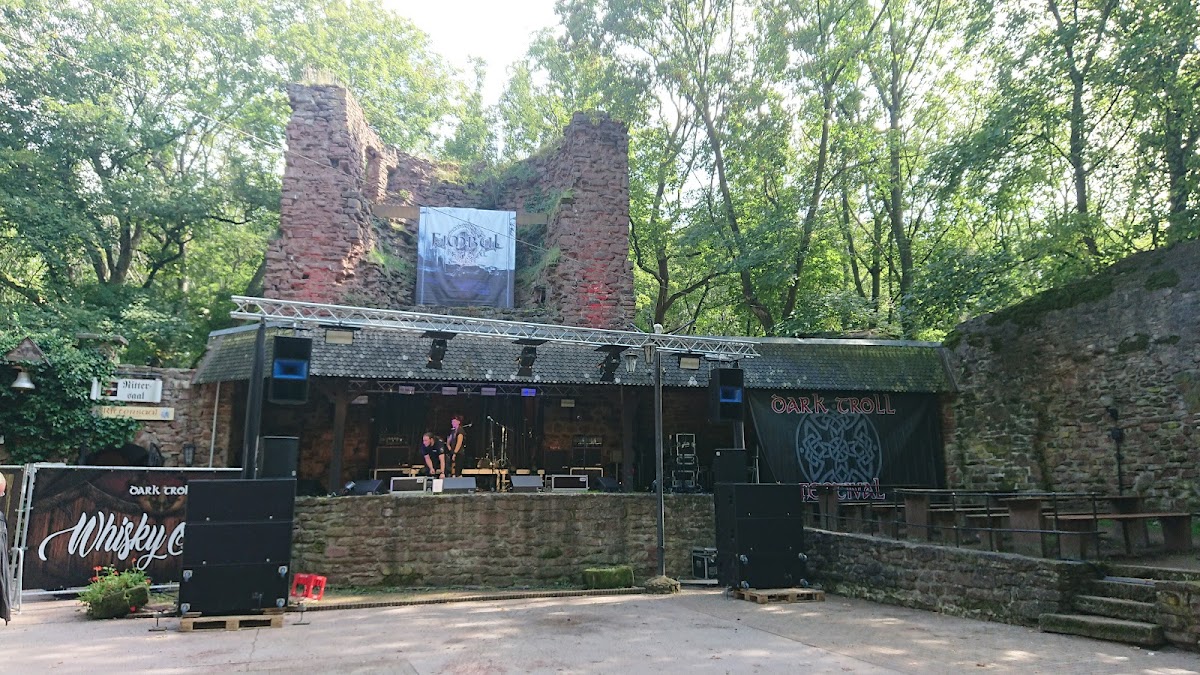
The ruined castle occupies a hilltop area measuring approximately 350 by 200 metres. Its surviving inner castle is centered on the 30-metre-high bergfried, the principal tower of a medieval German castle, generally intended for defense and refuge rather than as the main residence. The remaining defenses include the entrance gate, enclosing walls, and a ring moat around the site.
Inner Castle and Defenses
Bergfried
The surviving bergfried stands on a square base measuring 9 by 9 metres and rises approximately 30 metres above the castle area. It is the principal surviving structure of the inner castle and remains as a ruined medieval defensive tower.
Gate, Walls, and Ring Moat
The entrance gate survives together with clear stretches of the enclosing walls. A surrounding ring moat forms part of the castle’s defensive layout, preserving the relationship between the inner castle and its outer boundary.