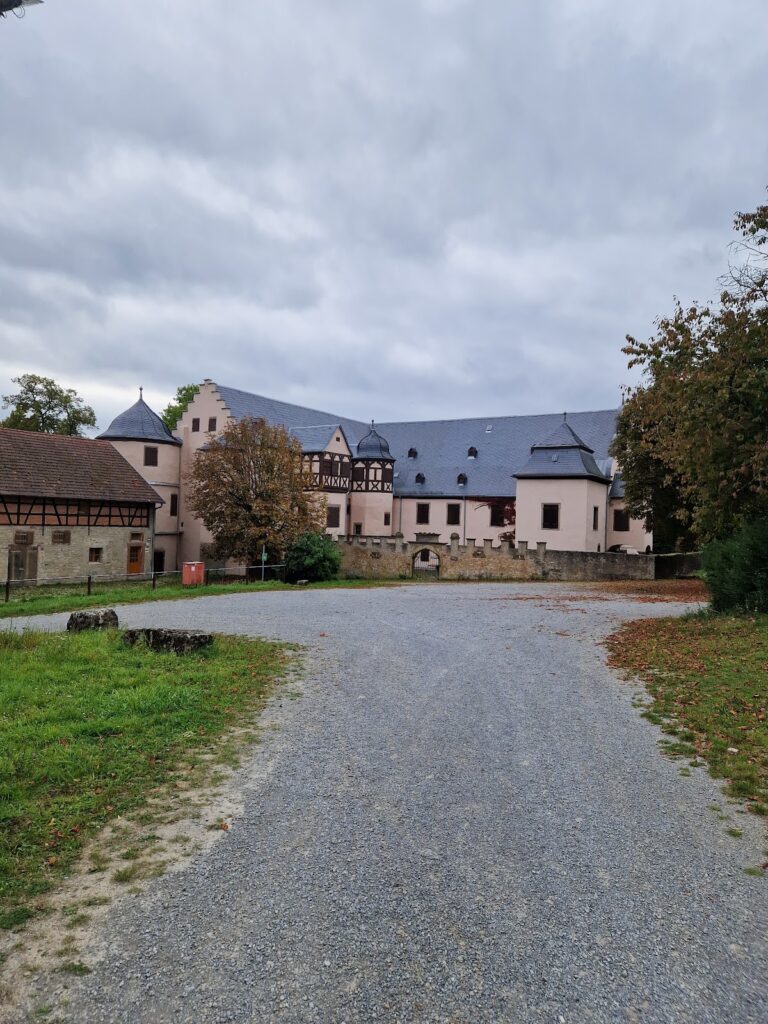
Burg Rothenfels: A Historic Hilltop Castle and Educational Center in Germany



Visitor Information
Google Rating: 4.3
Popularity: Low
Google Maps: View on Google Maps
Official Website: www.burg-rothenfels.de
Country: Germany
Civilization: Unclassified
Remains: Military

History
Burg Rothenfels is a hilltop castle located in the municipality of Rothenfels in modern-day Germany. It was established by the medieval German nobility in the mid-12th century, attributed to the family of Markward II von Grumbach, whose lineage is recorded from the early 12th century. Their tenure lasted until the family line ended in 1243 with the death of Albert von Grumbach.
Following the extinction of the von Grumbach family, ownership of the castle transferred through marriage to the Counts of Rieneck. In 1328, the castle changed hands when it was sold to the ministerial family von Wolfskeel. Merely five years later, in 1333, the castle became the property of the Prince-Bishopric of Würzburg, marking its integration into ecclesiastical territorial control.
The tide of secularization in 1803 shifted the castle’s status once again. It passed from church to secular noble hands under the House of Löwenstein-Wertheim-Rosenberg. Soon after, through mediatisation in 1806—a process where smaller sovereign entities were absorbed into larger states—the castle became part of the Principality of Aschaffenburg. By 1813, the castle was incorporated into the Kingdom of Bavaria. During this period, its role shifted away from noble residence or military stronghold toward agricultural purposes, serving as storage and accommodation for peasants and livestock.
The dawn of the 20th century brought a new chapter when in 1919 the princely family sold Burg Rothenfels to the Catholic youth movement Quickborn. This began its transformation into a center for Christian education and conferences. Between 1927 and 1939, the influential theologian Romano Guardini directed the castle’s programs. Under his guidance, the chapel gained prominence as a hub of the Liturgical Movement, a religious reform initiative foreshadowing changes that would later be adopted during the Second Vatican Council.
From 1924 to 1940, the castle benefited from the architectural expertise of Rudolf Schwarz, who served as its master builder. He oversaw the design and execution of the chapel’s furnishings carried out by a group of teachers and students from the Aachen School of Arts and Crafts. This artistic collaboration introduced notable liturgical elements that remain significant to the castle’s religious identity.
In August 1939, Nazi authorities confiscated Burg Rothenfels, temporarily halting its educational and spiritual activities. After World War II, these functions resumed under the Oratorian Heinrich Kahlefeld and successive leaders. Since the 1960s, a council of volunteers has supported the development of its educational mission, with a succession of full-time educational officers and honorary chaplains guiding its ongoing programs well into the 21st century.
The association managing the castle also reflects this evolving history. Founded originally in 1917 as the Quickborn Friends, it was renamed in 1933 to broaden its Christian outreach. The organization was dissolved under Nazi orders in 1939 but reconstructed in 1948 to continue its stewardship. In 2019, this association celebrated 100 years since acquiring the castle, marking a century of its role as an educational and spiritual center.
Starting in the 1970s, Burg Rothenfels underwent comprehensive restoration and modernization to better serve youth and adult education. This extensive work received public funding and support, including a pledge exceeding three million euros from the Bavarian government in 2022 aimed at preserving the historic complex for future generations.
Remains
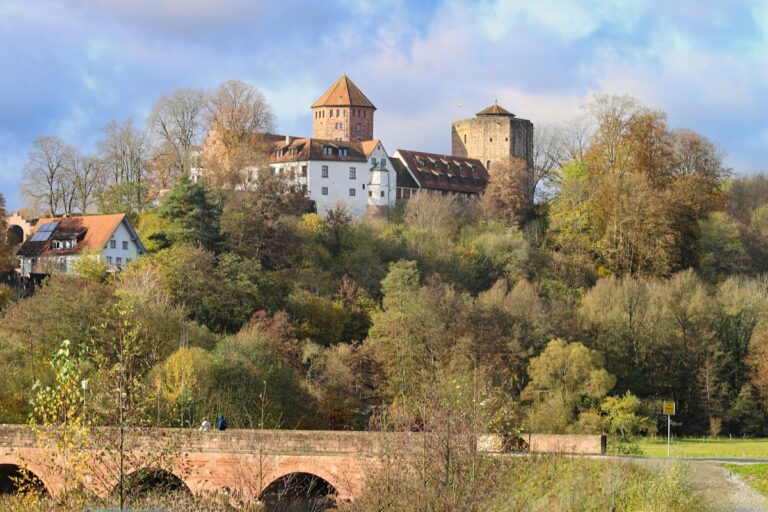
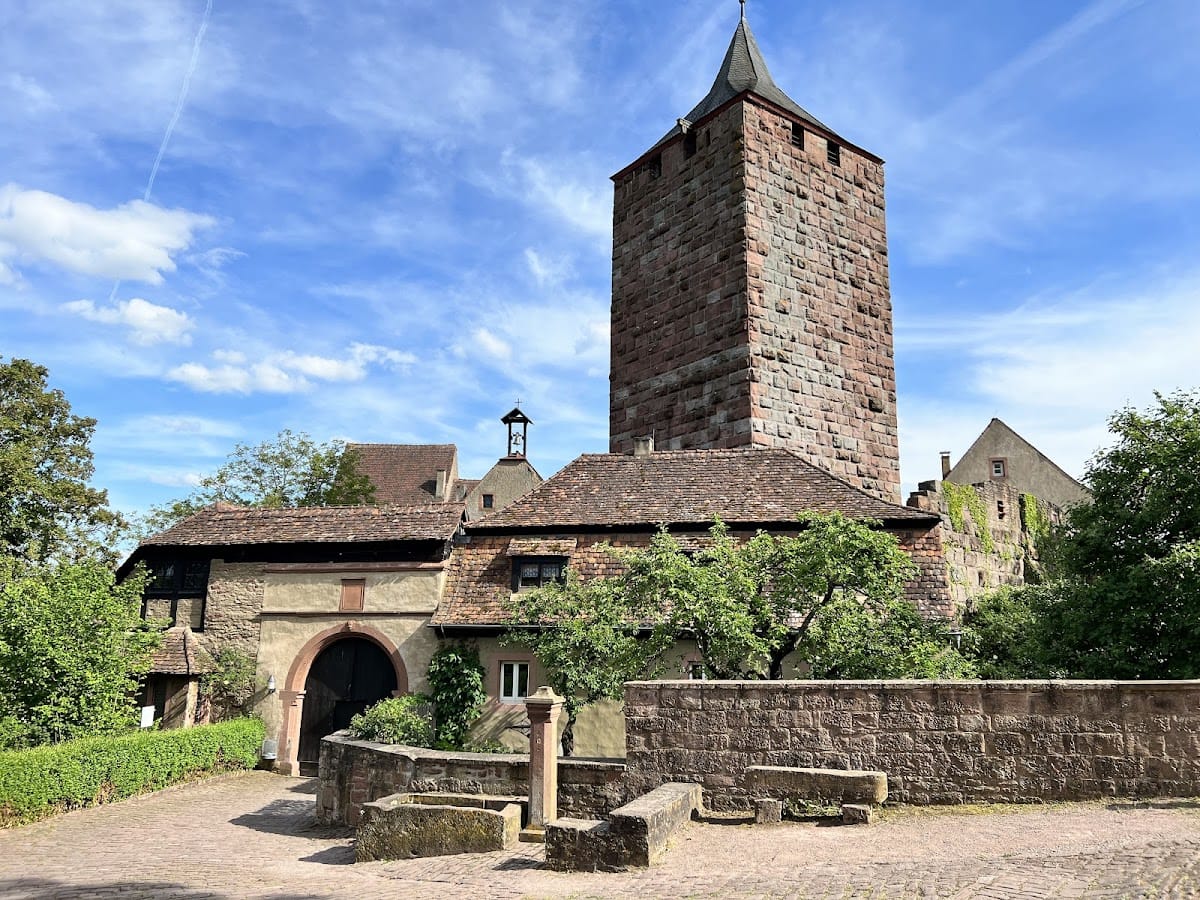
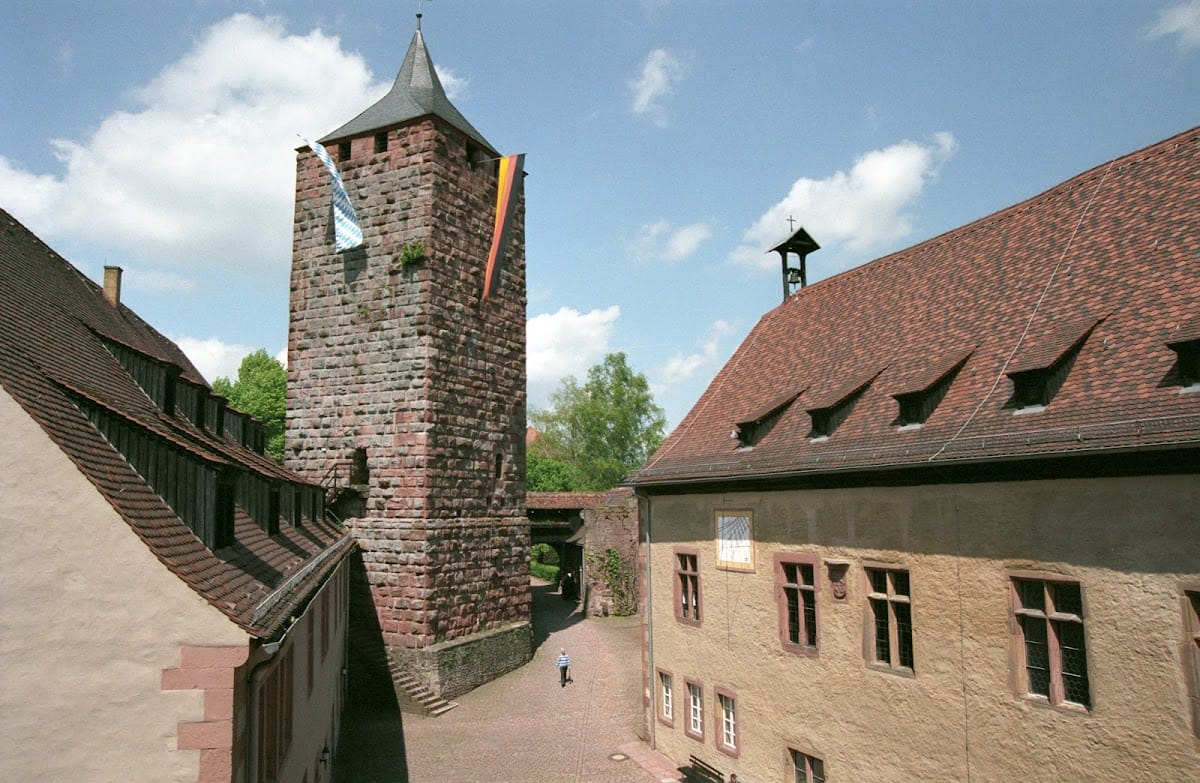
Burg Rothenfels is a classic example of a hill castle positioned prominently above the Main River. The fortress is centered around a massive main tower known as a bergfried, which has survived from its original 12th-century construction phase. This tower was primarily a stronghold and lookout point, built using the robust masonry techniques typical of the Middle Ages.
The castle complex is structured in two main enclosures: an inner bailey and an outer bailey. Within the inner bailey lie three principal residential buildings often referred to as the East, South, and West palaces. Since the 1970s, these structures have been carefully restored and modernized to accommodate contemporary use while preserving their historic character.
The chapel within the castle holds special significance for its unique liturgical furnishings, designed by architect Rudolf Schwarz during his tenure from the mid-1920s through 1940. A distinctive large chandelier serving as an eternal light was created by Fritz Schwerdt, contributing to the chapel’s solemn ambiance. Additionally, a delicate crucifix designed through the collaboration of Anton Schickel and Fritz Schwerdt, along with an ivory corpus crafted by Hein Minkenberg, adorn the space. The altar ensemble—including the altar itself, candlesticks, and tabernacle—is notable for being sheathed in nailed silver sheets, reflecting careful craftsmanship and artistic detail.
Today, the site offers accommodations with approximately 280 beds spread across the complex. It has three dining halls and ten rooms designed for group work or meetings, holding between 20 and 70 participants. A large knights’ hall also remains functional, seating about 300 people and providing a versatile space for theatrical and musical events.
Modern infrastructure changes have been sensitively incorporated. For instance, a wood chip heating system was installed in 2008, reflecting the commitment to sustainable energy use. Living quarters in the South Palace underwent renovation in 2014, ensuring the facilities meet current standards while maintaining historical integrity.
Burg Rothenfels serves as one of the largest youth hostel sites in the region of Lower Franconia. It is affiliated with both the Bavarian Adult Education Association and the Bavarian Youth Hostel Association, supporting an array of cultural, educational, and recreational activities that continue the castle’s long tradition as a place of community and learning.
Nearby sites