Burg Gamburg: A Romanesque Hilltop Castle in Germany


Site at a Glance
- Rating
- 4.6
- Popularity
- Low
- Country
- Germany
- Primary era
- Medieval
- External website
- Open
- Eras represented
- Medieval
- Civilizations
- Holy Roman Empire
- Site type
- Military
- Remains
- Castle
On this page11 sections
History
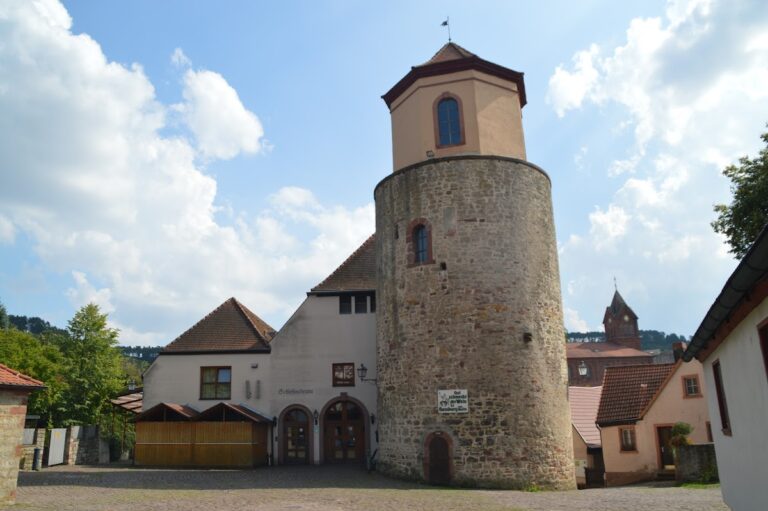
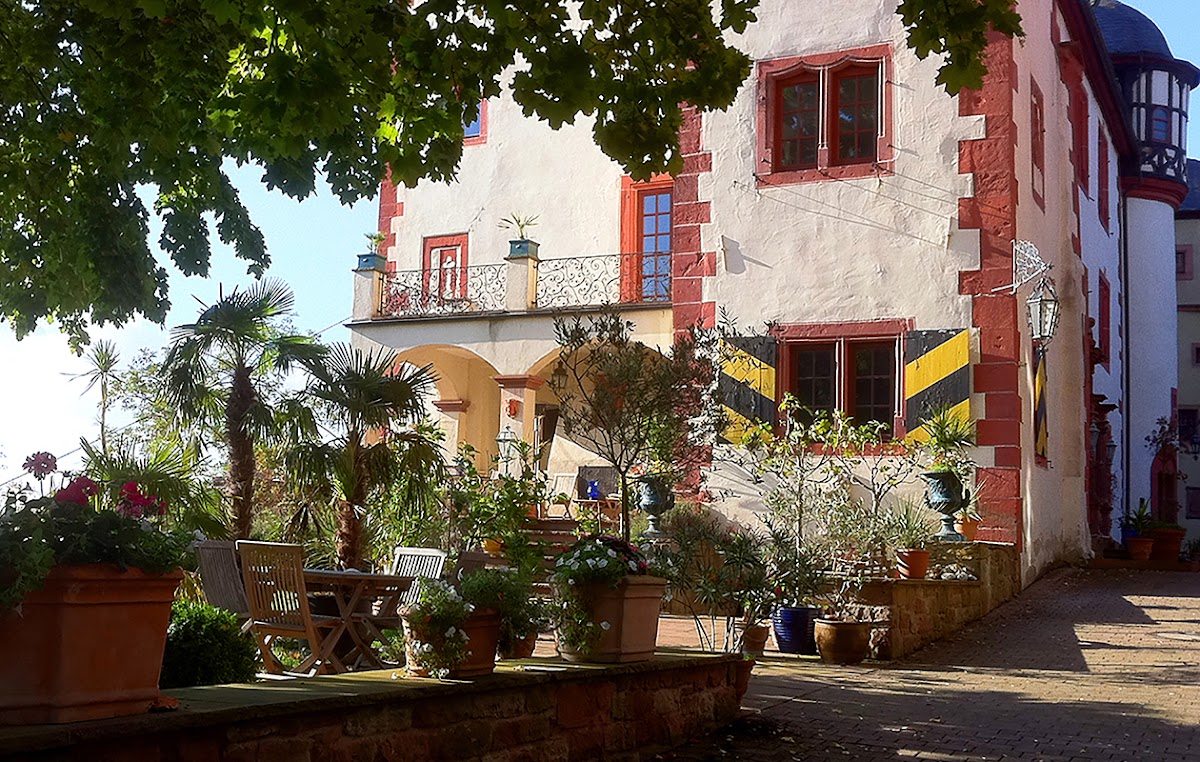
Burg Gamburg is a medieval hilltop castle in Germany, built by the archbishops of Mainz in the mid-12th century above Gamburg in what is now Werbach, Baden-Württemberg. Its Romanesque complex was first recorded in 1157 as castrum Gamburc. The castle combined a fortified administrative seat with a representative residence, and its surviving late-12th-century wall paintings rank among the oldest secular murals preserved north of the Alps.
Foundation and Mainz administration
Archbishop Arnold von Selenhofen granted Gamburg as a fief, meaning property or jurisdiction bestowed by a superior lord in return for service or another obligation, to the nobleman Beringer von Gamburg. In exchange, Beringer transferred the villula Brunnenbach, now the Schafhof near Bronnbach, to the archbishop. The Lords of Gamburg died out in 1219. The castle then functioned as an administrative centre occupied by retainers responsible for serving at and defending it. Members of the Lords of Uffenheim held this role in 1225.
Rudolf von Wertheim appears as hereditary castle warden in 1292 and 1315, while Ludwig von Rieneck entered the castle’s service in 1339. Gamburg was pledged to Henrich von Salza and his wife Gute in 1347. This arrangement followed the 1345 sale of Dryburg Castle and the town of Salza to Mainz Archbishop Heinrich III von Virneburg. One-third shares in Gamburg were later pledged to the Lords of Grumbach in 1358 and to the Lords of Stettenberg in 1359, followed by further grants involving scattered properties around Gamburg.
Private ownership and continued residence
Eberhard Rüdt von Collenberg acquired the castle from the archbishop of Mainz by exchange in 1546. It passed by inheritance to Dietrich von Hattstein in 1568, Eberhard Brendel von Homburg in 1570, and Hartmut the Elder and Hartmut the Middle von Cronberg in 1590. Hartmut the Elder became sole holder in 1592. The Lords and later Barons von Dalberg acquired it in 1606, and the Barons and later Imperial Counts von Ingelheim followed in 1722. The complex passed to Emanuel Count von Westerholt-Gysenberg in 1936 and has belonged to the von Mallinckrodt family since 1980.
The name “Upper Castle” distinguished Gamburg from the Lower Castle, whose lordship was separate from 1568/77 until 1806/07. Gamburg has remained privately owned since 1546 and has continued to be inhabited. Unlike many medieval castles, it was remodeled repeatedly, including during the Renaissance, but was never destroyed. It also escaped damage during the German Peasants’ War after the knight and military commander Götz von Berlichingen intervened personally.
Twentieth-century use and rediscovery
After the Second World War, displaced people were housed in the castle. Count von Westerholt-Gysenberg rented parts of the complex to Caritas, a Catholic charitable organization, in 1947. A rural residential adult-education school for northern Baden occupied part of the property as a subtenant in 1949, followed by a special school for resettlers in 1957.
The late-12th-century paintings in the palas were discovered in 1986. Their survival helped establish the castle’s importance for the study of secular Romanesque art. Burg Gamburg is designated as a cultural heritage monument in Baden-Württemberg. The English art historian and diplomat Joseph Archer Crowe died at the castle in 1896.
Remains
Castle layout and defenses
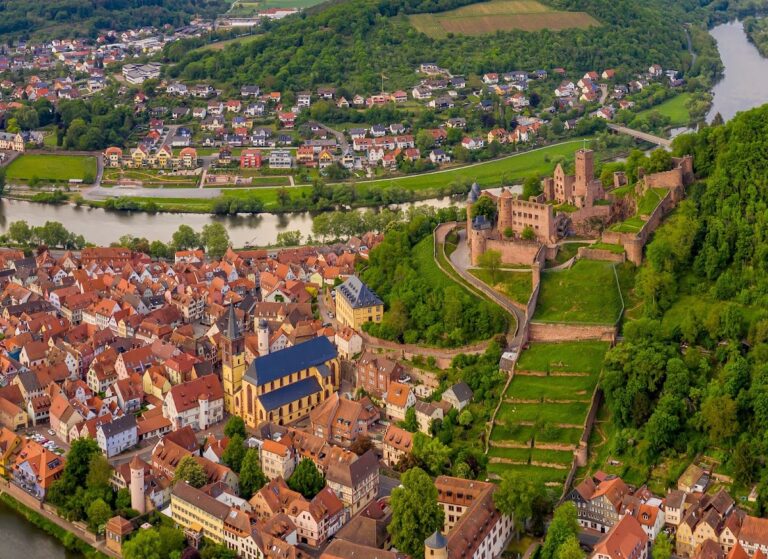
Burg Gamburg occupies the summit of the 242.5-metre Schlossberg directly above the Tauber. Its central complex follows an approximately oval plan and is built chiefly of sandstone. The inner courtyard is enclosed by former stables, the Försterhaus, or forester’s house, and the opposing group known as the “Schloss.” This group includes the chapel tower, palas, Middle Building, and Rear Building. The Rear Building has contained a chapel since 1921.
Central tower
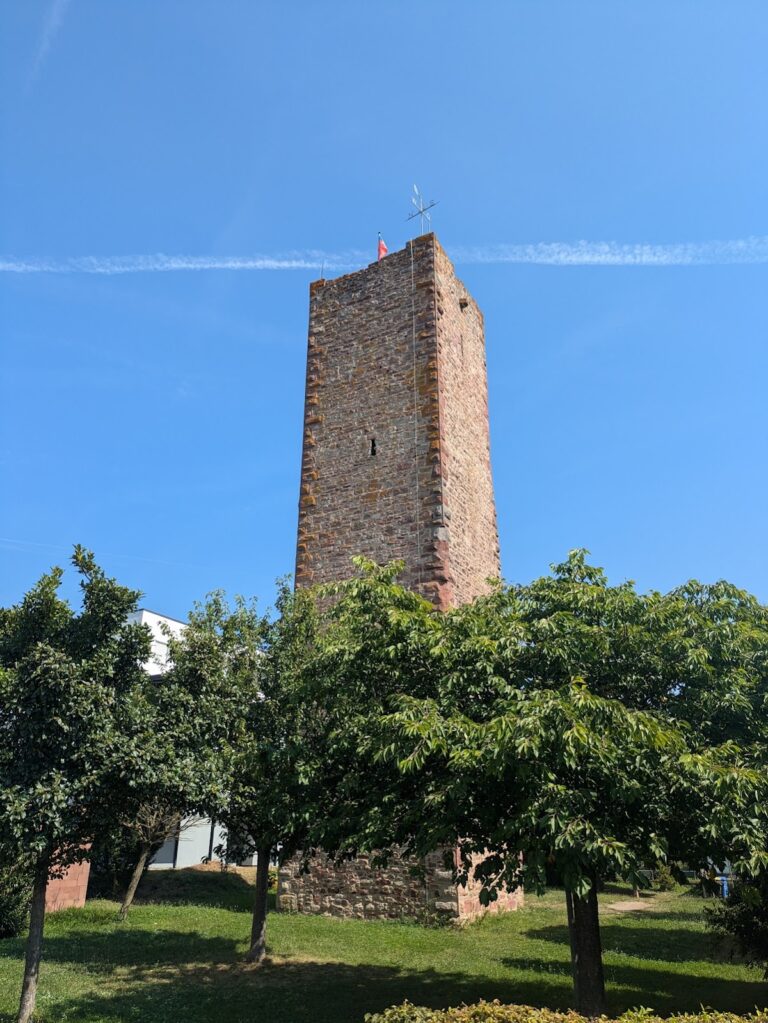
A Romanesque bergfried, the principal fortified tower of a medieval German castle, stands at the centre of the complex. It measures approximately 10 by 10 metres, with walls about 3 metres thick. Its smooth outer surfaces differ from the bossed ashlar masonry common on many towers of the period. The walls were originally plastered, giving the tower a distinct finish within the sandstone-built castle.
Outer defenses and park
The core castle was protected by a zwinger, an outer fortified enclosure between the main defenses and an outer wall. Six semicircular shell towers projected from this enclosure, remaining partly open toward the interior. A round corner tower and an outer gate flanked by two round towers completed the defensive arrangement. The neck ditch was later transformed into a Baroque castle park, changing the character of this part of the medieval approach without removing its place in the complex’s structural history.
Romanesque residence and paintings
Hall building
A late-12th-century hall building was erected above a basement, probably around 1180 by Beringer the Younger von Gamburg. It contained two further representative storeys, each originally undivided. The hall on the first upper floor covers 126 square metres and was equipped with underfloor heating. Its unusually wide Romanesque double arcades retain parts of their painted decoration, linking the building’s residential and ceremonial functions with the surviving visual program.
Palas murals
The palas, the representative residential hall of a medieval castle, preserves partially surviving late-Romanesque narrative wall paintings. Latin and German inscriptions accompany a continuous pictorial account of events from the Third Crusade, the late-12th-century expedition launched by European rulers in response to the Muslim reconquest of Jerusalem. The paintings certainly predate 1219. Beringer the Younger, who took part in the crusade with the troops of Würzburg Bishop Gottfried von Spitzenberg-Helfenstein, formerly an imperial court chancellor, is regarded as their patron.