Revište: A Gothic Castle Ruin in Slovakia


Site at a Glance
- Rating
- 4.7
- Popularity
- Low
- Country
- Slovakia
- Primary era
- Medieval
- External website
- Open
- Eras represented
- Medieval, Early Modern
- Civilizations
- Hungarian
- Site type
- Military
- Remains
- Castle
On this page7 sections
History
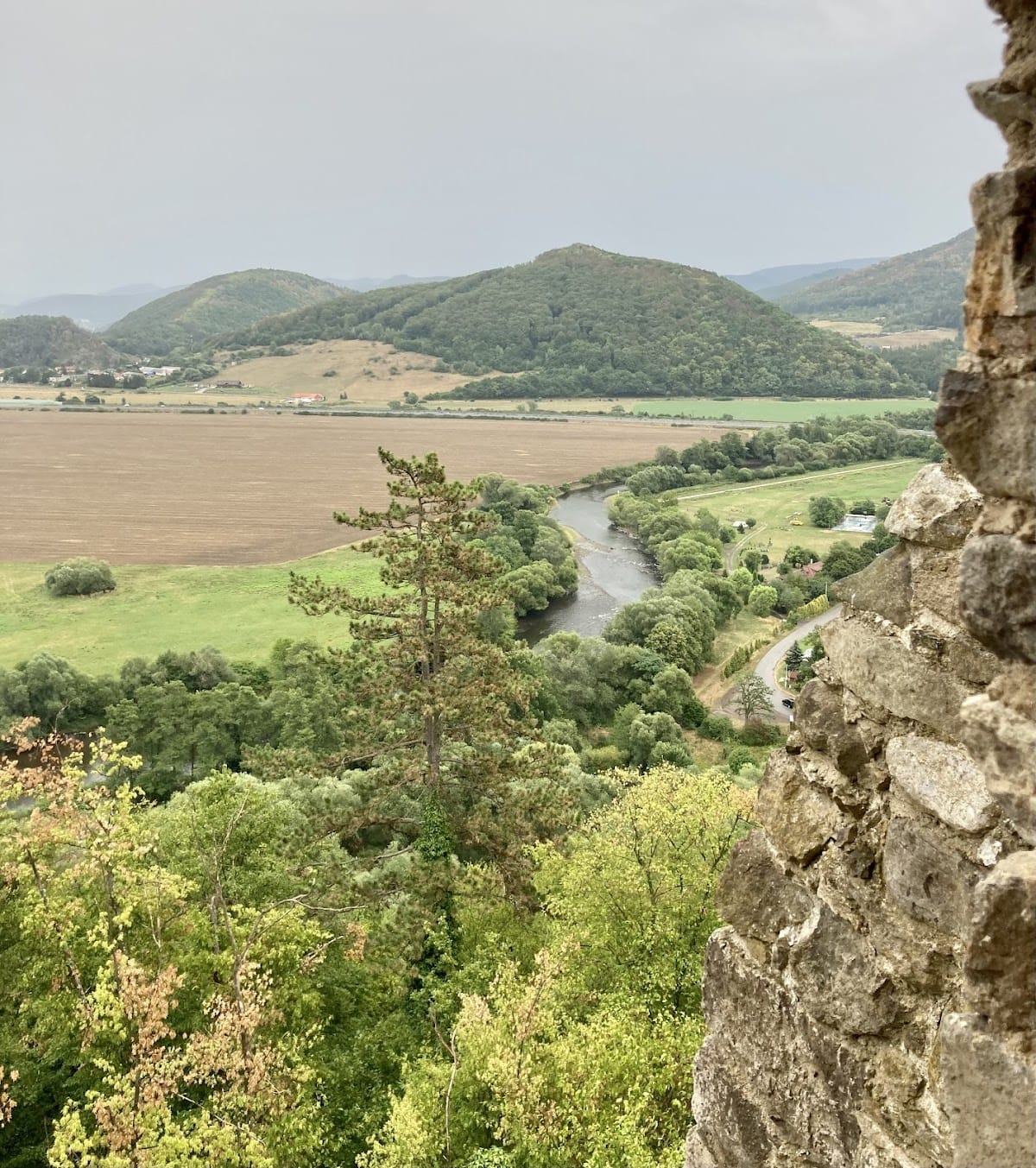
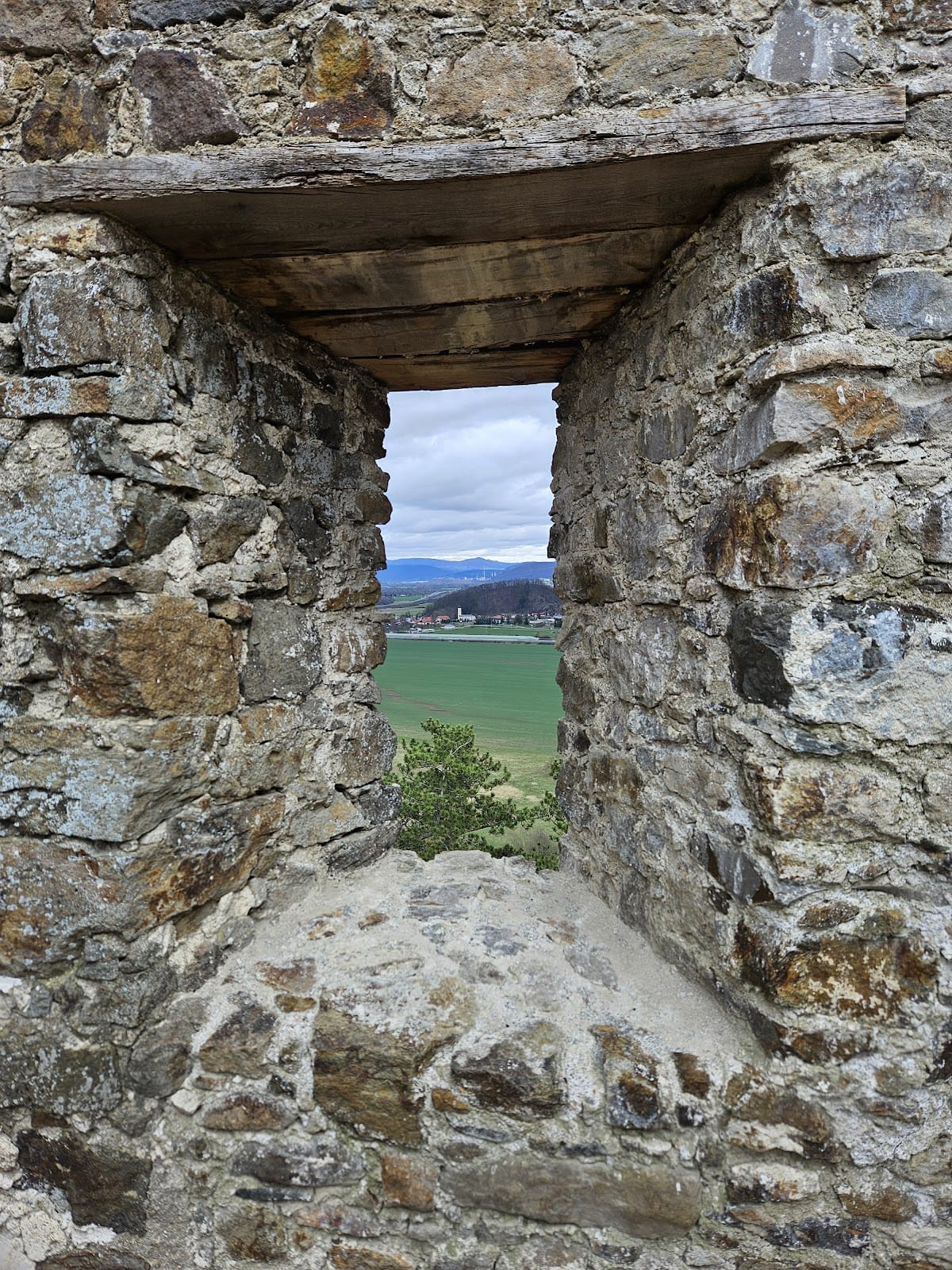
Revište is a Gothic castle ruin in Slovakia, probably built in the second half of the thirteenth century near Žarnovica. It formed part of a defensive system with Šášov Castle on the opposite bank of the Hron, protecting a narrow passage and trade routes leading to the central Slovak mining towns, especially Banská Štiavnica and Kremnica. The castle was a royal fortress, held directly by the monarch or by an official acting on the monarch’s behalf, and the fourteenth century was the main period of its formation.
Royal castle and medieval development
Revište is mentioned in 1265 and again in 1331, while its name appears in several historical forms, including Reuisce in 1331, Ryuche in 1340, and Revistye or Reuisthye in 1388. Its position above the Hron gave it a role in controlling movement through the valley and protecting access to the mining region. Ownership later passed through a succession of holders as the castle continued to serve royal and regional interests.
Jiskra, Matthias Corvinus, and the Dóczy family
During the fifteenth century, Revište was held by the forces of Ján Jiskra of Brandýs, a Bohemian military commander who controlled the castle from 1447. The castle returned to Matthias Corvinus, king of Hungary from 1458 to 1490, after the defeat of the last Bratrik camp at Veľké Kostoľany in 1467. The Bratriks were military bands associated largely with former Hussite soldiers active in the region.
In the late fifteenth century, Revište passed to the Dóczy family, a noble lineage that held estates around the central Slovak mining towns. The family retained the castle for almost two centuries and became a major regional power. Its members frequently disregarded royal orders and directed raids and other hostile actions against the mining area.
Destruction, military reuse, and decline
The last Dóczy lord of Revište, Žigmund, was beheaded by the Turks after they captured Žarnovica on 4 August 1647. After that event, the castle and surrounding villages returned to royal ownership. For a period, the estate was administered by the Grueber family of Banská Bystrica.
Revište was heavily damaged during the uprising led by Imre Thököly around 1679. Thököly was a Hungarian nobleman who led an anti-Habsburg uprising in the late seventeenth century. The castle was repaired soon afterward, but its final use came at the end of the eighteenth century, when soldiers’ quarters occupied the complex. After the soldiers left, Revište declined and was already a ruin during the nineteenth century. Reconstruction and conservation have continued for several years to supplement and preserve the remains.
Remains
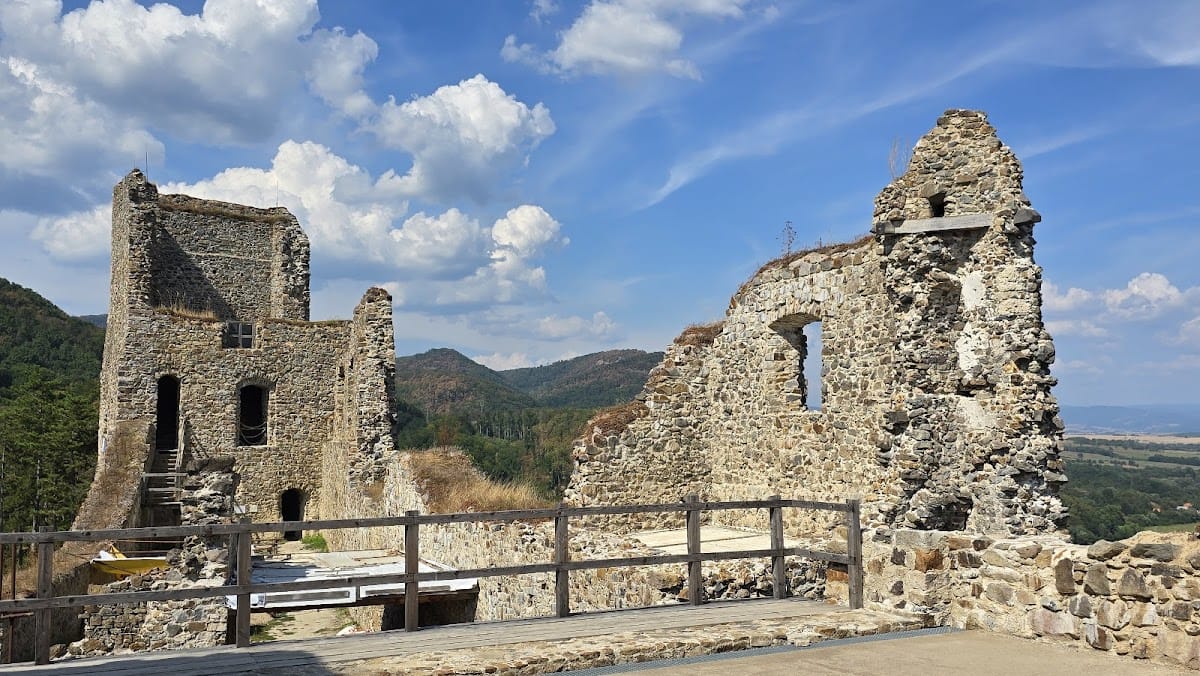
Revište stands on a rocky outcrop at the edge of a wooded slope on the right bank of the Hron. The rock formation determined the shape of the castle complex. Its layout developed around an inner castle, a lower and upper courtyard, entrance defences, and a later fortified forecourt on the southern side.
Inner castle and courtyards
The inner castle comprised a fortified tower and a courtyard containing a palace. A circular bastion protected the entrance from the lower courtyard to the upper courtyard. This arrangement combined residential space with controlled access between the different levels of the rocky site.
Outer fortifications and surviving masonry
A later Renaissance fortification enclosed the forecourt on the southern side. Renaissance fortifications were defensive additions shaped by the development of artillery warfare. Today, parts of the perimeter masonry survive, although some stretches are heavily damaged, together with remains of the residential buildings. Ongoing conservation work supplements and stabilizes the ruined structures.