Bornemissza Castle: A Historic Hunting Residence in Gurghiu, Romania


Visitor Information
Google Rating: 4.2
Popularity: Low
Google Maps: View on Google Maps
Official Website: muzeulmures.ro
Country: Romania
Civilization: Unclassified
Remains: Military

History
Bornemissza castle is located in Gurghiu, Romania. It was originally built by the Transylvanian principality in the mid-17th century as a hunting residence. The construction of the castle began in 1642 under the direction of Prince György I Rákóczi. Designed as a Renaissance-style hunting lodge, it served as the administrative center for the Görgény treasury estate and provided comfortable quarters for hunting trips in the nearby Görgény Mountains. The project was led by master builder Imre Sárdi and involved skilled masons from the cities of Kolozsvár, Beszterce, and Brassó. During the turbulent decades that followed, the castle experienced several changes in ownership and purpose. In 1660, Michael I Apafi took possession of the estate. Two years later, in 1662, the Transylvanian Diet convened within its walls, highlighting its significance at the time. Anna Bornemisza, princess consort of the principality, was a frequent resident, often living in the castle. However, by the end of the 17th century, the building’s prominence declined. It became partially unoccupied, used primarily by estate officials rather than the nobility. Following the Kuruc War, the castle fell into disrepair. In 1717, as a reward for the services of János Bornemisza, the Habsburg rulers pawned the estate to the Bornemisza family. János Bornemisza was granted a baronial title along with a 99-year lease for the property for a sum of 25,000 forints. The Bornemisza family undertook extensive renovations, incorporating Baroque features into the Renaissance structure. Notably, an elliptical chapel dedicated to Saint Anthony of Padua was added in 1730, enhancing the castle’s religious function. In the mid-18th century, Ignác Bornemisza consolidated ownership through imperial confirmation in 1754. Under his and his heirs’ management, the estate prospered. The castle underwent significant expansion during this period, including the addition of a longer eastern wing in the 1760s, the construction of a gatehouse in 1780, and a granary completed in 1807. These improvements established the castle’s current architectural form. In the 1830s, Baron Lipót Bornemisza finalized the surrounding park’s design in an English landscape style, working with gardeners Anton Böhm and Ferenc Leerch. The castle’s history also includes episodes of conflict. During the 1848 revolution, it was looted and damaged by Romanian insurgents. Restoration efforts were completed by 1855. The Bornemisza family became involved in a lengthy legal dispute with the treasury, ending in 1869 when they sold the estate back to the state for 450,000 forints. Following the sale, the castle found new life as a hunting lodge for Crown Prince Rudolf of Austria-Hungary. It became a site for organizing hunts and hosting nobles, including guests such as the future British King Edward and Bulgarian Tsar Ferdinand I. From 1893 onward, the castle housed a forestry school, which was the second largest in the Austro-Hungarian Empire after the one at Selmecbánya. This educational role continued through Romanian administration starting in 1920, the communist period, and after 1989, lasting until 2008. In the 1960s, part of the castle was dedicated to a natural history and hunting museum, covering seven rooms. This museum displayed hunting trophies, taxidermy animals, dioramas, and various fishing and hunting equipment. After the forestry school closed, the castle passed into local governmental hands. Renovations began in the 2010s, focusing on roof repairs and restoring the gatehouse. The small chapel, initially used by the Romanian Orthodox Church, transferred to the Greek Catholic Church in 1999. Plans have been developed to convert the property into a museum and a venue for conferences.
Remains
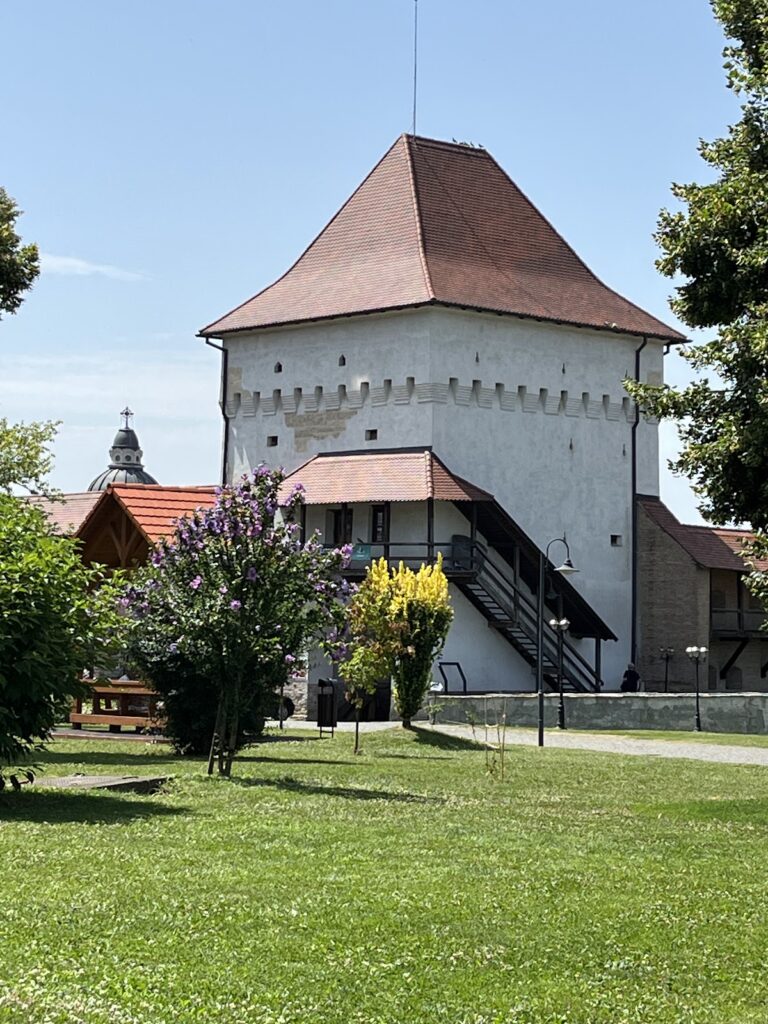
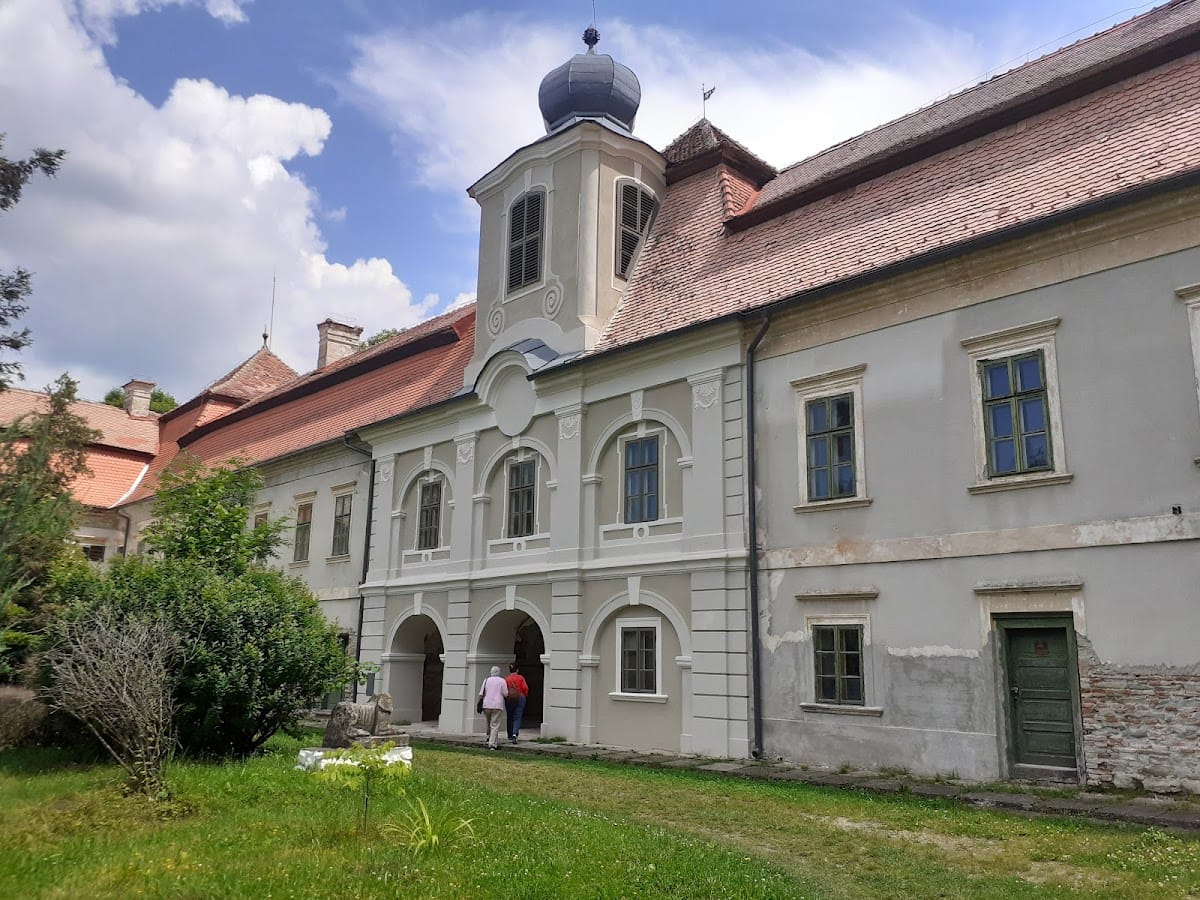
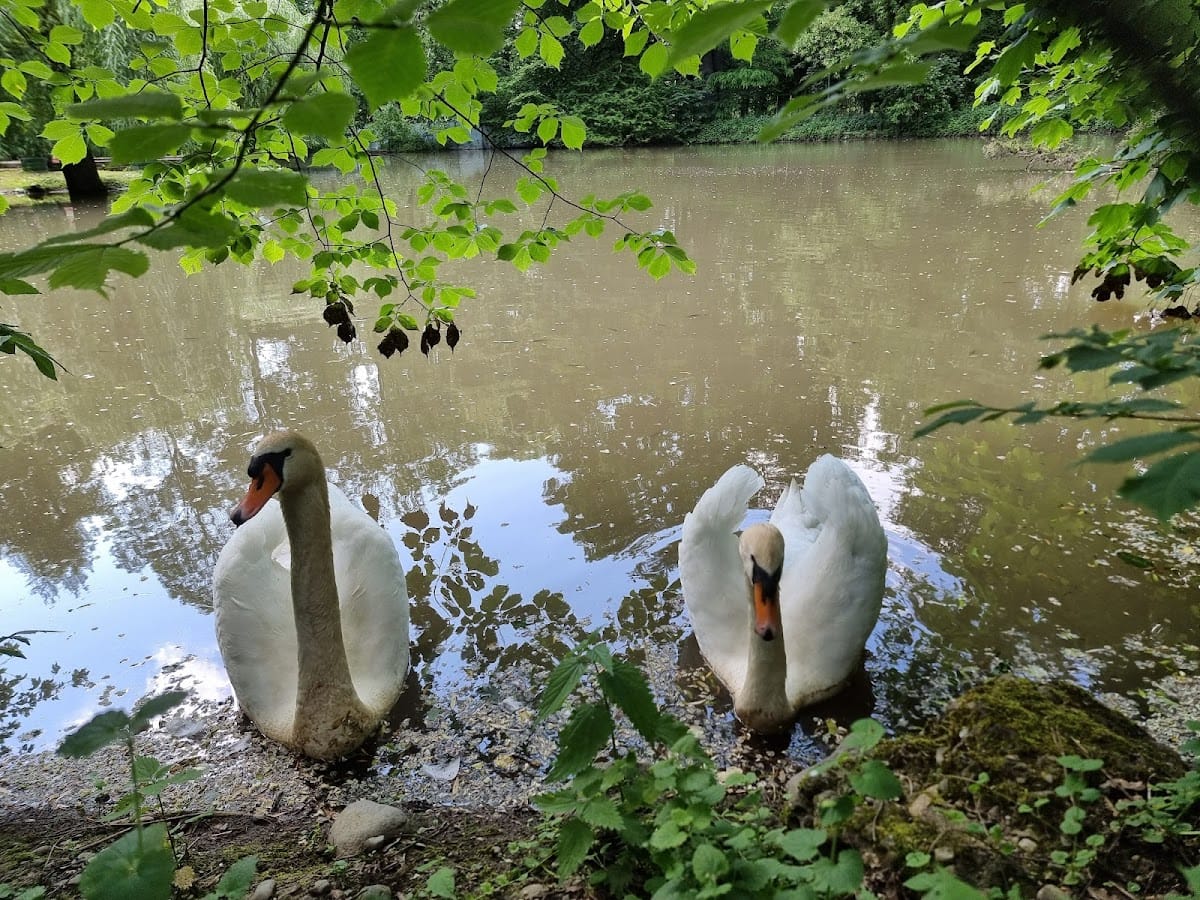
The Bornemissza castle presents a two-story, L-shaped layout, reflecting its evolution from a Renaissance hunting lodge into a complex residence with Baroque additions. The building’s ground floor primarily accommodated economic and service functions, while the upper floor housed representative rooms designed for noble living and entertaining. A notable architectural detail is the staircase, positioned within a porch-like projecting section known as a risalit on the northern wing. On the upper level of the northern wing stands the “great hall,” a large ceremonial room used for gatherings and official functions. This hall provides direct access to the adjoining chapel located on the western side, dedicated to Saint Anthony of Padua. Moving eastward from the great hall through a billiard room, visitors reach the castle’s substantial eastern wing, which extends approximately 85 meters. This wing contains richly adorned noble apartments arranged around a central risalit facing the garden. The central section includes a spacious dining room, while the southern part features a living room for social and private activities. The eastern wing culminates in bastion-like structures at the corners which enclose bedrooms, enhancing both security and privacy. On the castle’s southern side stands an arched gatehouse which historically housed the priest and key estate officials such as bailiffs and accountants. This functional layout integrated administrative roles closely with the residential complex. On the northwest side, a rectangular two-story annex with its own central risalit was initially constructed as a granary. During Crown Prince Rudolf’s use of the castle as a hunting lodge in the late 19th century, this granary was converted into accommodations for hunters and their retinues, adapting the space for hospitality purposes. The castle is surrounded by an expansive English-style park covering between eleven and twenty hectares, ranking as Romania’s second largest dendrological (tree) park. This park was laid out in the 1830s by professional gardeners Anton Böhm and Ferenc Leerch and includes rare tree species imported from Asia and North America. The original landscape composition combined naturalistic water features such as reflective ponds and fountains, alongside artistic elements like crafted rock formations, cascades, kiosks, and hermitages. Descriptions from an 1871 account by local priest Ferenc Székely detail the park’s mythological statuary, which included figures such as a sphinx, a faun, a silen (a woodland deity), and naiads—nymphs associated with water. Over time, however, the original design has been largely overtaken by natural overgrowth, resulting in a loss of the garden’s formal layout and character. Despite this, several features from the historic park survive in place: the road network, water channels, a central pond with an island, a memorial dedicated to the events of 1848, and the Elisabeth Table, a monument honoring Queen Elisabeth. Although the castle’s condition deteriorated somewhat by the early 21st century due to neglect, it remains in better shape than many comparable Transylvanian noble estates. This is largely attributed to its continuous use as an institution until 2008, which helped preserve its structure. Renovation projects have addressed key areas including the roof and the gatehouse, but the main building itself is currently closed to the public, awaiting further restoration and adaptive reuse.