Baths of Caracalla: Ancient Roman Public Baths in Rome, Italy


Visitor Information
Google Rating: 4.6
Popularity: Very High
Google Maps: View on Google Maps
Official Website: www.turismoroma.it
Country: Italy
Civilization: Roman
Remains: Sanitation

History
The Baths of Caracalla are located in Rome, Italy, in the southern part of the city within the area known as Regio XII Piscina Publica. This vast bathing complex was built by the ancient Romans, a civilization renowned for their engineering and public architecture.
Construction began around AD 211 or 212 under Emperor Septimius Severus and was completed during the reign of his son Caracalla. The baths were officially opened in AD 216. The site was chosen on land that once belonged to the horti Asiniani, a garden estate developed by Gaius Asinius Pollio during the reign of Augustus. The building project was part of a broader Severan family initiative that included other constructions such as the Via Nova and the Septizodium. Some older structures on the site were either demolished or integrated into the new foundations.
After Caracalla’s death, decoration and construction continued under his successors Elagabalus and Severus Alexander, with the complex reaching its final form around AD 235. Later emperors, including Aurelian, Diocletian, and Constantine the Great, carried out renovations to maintain the baths. The facility remained in use until the 530s when the Gothic War siege of Rome disrupted the water supply, causing the baths to be abandoned.
In the 6th and 7th centuries, the site was repurposed for burials of Christian pilgrims. From the 12th century onward, the ruins served as a quarry, providing building materials for churches and palaces in Rome. Significant archaeological excavations and restoration efforts began in the 16th century under Pope Paul III Farnese and continued through the 19th and 20th centuries.
In the 20th century, the baths were adapted for cultural events, including opera performances from 1937 to 1993, and later resumed limited use in 2001. The site also hosted concerts, sporting events such as gymnastics during the 1960 Olympics, and served as a film location. The ruins have suffered damage from earthquakes in 847, 2009, and minor damage in 2016.
Remains
The Baths of Caracalla cover about 25 hectares (62 acres) with a nearly rectangular layout measuring roughly 337 by 328 meters. The central bath building itself measures approximately 214 by 110 meters and rises to a height of 44 meters. The design is axially oriented to maximize sunlight, with the hot room facing southwest and the cold room northeast.
The central frigidarium, or cold room, is a large vaulted hall measuring 58 by 24 meters. Its ceiling reaches nearly 33 meters high and is supported by eight massive Egyptian granite columns, each about 12 meters tall and weighing close to 100 tons. The circular caldarium, or hot room, is 35 meters in diameter with a dome almost 36 meters wide. It rests on eight masonry pillars with glass windows between them and contains seven pools, six of which survive, each measuring 9.5 by 5 meters and about one meter deep.
An open-air swimming pool called the natatio measures 50 by 22 meters and is enclosed by walls over 20 meters high. The northern façade features three large grey granite columns, and bronze mirrors were installed overhead to reflect sunlight into the pool area. Two symmetrical libraries, one for Greek texts and one for Latin, are located on the south side. The surviving library measures 38 by 22 meters and includes 32 niches for storing scrolls, along with marble flooring.
The baths were heated by a hypocaust system, an ancient Roman underfloor heating method fueled by coal and wood. Extensive underground vaulted tunnels housed the heating system, fuel storage with a capacity exceeding 2,000 tons of wood, and water drainage. These tunnels extend for hundreds of meters and were illuminated by skylights.
Beneath the complex, archaeologists discovered a large Mithraeum temple measuring about 23 by 10 meters. It features a cross-vaulted ceiling, mosaic floors, frescoes, benches, and a unique ritual pit connected to an adjoining tunnel, indicating its use for the Mithraic cult.
Construction materials include millions of bricks, 17.5 million facing bricks and 520,000 large bricks, 252 marble columns, 6,300 cubic meters of marble, 341,000 cubic meters of pozzolana (a volcanic ash used in Roman concrete) and tuff, and 150,000 cubic meters of basalt for the foundations. The baths were richly decorated with over 120 high-quality sculptures, including famous works such as the Farnese Bull and Farnese Hercules. Mosaics depicting athletes, frescoes, and interiors adorned with marble and bronze further enhanced the complex.
Additional features include two large exedras (curved open spaces) on the east and west sides, shops (tabernae) to the north, gardens (xystus) between the central building and outer walls, and eighteen large cisterns connected to the Aqua Antoniniana aqueduct for water supply.
The central block alone covers about 2.6 hectares and could accommodate roughly 1,600 bathers at once, with a daily capacity estimated between 6,000 and 8,000 users. Facilities supported bathing, exercise, reading, and socializing, including palaestrae (exercise yards) for wrestling and boxing, saunas called laconica, and private bathing rooms.
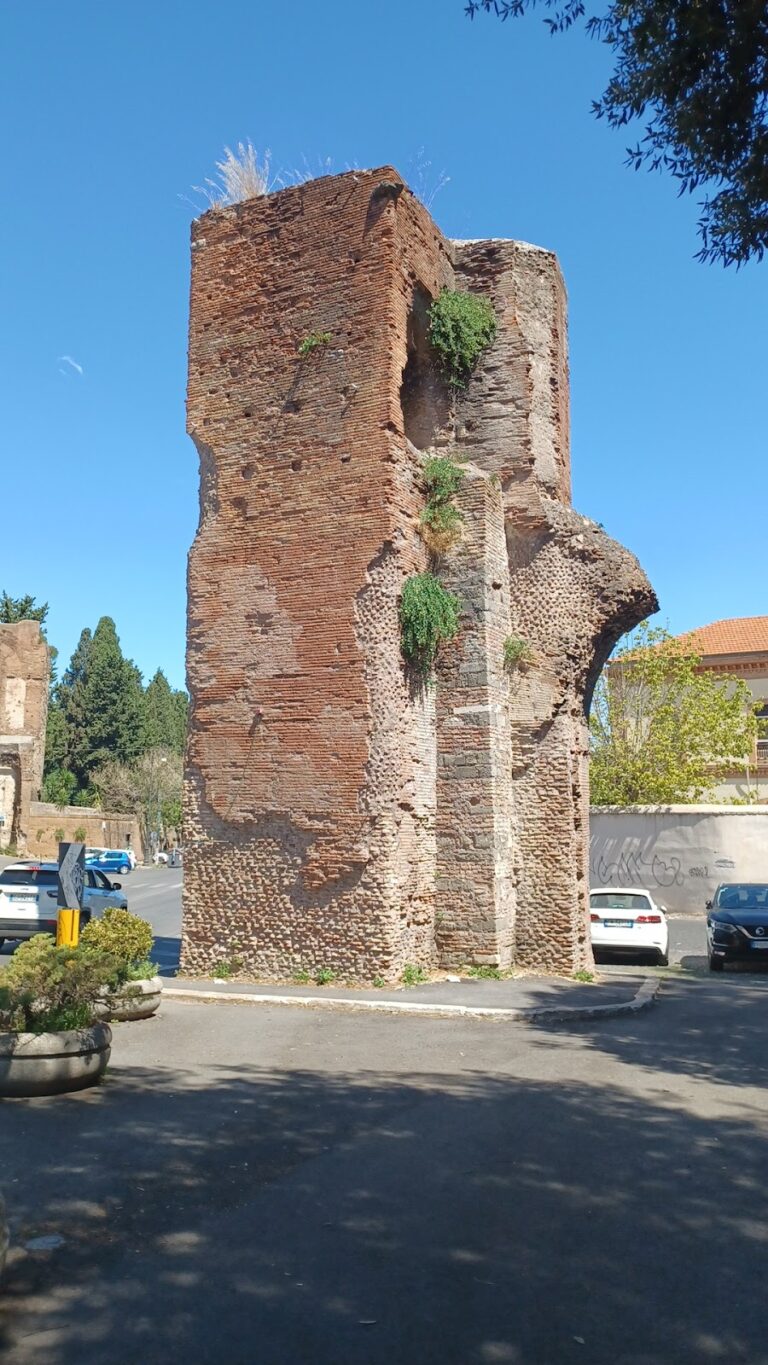
Restoration efforts in the late 20th century cleared vegetation and illegal structures, restored key walls, libraries, and halls, and removed a 20th-century opera stage from the caldarium. The site remains a significant example of Roman public architecture and engineering.
Nearby sites