San Leucio Archaeological Park: From Hellenistic Temple to Paleochristian Basilica in Canosa di Puglia


Visitor Information
Google Rating: 4.4
Popularity: Low
Google Maps: View on Google Maps
Official Website: www.canusium.it
Country: Italy
Civilization: Byzantine, Greek, Roman
Remains: Religious

History
The Archaeological Park of San Leucio is located in Canosa di Puglia, a town in the province of Barletta-Andria-Trani, southern Italy. The site originated during the Hellenistic period, between the late 4th and the first half of the 3rd century BCE. It was built by the inhabitants of Canosa, a city influenced by the cultures of Magna Graecia, the Greek colonies in southern Italy. Canosa developed as a commercial and artisanal center and entered into a formal alliance with Rome in 318 BCE, which led to its gradual Romanization.
By the 4th century CE, the original pagan temple dedicated to the goddess Minerva was likely abandoned. In the 6th century CE, under the direction of Bishop Sabino, the site was transformed into a paleochristian basilica. This early Christian church was initially dedicated to Saints Cosmas and Damian. During the 8th century, in the Lombard period, the church was rededicated to Saint Leucius after his relics were moved to nearby Trani.
The basilica underwent significant restoration in the 6th century, probably following earthquake damage. Repairs included the addition of external buttresses and new internal pillars to support a dome over the central area. By the 7th century, the surrounding grounds and the southern arm of the basilica served as a large burial site, indicating continued use of the area for Christian worship and funerary practices.
Remains
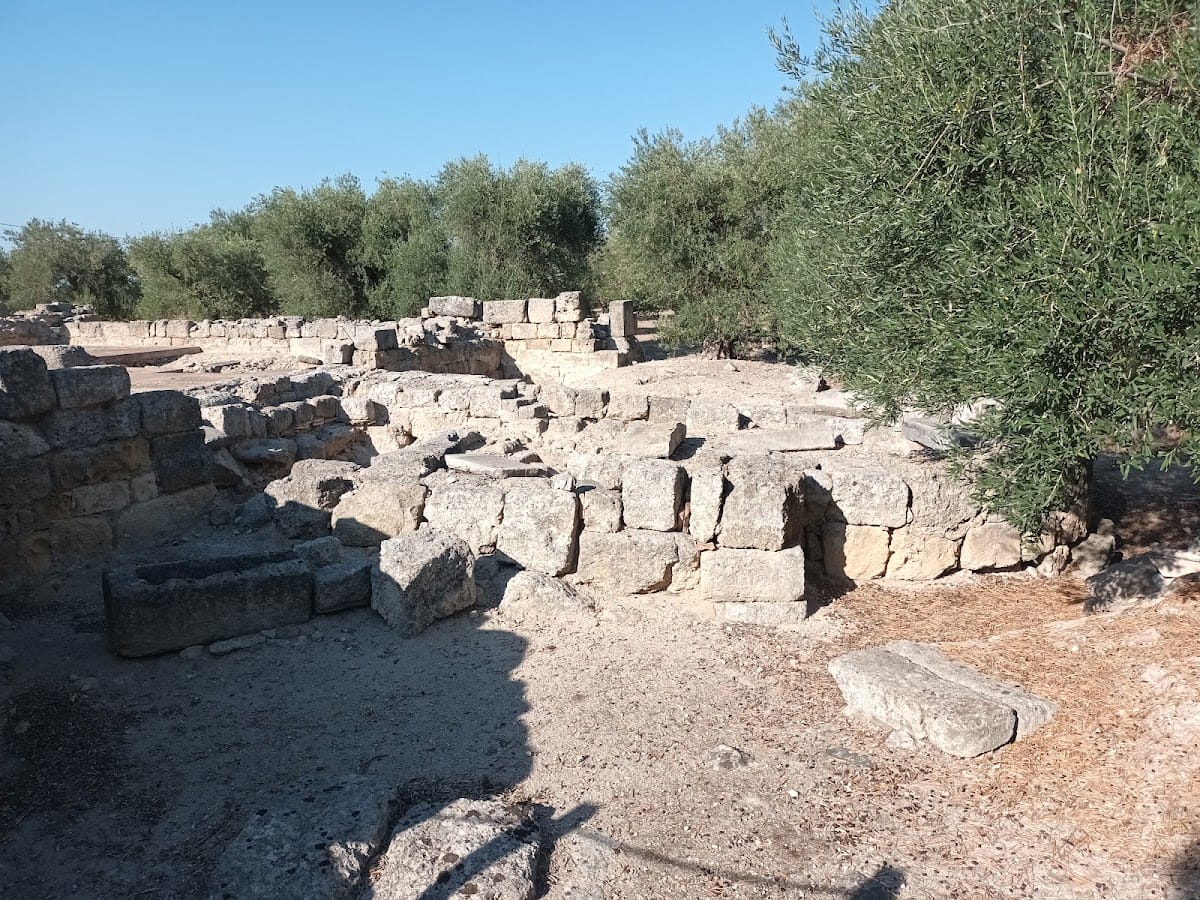
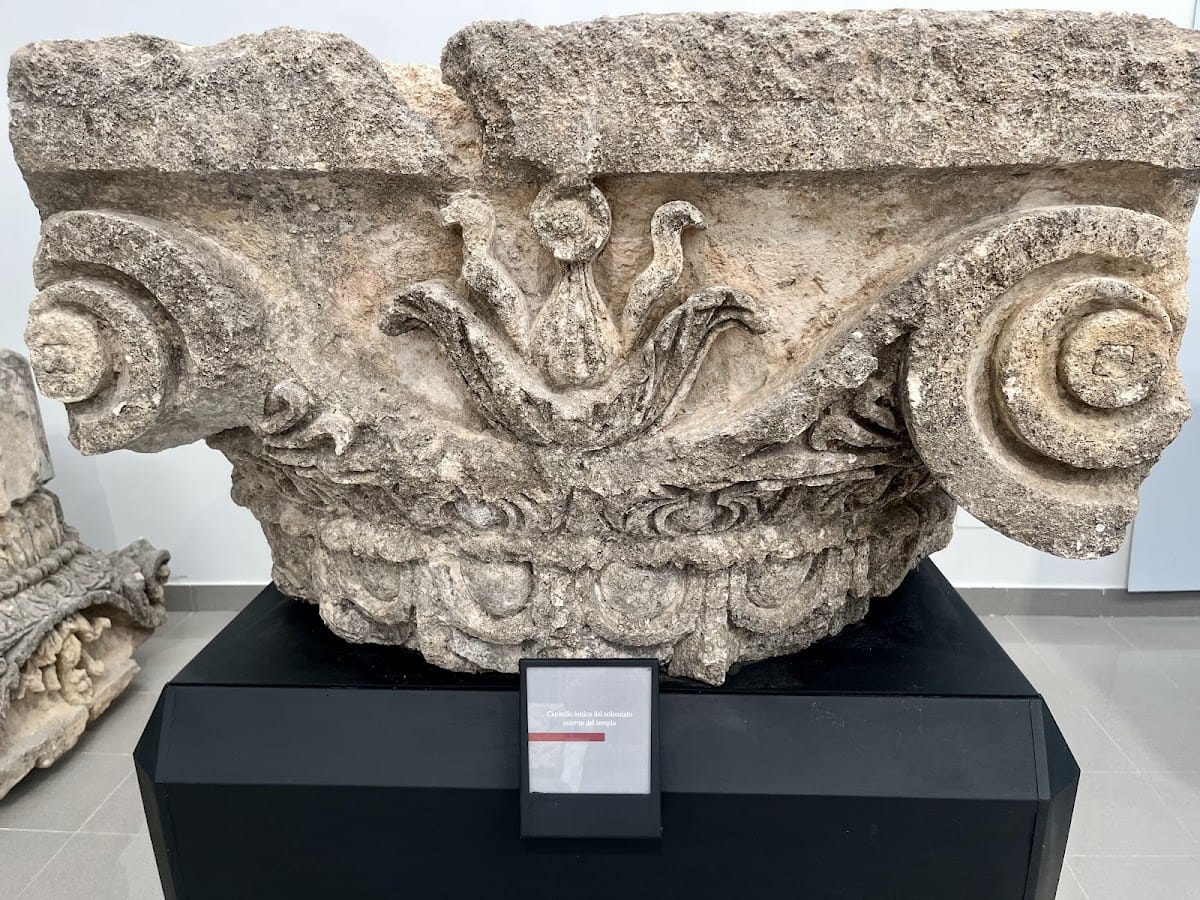
The site preserves remains from both the original Hellenistic temple and the later paleochristian basilica. The temple was constructed on a high, shaped podium with a central staircase flanked by two large telamons, sculpted male figures serving as architectural supports. It featured an external Ionic colonnade topped by a Doric frieze decorated with metopes and triglyphs showing armor motifs. Inside, a second row of columns displayed capitals with female heads emerging from acanthus leaves between spiral volutes.
The 6th-century basilica was built as a “double tetraconch,” a design with a large outer square containing four semicircular apses, one on each side. Inside this square was a smaller concentric square formed by pillars and four apses outlined by columns. This created a four-armed ambulatory, or walkway, covered by barrel vaults, which connected to a central space originally roofed by a pavilion vault. The apses were covered by half-domes. Access was through a staircase at the eastern external apse, with service rooms adjacent to the northern apse. The western apse housed the presbytery with a large altar and a ciborium, a canopy-like structure over the altar.
The basilica’s floors were richly decorated with mosaics featuring geometric patterns. These included overlapping pelta shields at the entrance, interlinked circles forming four-petal flowers, and spirals in black, yellow, and red tesserae in the internal apse. The ambulatory arms displayed large mats with meander and floral motifs. The presbytery mosaics were elevated and included small diamonds, pelta motifs, concentric circles with Solomon’s knots, stars, crowns, and a paradisiacal scene with two peacocks flanking a flower on an acanthus basket surrounded by floral and fruit-bearing branches with birds, all framed by a braid pattern.
Restoration work on the basilica added external buttresses and new internal pillars with attached columns to support a dome over the central space. Some original pebble mosaics from the temple were reused in the ambulatory floors. Today, the site preserves ruins of the church structure and mosaic floors.
An Antiquarium, opened in 2008, displays architectural fragments reused in the basilica, including large Corinthian and Ionic semi-capitals and a giant telamon foot from the temple. It also houses votive and utilitarian objects related to Minerva’s cult, as well as Christian marble furnishings such as ciborium fragments and bricks stamped with Bishop Sabino’s monogram. These finds illustrate the layered history of the site from its pagan origins to its Christian transformation.
Nearby sites