Schloss Zichow: A Medieval Castle and Baroque Palace in Germany
Site at a Glance
- Rating
- 4.2
- Popularity
- Very Low
- Country
- Germany
- Primary era
- Early Modern
- Eras represented
- Medieval, Early Modern
- Civilizations
- Duchy of Pomerania, Holy Roman Empire, Margraviate of Brandenburg
- Site type
- Domestic
- Remains
- Elite Residence
On this page6 sections
History
Schloss Zichow is a historic castle complex in Germany, in the municipality of Zichow in Brandenburg’s Uckermark district. Its medieval origins are generally placed around the middle of the thirteenth century, during the German eastward colonization, the expansion of German settlement and political institutions into parts of east-central Europe. The surrounding settlement, probably Slavic in origin, was first mentioned in a document of Gramzow Monastery in 1288.
Brandenburg and Pomeranian Rule
The castle occupied a position affected by the changing political boundary between Brandenburg and Pomerania. Under the Treaty of Oderberg in 1354, Margrave Ludwig II transferred it to Pomerania, and the castle was expressly named in the Pomerania-Brandenburg border treaties of 1355. It returned to Brandenburg in 1447 under Elector Friedrich II, a fifteenth-century ruler of Brandenburg.
In 1449, the castle was pledged to Hans von Beerfelde on the condition that he garrison and maintain it. The von Arnim family then held the castle from 1456 until 1945, linking the site to a long period of aristocratic ownership.
From Medieval Castle to Palace
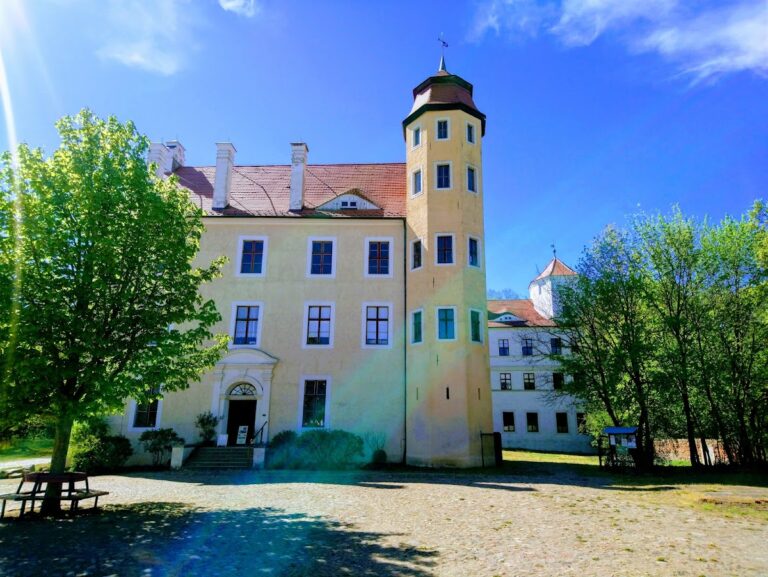
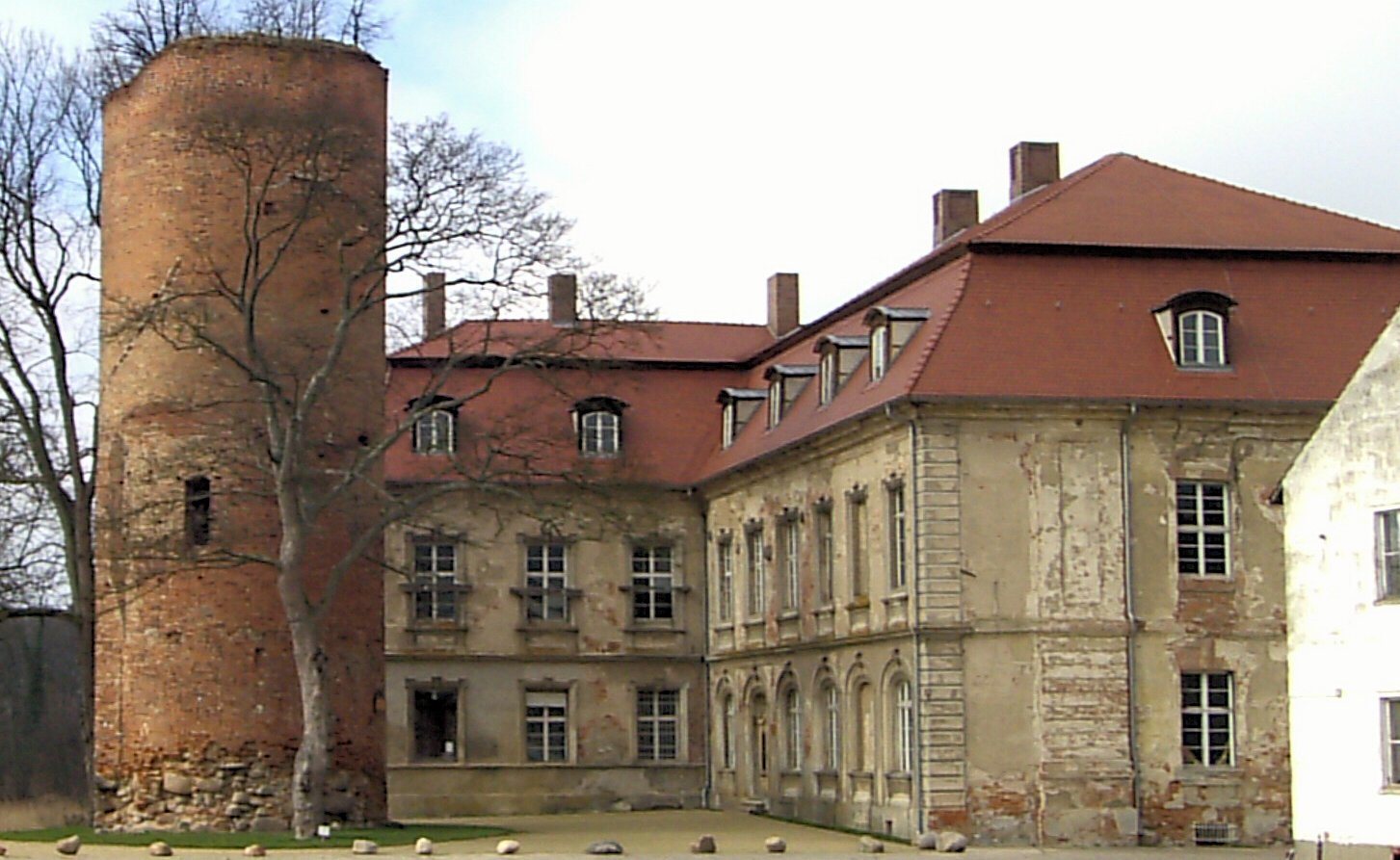
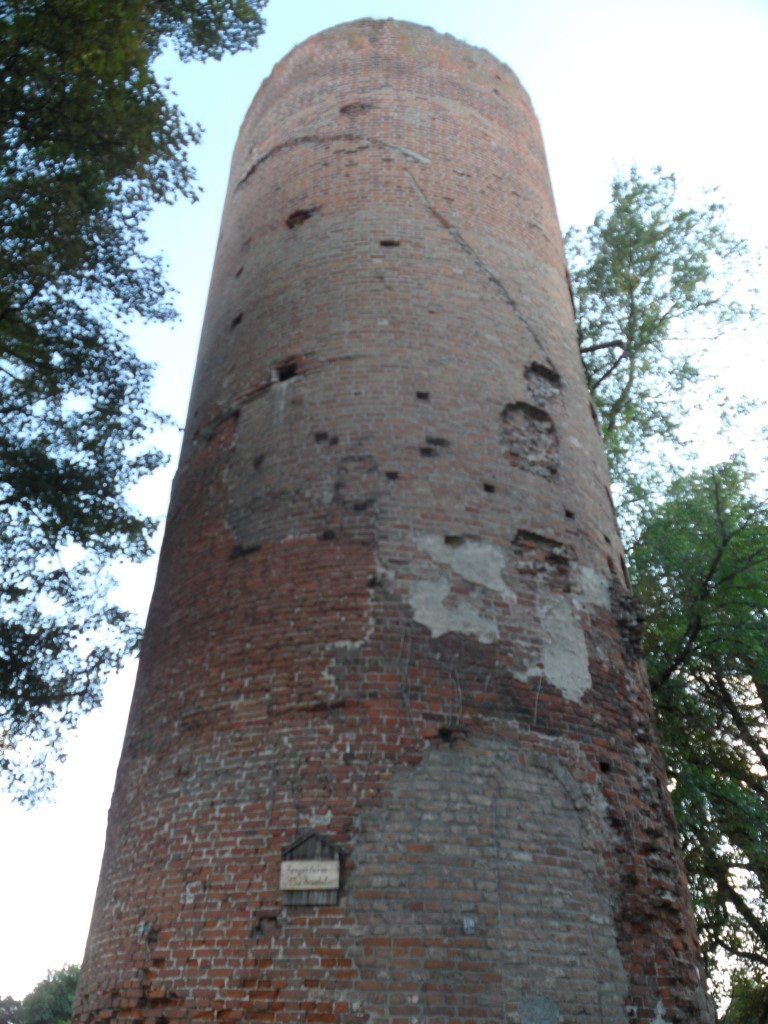
After a fire, the von Arnim family commissioned a palace in 1745 on the foundations of the older castle. This rebuilding transformed the complex from its medieval form into an early-modern residence while retaining the medieval keep. The keep, known as the Fangerturm, was first documented in 1527 and remains the sole surviving element of the former medieval complex.
Schloss Zichow is protected as a heritage monument. Before the palace complex was sold in 2015 to property investor and castle collector Georg Thaler, the municipality largely renovated its roof and roof structure.
Remains
Medieval Keep
The surviving Fangerturm stands beside the later palace and is the only remaining part of the medieval castle complex. Dating from the thirteenth century, it preserves the principal fortified tower of the lowland castle and provides the clearest physical link to the site’s medieval phase.
Baroque Palace Ensemble
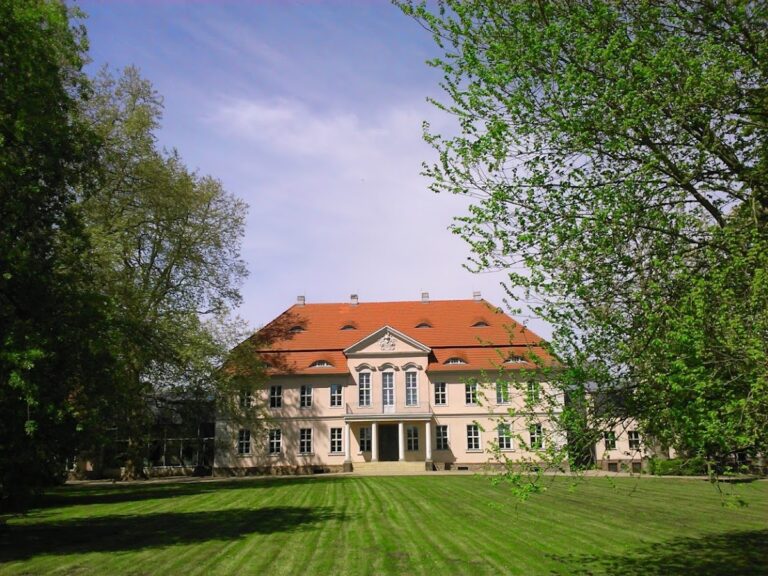
The present palace is a two-storey Baroque building, an early-modern European architectural style characterized by formal planning, substantial massing, and strongly shaped roofs and façades. Built in 1745 after the fire, it follows an L-shaped plan and has a hipped roof. The ensemble also includes a manor administrator’s house and a small park with a pond. The administrator’s house is protected as a heritage monument, while the palace roof and roof structure have been largely renovated.