Elphinstone Tower: A Sixteenth-Century Tower House in Scotland


Site at a Glance
- Rating
- 4.6
- Popularity
- Very Low
- Country
- United Kingdom
- Primary era
- Early Modern
- Eras represented
- Early Modern
- Civilizations
- Kingdom of Scotland
- Site type
- Military
- Remains
- Castle
On this page8 sections
History
Elphinstone Tower is a ruined sixteenth-century tower house in Scotland, located at Dunmore in the Falkirk council area. Built by the Scottish nobleman Sir John Elphinstone in the early 1500s, probably around 1508, it served as the seat of the barony of Elphinstone, a territorial lordship that gave its holder jurisdiction and status over a defined area. The surrounding lands had belonged to the Elphinstone family since the fourteenth century.
The Elphinstone family seat
The tower formed a fortified residence, combining domestic accommodation with defensive features in a compact, vertically arranged building. Alexander Elphinstone, 4th Lord Elphinstone, expanded the residence with a gallery and a new hall before his death in 1638. The title Lord Elphinstone was a Scottish peerage title held by members of the Elphinstone family.
Transfer to the Dunmore family
In 1754, John Murray, the son of the 3rd Earl of Dunmore, purchased the Elphinstone estate for £16,000. He inherited the earldom two years later and renamed the property Dunmore Estate after his title. In 1761, Lord Dunmore built the Dunmore Pineapple elsewhere on the estate, an ornamental folly constructed chiefly for picturesque effect rather than practical use.
The tower was later extended, although the date of the work is uncertain and there is little evidence that the enlarged building was occupied. During the 1820s, George Murray, 5th Earl of Dunmore, commissioned Dunmore Park as the principal residence of the estate. The tower’s additions were then demolished to make room for St Andrew’s Episcopal Church, a private chapel completed around 1850. An Episcopal church is governed within a tradition in which bishops exercise ecclesiastical authority, while a private chapel is intended primarily for a household or estate.
Decline and protection
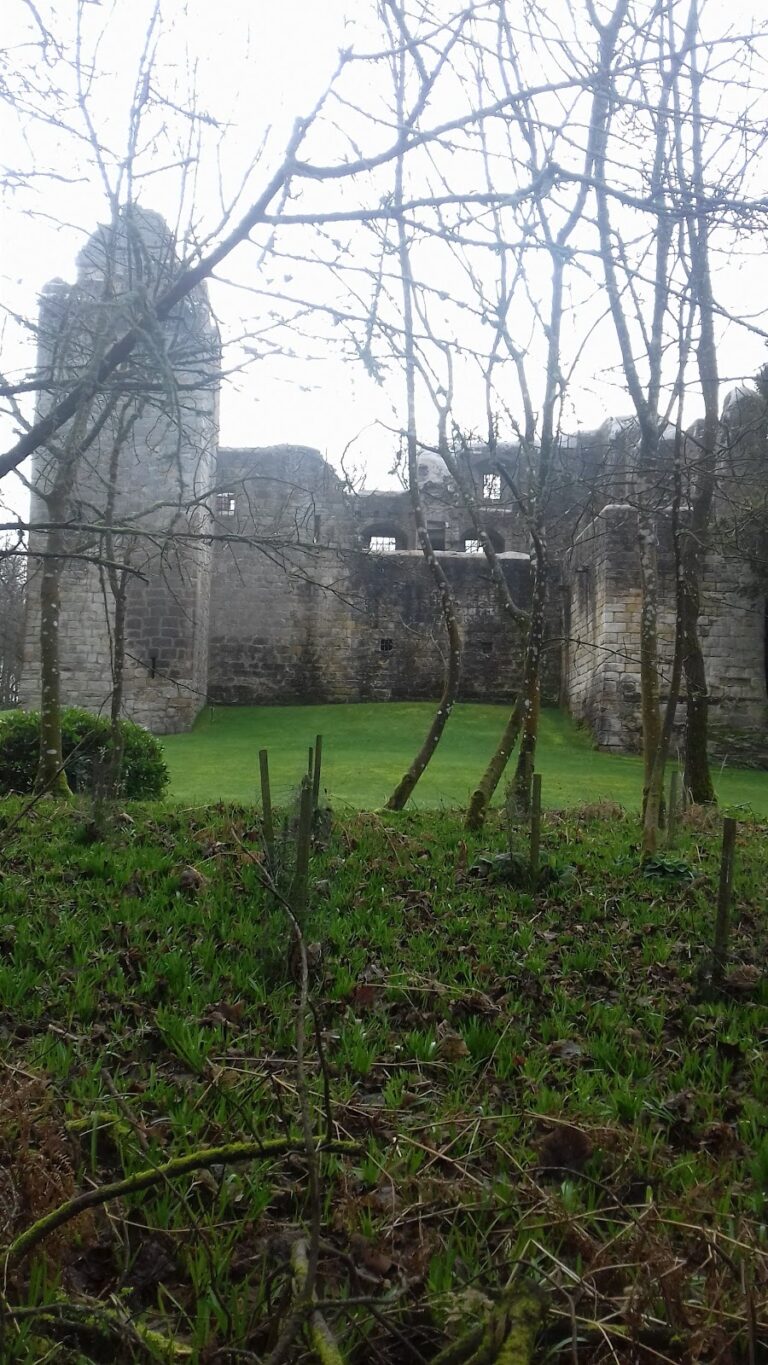
The tower was subsequently restored, and its ground floor was remodelled as a family burial vault for the Earls of Dunmore. The Murray family left Dunmore in 1911, after which the building deteriorated. St Andrew’s Church was demolished in the early 1960s, and a storm around 1968 caused the north-west corner of the tower to collapse. The family vault was plundered around 1990.
Elphinstone Tower is protected as a category C Scottish listed building, a designation recognizing local architectural or historic importance. Its listed status dates from 23 April 1979.
Remains
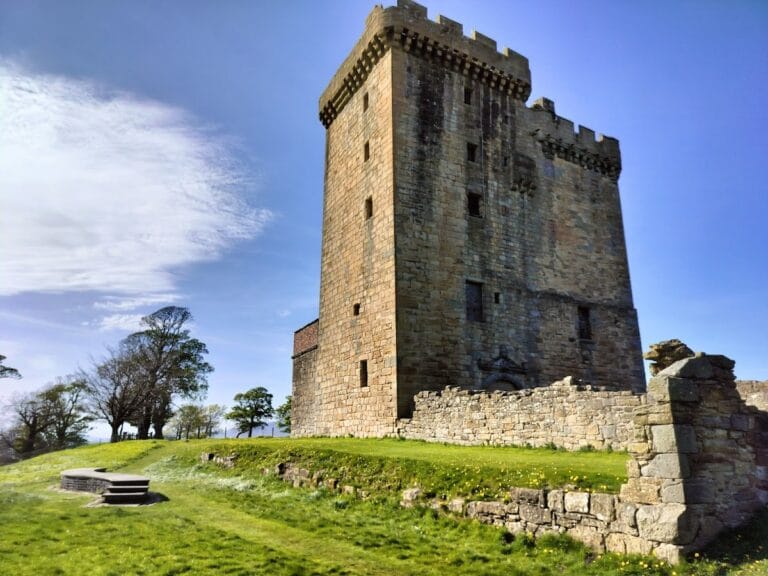
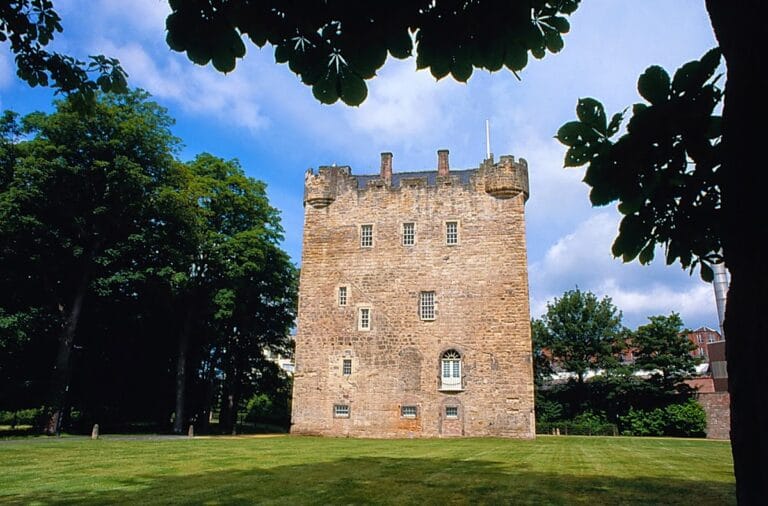
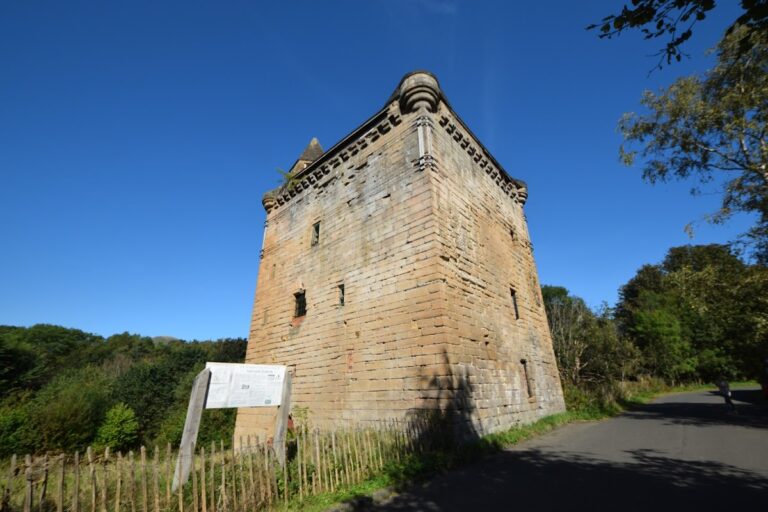
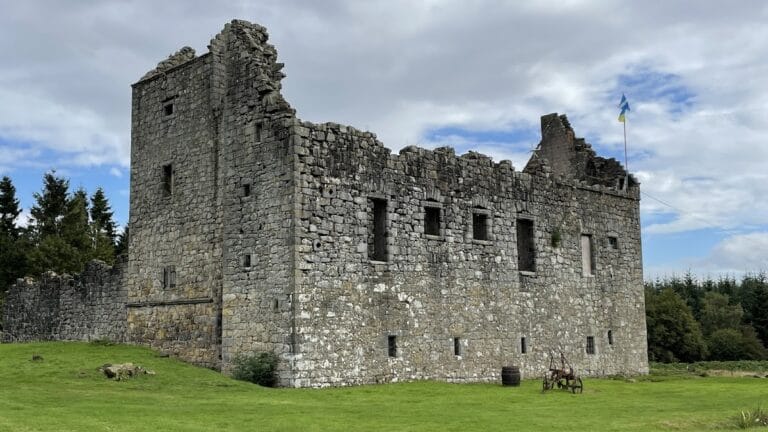
The surviving ruin stands on the Dunmore Estate, about 1.5 kilometres north-west of Airth and 9 kilometres east of Stirling. The tower has a rectangular plan measuring approximately 9 by 7.4 metres. Built of rubble stone, it originally rose four storeys, and its walls remain about 17 metres high to the parapet. The eastern side retains its original height.
Site layout and surviving structures
Elphinstone Tower
The entrance is positioned on the south side of the rectangular tower. A round tower formerly occupied the south-west corner, while a two-storey building stood beside the main structure. The ground floor was converted into a burial vault during the building’s later history and is now filled with debris. The ruin is considered probably unstable.
Former chapel and adjoining buildings
St Andrew’s Episcopal Church stood to the south-west of the tower before its demolition in the twentieth century. The tower’s additions were removed for the chapel’s construction, altering the relationship between the surviving tower and the estate’s later religious use.