Castello di Pereto: A Medieval Castle in Italy

Site at a Glance
- Rating
- 4.5
- Popularity
- Very Low
- Country
- Italy
- Primary era
- Medieval
- Eras represented
- Medieval
- Civilizations
- Holy Roman Empire, Kingdom of Naples, Kingdom of Sicily
- Site type
- Military
- Remains
- Castle
On this page12 sections
History
Castello di Pereto is a medieval hilltop castle in Italy, built on the slopes of Monte Forcellese to control the Piana del Cavaliere and the ancient Via Tiburtina Valeria. Its earliest structure was a tower raised during the first half of the 10th century by Berardo dei Marsi, a local nobleman known as a proto-count. The tower site later became the position of the castle keep.
From the Marsi to Montecassino
The fortification was strengthened in the second half of the 11th century, when Pereto became the residence of Rainaldo, Count of Marsi. Rainaldo left for the First Crusade in 1093. This late-11th-century Western European military expedition to the eastern Mediterranean led to the capture of Jerusalem in 1099. After Rainaldo’s death, his widow Aldegrima moved to Oricola and gave the castle to the Abbey of Montecassino, a major Benedictine monastery in central Italy.
In 1097, Pope Urban II issued a papal bull confirming the castle among the properties of Abbot Oderisio of Montecassino. A papal bull was a formal document issued by a pope, and this act connected Castello di Pereto with the abbey’s possessions.
Expansion and noble ownership
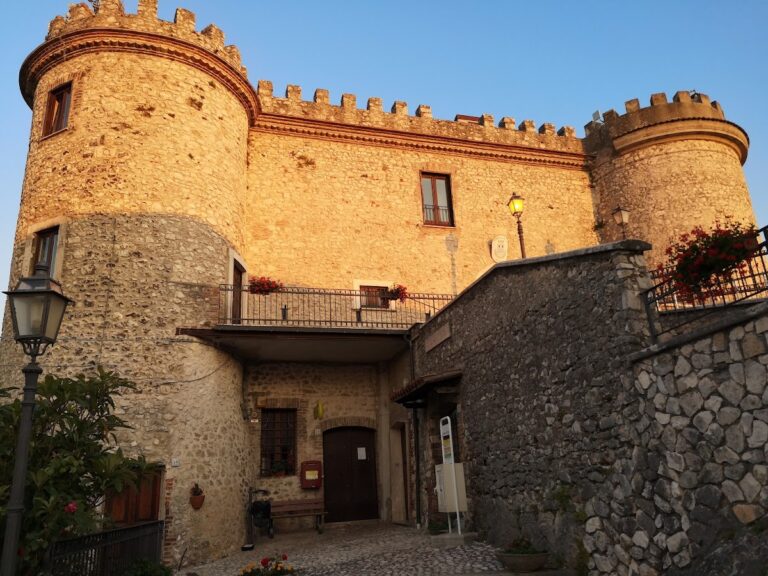
After a period of decline, the castle passed to the De Ponte lords in 1150. It was enlarged during the Frederician era, the period associated with Frederick II’s rule and political influence in medieval Italy. In the 14th century, two square towers and connecting walls were added, creating the enclosed defensive arrangement that defines the castle today.
At the beginning of the 15th century, Castello di Pereto became the property of the Orsini family. It was probably damaged by the earthquake that struck central and southern Italy on 5 December 1456. At the end of the 15th century, ownership passed to the Colonna family. During the 19th century, the north tower was used by the Maccafani family, who sold it to the Vicario family at the beginning of the 20th century.
Earthquake damage and restoration
The 1915 Avezzano earthquake severely damaged the castle. Aldo Maria Arena purchased it in 1966 and directed its restoration. In 1982, Europa Nostra, a European heritage organization that recognizes and supports cultural conservation, awarded the work a diploma of merit for its success and quality.
Remains
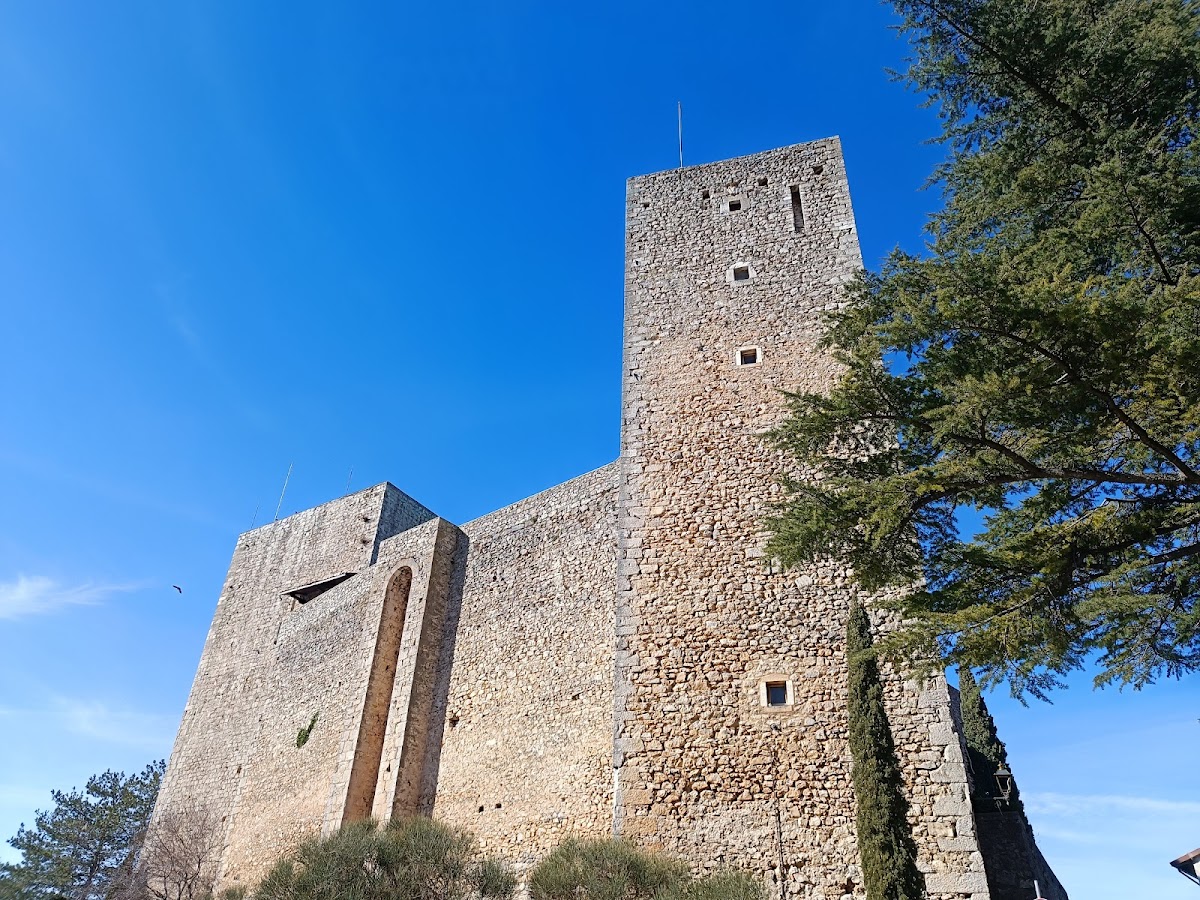
Castello di Pereto survives as a castle-enclosure built in rubble stone. Its defensive layout consists of a principal keep, two square towers, and perimeter walls joined by a patrol walkway along their tops. The walkway connects the towers and forms a continuous defensive route around the enclosure.
Towers
The keep
The keep, the castle’s principal fortified tower, has a square plan measuring 11.70 metres on each side and rises 27 metres. Its ground level contained a guardhouse, storerooms, and prisons. A justice hall occupied the first floor, while the lord’s residence extended across the second and third floors. The uppermost level served as a watch and defensive area.
The north tower
The square tower on the north side measures 6.60 metres on each side and is 24 metres high. Its interior is divided into five levels. During the 19th century, this tower was used by the Maccafani family.
The southeast tower
The southeast tower has a square plan measuring 4.60 metres on each side and is 16 metres high. It has no internal floors and probably served as a link between the walls and as a lookout.
Enclosing walls
Southwest wall
The southwest wall is 23 metres long and 15 metres high. The main entrance lies near the keep, placing the principal access point beside the castle’s central fortified tower.
Eastern and northern walls
The eastern wall measures 24.5 metres in length and 13 metres in height. The northern wall is 22.40 metres long and 14 metres high. Together with the other connecting walls and the patrol walkway, these elements form the enclosed defensive complex.