Amphitheatre of Trebula Mutuesca: A Roman Public Building in Italy

Site at a Glance
- Rating
- 4.3
- Popularity
- Very Low
- Country
- Italy
- Primary era
- Classical
- External website
- Open
- Eras represented
- Classical
- Civilizations
- Roman
- Site type
- Entertainment
- Remains
- Amphitheatre
History
The Amphitheatre of Trebula Mutuesca is a Roman public building in Italy, at present-day Monteleone Sabino, belonging to the ancient Sabine city of Trebula Mutuesca. The Sabines were an ancient Italic people whose territory included part of the central Apennine region. The city lay approximately 3 km east of the Via Salaria, the Roman road linking Rome with the central Apennine and Adriatic regions.
Trebula Mutuesca became a municipium during the Augustan period, the reign of Augustus, conventionally dated from 27 BC to AD 14. A municipium was a Roman town whose inhabitants possessed Roman civic rights and whose administration formed part of the Roman state. In the first half of the 2nd century AD, the city gained important public buildings, including the amphitheatre, baths, and forum. Their construction was supported by the Brutti Praesentes, a powerful senatorial family active during the Roman imperial period.
Remains
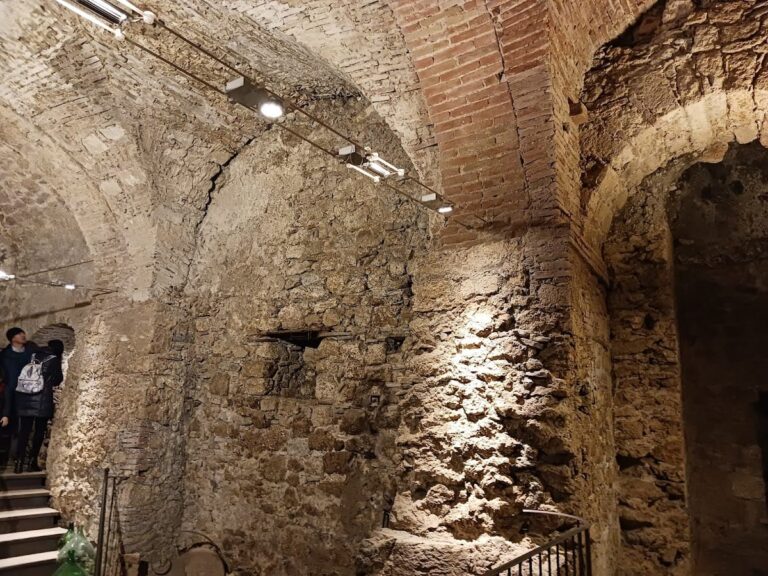
The amphitheatre survives as considerable ruins within the archaeological remains of Trebula Mutuesca. It was built on a terrace alongside the baths and forum, forming part of the city’s public architectural complex. An interior corridor is among the surviving features, preserving evidence of the building’s internal arrangement.