Hausneindorf Castle: A Medieval Hilltop Fortress in Germany


Site at a Glance
- Rating
- 4.3
- Popularity
- Low
- Country
- Germany
- Primary era
- Medieval
- Eras represented
- Medieval, Early Modern
- Civilizations
- Holy Roman Empire
- Site type
- Military
- Remains
- Castle
On this page8 sections
History
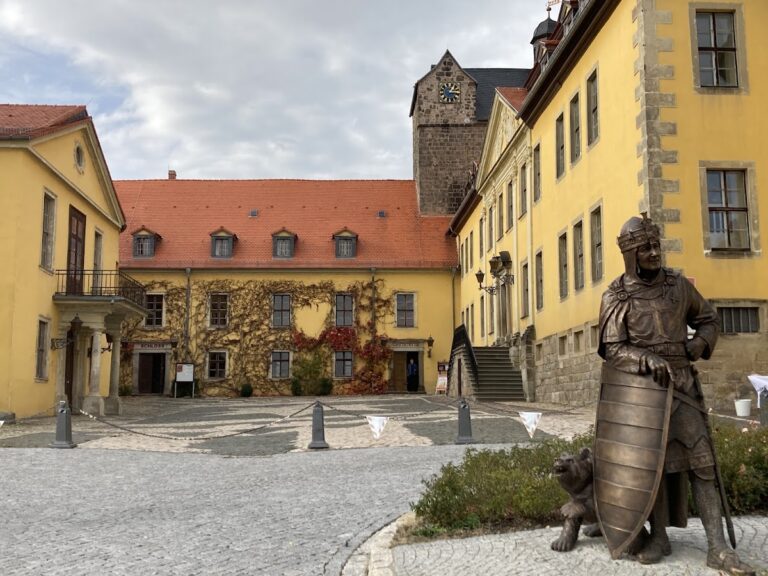
Hausneindorf Castle is a medieval hilltop fortress in Germany, founded around 1140 by Henry the Lion, the Welf ruler who held the titles Duke of Saxony and Duke of Bavaria. Its foundation took place in the context of the County of Blankenburg, and the castle was destroyed in 1168 before being rebuilt in 1172.
Medieval lordship
The castle later belonged to the Prince-Bishopric of Halberstadt, an ecclesiastical territory governed by a prince-bishop with both religious and territorial authority. Hausneindorf Castle was first mentioned in 1310 as a pledged holding of the County of Regenstein. From 1429 to 1573, the Lords of Hoym held it as pledged property.
Prussian state domain
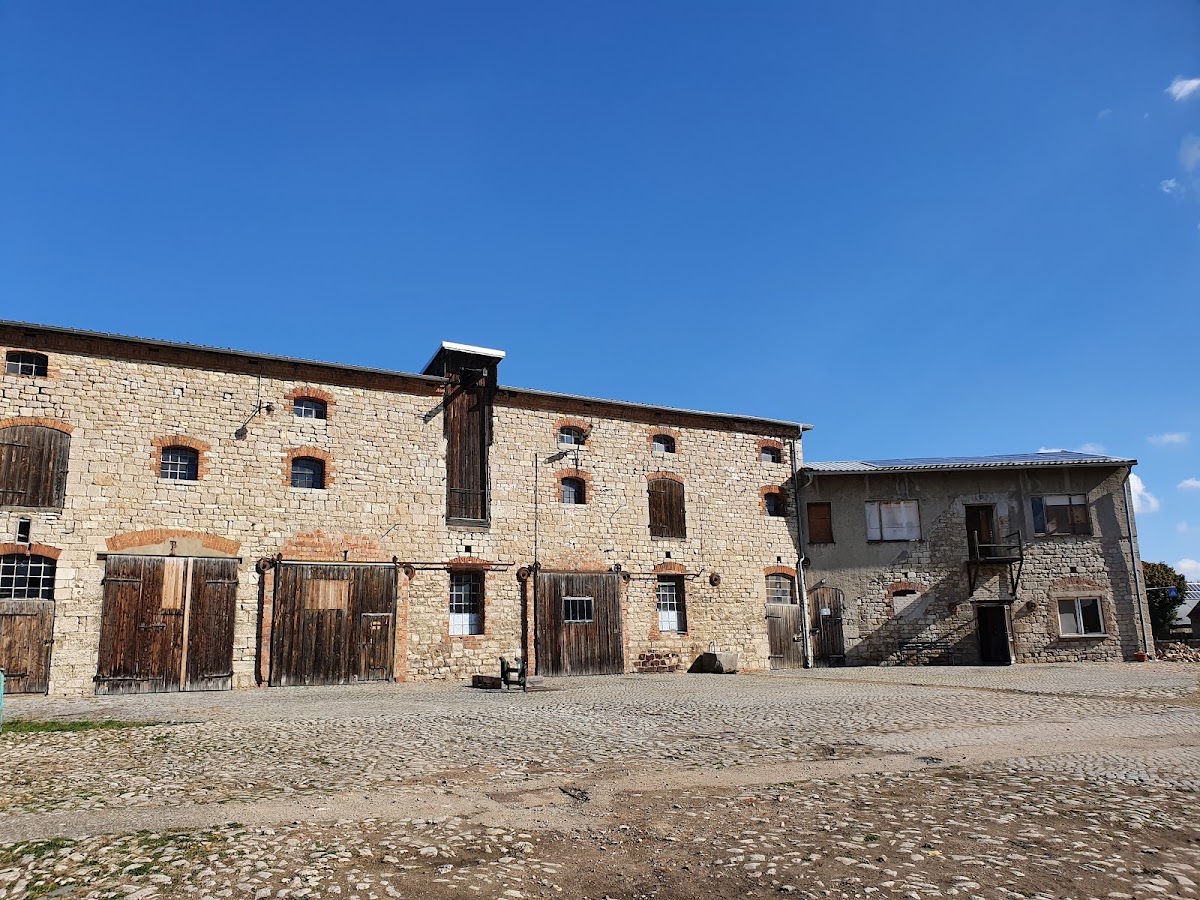
In 1711, the castle became a Prussian state domain, meaning a state-owned estate generally managed for agriculture. This agricultural use permanently changed the appearance of the castle complex. The site is listed in the local heritage register as an archaeological monument and is designated as a cultural monument.
Remains
Hilltop layout and defences
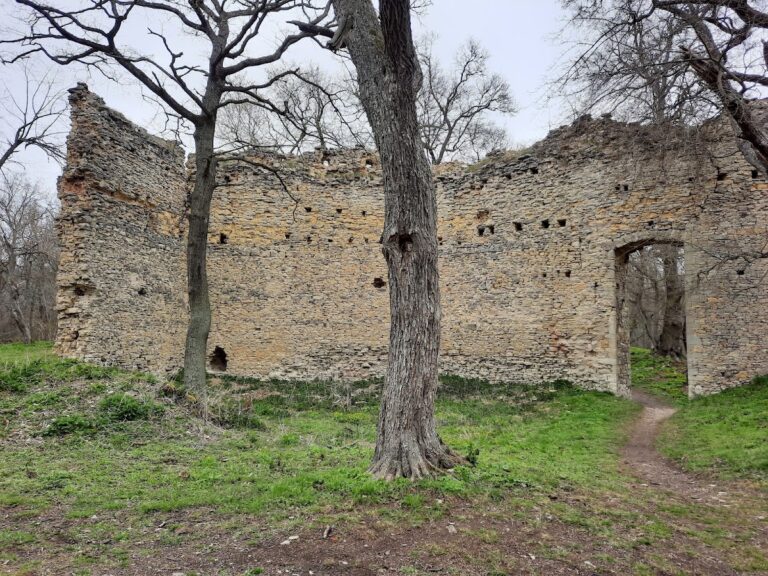
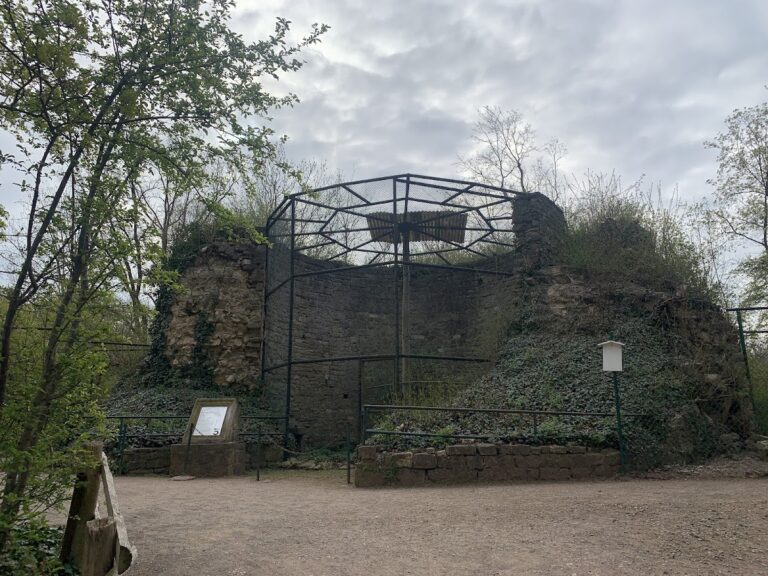
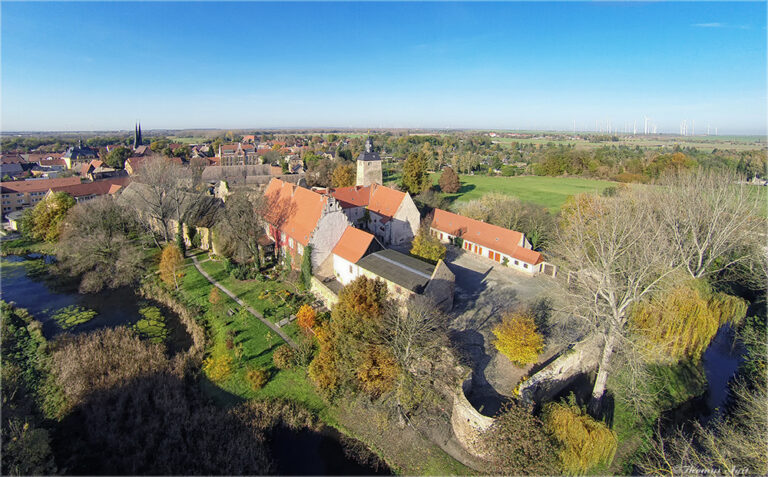
Hausneindorf Castle occupies a plateau 112 metres above sea level overlooking the Selke in Hausneindorf, within Selke-Aue in Saxony-Anhalt’s Harz District. Built from rubble stone, the complex was enclosed by broad dry moats and had a diameter of approximately 175 metres. A circular inner castle, about 100 metres across, stood within the larger enclosure and was surrounded by a 10-to-15-metre-wide zwinger, a defensive zone between outer and inner fortifications. Two bridges connected the castle with the Selke lowland, while the eastern entrance to the outer bailey was secured by a double gate system.
Inner fortress
The northwestern part of the inner castle formed a square fortress measuring approximately 40 by 40 metres. Its surviving buildings preserve elements from several architectural periods, including a Romanesque residential hall and a keep altered during the Gothic period.
Romanesque palas
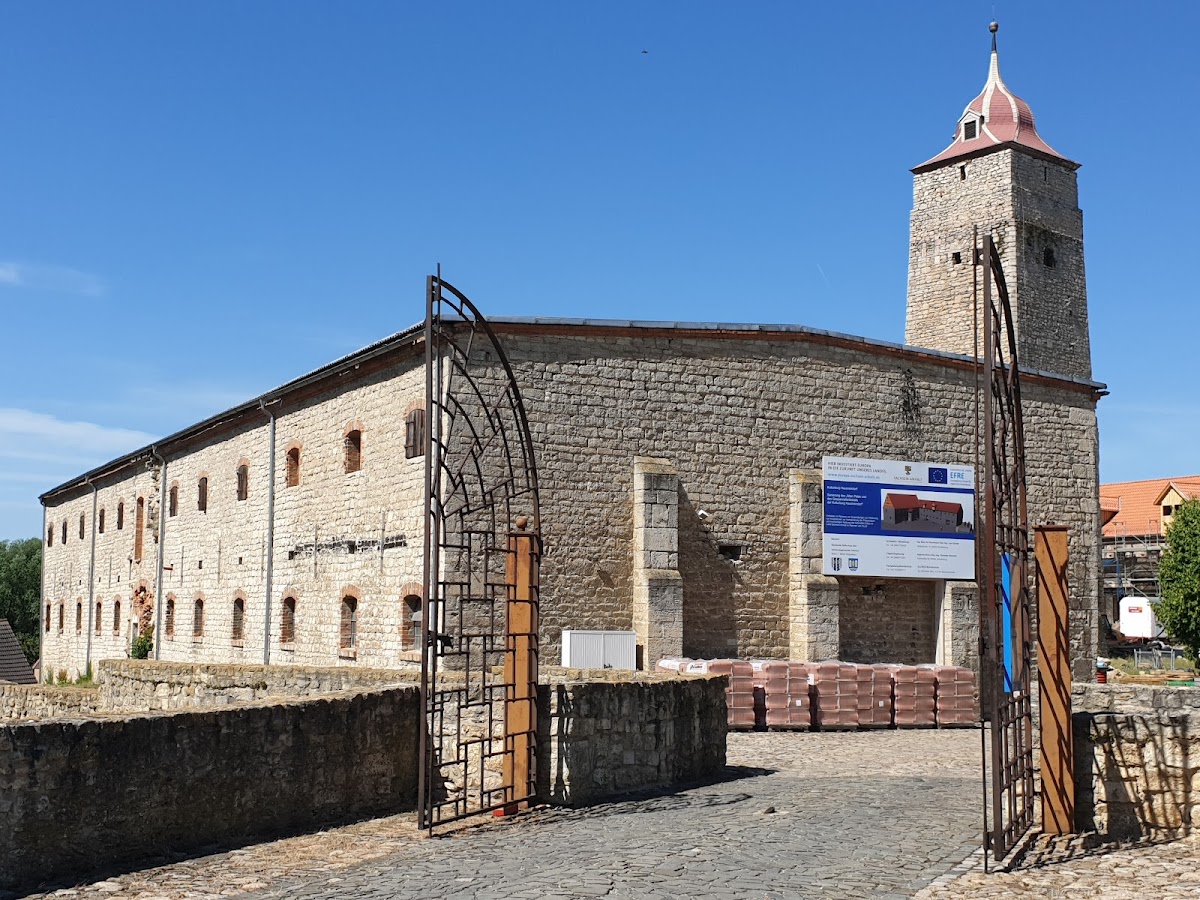
The western side of the fortress contains the surviving Romanesque palas, the principal residential or representative hall of a medieval castle. It measures approximately 10 by 25 metres and forms one of the principal surviving structures within the inner fortress.
Square keep
A square keep stands in the southeastern corner of the fortress. This fortified tower, used mainly for defence and refuge rather than permanent residence, measures approximately 7.5 by 7.5 metres and rises 27 metres high. It was heightened during the Gothic period and still preserves traces of a Renaissance spiral staircase.
Nearby sites