Sketrick Castle: An Anglo-Norman Island Fortress in Northern Ireland

Site at a Glance
- Rating
- 4.4
- Popularity
- Low
- Country
- United Kingdom
- Primary era
- Medieval
- External website
- Open
- Eras represented
- Medieval
- Civilizations
- Norman
- Site type
- Military
- Remains
- Castle
On this page6 sections
History
Sketrick Castle is a late twelfth-century Anglo-Norman castle on Sketrick Island in Northern Ireland, United Kingdom. It was built after the Anglo-Norman conquest of Ireland, the expansion of Norman and English power into Ireland that began in the late twelfth century, when fortified sites were needed to defend conquered territory.
Medieval ownership and conflict
In the fourteenth century, Sketrick Castle came into the possession of Sir Robert Savage, a medieval Norman settler and landholder in Ireland. The castle later became involved in conflict between Gaelic powers and their opponents. The Annals of the Four Masters record that an army led by O’Neill captured it in 1470 while assisting the MacQuillans, an Irish clan. The castle was then given to the MacQuillans for safekeeping.
Decline and protection
After the final English conquest of Ireland, Sketrick Castle stood vacant for a prolonged period and gradually deteriorated. Much of the structure was demolished by a storm in 1896, although it had remained substantially intact until that event.
The castle tower-house and the passage leading to the spring are State Care Historic Monuments in the townland of Sketrick Island, within the Ards and North Down Borough.
Remains
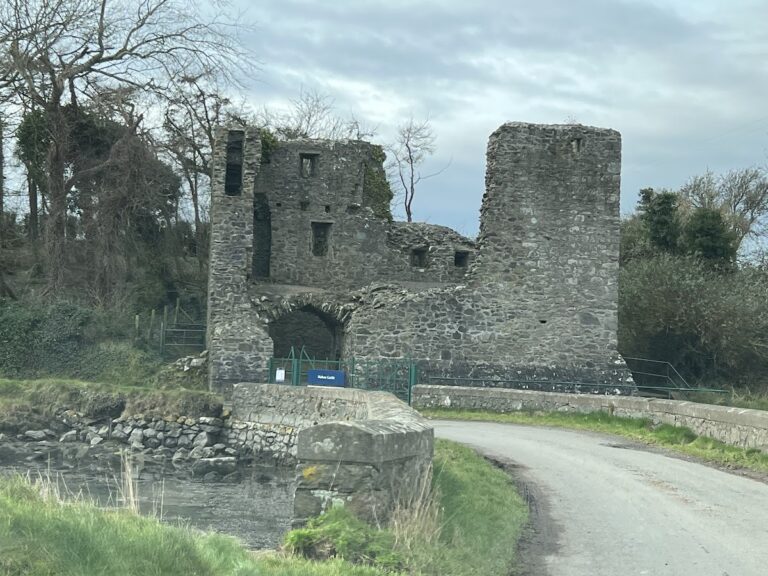
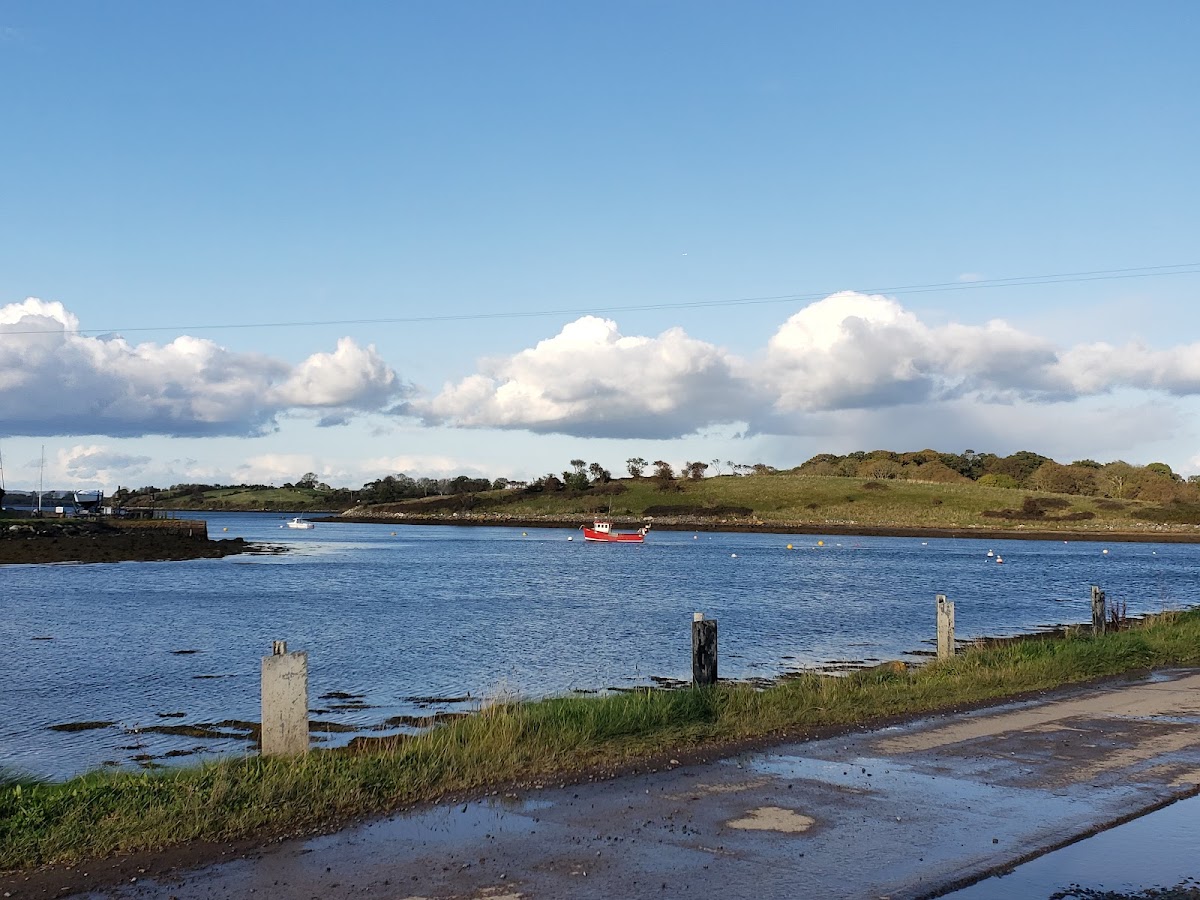
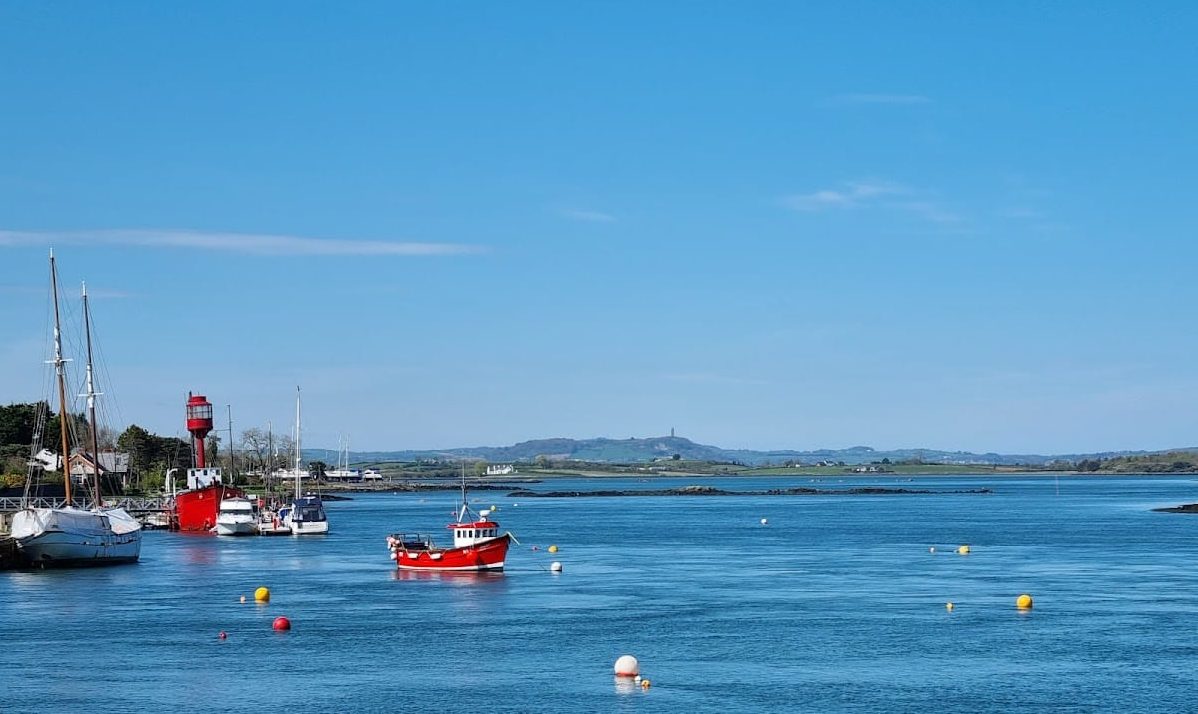
The surviving remains consist of a ruined tower-house, sections of its enclosing defensive wall, and a subterranean passage connected with a fresh-water spring. The castle originally occupied a defended position on Sketrick Island and included a boat landing or boat bay. It also formerly guarded the causeway on the western side of the island.
Tower-house and enclosing wall
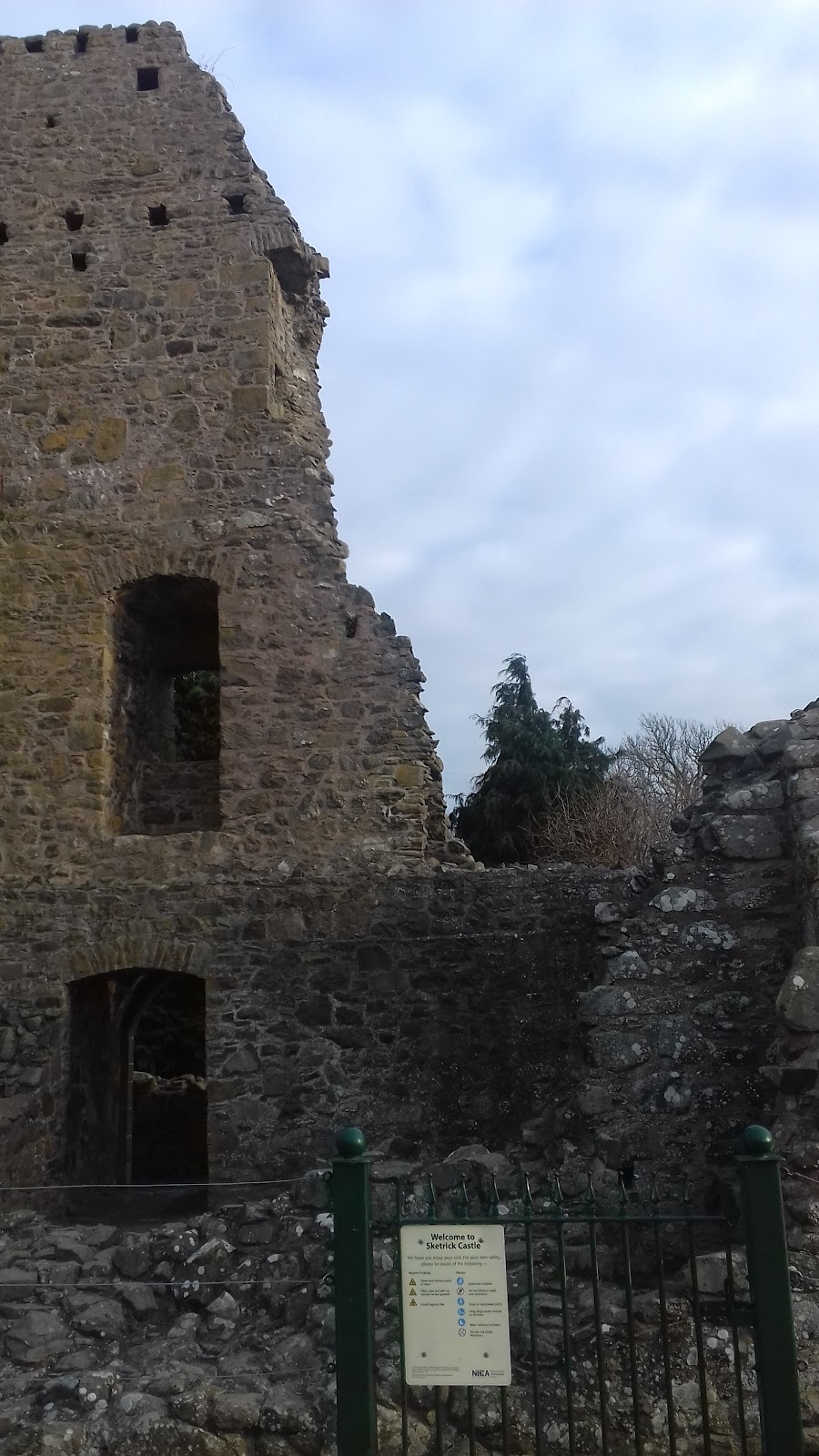
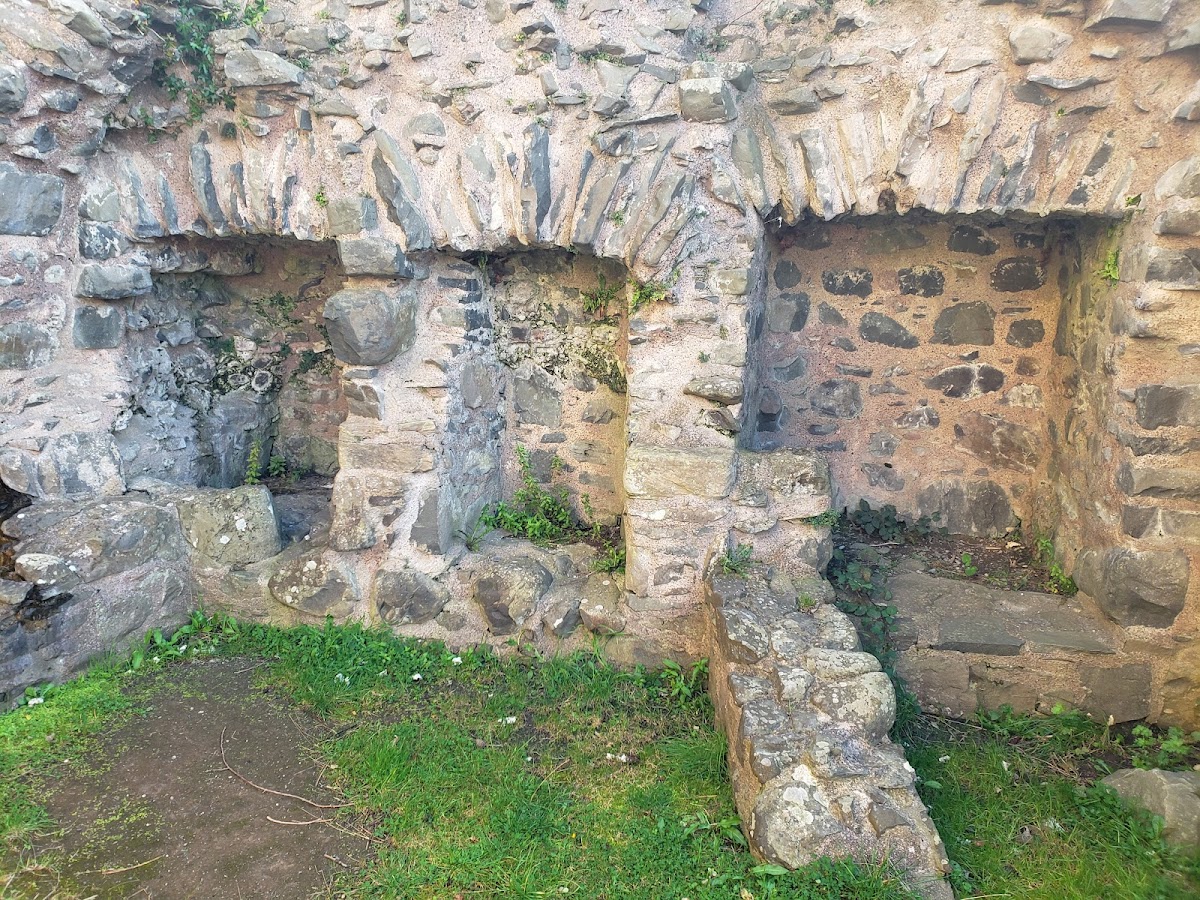
The original castle was a four-storey tower approximately 57 feet high, 51 feet long, and 27 feet wide. Its entrance was in the east wall, where a murder-hole, an opening used by defenders to attack people below from above, protected the approach. The ground floor contained four rooms. The largest had a basket-handle vault, a rounded vault shaped like a basket handle, together with two brick-lined niches believed to have served as ovens.
Parts of the bawn wall, the enclosing defensive wall around a fortified building, survive on the north and east sides. The upper floors have collapsed, but some joist holes remain visible in the walls. These indicate that the higher levels were fitted with wooden floors. The castle now survives as a ruin, with only parts of its walls standing.
Spring passage
A stone passage beneath the ground was discovered in 1957. It runs to a chamber associated with a fresh-water spring, and lintels extend beneath the bawn wall to reach the chamber. A corbel projects above the spring within the chamber, forming part of this unusual underground water-access arrangement.