Burg Wanzleben: A Reconstructed Lowland Castle in Germany


Site at a Glance
- Rating
- 4.4
- Popularity
- Low
- Country
- Germany
- Primary era
- Medieval
- External website
- Open
- Eras represented
- Medieval, Early Modern, Modern
- Civilizations
- Holy Roman Empire
- Site type
- Military
- Remains
- Castle
On this page7 sections
History
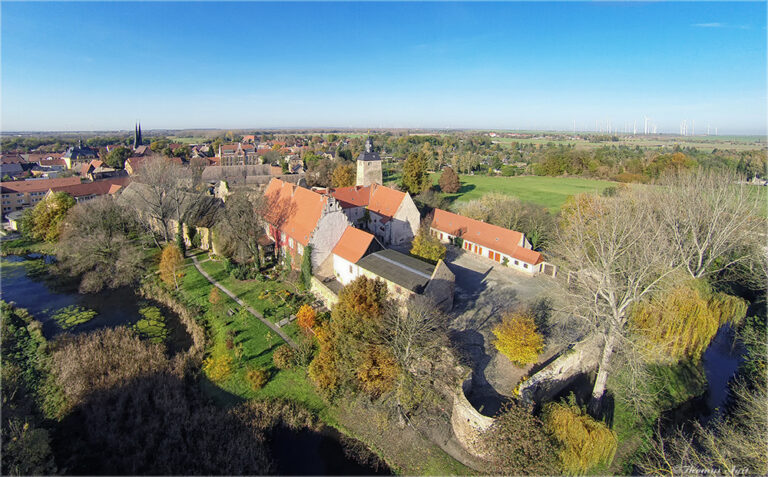
Burg Wanzleben is a lowland castle in Germany, located on the northern edge of Wanzleben beside the former military road linking Magdeburg and Hadmersleben. The castle was first mentioned around 968 and developed as a circular fortress protected by ditches and ramparts.
Medieval administration
From the twelfth century, Burg Wanzleben was administered within the sphere of Gandersheim Abbey, a major medieval religious institution in the German lands. Between the twelfth and fourteenth centuries, the Lords of Wanzleben were connected with the castle’s administration. In 1373, they sold the castle to Peter Jelito, archbishop of Magdeburg. A regional court was also held at the castle bridge.
Expansion and estate use
The complex was expanded from 1583. After the Thirty Years’ War, an estate, brewery, granary, and stable were established within the castle grounds. During the eighteenth and nineteenth centuries, the residential and agricultural buildings were rebuilt and enlarged.
From 1680, the estate formed part of a Brandenburg-Prussian domain, meaning land administered for the ruling state. The Kühne family served as tenants for seven generations. In the 1920s, their leasehold included the domain and the associated outlying estates of Buch and Blumenberg, together covering 1,245 hectares, along with a further 268 hectares in Bottmansdorf. Erich Kühne was the tenant at that time, and the family managed the domain estate until 1945.
Twentieth-century changes and reconstruction
Until 1945, a royal domain tenant administered the castle and its associated lands. During the East German period, an agricultural production cooperative, a collectivized farming organization, established in the town housed its administration in the castle.
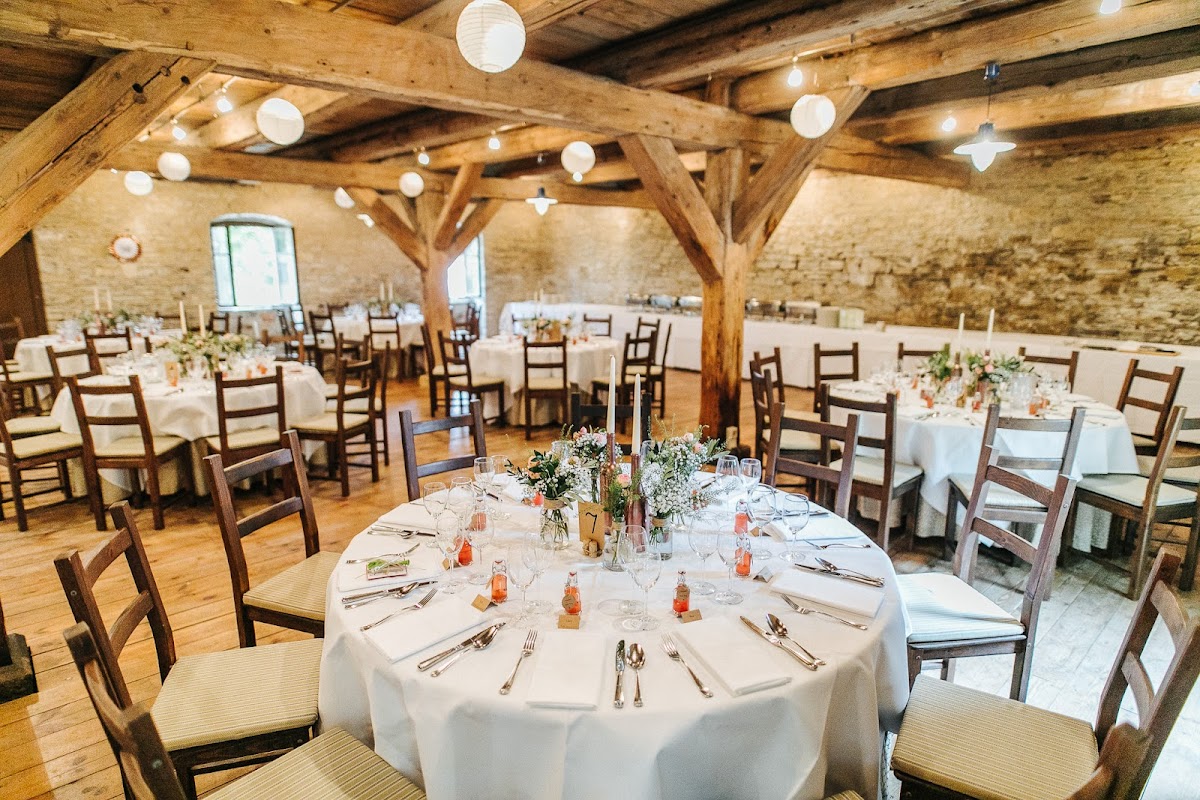
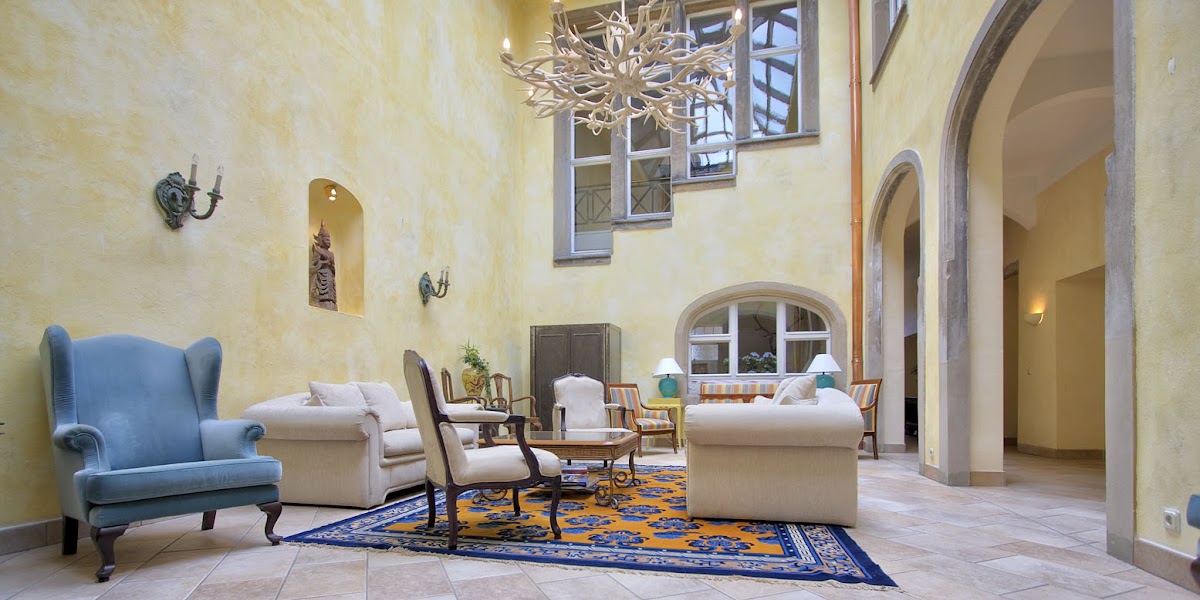
A descendant of the last tenant, Kühne, acquired Burg Wanzleben in 1993. Reconstruction began in 1996, and the principal alterations were completed in 2003. The complex was subsequently used as a residential building, hotel, conference venue, and restaurant. Burg Wanzleben is listed as a protected architectural monument in Saxony-Anhalt under cultural-heritage identification number 09411981.
Remains
Fortress layout and defensive tower
Burg Wanzleben retains the form of a circular lowland fortress built on relatively flat terrain. Ditches and ramparts enclosed the site, with one description specifying two concentric ditches. Marshes and a small river strengthened its defensive setting.
The Romanesque bergfried, the principal fortified tower of a medieval castle, rises 30 metres. It is dated specifically to the thirteenth century, within a broader tenth- to thirteenth-century range, and remains well preserved. The tower serves as the most recognizable feature of the castle.
Residential and agricultural buildings
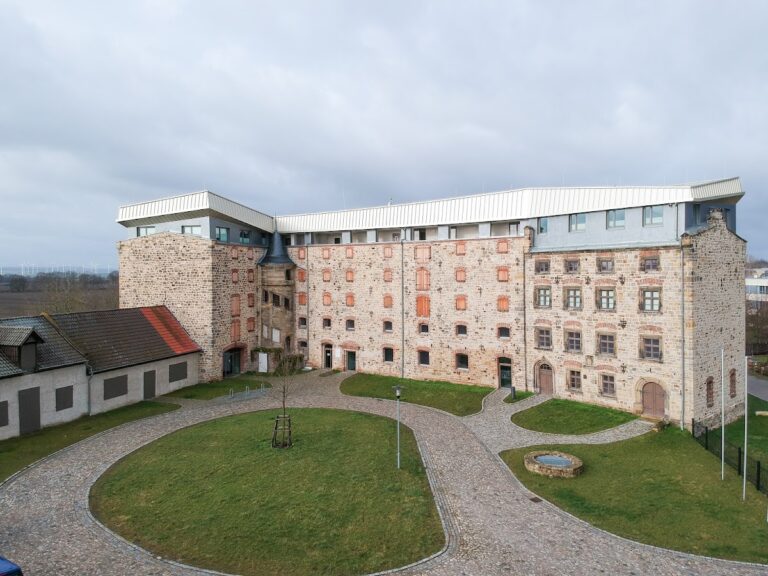
The surviving complex includes a gatehouse, a dovecote tower, a barn, a former horse stable, eastern and southern sections, and ancillary buildings on the west. The former horse stable now contains the restaurant, while the eastern part of the complex is used as a hotel.
The residential and agricultural buildings reflect rebuilding and enlargement during the eighteenth and nineteenth centuries. They were substantially reconstructed again from 1996, leaving Burg Wanzleben preserved in a reconstructed form.
Nearby sites