Anhalt Castle: An Ascanian Ancestral Seat in Germany


Site at a Glance
- Rating
- 4.5
- Popularity
- Low
- Country
- Germany
- Primary era
- Medieval
- Eras represented
- Medieval, Modern
- Civilizations
- Holy Roman Empire
- Site type
- Military
- Remains
- Castle
On this page12 sections
History
Anhalt Castle is a medieval hill castle in Germany, near Harzgerode in Saxony-Anhalt, built around 1123 by Count Otto of Ballenstedt, known as Otto the Rich, as an ancestral seat of the Ascanian dynasty. Its position above the Selke valley made it an important centre of Ascanian power in the Harz.
Foundation and Reconstruction
In 1140, the castle was devastated during Otto’s son Albert the Bear’s struggle for the Saxon ducal title. Forces led by Archbishop Conrad of Magdeburg and Margrave Conrad of Meissen carried out the attack amid Albert’s conflict with the Welfs, a rival German dynastic house. After 1147, Albert rebuilt Anhalt Castle, turning it into one of the most powerful fortifications in the Harz region.
Anhalt was one of three ancestral Ascanian castles, together with Aschersleben and Ballenstedt. The title “Prince of Anhalt,” first recorded in 1215, referred to the castle. During the fifteenth and sixteenth centuries, the name passed from the stronghold to the ruling House of Anhalt and eventually to the territory governed by that dynasty.
Dynastic Decline and the Surrounding Settlement
Following the division of the Principality of Anhalt in 1252, Anhalt Castle passed to the older Aschersleben line, which made it a principal residence. That line died out in 1315, after which the castle entered a period of decline. Members of the Stammer family nevertheless occupied it as castle retainers during the fifteenth century.
A separate fortification called Little Anhalt stood on the Kleiner Hausberg about 500 metres east of the main castle during the thirteenth and fourteenth centuries. After Anhalt Castle was abandoned, Harzgerode, whose castle was mentioned in 1326, became the centre of Ascanian authority in the Upper Principality.
The settlement of Anhalt lay south of the castle and was first mentioned in 1311. It supported the garrison and the extraction and processing of iron ore before being abandoned in the middle of the fifteenth century. Its church bells were transferred to Harzgerode in 1440. The name of the castle later acquired dynastic and territorial importance, encouraging legends and poetry in the nineteenth century. One explanation derives it from the Middle Low German An-Holt, meaning “built without wood,” while another connects it with the change from the timber-associated name Ballenstedt to a castle constructed without wood.
Clearance and Archaeological Work
Duke Alexius Frederick Christian of Anhalt-Bernburg ordered the ruins cleared in 1822. A well exposed during this work was covered by a Neo-Gothic well house. Archaeological excavations followed during the early twentieth century under the Brunswick building officials Brinckmann and Starke.
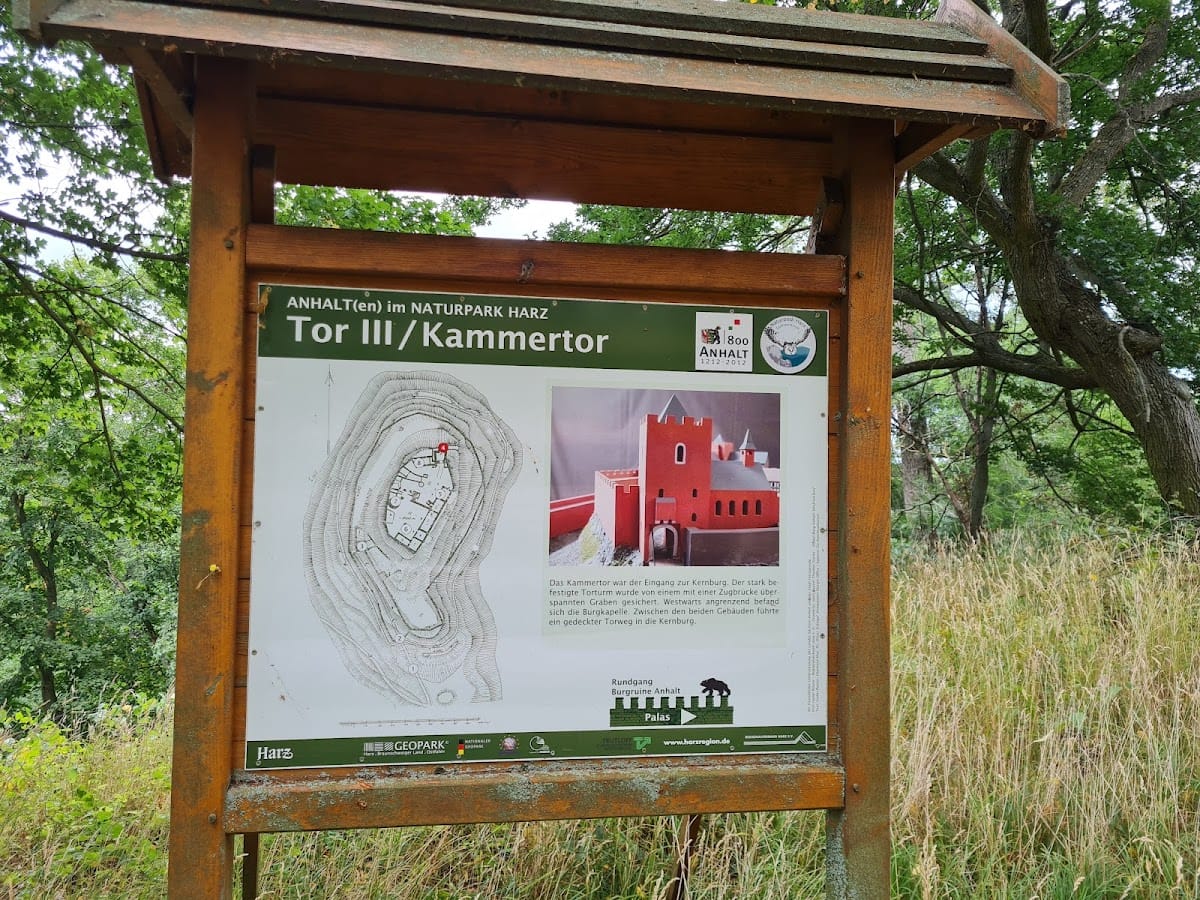
In 2012, celebrations marking 800 years of Anhalt led to the formal inauguration of a commemorative site at the castle, alongside restoration work on parts of the ruins. The surviving remains now preserve the physical setting of a castle whose name continued through Ascanian dynastic history.
Remains
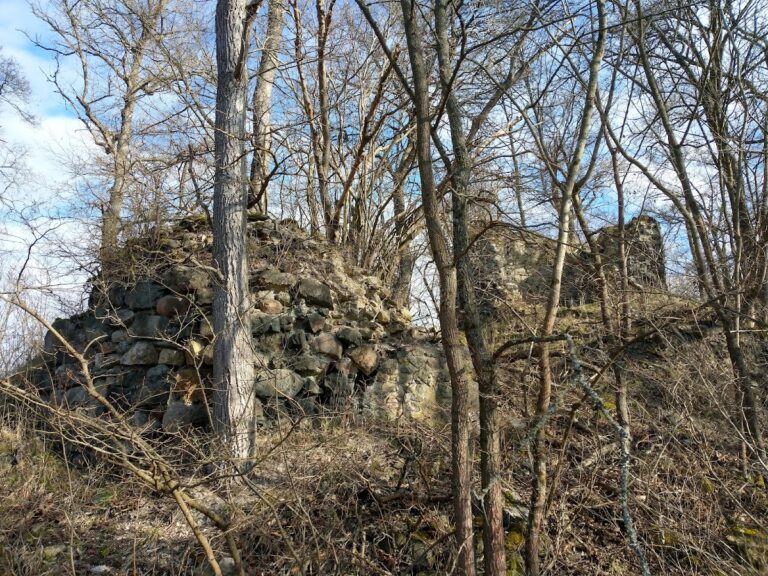
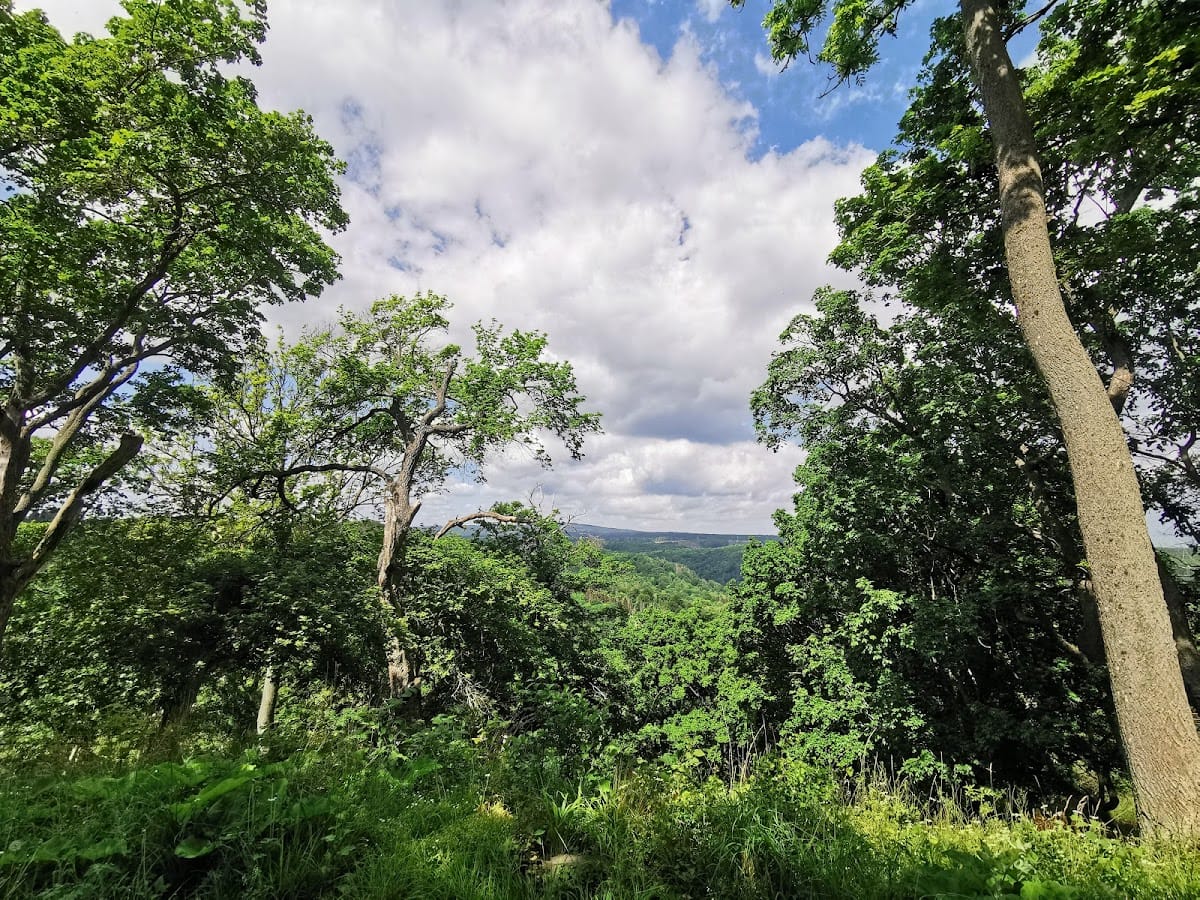
Anhalt Castle occupies the Großer Hausberg, a wooded hill about 397.9 metres above sea level between Meisdorf and Mägdesprung, above the Selke valley. The site lies within the Harz/Saxony-Anhalt Nature Park and the Upper Selke Valley nature reserve. Its defenses were enclosed by a dry moat and an outer rampart extending together for about 543 metres. Brick formed part of the construction, an unusual choice for the period and region.
Castle Structures
Residential Tower
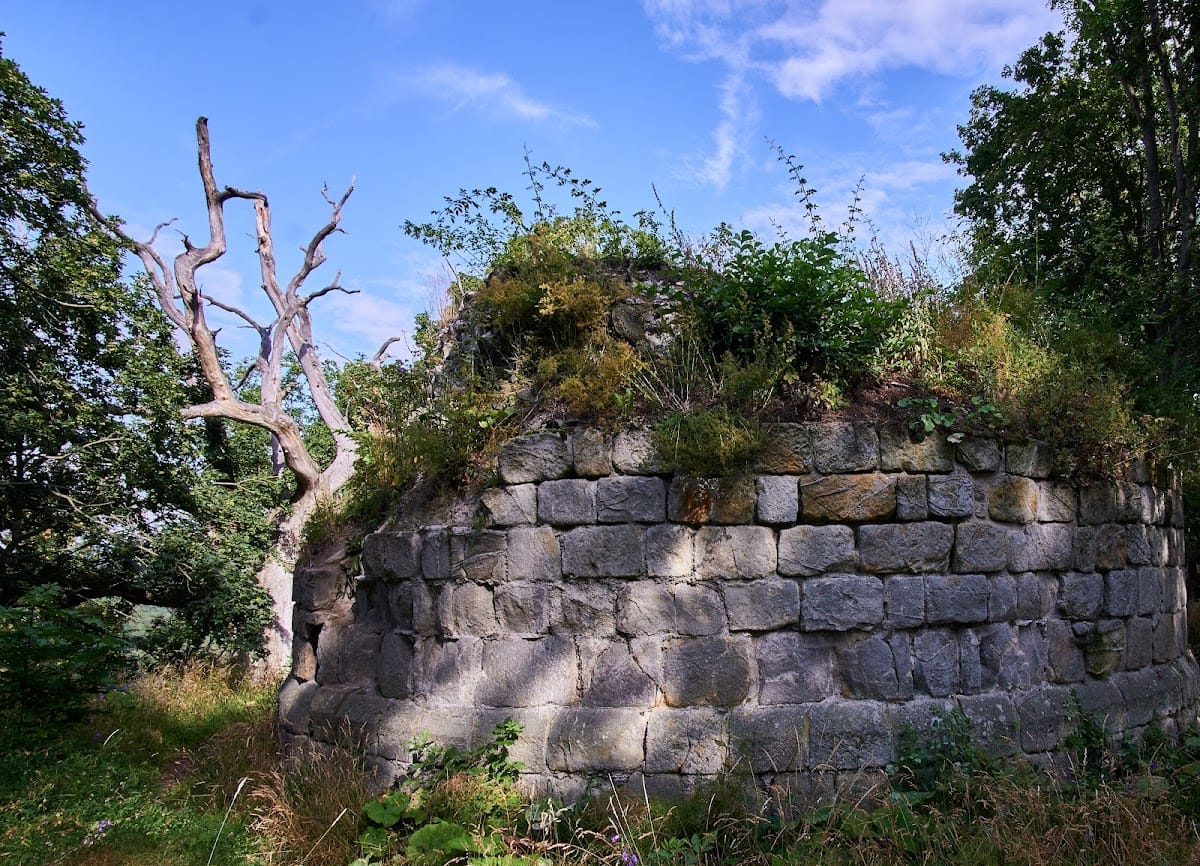
The earliest castle consisted mainly of a circular residential tower measuring about 18 metres in diameter. The rebuilt complex was much larger and comparable in scale with the Wartburg in Thuringia. The bergfried, the principal fortified tower of a medieval German castle, survives as a vegetation-covered base or stump approximately three metres high.
Chapel and Buildings
Several wall sections remain from the castle chapel, residential buildings, and ancillary structures. Together with the surviving tower base, these fragments indicate the range of buildings within the expanded medieval complex.
Well House
The Neo-Gothic well house stands over the well exposed during the clearance and excavation of the ruins in 1822. It preserves the location of this water source within the castle remains.
Settlement and Iron Production
Former Settlement
South of the castle, the former settlement retains several house plots and depressions that mark wells. A rubble mound represents the remains of its church, linking the surviving ground features with the community that served the castle and its garrison.
Smelting Furnace and Mining Area
Excavation of the settlement revealed the remains of an iron-smelting furnace dating from the twelfth or thirteenth century. The settlement area also contains evidence of former iron-ore mining, reflecting the extraction and production activities associated with Anhalt before its abandonment.
Nearby sites