Castello Eufemio: A Medieval Castle in Sicily

Site at a Glance
- Rating
- 4.2
- Popularity
- Low
- Country
- Italy
- Primary era
- Medieval
- External website
- Open
- Eras represented
- Medieval
- Civilizations
- Kingdom of Sicily
- Site type
- Military
- Remains
- Castle
On this page7 sections
History
Castello Eufemio is a medieval castle in Italy, at Calatafimi Segesta in western Sicily. Its earliest origins are uncertain, but it may have formed part of a network of fortified sites that defended and controlled routes leading to Segesta.
Medieval origins and imperial campaigns
Written evidence begins in the mid-twelfth century, when Idrisi, an Arab traveler and geographer who described places throughout the medieval Mediterranean, referred to the site as an old castle with a settled community. During the thirteenth century, Castello Eufemio became one of the imperial castles used by the troops of Frederick II, the Holy Roman Emperor and king of Sicily, in campaigns against Muslim rebels. Their apparent stronghold was the nearby settlement of Calatabarbaro on the acropolis of Segesta. The castle was probably restored during this period.
Feudal residence and later military use
After the thirteenth-century campaigns, the castle served as a residence for Calatafimi’s feudal lords and for governors who administered the town on behalf of the crown. During the Sicilian Vespers, the revolt against Angevin rule that began in Sicily in 1282, the feudal lord Guglielmo Porcelet probably lived at Castello Eufemio. Because his subjects regarded him favorably, he was spared and sent safely to Provence with his family.
The castle later became a military garrison and prison. It was abandoned in 1868, after which its gradual deterioration began.
Remains
Ruined fortress and principal facade
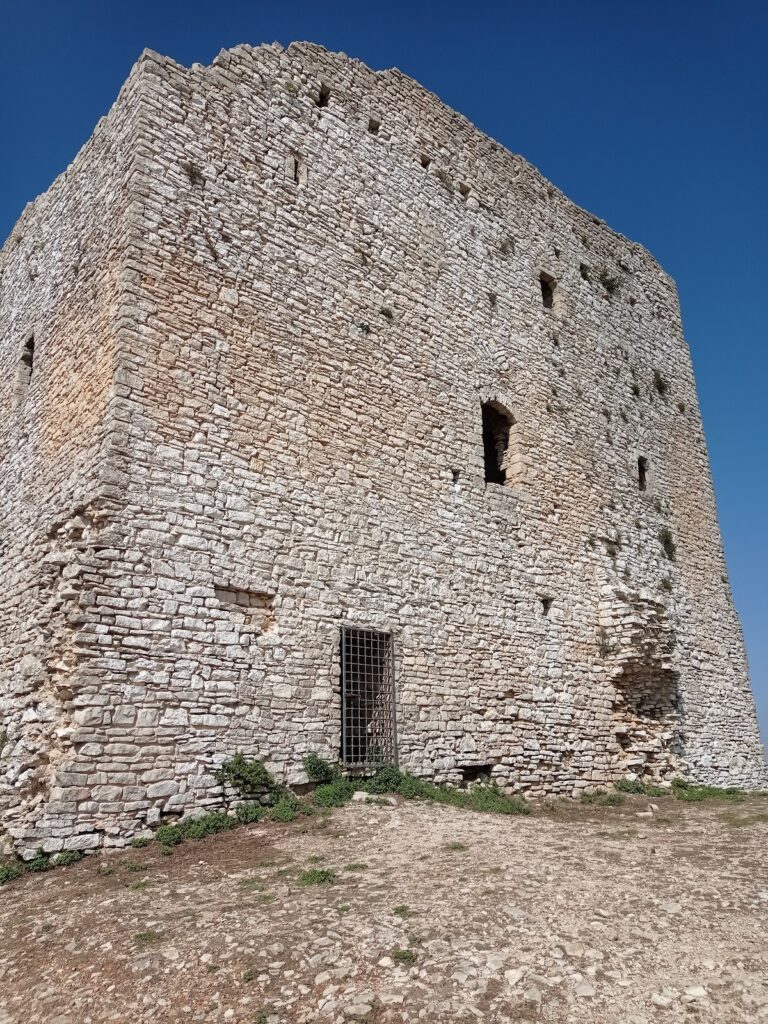
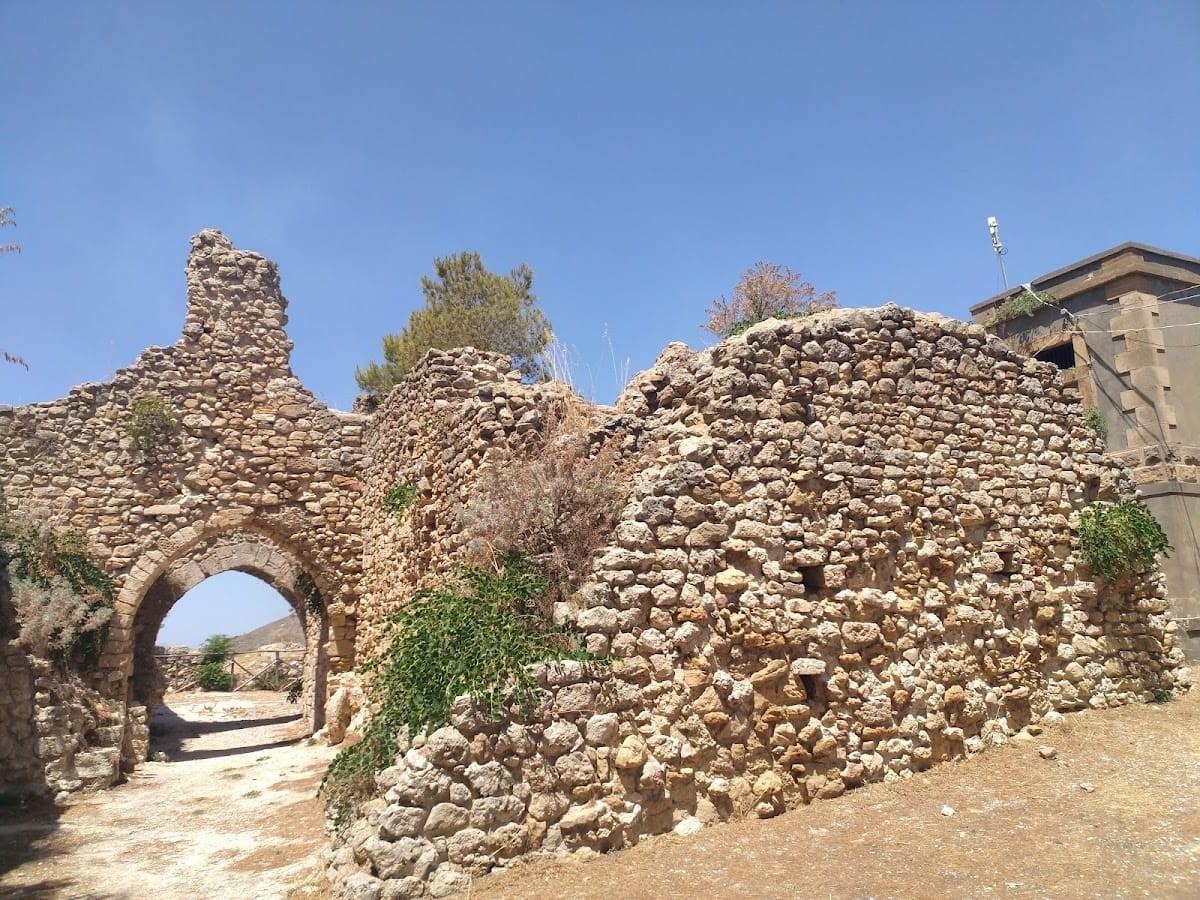
Castello Eufemio survives as a ruin. Its original plan included three towers, and this form has appeared in Calatafimi’s municipal coat of arms since the sixteenth century. The principal facade faces the town, but only the northern and southern towers remain. The third tower has disappeared completely. A curtain wall, meaning a defensive wall linking fortified points, connects the surviving towers. Near the southern tower, on the side facing away from the settlement, the wall contains the castle gate.
Entrance and interior spaces
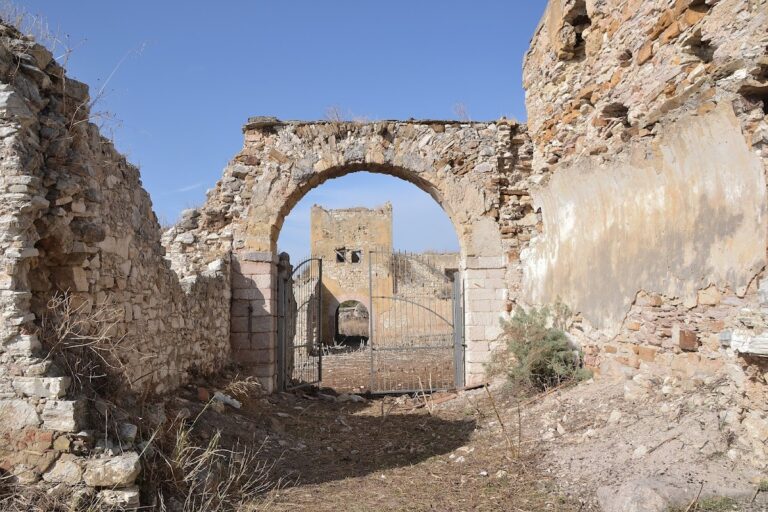
The gate opened into a vestibule formed by two arches, which led to the courtyard. On the left side of the vestibule and courtyard are narrow entrances to several cells. Prisoners left graffiti on the cell walls, and these marks remain visible. Another floor occupied the same side and probably held the principal residence of the castle’s lord.
Rainwater storage
Large cisterns, structures used to collect and store water, are arranged along the western side of the castle. They were supplied by rainfall and formed part of the fortress’s surviving water-management system.
Nearby sites