Castell de Cornellà: A Gothic Castle and Agricultural Estate in Spain


Site at a Glance
- Rating
- 4.3
- Popularity
- Low
- Country
- Spain
- Primary era
- Medieval
- External website
- Open
- Eras represented
- Medieval, Early Modern
- Civilizations
- Crown of Aragon, Spanish
- Site type
- Domestic
- Remains
- Castle
On this page12 sections
History
Castell de Cornellà is a historic castle in Spain, in the Centre district of Cornellà de Llobregat, Barcelona. Rebuilt in the late thirteenth or early fourteenth century in the Gothic period, it occupied a small hill overlooking the lower Llobregat River, its delta, and routes toward Barcelona. The castle became the centre of an extensive estate whose history reflects the changing control, cultivation, and settlement of the surrounding parish.
Early settlement and medieval lords
Archaeological excavations indicate continuous settlement in the area between the Roman period and the Middle Ages, particularly between Santa Maria church and the castle. A defensive tower at in locum Cornelianus was mentioned in 1067, although its exact location remains unknown. During the eleventh and twelfth centuries, the territory was associated with the Cornellà family, also known as Castellvell. Pere de Cornellà witnessed a donation by Gausfred, Count of Roussillon, in 1162, while Berenguer de Cornellà paid homage to Alfonso II in 1173. In 1192, Bernat de Granera was lord of the castle and sold a fief, or land held within a feudal relationship, in the parish of Cornellà to the same king.
From 1202 until the middle of the seventeenth century, the lands of Cornellà passed through various lineages of knights and Barcelona burghers. These families were generally connected with the comital house of Barcelona and with the expansion of its influence across the Mediterranean. The castle was rebuilt in the late thirteenth or early fourteenth century. In 1308 it belonged to Berenguer Mallol, and the Mallol family reorganized agricultural exploitation from the mid-thirteenth century onward, encouraging settlement and contributing to the formation of many farmsteads in the parish. The family probably built the original Cornellà residence, regarded as the earliest construction associated with the present castle.
War, damage, and the Ribes residence
During the Catalan Civil War of 1462–1472, a conflict involving Catalan institutions, royal forces, and factions supporting the monarchy, the castle was confiscated from the cleric Joan Maurici de Ribes. It was transferred to Manaud del Guerri, a supporter of René of Anjou and his captain in the Llobregat region. The conflict apparently damaged the building. It was later returned to the Ribes family and was regularly described as a tower.
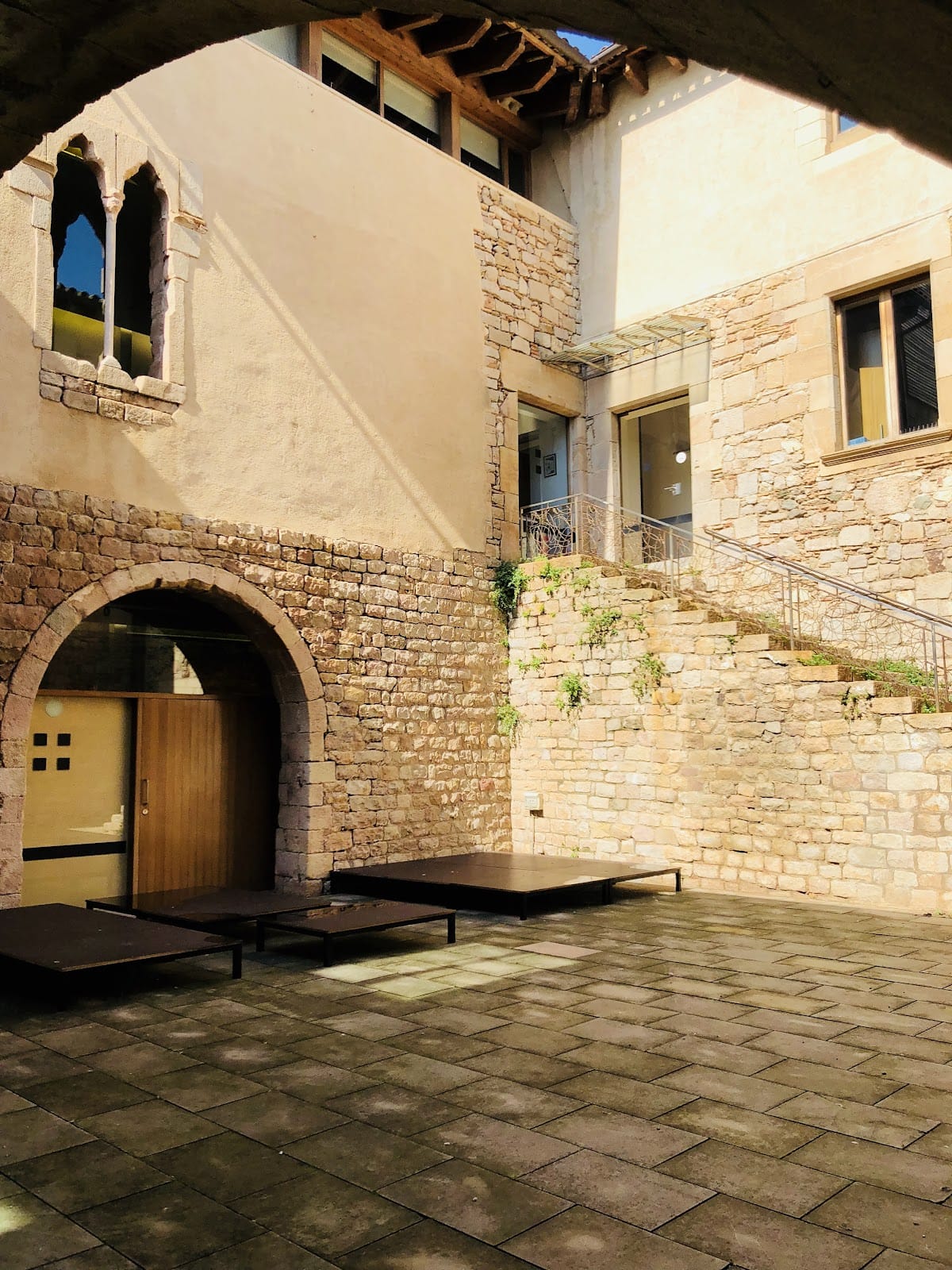
Adriana de Ribes transformed the damaged building into a seigneurial residence, a manor house associated with a landholding lord. She lived there, added the first floor, built the stone staircase in the courtyard, and incorporated the family chapel of Saint Anthony. Gothic windows were inserted into older walls, bringing the different parts together in a palace-like design. In 1560, through marriage agreements with Elionor de Ciurana, Adriana transferred the property to her cousin Joan de Rajadell i de Vega. The Ribes and Rajadell succession continued through Francesc de Rajadell i de Cruïlles, the son of Joan’s second marriage to Violant de Cruïlles.
From manor to agricultural centre
By the end of the sixteenth century, the estate was in poor condition. Floods had destroyed its lands, and many fields were uncultivated. In 1666, Josep de Cruïlles-Rajadell i de Xammar sold the castle and the Cornellà estate to Baltasar de Oriol y Marcer. The Oriol family restored cultivation, enlarged the property, and managed it as a large agricultural enterprise.
During the seventeenth and eighteenth centuries, the building changed from a seigneurial residence into a rural farm complex. A second floor with a gallery was added, while a silo and an oil mill supported agricultural production. Melcior de Oriol i de Tord died without heirs and was succeeded by his brother Josep, who was abbot, the head of a monastery, at Santa Maria de Ripoll from 1756 until his death in 1784. Josep later became involved in a dispute over possession of the castle with Josep de Carreras-Cruïlles-Rajadell i de Vallgornera and Francesca de Vallgornera. The property subsequently passed through Antoni de Puig i d’Oriol, Antoni de Puig i Franquesa, Joan de Puig i Estany, Maria Antònia de Puig, and her son Antoni Via i de Puig.
Twentieth-century ownership and civic use
In 1903, representatives of Antoni Via i de Puig’s creditors sold the castle and its lands at public auction to the former tenant farmer Miquel Cuxart i Mitjavila for 20,000 pesetas. Local farmers and small landowners acquired much of the land, while the building continued to serve an agricultural purpose. It became popularly known as “the One-Eyed Man’s Castle” because a one-eyed tenant reportedly lived in part of it. The Catalan name del Borni is also associated with Isidre Cuxart i Gil, known as “Borni.”
In 1992, Cornellà City Council acquired the castle for public use and began consolidation and rehabilitation works. Reconstruction was completed in 2000. The work preserved the original structure while respecting its successive architectural layers, styles, and materials, although some foundations had to be rebuilt because the existing base was insufficient. Since 1988, Castell de Cornellà has been protected in Spain as a Cultural Asset of National Interest, and it is also registered in Catalonia as a historic monument and Cultural Asset of National Interest. Its first and second floors house the Municipal Historical Archive of Cornellà and the Utopia Foundation, while the ground floor is used as an exhibition space and the courtyard hosts public activities.
Remains
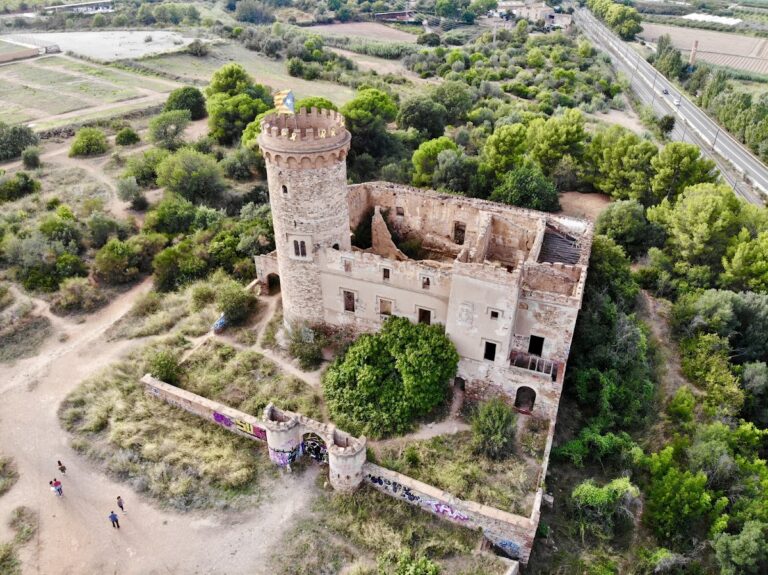
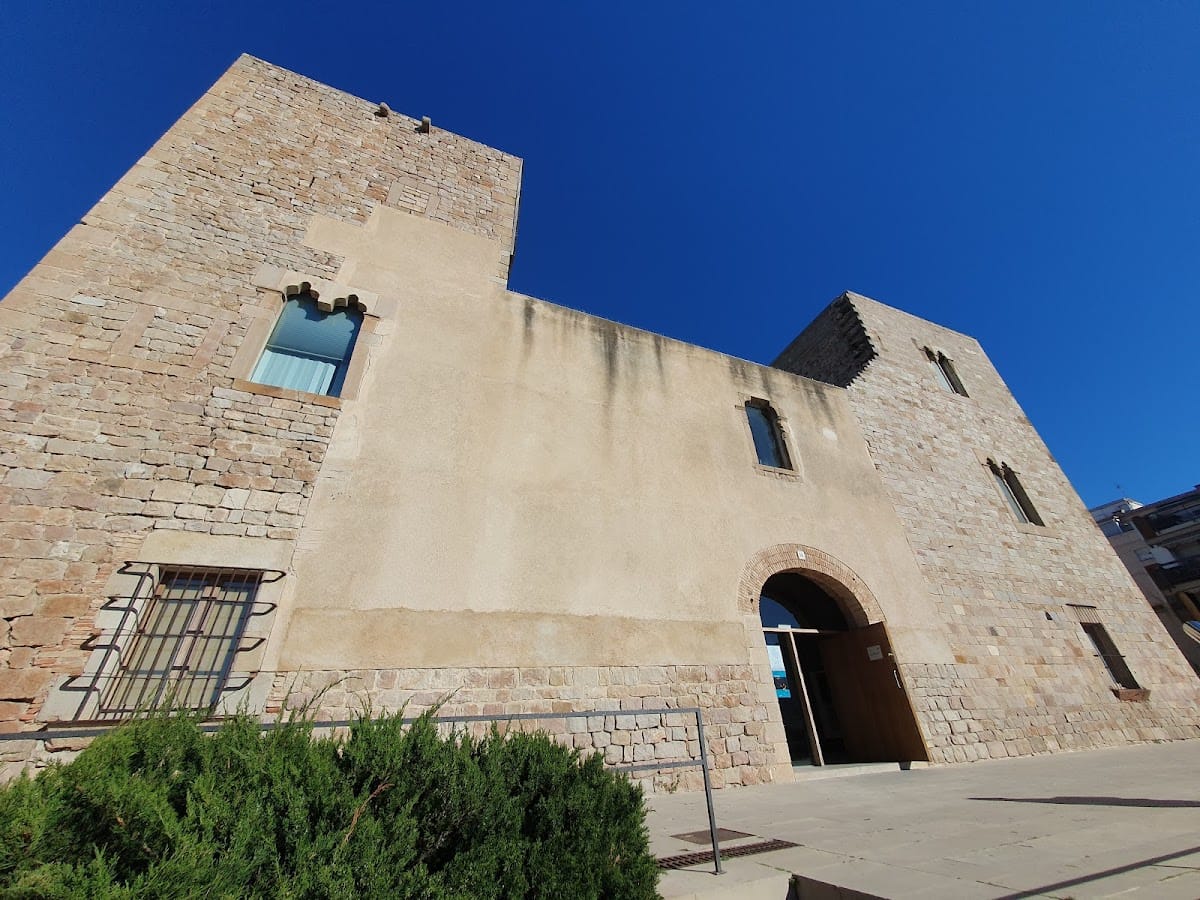
The present building is a large Gothic mansion with a square plan arranged around a central courtyard. A tower rises above each corner of the main two-storey fabric. The lower walls and towers use natural stone, cut stone, and mortar, while much of the remaining structure is made from rammed earth, compacted layers of earth used as a building material. Because additions from different periods have accumulated within the building, its architectural phases are not always easy to separate.
Medieval structure and later additions
Ground floor and corner towers
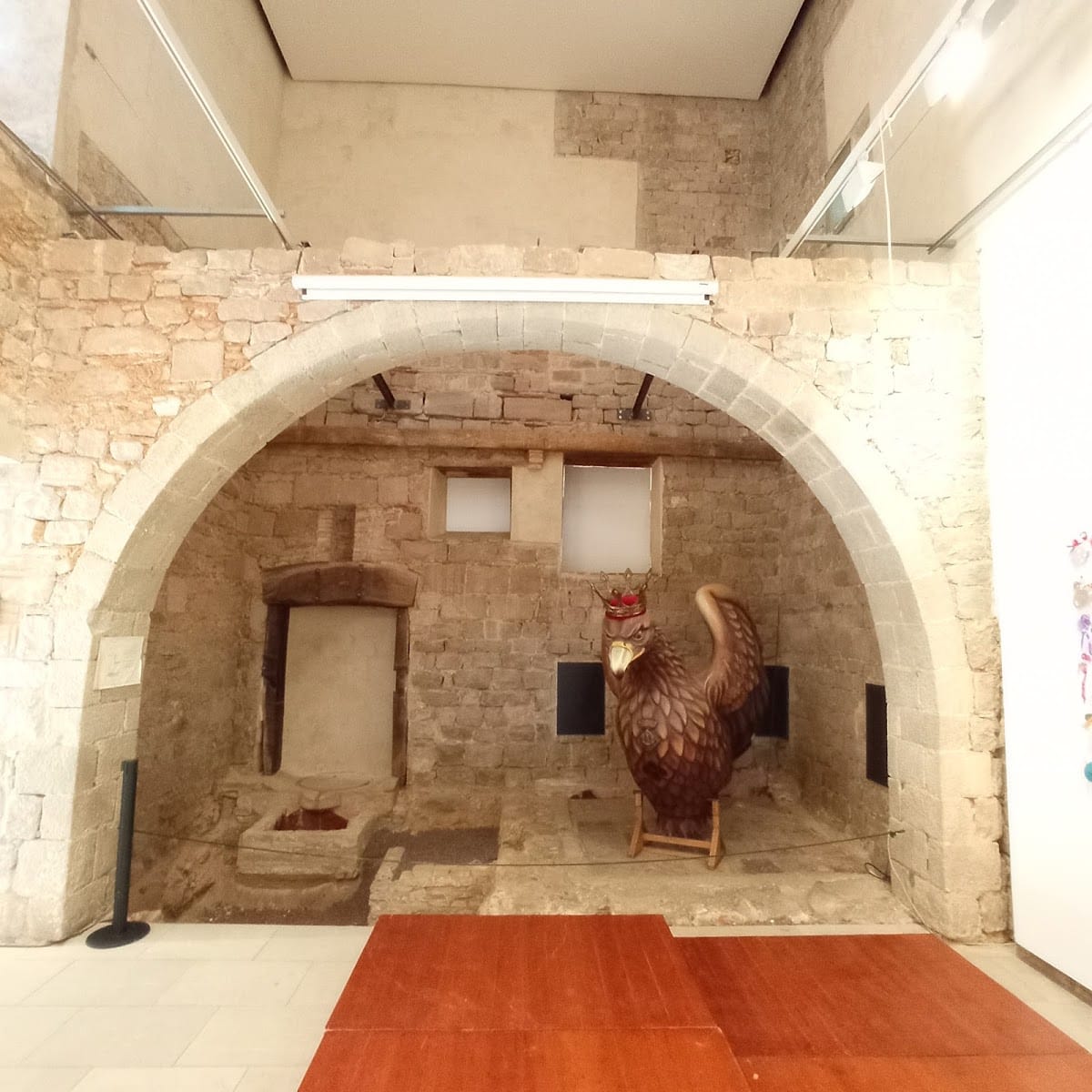
The earliest surviving elements attributed to the fourteenth and fifteenth centuries are the ground floor and the two towers on the principal façade. The ground-floor arrangement included a cellar and the family chapel of Saint Anthony. During the later agricultural phase, the ground floor also received an oil mill, extending its role beyond that of a medieval residence. The exhibition hall now occupies this level.
Upper floors and gallery
Adriana de Ribes’s conversion of the castle into a residence added the first floor and the stone staircase in the courtyard. Drawings by the architect Ramon Puig i Gairalt show chambers and salons on the upper floor. The second floor belongs to the later agricultural transformation and includes a gallery. A silo was also installed as part of the building’s use as a farm centre. The first and second floors now accommodate the Municipal Historical Archive of Cornellà.
Gothic windows and courtyard
Paired Gothic window
The facades contain several paired Gothic windows, each divided into two openings by a slender central support. They belong to the refined fifteenth-century Gothic tradition. One surviving example is built from carefully cut, dry-laid stone. Its jambs are formed from three pieces set on a single-stone base, and two worked stones create a crown of trefoil-pointed arches.
The arches rest on the jambs and on a narrow central column with a faceted cubic capital whose lower part is conical. The stylized capital imitates a classical Corinthian model through its rosette, collar, and acanthus leaves, a form associated with fifteenth-century Catalan Gothic architecture. Parts of the window, including the small column and the upper right lintel, appear to have been added during a modern restoration that imitated the earlier design.
Central courtyard
The central courtyard contains the stone staircase built for Adriana de Ribes. At its lower level are blocked-up windows that belong to the building’s accumulated phases. The courtyard remains an important internal space within the square plan and is used for concerts, conferences, public presentations, and other civic activities.