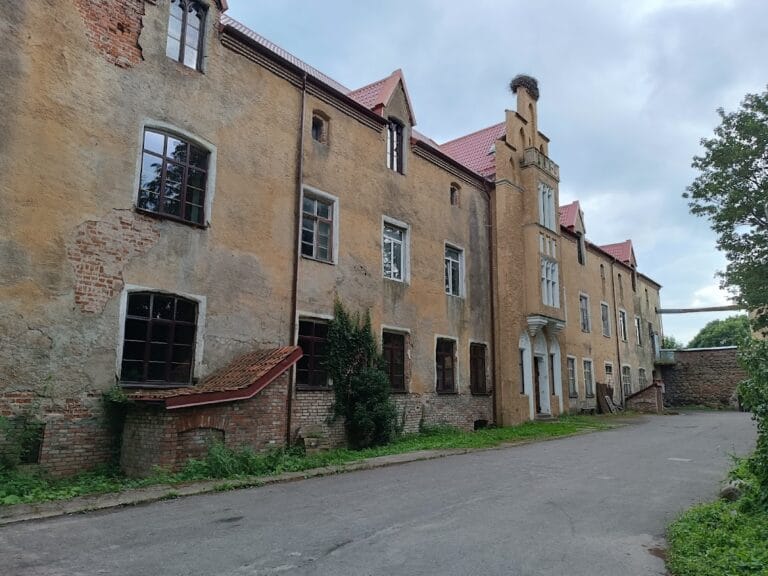
Lauken: A Teutonic Order Castle and Prussian Palace in Russia


Site at a Glance
- Rating
- 4.5
- Popularity
- Low
- Country
- Russia
- Primary era
- Early Modern
- External website
- Open
- Eras represented
- Medieval, Early Modern, Modern
- Civilizations
- Crusader, Duchy of Prussia, Teutonic Order
- Site type
- Domestic
- Remains
- Palace
On this page6 sections
History
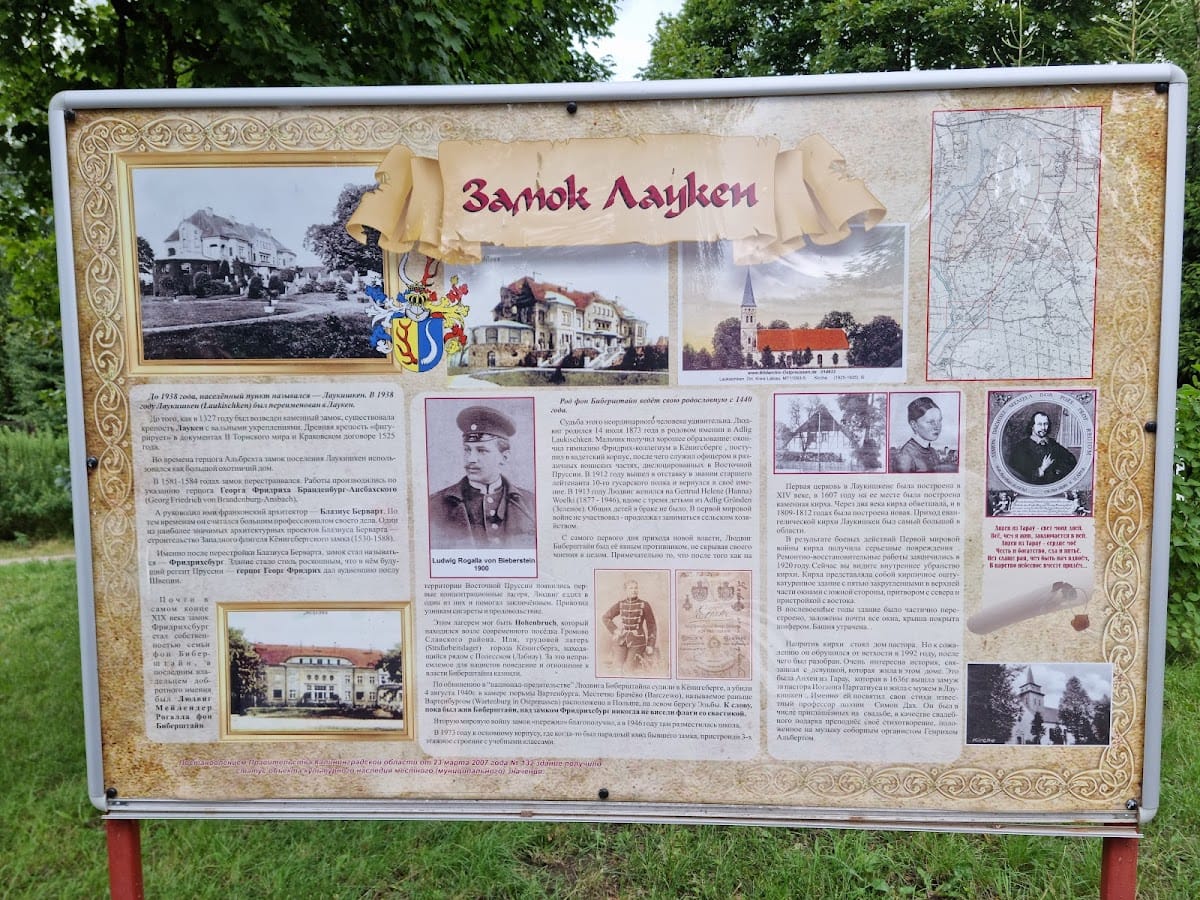
Lauken is a castle in Russia’s Kaliningrad Oblast, established by the Teutonic Order around 1260 as an earthen fortification. The medieval German military-religious order used fortified settlements to establish and administer territories in the eastern Baltic. From 1270, Lauken served as a bridgehead on the Laba River, now called the Deima, during the Order’s offensive operations against Nadrovia, a historical region inhabited by the Nadruvians.
Teutonic Order administration
The fortification was rebuilt in stone in 1327. From 1390, it housed a Kammeramt, an administrative office responsible for aspects of the Teutonic Order’s territorial management. Lauken appears in documents connected with the Second Peace of Thorn in 1466 and the Treaty of Kraków in 1525, agreements that marked major changes in the political status of the Order’s Prussian territories.
From hunting lodge to palace
After the Reformation of 1525 and the secularization of the Teutonic Order’s Prussian territory, Duke Albrecht converted Lauken into a hunting lodge. Between 1581 and 1584, Duke Georg Friedrich ordered a complete rebuilding under the architect Blasius Berwart. The building became a palace and acquired the name Friedrichsburg. Soon afterward, Georg Friedrich held an audience there for a Swedish ambassador.
Estate, wartime damage, and later use
In later centuries, Lauken became a knightly estate, a landed holding used as a noble residence and economic property, and was rebuilt repeatedly. At the end of the nineteenth century, ownership passed to the von Rogalla von Bieberstein family. During the First World War, the castle suffered heavy damage and was subsequently restored.
The last owner, Ludwig Meyländer, known as Rogalla von Bieberstein, was an East Prussian cavalry officer and estate owner. Imprisoned as an opponent of the Nazi regime, he was found hanged in his cell in 1940. After the Second World War, the building was adapted for use as a school. A local cultural-heritage designation was granted by a resolution of the Government of Kaliningrad Oblast dated 23 March 2007.
Remains
Castle building and surviving medieval fabric
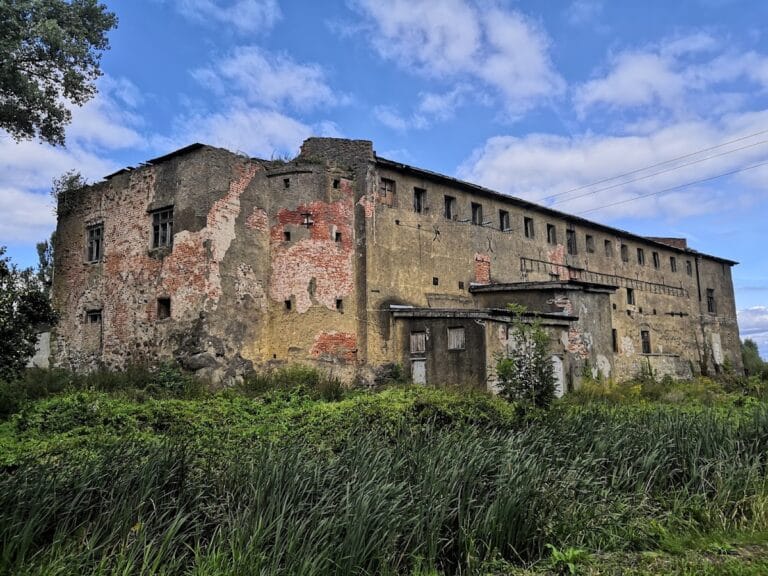
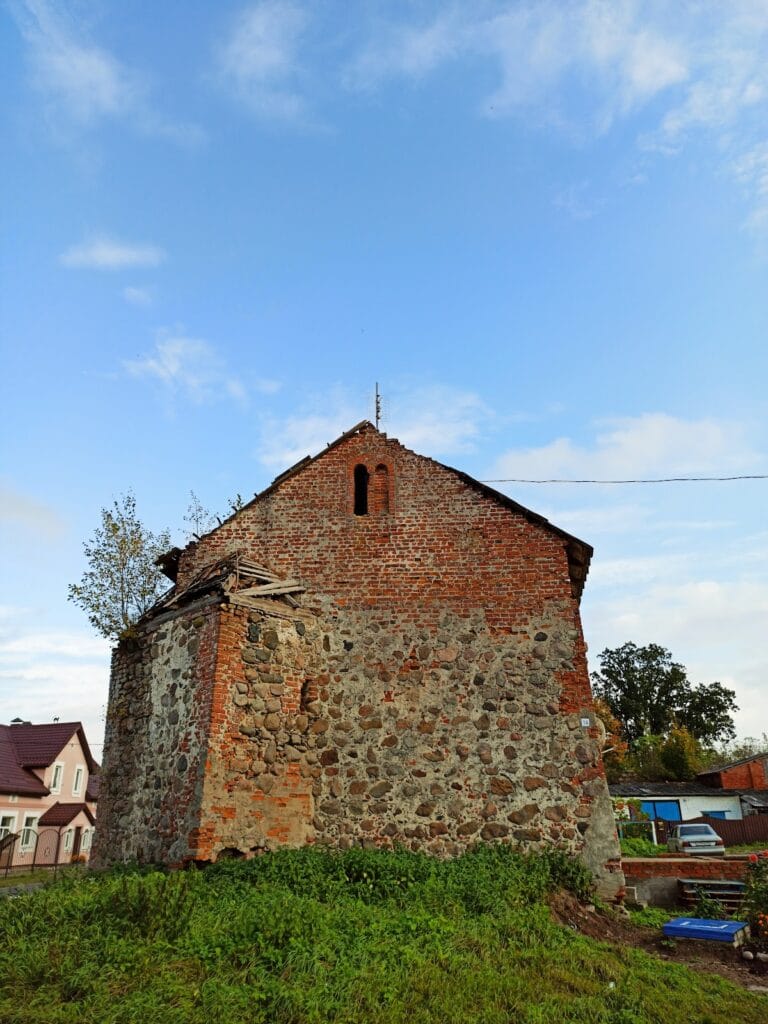
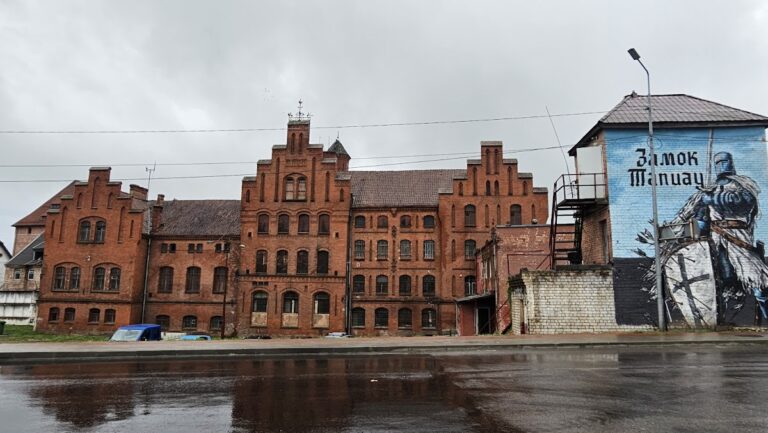
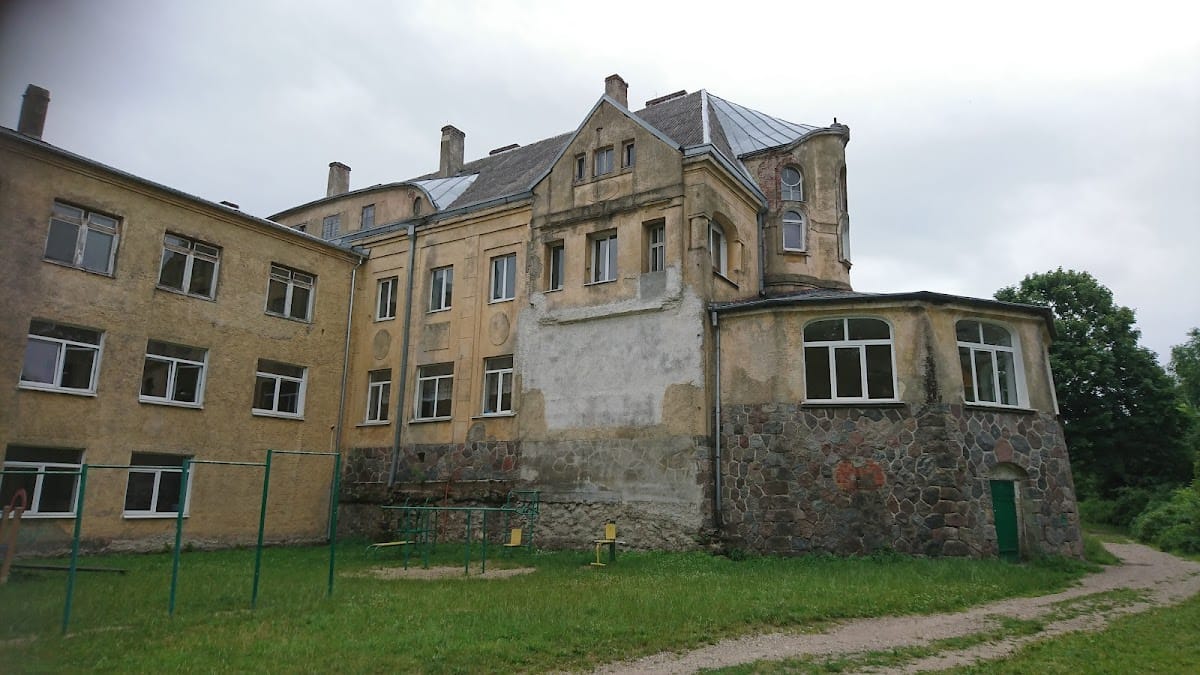
The surviving castle combines the remains of several building phases. The original defensive works were earthen ramparts, while the 1327 rebuilding introduced stone construction. The main building was completely reconstructed in 1581–1584 as the palace later called Friedrichsburg and underwent further rebuilding afterward. A further building was attached to its north side during the postwar period, leaving the castle in an altered form that survived into the early twenty-first century. Cellars from the Teutonic Order period remain beneath the building, providing a physical link to Lauken’s medieval fortification and administrative history.