Taplacken Castle: A Teutonic Order Fortress in Russia


Site at a Glance
- Rating
- 4
- Popularity
- Low
- Country
- Russia
- Primary era
- Medieval
- External website
- Open
- Eras represented
- Medieval, Early Modern
- Civilizations
- Crusader, Duchy of Prussia, Teutonic Order
- Site type
- Military
- Remains
- Castle
On this page9 sections
History
Taplacken Castle is a Teutonic Order fortress in Talpaki, Russia, founded in 1336 beside a Prussian settlement. The Teutonic Order was a Catholic military-religious institution that established and administered fortified settlements in the eastern Baltic during the Middle Ages. The castle occupied an important position near routes from Königsberg toward Insterburg and Lithuania, as well as the Pregel River waterway.
Foundation and stone rebuilding
The first fortress consisted of wooden and earthen defenses beside the Prussian village of Taplacken, a name meaning “warm field.” In 1376, Lithuanian forces led by Kęstutis, a medieval ruler of the Grand Duchy of Lithuania, captured and destroyed it. After the territory returned to German control, the fortress was rebuilt in stone in 1379 on a more defensible tongue of land extending from marshy ground.
During the second half of the fourteenth century, Taplacken became the center of a Kammeramt, an administrative and economic district managed for a territorial ruler. An Order official called a Pfleger, responsible for administering a castle or district, is recorded at Taplacken in 1409.
Ducal domain and rural estate
Taplacken became a ducal domain in 1525. By 1530, the fortress had been rebuilt as a representative castle. It received district status in the eighteenth century, but by the beginning of the nineteenth century it had lost its military importance and functioned as a large rural estate.
Damage and modern status
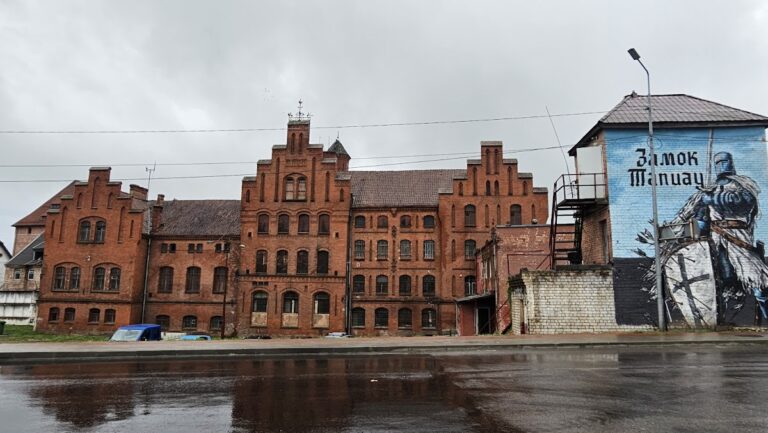
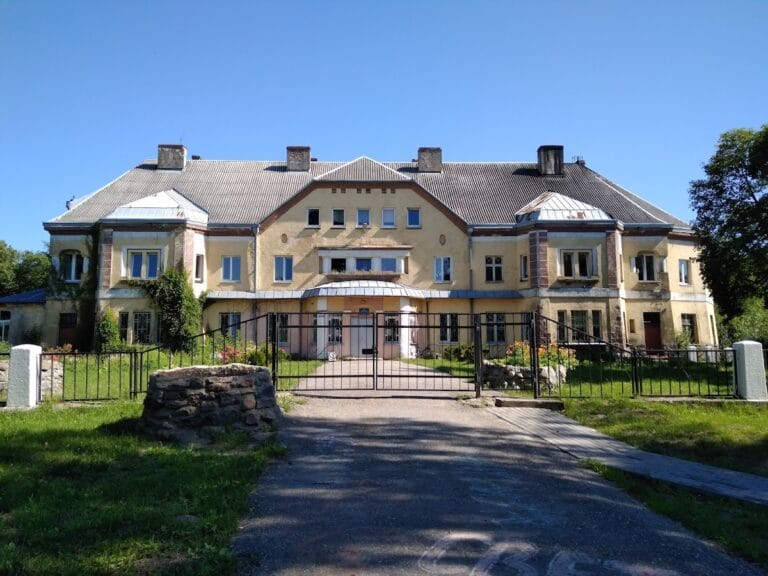
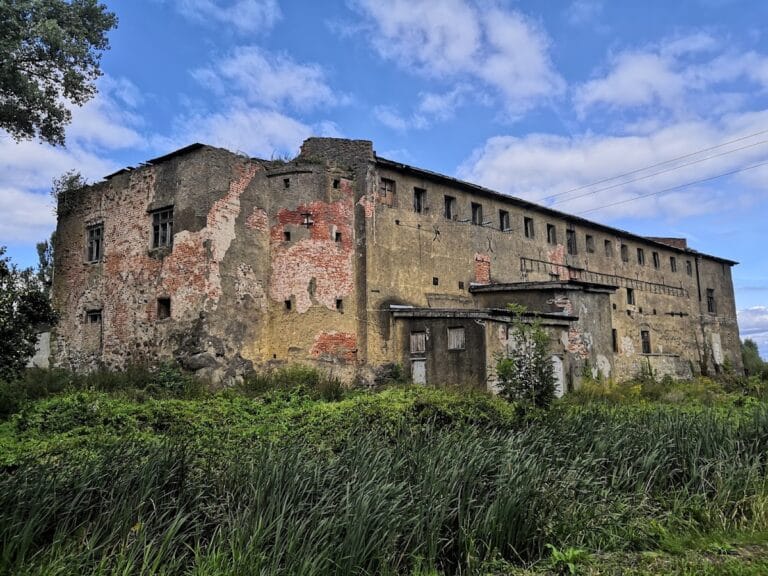
Fighting in 1945 damaged and partly burned the castle’s main building. Soviet settlers occupied the northern wing in 1946, and several families live in the castle. The name Taplacken was replaced by Talpaki after 1945. A resolution of the Kaliningrad Oblast government dated 23 March 2007 recognized Taplacken Castle as a regional cultural-heritage monument of the Russian Federation. Since 2012, the castle has belonged to the Russian Orthodox Church.
Remains
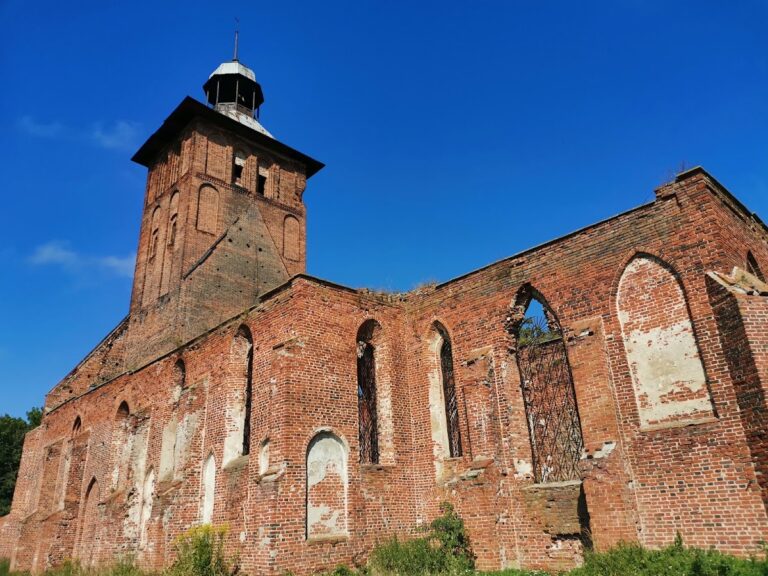
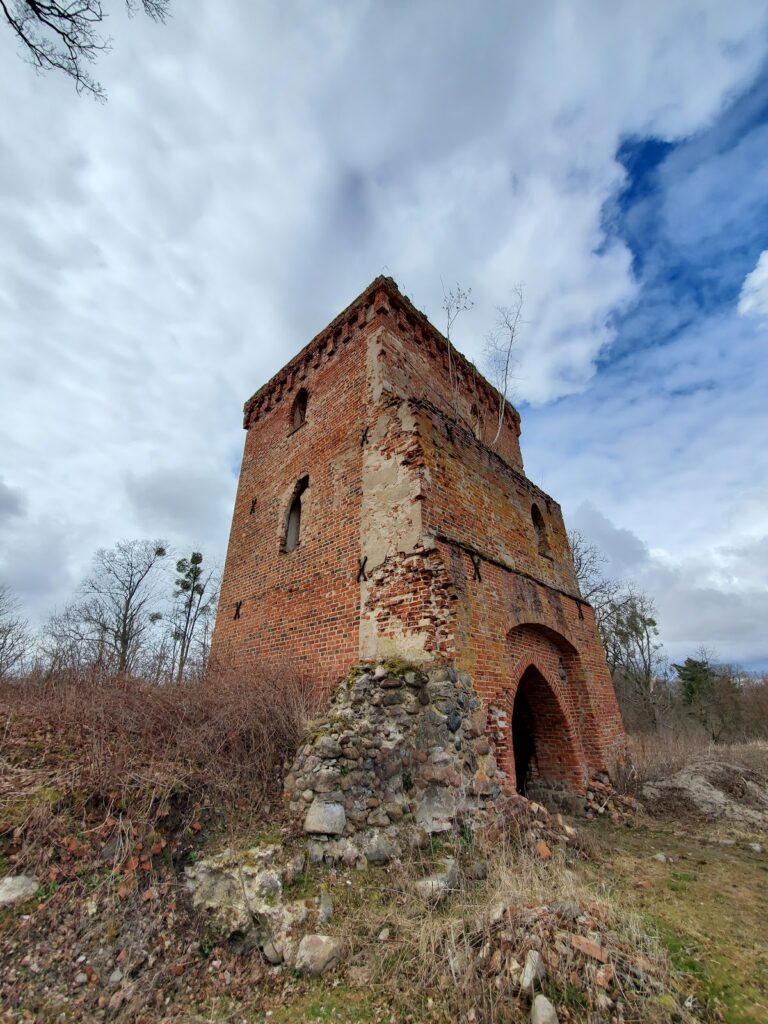
Taplacken is a small, late-period Teutonic Order fortress arranged around a square courtyard. A partly surviving ring wall of fieldstone encloses the court, while small towers protected the southern corners. The lower section of the southeast tower remains. The later fortress was set on a defensible landform projecting into marshy ground. Wet conditions led to the abandonment of planned cellar construction or enlargement, although a basement is described beneath the three-storey residential wing.
Castle buildings
Residential wing
The castle had one principal wing, including a three-storey residential range with a basement. This part formed the main domestic and representative building of the complex and survives in damaged condition after the destruction and fire of 1945.
Western economic building
An economic building occupied the western part of the castle. Its date is uncertain, since it may not be medieval, and the building remains habitable.
Northern chapel
The northern part of the castle included a chapel. Together with the residential range, the economic building, courtyard, ring wall, and surviving southeast tower base, it formed the architectural arrangement of the fortress.